A waterproof beach bag sounds simple, but that word can hide many product risks.
Commercial sourcing path: If this topic is part of a retail, resort, promotion or private-label sourcing brief, use LISO's custom beach bag manufacturer options to review waterproof wording, lining choices, logo methods and sample planning before sending specs.
Buyers should check the material, seam behavior, lining, bottle pocket, wet compartment, closure, handle strength, sand resistance, packing size, MOQ, and collection fit before choosing a waterproof beach bag manufacturer.
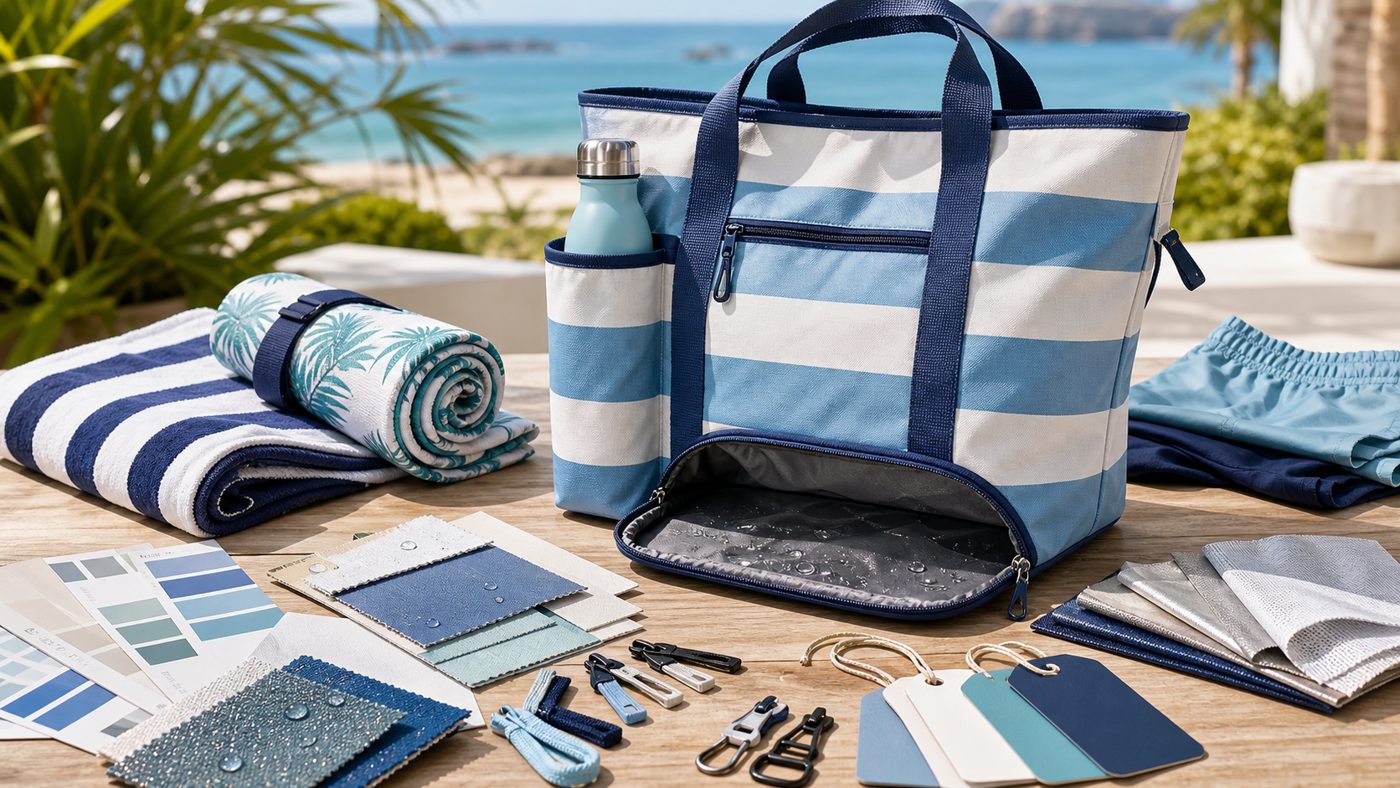
Beach bags are moving beyond a basic tote. Consumers want bags that hold towels, bottles, sunscreen, wet swimwear, phones, and small valuables. Retailers want color, structure, and a strong shelf story. Brands want private label details. Importers want MOQ that does not create too much inventory risk.
That is why I do not treat a beach bag as a simple bag. I treat it as part of a beach day solution. A beach bag can connect with beach mats, towels, cooler bags, bottle holders, and resort retail packaging. You can see this direction in our Beach Day Essentials product hub.
Why is waterproof not enough for a beach bag?
Waterproof is only one part of the real beach use case.
A waterproof beach bag still needs strong seams, easy cleaning, drainage thinking, wet-dry separation, sand handling, comfortable straps, and the right material hand feel. A bag that holds water in the wrong place can become smelly or hard to use.
The buyer should ask what kind of water the bag faces
Many suppliers use the word waterproof too quickly. The buyer needs to ask: waterproof against what? A splash from a pool is different from wet towels sitting inside the bag for hours. A coated fabric is different from a sealed seam. A water-resistant pouch is different from a fully waterproof compartment. If the product will be used near the sea, salt and sand also matter.
This is why I prefer to separate the waterproof question into smaller checks. A buyer should look at fabric surface, lining, seams, zipper, pocket structure, and cleaning method. The best design is not always the most sealed design. Sometimes quick cleaning and good wet-dry separation are more useful than a heavy fully sealed structure.
| Buyer claim | Hidden question | Practical check |
|---|---|---|
| Waterproof fabric | Does water enter through seams? | Check seam construction and lining |
| Wet pocket | Can it hold wet swimwear? | Check size, zipper and odor risk |
| Easy clean | Is sand easy to remove? | Check surface texture and bottom shape |
| Travel friendly | Does it fold or store well? | Check folded size and weight |
| Premium retail | Does it look like a brand item? | Check color, trims, label and package |
The word waterproof should start a conversation, not end it.
What materials should buyers compare before sampling?
The best material depends on the channel and use scene.
Buyers should compare coated polyester, Oxford fabric, EVA or rubber-like materials, mesh, PEVA lining, recycled polyester, and insulated materials when needed. Each material has a different balance of weight, cost, cleaning, shape, and retail feel.
Material choice decides the whole product personality
A soft polyester beach tote feels light and foldable. An Oxford bag may feel more durable and structured. A rubber-like beach tote can look modern and easy to clean, but it may cost more and feel heavier. Mesh helps with sand and drainage, but it may not protect small items. PEVA lining can help wet compartments, but it needs correct sewing and quality control.
For B2B buyers, material choice should also match the brand promise. A resort gift bag, a supermarket summer promotion, a premium private label beach tote, and an e-commerce travel bag should not use the same structure. The buyer should define the retail price, display channel, target customer, and expected use before asking for a quote.
| Material route | Strength | Watch point |
|---|---|---|
| Coated polyester | Light, printable, flexible | Coating quality and seam behavior |
| Oxford fabric | Durable and structured | Hand feel and color fastness |
| Mesh | Sand release and breathability | Small item protection |
| PEVA lining | Wet compartment support | Sewing and odor control |
| Recycled polyester | Sustainability story | Certification and MOQ |
If the buyer wants a private label range, I suggest making material decisions across the full collection. The beach bag should not feel disconnected from the towel, mat, and cooler bag.
How do bottle pockets, wet compartments, and packing details affect retail value?
Functional details can make a beach bag easier to sell.
Bottle pockets, wet compartments, key clips, zipper pouches, compact folding, hangtags, and carry straps can raise perceived value. But each detail should be chosen for the target customer, not added only because competitors have it.
More features are not always better
Feature stacking can make a product look attractive in a listing, but it can also create cost and quality risk. A bottle pocket needs the right size and elastic strength. A wet compartment needs the right lining and zipper route. A key clip needs good placement. A compact fold needs material that can recover without looking damaged. A hangtag needs to explain the value quickly for retail shoppers.
I like to plan beach bag features around three questions. First, what does the user carry? Second, where does the bag sit in the store or online listing? Third, what problem does the feature solve? A beach bag for families may need bottle pockets and a wet area. A resort retail bag may need a cleaner shape and premium trims. A promotion bag may need low cost and fast production.
| Feature | Good for | Risk if poorly planned |
|---|---|---|
| Bottle pocket | Family beach days and travel | Wrong size or weak elastic |
| Wet compartment | Swimwear, towels, sunscreen leaks | Odor or hard cleaning |
| Zipper pouch | Phone, keys, cards | Poor zipper or awkward access |
| Compact fold | Travel retail and gifting | Wrinkles or weak structure |
| Hangtag | Retail explanation | Too much text, unclear benefit |
The best feature set is the one the customer will actually use.
Should buyers source one beach bag or a full beach day collection?
A full collection is stronger when the buyer wants brand value and repeat orders.
Buyers can test one beach bag first, but a coordinated beach day collection often creates better retail display, higher order value, and clearer brand positioning. The collection can include bags, towels, mats, cooler bags, and bottle holders.
The collection makes the sourcing story clearer
A single beach bag may sell well, but it does not always build a strong brand story. A beach day collection can solve more of the consumer’s trip: carry items, sit on a mat, dry with a towel, keep drinks cool, and store wet clothing. This is useful for buyers who sell through resorts, gift shops, e-commerce, supermarkets, and seasonal retail programs.
The challenge is coordination. The colors, patterns, labels, and packaging should feel related. If every item comes from a different source, the collection may look messy. A buyer may also lose time managing many suppliers. A coordinated supplier can help align fabric, print, trims, MOQ and package across the collection.
| Collection item | Role in the beach day set | B2B decision point |
|---|---|---|
| Beach bag | Carry and brand visibility | Material, pockets, label |
| Beach mat | Seating and travel comfort | Folded size, waterproof backing |
| Beach towel | Daily use and color story | GSM, fiber, print method |
| Cooler bag | Food and drink value | Insulation, lining, zipper |
| Bottle holder | Add-on item | MOQ and packaging |
For new buyers, I suggest testing a focused collection rather than too many unrelated beach products. It gives the buyer a clearer story and better data.
Which beach day pages should buyers compare before building a collection?
If a waterproof beach bag is part of a larger beach program, I suggest comparing the Beach Day Essentials product hub with the sand-free waterproof beach mat page. This keeps bag material, wet storage, mat backing, color, MOQ, and packaging decisions inside one collection plan.
Conclusion
A waterproof beach bag should be planned as a beach day product system, not only a waterproof tote.
My Role
I help buyers turn beach textile ideas into practical OEM/ODM products. My job is to make the product easier to source, easier to explain, and easier to reorder. If sustainability is part of the buyer brief, compare the eco-friendly beach bag manufacturer route alongside waterproof structure, logo method, handle strength and retail packaging. When the beach bag sits inside a larger Beach Day set, pair it with the cooler bag manufacturer checklist so lining, insulation, zipper quality, logo method and collection packaging are checked together.
Sample Approval Matrix for Waterproof Beach Bag Programs
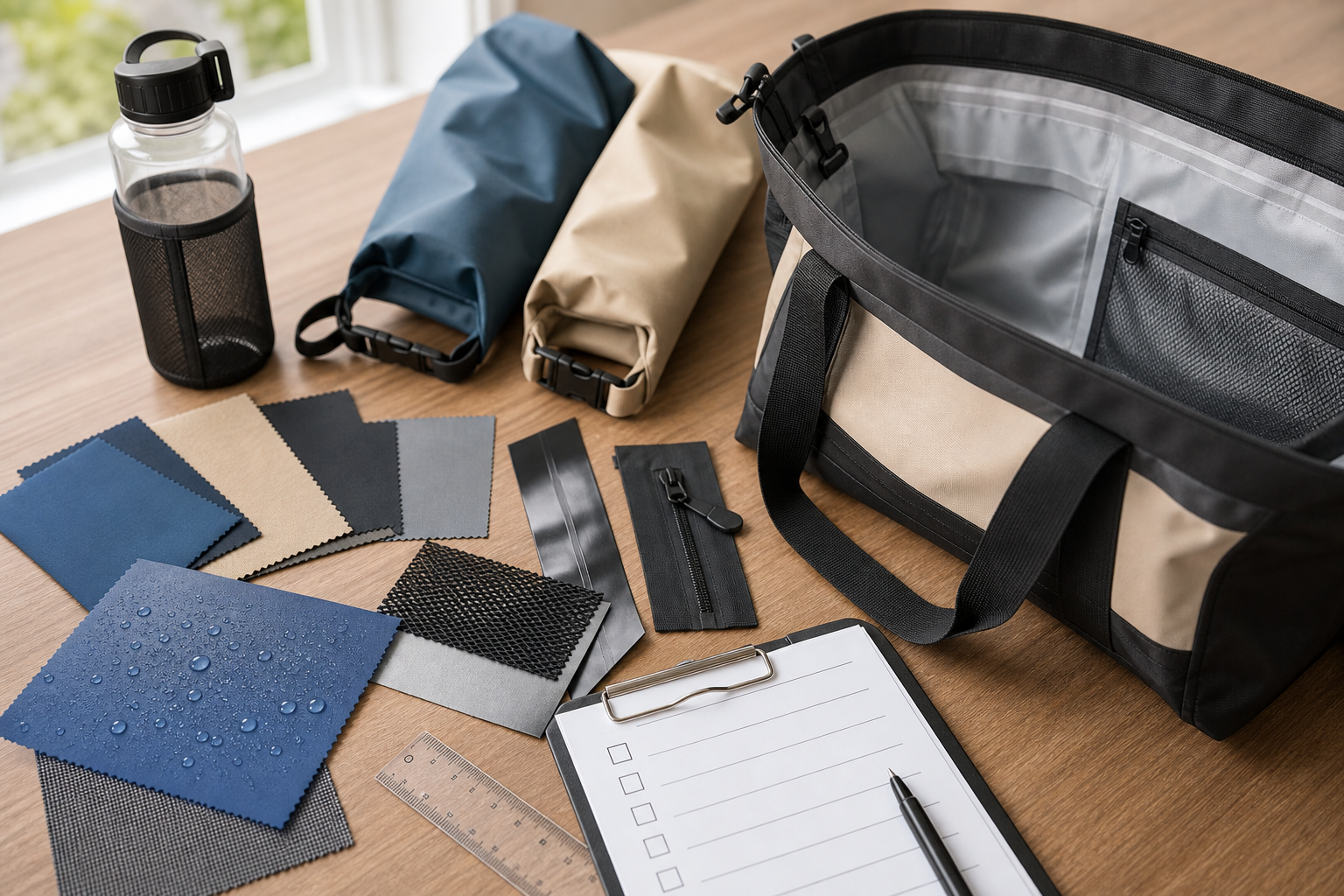
A waterproof beach bag should not be approved from the material name alone. Buyers should separate water exposure level, fabric coating, seam route, zipper quality, wet-compartment structure, packaging and matching beach collection needs before comparing MOQ or print price.
| Approval area | What to ask the manufacturer | Why it matters |
|---|---|---|
| Water exposure | Is the bag for splashes, wet towels or short water contact? | The word waterproof can hide different constructions |
| Fabric and coating | Which fabric, coating and backing are used? | It affects hand feel, print route and durability |
| Seams and zipper | Are stress points reinforced and easy to clean? | Weak seams or zippers create after-sale risk |
| Collection fit | Can the bag match towels, mats or cooler bags? | A coordinated Beach Day line raises retail value |
Compare Beach Bag Manufacturing Options
If you are ready to turn the waterproof construction checklist into a product brief, compare LISO's Beach Bag Manufacturer page. It connects waterproof fabrics, wet compartments, private label logo methods, MOQ, packaging and matching Beach Day collection options in one sourcing path.
Beach collection add-on
A beach bag can carry towels and dry goods, but food and drink storage needs another specification. If the retail story includes picnic, resort, travel or promotional use, buyers should plan cooler bags with food-grade PEVA lining, EPE insulation, zipper quality, print placement and matching packaging.