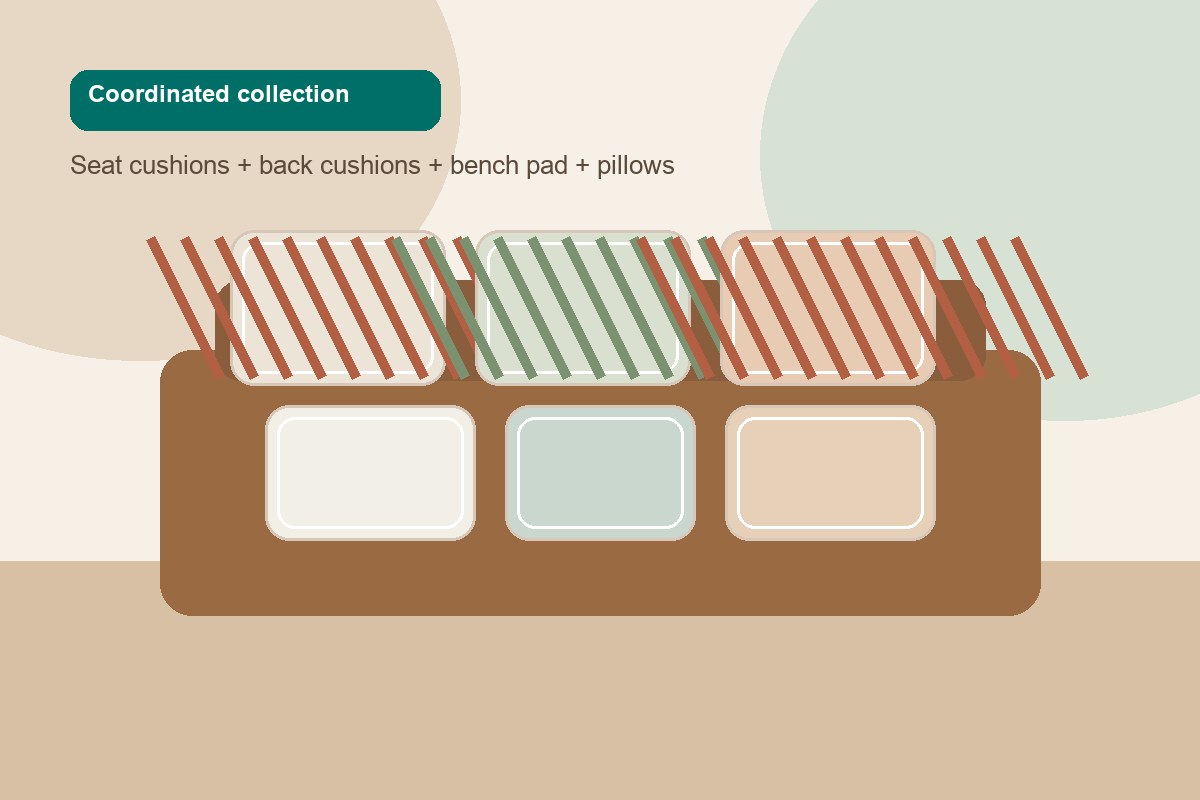
Importers should use a single outdoor cushion SKU when they need to validate one size, construction or channel. A coordinated outdoor cushion collection is the better route when the buyer needs one planned patio or seating story across seat cushions, back cushions, bench pads, chair pads and pillows.
The decision is not simply "small order versus large order." It depends on the customer scene, product mix, fabric route, color-control system, quantity by SKU, packaging and sample-approval path.
When does a single outdoor cushion SKU make sense?
A single SKU is useful when the buyer has one clear question to answer.
| Single-SKU purpose | What it can validate | What it cannot validate |
|---|---|---|
| One chair or furniture size | Fit, thickness and attachment position | A broader size system |
| One fabric route | Hand feel, appearance and construction | Color consistency across mixed materials |
| One sales-channel test | Response to one product offer | Demand for a coordinated patio scene |
| One package format | Pack size and handling | A collection-wide packaging system |
A single product is not a failed collection. It is a narrow test. The mistake is using one SKU to answer questions about an entire patio or seating range.
When is a coordinated cushion collection the better route?
Choose a coordinated route when the buyer wants related products to be displayed, photographed, listed or reordered as one program. The products may share a color family, pattern direction, trim logic and packaging language while keeping different dimensions and constructions.
| Buyer situation | Practical route | Reason |
|---|---|---|
| Retailer planning a patio story | Seat cushions, chair pads and selected pillows | Creates a visible scene without unrelated SKUs |
| Importer serving several accounts | A controlled family of sizes and constructions | Makes the range easier to present and reorder |
| Brand building a design-led offer | One pattern or color family across related products | Reinforces a recognizable brand direction |
| Project buyer with one furniture reference | Custom size and attachment route first | Fit and use conditions matter more than a wide range |
The first collection does not need a fixed number of SKUs. It needs enough products to complete one use scene while keeping material, quantity and approval decisions manageable.
Which products belong in the first range?
Start from the furniture and scene rather than a generic SKU target.
| Use scene | Possible lead products | Inputs needed before sampling |
|---|---|---|
| Patio dining | Chair pads and seat cushions | Chair dimensions, tie or strap position, thickness and cleaning route |
| Lounge seating | Seat cushions, back cushions and pillows | Furniture reference, finished sizes, foam and cover construction |
| Bench or balcony | Bench pad and selected pillows | Bench dimensions, attachment needs and exposure level |
| Stadium or grass seating | Long seat cushion or portable pad | Finished size, carrying method, strap position and surface conditions |
LISO commonly starts cushion development from buyer references, finished dimensions and the intended use scene. Foam is a common filling route. Oxford and polyester fabrics are common starting points, while the material can be adjusted to the buyer's specification. Removable covers with hidden zippers, nylon ties or straps and anti-slip bases can be evaluated when the product and use scene require them.
Why is color consistency harder across a collection?
The same target color can appear different on separate fabric bases, coating routes, print methods, piping, zippers and straps. A screen image cannot control this difference by itself.
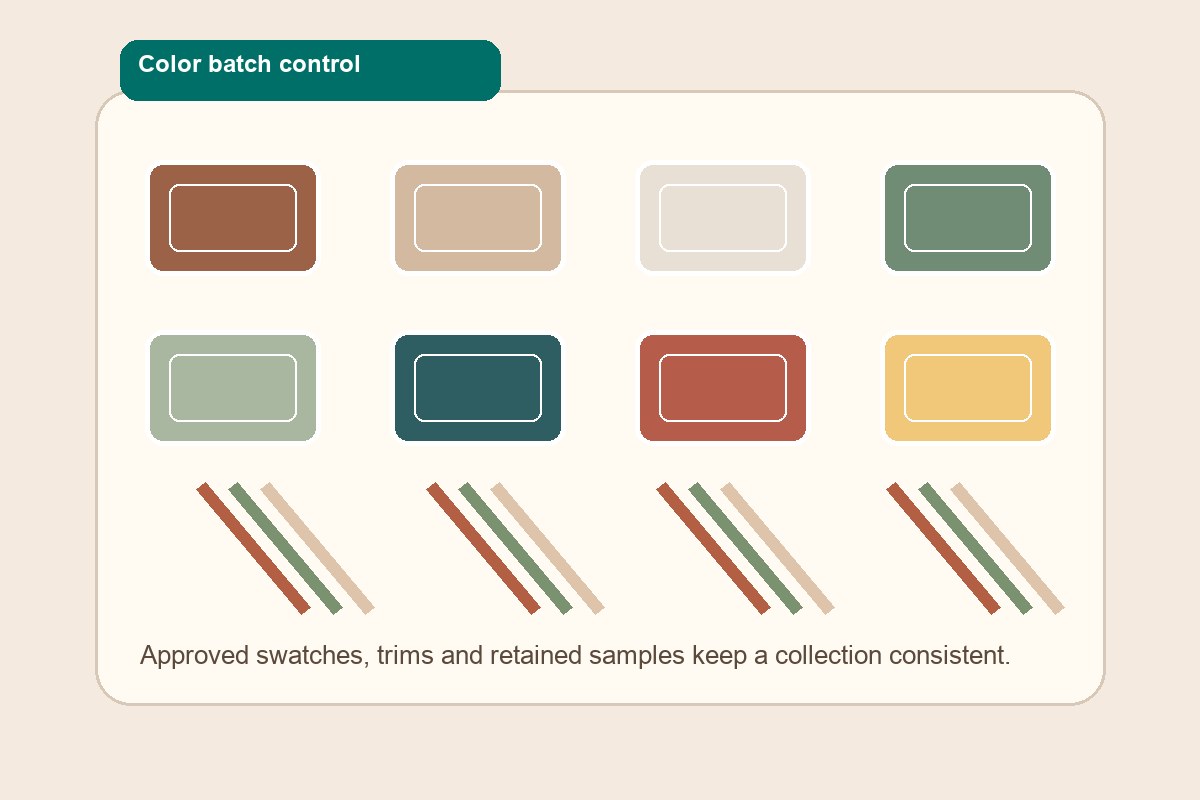
Use an approval sequence that names the reference for each stage:
- color target and artwork file;
- swatch, lab dip or strike-off where applicable;
- sample on the actual fabric and trim route;
- approved pre-production reference;
- agreed bulk and repeat-order comparison.
If the buyer uses an instrumental color tolerance, the method and acceptance limit should be written into the specification. ISO 105-J03 describes a method for calculating color differences between textile specimens. It does not set one universal tolerance for every end use.
Outdoor exposure should also be defined precisely. Water-resistant, waterproof, quick-dry, UV-resistant and mildew-resistant are different requirements. Do not combine them into one vague "outdoor fabric" promise. If an outdoor weathering test is required, ISO 105-B03 is one official reference for color fastness to weathering by outdoor exposure; the buyer still needs to state the chosen test and acceptance criteria.
How should pattern scale and trims be planned?
A coordinated range can fail even when the fabric color is close. Pattern scale and trim placement change how the products look together.
Confirm before sampling:
- pattern repeat and crop for each cushion size;
- stripe or directional-print orientation;
- piping, zipper, tie and strap colors;
- seam position on visible faces;
- whether paired cushions need mirrored or aligned placement;
- the approved file version and color reference.
How should importers plan MOQ and quantity by SKU?
There is no useful fixed public MOQ for every cushion collection. Quantity depends on the fabric route, color plan, sizes, trim, filling, packaging and how many SKUs share the same inputs.
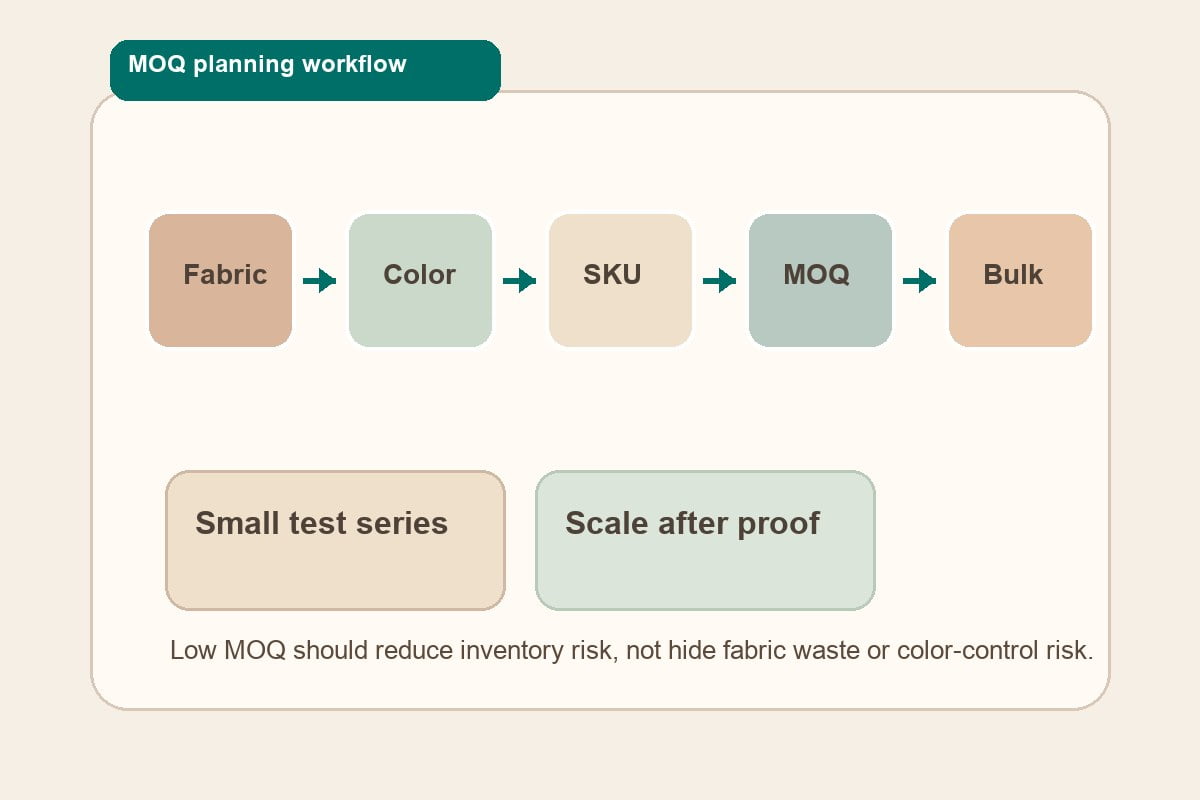
The buyer should send quantity tiers by SKU and let the quotation show where materials can be shared. A practical first collection usually reduces unnecessary differences:
- use a controlled color family;
- share a fabric base where the end use allows it;
- keep trim decisions consistent;
- group sizes around real furniture or channel demand;
- use one packaging system with SKU-specific information;
- separate must-have custom details from optional upgrades.
This approach reduces avoidable setup and material waste. It does not promise that every low-quantity request will have the same cost or production route.
What happens during sampling?
For a cushion project with the specification confirmed, LISO's general sample cycle is usually 7-10 days. The timing depends on receiving the dimensions, fabric direction, filling, construction, attachments, artwork and packaging inputs needed for that sample.
The sample review should cover:
| Review area | Buyer check |
|---|---|
| Fit | Finished dimensions, shape and furniture reference |
| Comfort | Filling route, thickness and intended seating use |
| Cover | Fabric, removable construction, zipper and care route |
| Attachment | Ties, straps or anti-slip option where required |
| Appearance | Color, pattern scale, trim and seam placement |
| Collection | How the sample looks beside the other planned SKUs |
What changes by target market?
Market belongs in the RFQ because label and fibre-composition rules differ. For products within scope, the U.S. FTC textile guide, EU Regulation 1007/2011 and GOV.UK textile labelling guidance are official starting points. The importer should confirm the exact requirement for the cushion construction, components and sales market before label and packaging approval.
What should importers send before requesting a collection quote?
- buyer type, target country and sales channel;
- furniture or chair reference and finished dimensions;
- planned product list and quantity tiers by SKU;
- use scene: patio, beach, stadium, grass, resort or another setting;
- fabric, color, pattern and functional requirements;
- foam or other filling direction;
- removable cover, hidden zipper, ties, straps or anti-slip requirements;
- labels, packaging and artwork files;
- required tests or buyer manuals;
- target sample date and launch window.
For product-level comparisons, use the outdoor cushion manufacturer page and outdoor chair pads page. For a coordinated program that may extend beyond cushions, use the collection solution below.
Frequently asked questions
Is a coordinated outdoor cushion collection always better than one cushion?
No. A single SKU is appropriate for one narrow fit, construction or channel test. A collection is appropriate when the buyer needs several related products to work as one seating or patio program.
How many SKUs should a first cushion collection contain?
There is no universal number. Select the smallest set that completes one customer scene and can share a practical material, color and approval system.
Can LISO make removable outdoor cushion covers?
Yes. Removable covers with hidden zippers can be evaluated from the buyer's dimensions, fabric and cleaning requirements.
Can ties, nylon straps or an anti-slip base be added?
Yes, when the chair or use scene needs them. Their position and construction should be confirmed from the furniture reference or sample.
Does LISO publish fixed prices for cushion collections?
No. The quotation is based on size, fabric, filling, construction, quantity tiers, packaging and sample requirements.
Build the coordinated range
Use the Custom Outdoor Matching Collections solution to plan cushions, chair pads and related outdoor products under one color and artwork system. This article is the decision guide; the solution page is the single commercial destination for the collection brief.