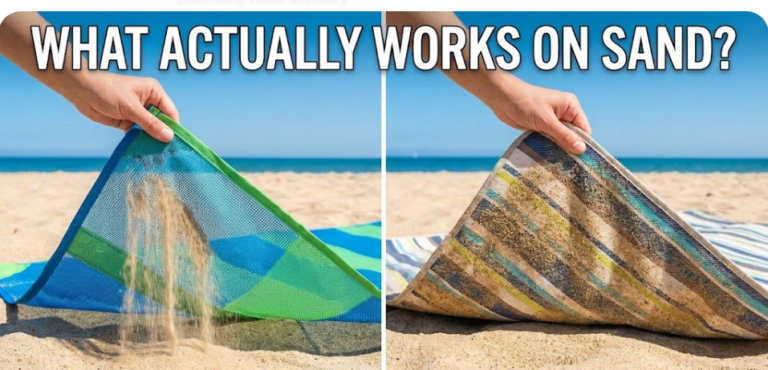
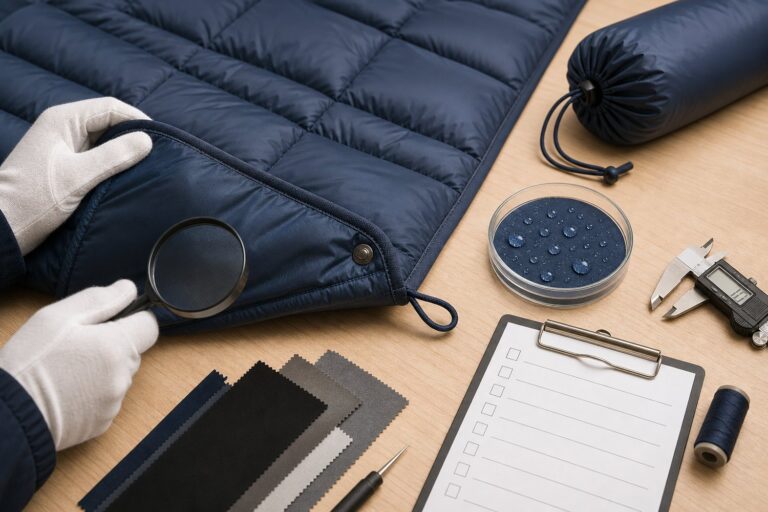
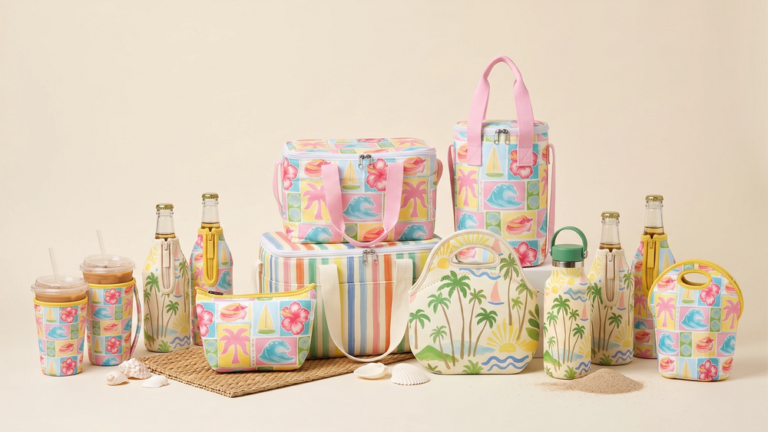
Outdoor cushions can look perfect in a sample room and still create complaints after one season outside.
Outdoor cushions usually fail early because the buyer only checks the surface fabric, not the full use scene. Fading, mildew, and foam collapse come from fabric choice, dye or print route, wet storage, airflow, seam design, filling recovery, and unclear sourcing standards before bulk production.
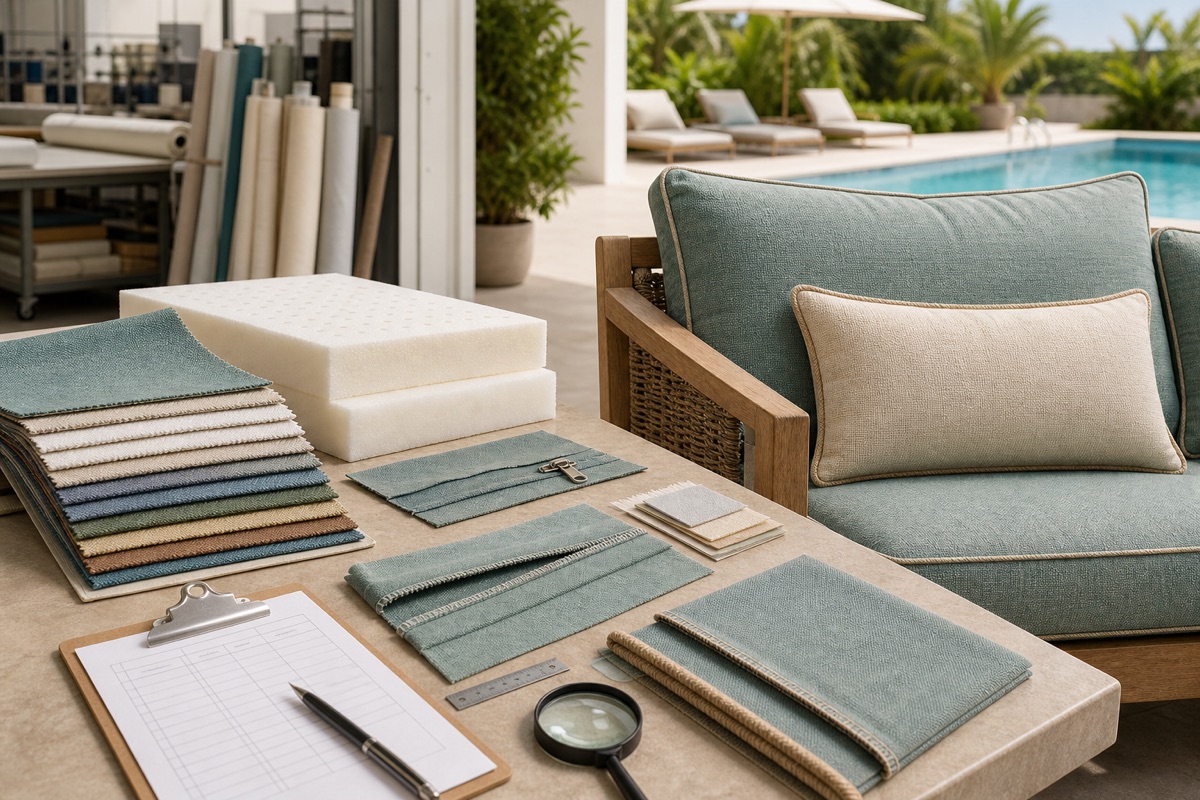
I do not see outdoor cushions as a simple sewn product. I see them as a small outdoor system. The fabric must resist sunlight. The color must hold under real use. The foam must recover after pressure. The construction must dry well enough for the market. The packaging must also help the product arrive in the right shape.
This is why I do not advise buyers to compare only price. A cheap cushion can look good in a photo. It can also become expensive when fading, mold smell, soft foam, and customer complaints appear after the first selling season. Buyers who are planning a new patio program can start with our outdoor cushion manufacturer page and compare it with custom outdoor cushions before sampling.
Why do outdoor cushions fail after one season?
Many importers treat outdoor cushions like indoor cushions with stronger fabric.
Outdoor cushions fail after one season when the product standard does not match sunlight, rain, poolside moisture, storage habits, and repeated body pressure. The main failure routes are color fading, mildew growth, weak foam recovery, seam weakness, and bulk production drift from the approved sample.
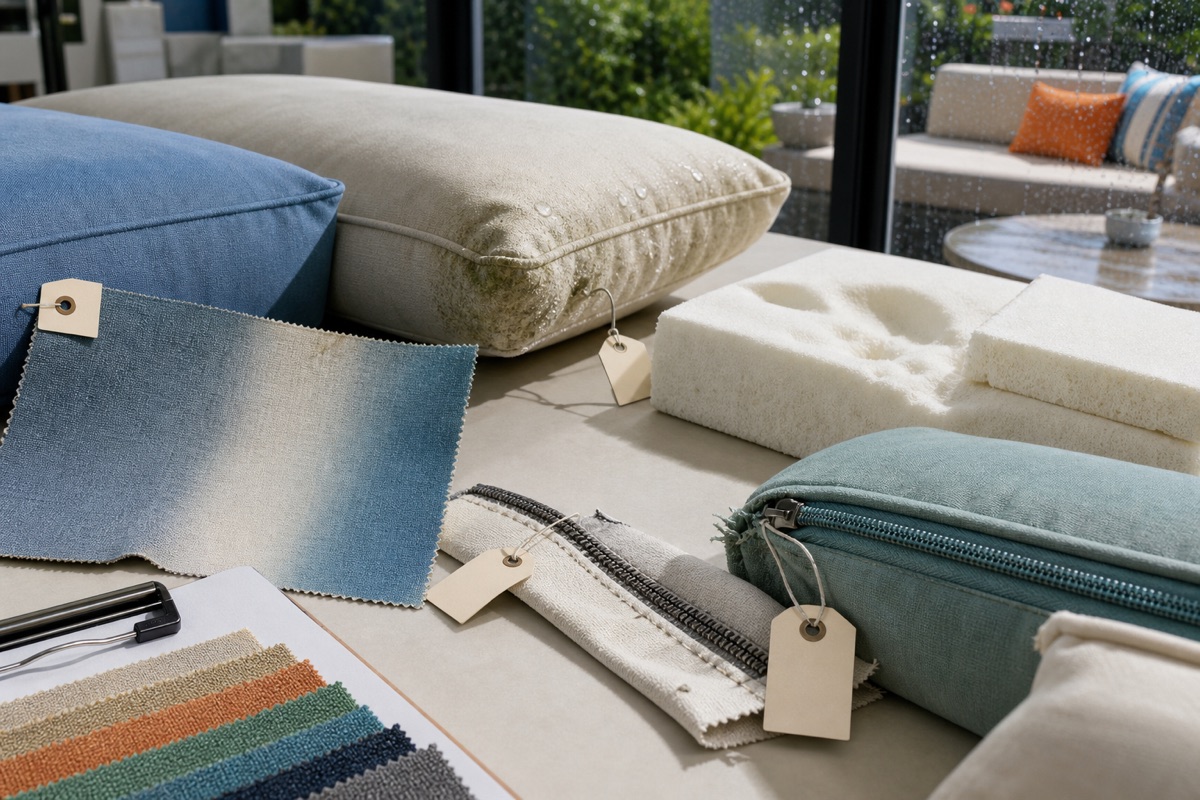
What failure route should buyers check first?
I usually separate the problem into four routes. The first route is color. Many buyers ask if the fabric is “outdoor,” but they do not ask how the color was made or how it behaves under sunlight, chlorine splash, salt air, or wet storage. This is a real risk because patio cushions, poolside cushions, and beach-adjacent cushions do not live in the same environment.
The second route is moisture. A fabric can be water-resistant and still become a mold problem if water sits inside the cushion. The third route is foam recovery. A cushion that feels soft on day one may become flat if the foam density, filling mix, and compression recovery are not planned. The fourth route is bulk control. A sample proves that one piece can be made. Bulk production proves that the factory has a system.
| Failure route | What buyers notice later | What buyers should ask before sampling |
|---|---|---|
| Fading | Color looks washed out after sun exposure | What fabric, dye, print, and color-fastness target fit the use scene? |
| Mold or smell | Cushion feels damp, smells sour, or grows spots | How will water enter, drain, dry, and be stored? |
| Foam collapse | Cushion loses shape or feels thin | What foam density, thickness, and recovery standard are used? |
| Seam weakness | Edges split or water enters through sewing points | Which seams, zippers, piping, and stress points need reinforcement? |
| Bulk drift | Bulk goods do not match the approved sample | How are retained samples and bulk samples compared? |
My sourcing view
I would rather slow down before the first sample than solve complaints after shipment. A buyer should define the scene first. Is the cushion for a covered patio, open garden seating, poolside lounge, resort furniture, retail replacement cushions, or an outdoor chair pad program? These scenes can share some materials, but they should not always share the same claim. If the buyer writes only “waterproof outdoor cushion,” the supplier may choose a route that sounds right but fails in real use.
Is fading mainly a fabric problem or a dyeing and printing problem?
Fading is easy to see, so consumers often blame the whole brand.
Fading is not only a fabric problem. It can come from fiber choice, yarn dyeing, piece dyeing, digital printing, pigment quality, coating, finish, color depth, and the real exposure scene. Buyers should judge the whole color route, not only the fabric name.
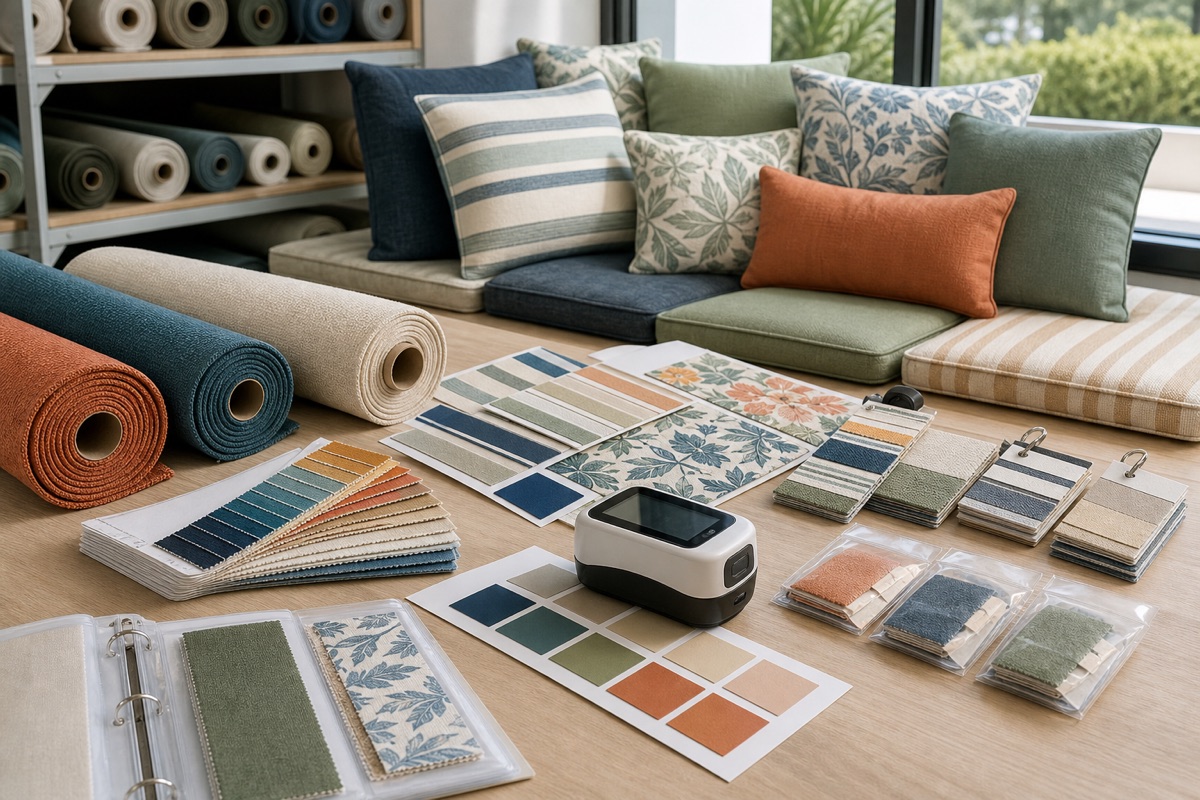
What changes color performance?
I pay close attention to the way color enters the product. A simple solid color, a yarn-dyed stripe, and a digital print do not carry the same risk. Dark colors, bright reds, deep blues, and complex prints can also behave differently under sun. If the product will sit near a pool, chlorine can make weak color routes fail faster. If the product will be used near the beach, salt air and wet-dry cycles add more pressure.
This is why I think buyers should be careful with broad phrases such as “UV resistant” or “fade resistant.” Those words can be useful, but they need proof and context. A real outdoor cushion manufacturer should explain the material route and the use limit. If the supplier only says “no problem,” I do not treat that as enough information.
| Color route | Good use case | Main risk | Buyer note |
|---|---|---|---|
| Stock outdoor fabric | Low MOQ launch and fast sampling | Limited color and finish options | Good for early market testing when claims stay realistic |
| Custom dyed fabric | Brand color programs | Higher MOQ and color control pressure | Needs retained samples and shade approval |
| Digital print | Patterns and seasonal stories | Print fastness can vary by route | Ask for print method and exposure limit |
| Yarn-dyed stripe | Classic patio or resort look | Higher planning cost | Strong for coordinated collections when quantity supports it |
My sourcing view
LISO often helps buyers avoid a mistake before it becomes expensive. Some buyers ask for low MOQ, low price, many colors, custom print, and strong outdoor performance at the same time. This combination is not always realistic. Low MOQ can lower inventory risk, but it may also force stock fabric or simpler production routes. That is not wrong if the claim is honest. It becomes risky when the buyer expects premium outdoor performance from a compromise route.
Why do outdoor cushions get moldy even when the fabric says water-resistant?
Water-resistant fabric does not mean the whole cushion dries safely.
Outdoor cushions get moldy when moisture enters through seams, zippers, stitching holes, or wet storage and cannot dry fast enough. The fabric may resist light rain, but the foam, backing, airflow, cover design, and storage habit decide whether the cushion stays usable.
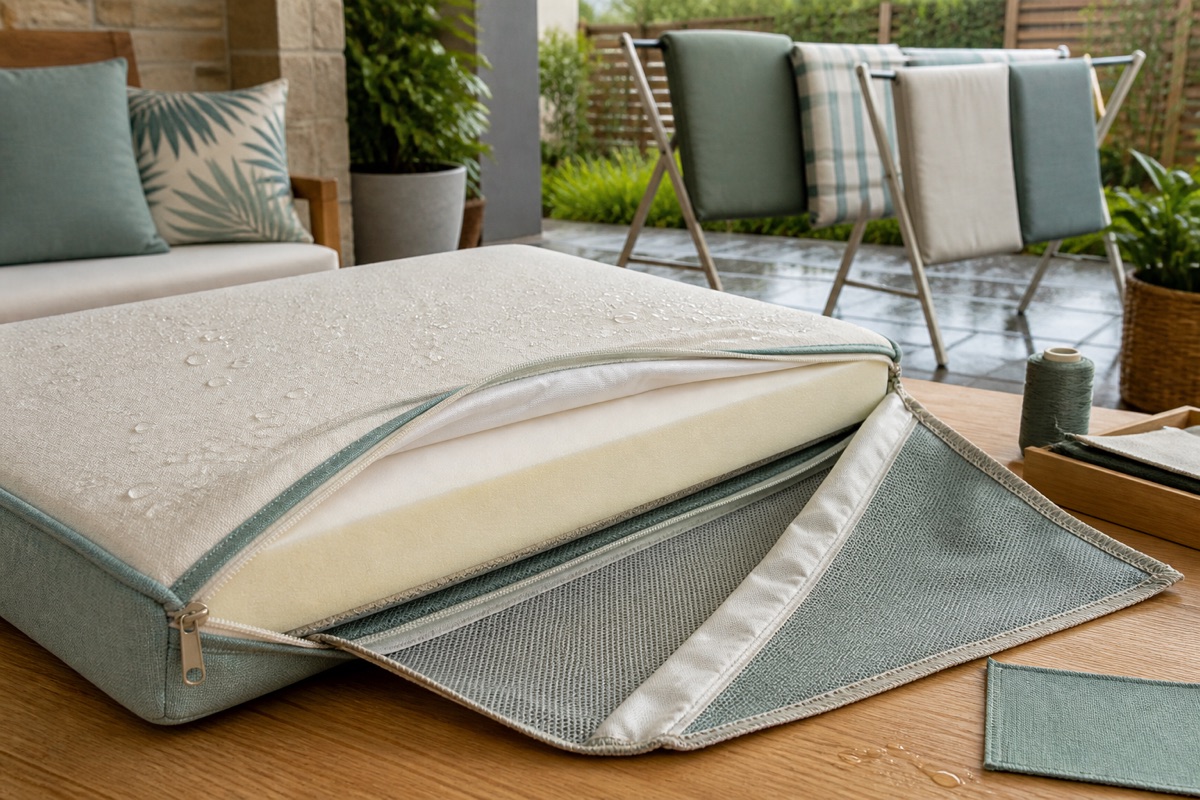
What should buyers compare?
The word “waterproof” can create false safety. If water enters from a seam and cannot escape, the cushion may hold moisture inside. That can create smell, mold, and a bad consumer experience. A fully sealed idea can also create trouble if the construction does not support it. For many cushions, the better route is not only a stronger surface claim. It may be quick-dry foam, breathable backing, removable covers, better seam planning, and clear care instructions.
Consumer-side outdoor content keeps talking about drying, storage, mold, and mildew because real users do not treat cushions gently every day. They leave cushions outside. They forget them during rain. They store them while damp. They use them near pools. A B2B buyer cannot control every consumer habit, but the buyer can choose a product structure that reduces predictable complaints.
| Construction choice | Best for | Main risk | Buyer note |
|---|---|---|---|
| Water-resistant cover | Covered patio and light rain | Overclaimed as waterproof | Define splash, rain, and care limits clearly |
| Quick-dry foam | Poolside or humid areas | Higher cost | Useful when moisture is expected |
| Removable cover | Retail cushions and replacement programs | Zipper quality matters | Helps cleaning and after-sales support |
| Breathable bottom | Wet-use or humid markets | Not suitable for every look | Helps moisture escape |
| Fully sealed concept | Special cases only | Water can enter and stay trapped | Must match seams and construction |
My sourcing view
I prefer to ask where water comes from. Rain is not the same as pool water. Pool water is not the same as sea water. A buyer who sells patio cushions in a dry inland market may not need the same construction as a resort buyer near a pool. If the buyer only copies a competitor’s keyword, the sample brief becomes weak. If the buyer describes the real use scene, the supplier can give a safer fabric and construction suggestion.
How does foam density and recovery affect outdoor cushion complaints?
Consumers do not only judge color. They also judge comfort after use.
Foam recovery affects whether an outdoor cushion keeps its shape after sitting, compression, shipping, and seasonal use. Buyers should confirm thickness, density, resilience, compression behavior, drying needs, and packing method before approving the sample, not after the cushion arrives flat in bulk.
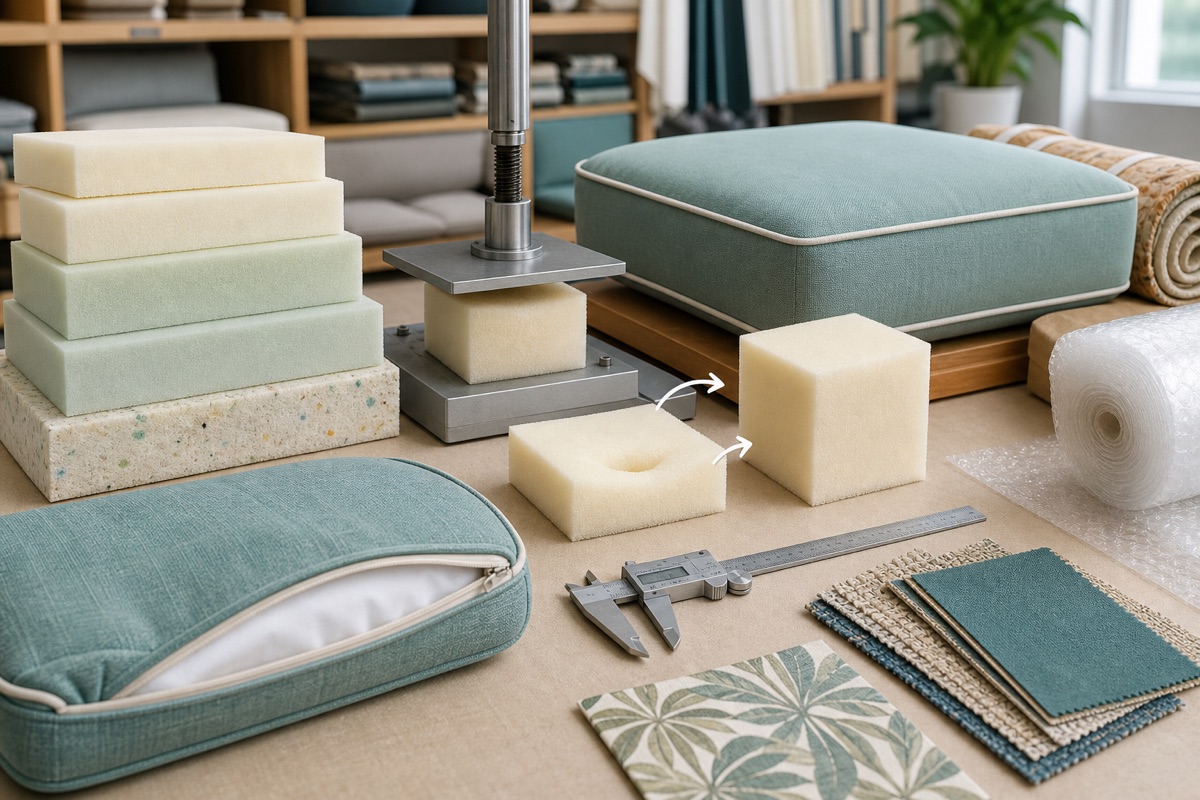
What changes the final choice?
Foam is a quiet quality point. It does not always sell the product in a listing photo, but it affects reviews and reorder confidence. A thin seat cushion can look acceptable on a white background, then feel cheap after one week of use. A thicker cushion can feel better, but it may raise cost, shipping volume, drying time, and packaging size. A buyer should not choose foam only by hand feel in one sample.
I also look at how the cushion will be shipped. If the cushion is compressed too much, or stored too long in poor conditions, shape recovery may suffer. If a cushion is meant for a retail program, packaging must protect shape and still make shelf or warehouse handling practical. If the buyer wants lower freight cost, we need to discuss what compression is safe.
| Foam decision | What it affects | Buyer question |
|---|---|---|
| Thickness | Comfort and visual value | What thickness fits the target price and furniture type? |
| Density | Support and durability | Will the cushion feel stable after repeated use? |
| Recovery | Shape after pressure | How does the foam behave after compression? |
| Drying route | Mold and smell risk | Does the filling hold water too long? |
| Packing | Freight and shape | Can the cushion recover after transport? |
My sourcing view
I do not promise that every filling issue can disappear. Some outdoor products naturally lose some rebound over long-term use. What matters is whether the buyer knows this before selling. For some products, LISO can help buyers plan extra filling or after-sales support. For outdoor cushions, I want the buyer to define the target use, target price, and complaint tolerance first. Then we can choose the right structure instead of only chasing the lowest quote.
What should importers confirm before approving outdoor cushion samples?
Many buyers approve a sample because the look is right.
Before approving outdoor cushion samples, importers should confirm use scene, fabric route, color-fastness target, water exposure, foam specification, seam construction, cover design, MOQ logic, packaging method, care wording, and bulk comparison process. This turns a sample into a production standard.
The sample approval checklist I would use
I like a sample brief that leaves less room for guesswork. The buyer does not need to write a technical book, but the buyer should write enough details to stop the supplier from choosing the wrong route. A useful brief tells the supplier what the product must survive and what the product does not need to claim.
Use this checklist before approving a sample:
- Product type: seat cushion, back cushion, bench pad, lounge cushion, chair pad, or pillow.
- Use scene: covered patio, open garden, poolside, resort, balcony, or retail replacement.
- Fabric route: stock outdoor fabric, custom fabric, solution-dyed fabric, printed fabric, or coated fabric.
- Color plan: solid, stripe, seasonal print, dark shade, or coordinated collection.
- Water expectation: light splash, rain, poolside contact, humid storage, or repeated wet-dry use.
- Foam route: density, thickness, recovery, comfort level, and drying expectation.
- Construction: seams, zipper, piping, removable cover, breathable backing, and reinforcement.
- MOQ logic: stock fabric launch, custom fabric order, or coordinated series plan.
- Packaging: compressed, flat packed, retail sleeve, carton plan, or hangtag.
- Bulk control: approved sample, retained sample, shade check, and pre-shipment inspection.
Buyers who plan a wider outdoor program should also compare outdoor chair pads and the Outdoor Patio product hub. A coordinated program can be stronger than one isolated SKU when the buyer wants a clear retail story.
If the buyer is still comparing supplier quotes, I also suggest reading our guide to outdoor cushion buying mistakes for importers. That article explains why price, MOQ, and sample approval should not be judged separately.
Should a new buyer start with one outdoor cushion SKU or a small coordinated series?
One SKU feels safer, but it can give slow market feedback.
A new buyer can start with one SKU if the budget is very tight, but a small coordinated series often gives better retail display and faster learning. The safer route is a controlled series with shared fabric direction, limited colors, realistic MOQ, and clear quality standards.
How I judge this decision
I do not think every buyer should launch a large collection. That creates inventory risk. I also do not think every buyer should launch only one item. That can make the brand look thin, and it may not show the customer how the outdoor space should feel. A small coordinated series can sit between these two choices.
For example, a buyer can start with seat cushions, back cushions, bench pads, and a few outdoor pillows in the same color family. This gives the retailer a better display. It also lets the buyer test color, fabric, comfort, and packaging across several related products. If the market responds, the buyer can reorder and expand. If the market is slow, the buyer has not locked too much money into one risky custom development.
| Launch route | Best for | Main risk | My advice |
|---|---|---|---|
| One SKU | Very small test budget | Weak display and limited learning | Use when budget is the main limit |
| Too many SKUs | Mature buyers with clear sales data | Inventory and color-control risk | Use only when the market is proven |
| Small coordinated series | New brands and importers testing a niche | Needs better planning | Best balance for many outdoor buyers |
My sourcing view
LISO is strongest when the buyer needs product thinking, not only sewing. We can help buyers choose fabric, size, logo method, packaging, and product-line direction. We can also tell buyers when an idea may create quality risk or cost waste. I think this is the difference between a supplier that only takes an order and a supplier that protects the buyer’s business.
FAQ
Are outdoor cushions always waterproof?
No. Many outdoor cushions are water-resistant, not fully waterproof. Buyers should confirm whether the claim means splash resistance, rain resistance, waterproof backing, quick-dry structure, or another defined condition.
Why do outdoor cushions fade so quickly?
Outdoor cushions fade quickly when fabric, dye, print, coating, and real use exposure do not match. Sunlight, chlorine, salt air, wet storage, and dark or bright colors can all raise fading risk.
What foam is best for outdoor cushions?
The best foam depends on use scene, comfort target, drying need, and price level. Buyers should compare density, thickness, resilience, recovery after compression, and whether moisture can escape.
Does low MOQ make outdoor cushion quality worse?
Low MOQ does not automatically mean poor quality. The risk is that low MOQ can limit fabric choice, color options, custom finish, and production route. Buyers should match the claim to the available material route.
What should I ask an outdoor cushion manufacturer before sampling?
Ask about use scene, fabric type, color-fastness target, water exposure, foam specification, seam construction, MOQ logic, packaging, care wording, and how the factory controls bulk goods against the approved sample.
Conclusion
Outdoor cushion quality fails when the sourcing standard is vague. Buyers who define use, fabric, foam, moisture, MOQ, and bulk control early protect both margin and brand trust.
My Role
I help buyers turn outdoor textile ideas into practical OEM and ODM decisions. My work is not only making cushions. I help buyers avoid the wrong material route, weak sample approval, and unclear product claims before bulk production starts.