Importers lose margin when outdoor cushions look good in a showroom but fail after one season outside.
Commercial sourcing path: If this article is part of an Outdoor Patio sourcing brief, compare LISO's custom outdoor cushion manufacturer page before sending dimensions, fabric preference, replacement route and sample requirements.
The biggest outdoor cushion buying mistakes are choosing by price first, ignoring climate, accepting vague waterproof claims, skipping color fastness checks, and treating a cushion as a single item instead of part of a full outdoor textile program.
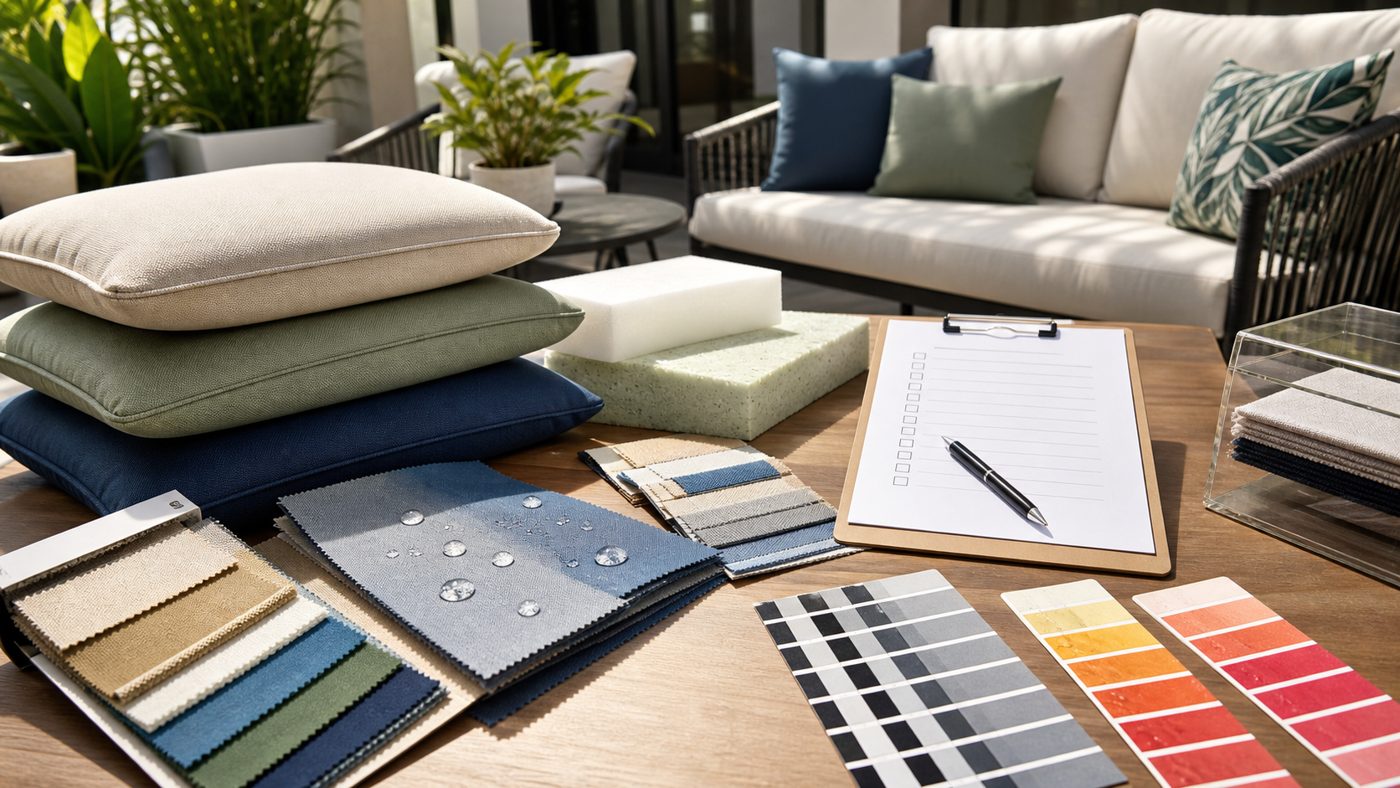
I see many buyers start with a simple question: how can I get a cheaper outdoor cushion? I understand that question. Cost matters. But outdoor cushions are not indoor cushions with a different fabric. They sit under sun, humidity, chlorine water, rain, body oil, sunscreen, and repeated compression. A small mistake in fabric, foam, zipper, sewing, packing, or MOQ planning can become a consumer complaint later.
At LISO, I prefer to treat outdoor cushions as a product system. The buyer should check the use scene, target customer, fabric route, filling route, quality standard, packing method, and reorder plan before sampling. This is the difference between buying a cushion and building an outdoor patio product line. If you are comparing suppliers, you can also review our Outdoor Patio product program as a reference point.
Why do outdoor cushions fail after the first season?
Cheap outdoor cushions often fail because the buyer only checks appearance, size, and price.
Outdoor cushions usually fail because the fabric fades, the foam traps water, the sewing weakens, the zipper rusts, or the bulk goods do not match the approved sample. The problem starts before production, when the specification is too simple.
The mistake is treating outdoor use like indoor use
Outdoor cushions live in a harsher environment. A cushion on a patio chair may face sun in the morning, pool water in the afternoon, and wet storage at night. If the fabric is only described as “waterproof,” the buyer still does not know if it resists fading, mildew, chlorine water, or abrasion. I have seen many buyers ask about waterproofing but forget color fastness. This is risky because fading is visible to the final customer very quickly.
| Risk area | What buyers often ask | What buyers should also confirm |
|---|---|---|
| Fabric | Is it waterproof? | Is it fade resistant and suitable for sun exposure? |
| Foam | Is it soft? | Does it drain, recover, and resist long-term collapse? |
| Sewing | Is the stitch clean? | Will the seam hold under wet use and repeated sitting? |
| Zipper | Is there a zipper? | Is it protected from rust, sand, and outdoor dirt? |
| Bulk goods | Does the sample look good? | Is there a retained sample for bulk comparison? |
The better route is to define the real use case first. A balcony cushion, poolside cushion, garden bench pad, and resort lounge cushion should not use the same standard. Outdoor textile buyers need a material decision tree, not only a price table.
What should buyers check before asking for a low MOQ?
Low MOQ is useful, but low MOQ does not mean low cost.
Buyers should confirm available fabric, color options, printing method, foam MOQ, packaging, and reorder plan before asking for low MOQ. A very low MOQ can increase cost if the material must be custom made.
The hidden cost is material planning
Many small brands ask for low MOQ because they want to reduce inventory risk. I agree with that direction. A new brand should not lock too much cash in slow-moving stock. But low MOQ has limits. If a buyer wants a custom dyed fabric, custom print, special foam, special trim, and private label packaging at a very small quantity, the unit price will rise. Sometimes the cost is not because the factory is expensive. It is because the material chain has its own MOQ.
The practical answer is not “MOQ should always be lower.” The practical answer is “MOQ should match the launch stage.” For a first test, I usually suggest starting with existing fabric directions, proven cushion structures, and a coordinated small collection. This reduces risk while still giving the buyer a brand look.
| Launch stage | Better choice | Why it works |
|---|---|---|
| First test | Existing outdoor fabric plus custom label | Lower risk and faster sampling |
| Early retail | 2-3 colors across several SKUs | More visual impact without too many materials |
| Growth order | Custom color or custom print | Better brand identity after demand is proven |
| Mature program | Full coordinated collection | Stronger shelf display and repeat ordering |
This is why LISO supports small-batch customization when the plan is realistic. We can help buyers decide what should be customized first and what should stay simple until the product proves demand.
How can importers reduce fading, returns, and bulk quality risk?
Importers reduce returns by making quality measurable before production starts.
The safest way to reduce fading and bulk risk is to set color fastness expectations, keep approved samples, inspect bulk goods against retained samples, and choose fabric and foam based on climate and use scene.
The sample is not the full risk
Some buyers believe a good sample means the bulk order is safe. I do not agree. A sample only proves that one piece can be made well. Bulk production tests whether the supplier can repeat the same standard many times. This is where color, fabric batch, foam thickness, filling weight, sewing tension, and packing pressure matter.
For outdoor cushions, color fastness is one of the easiest risks to underestimate. Sunlight is already a problem. Pool water adds another layer because chlorine can attack color more aggressively than normal rainwater. Beach and resort use may add salt, sand, and stronger UV. If the buyer sells patio products to customers with pools, the standard should be closer to outdoor furniture fabric thinking, not casual indoor textile thinking.
| Bulk control point | Practical check |
|---|---|
| Color | Compare bulk fabric with approved sample and previous bulk sample |
| Foam | Check density, thickness, recovery, and water behavior |
| Sewing | Inspect stress points, ties, piping, corners, and zipper area |
| Packing | Test compression and recovery after carton storage |
| Labeling | Confirm care labels and private label placement before packing |
The goal is not to make the most expensive cushion. The goal is to make a cushion that fits the buyer’s channel, retail promise, and complaint tolerance.
Should new buyers start with single items or a coordinated outdoor collection?
New buyers should usually start with a small coordinated collection instead of one isolated item.
A coordinated outdoor collection lets buyers test several related products with one visual story. It can raise average order value, improve retail display, and reduce the time needed to learn what customers really want.
A collection gives better market feedback
Single items are easier to manage, but they also give weaker market information. If a buyer only tests one cushion, they learn whether that cushion sells. If they test a small coordinated collection, they learn which size, color, shape, and use scene performs better. This is much more useful for future planning.
For outdoor patio, a starter collection can include chair pads, seat cushions, bench pads, pillow covers, tablecloths, and storage bags. The colors do not need to be complicated. A strong collection can use one pattern, one color family, or one fabric direction across several SKUs. This is also better for brand buyers because consumers often care about matching colors, shapes, and style. A mismatched collection can make the brand look weak even if each item is acceptable alone.
| Collection route | Best for | Risk |
|---|---|---|
| Same product, many colors | Retail color testing | Too many fabric SKUs |
| Same color, many products | Brand story and display | Needs tighter color control |
| Same pattern, several categories | Seasonal launch | Pattern matching and fabric waste |
| Core neutral plus accent color | Lower-risk launch | Less dramatic but easier to reorder |
My preference for new buyers is a small coordinated series with controlled MOQ. It gives a real brand feeling while keeping inventory risk under control.
Which sourcing pages should buyers compare before sampling?
If this checklist is becoming a real sample brief, I suggest comparing the Outdoor Patio product program with the custom outdoor cushions manufacturer page. The first page helps buyers see the wider patio range. The second page is better when the project needs fabric, foam, MOQ, color fastness, and private label packaging decisions for cushions.
Conclusion
Outdoor cushion buying works best when importers buy a system, not just a cushion.
My Role
I help buyers turn outdoor textile ideas into practical OEM/ODM programs. I care about price, but I care more about the hidden details that decide whether the product sells again after the first season. If the same patio program includes covers, use the outdoor furniture cover manufacturer page to align waterproof fabric, cover sizing, Oxford routes, MOQ and QC before quoting cushion and cover sets together.
Importer Rejection Matrix: Sample Checks That Prevent First-Season Returns
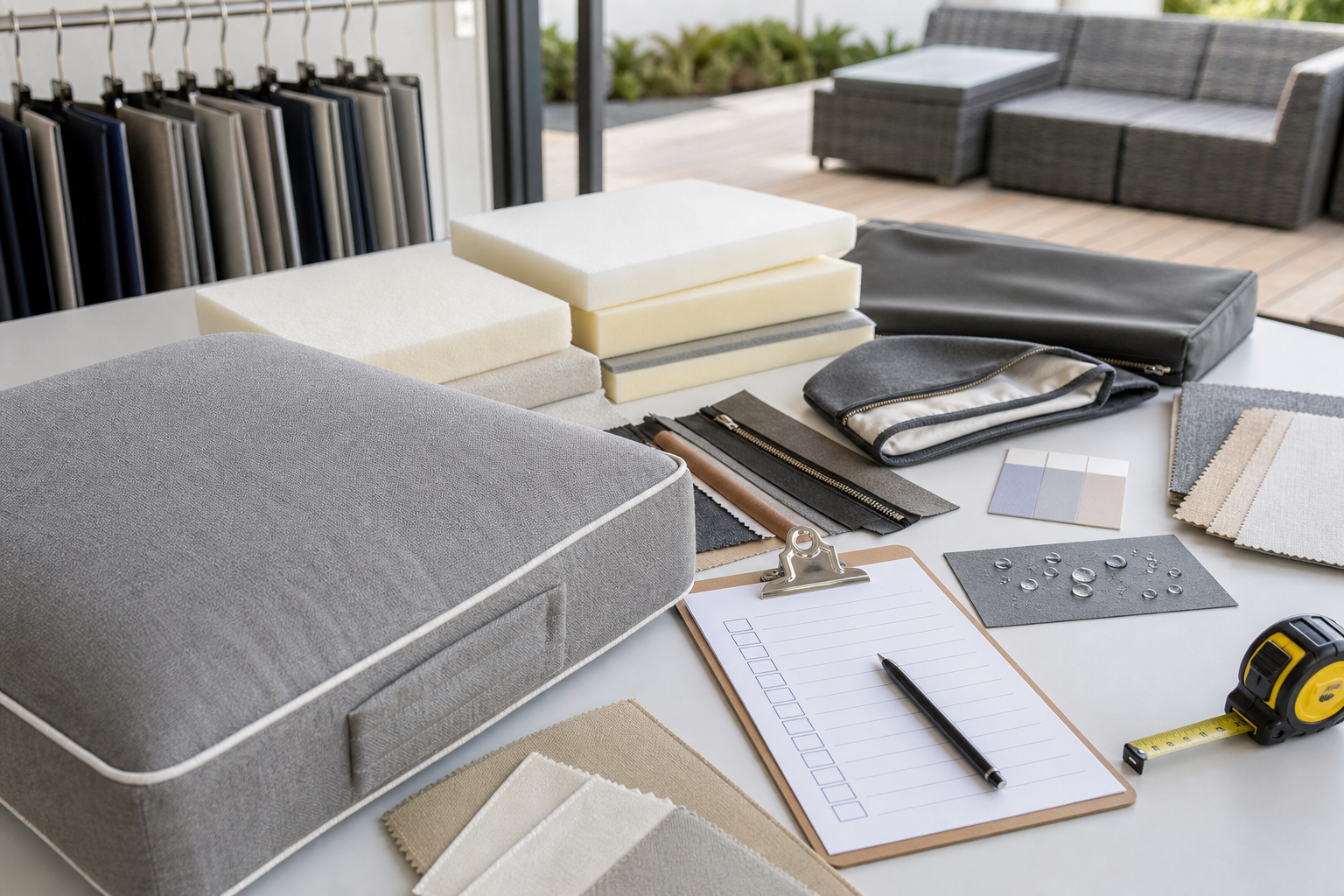
The most expensive outdoor cushion mistake is approving a good-looking sample without testing the failure points that create first-season complaints. A private label buyer should review fabric face, backing, foam recovery, zipper access, seam construction, packing method and replacement planning before approving bulk production.
| Sample check | What the importer should inspect | Decision rule |
|---|---|---|
| Fabric face and backing | Hand feel, water beading, coating stability and color route | Match the fabric route to patio, poolside or beach use |
| Foam and filling | Recovery after compression, drying behavior and comfort level | Do not approve softness without recovery testing |
| Sewing and zipper | Seam strength, zipper access, ties and removable-cover details | Stress points need reinforcement before bulk |
| Packing and replacement | Fold marks, carton quantity, labels and replacement planning | Packaging should protect shape and explain care |
Review custom outdoor cushions and replacement pad options
<!-- /liso-ob-source-content:outdoor-cushion-sample-rejection-matrix -->