Many buyers use “chair pad” and “seat cushion” as if they mean the same thing, but they do not.
Chair pads are usually thinner, lighter, and made for dining or casual seating. Seat cushions are usually thicker and built for longer comfort. OEM buyers should choose based on chair type, use scene, foam, fixing method, and retail channel.
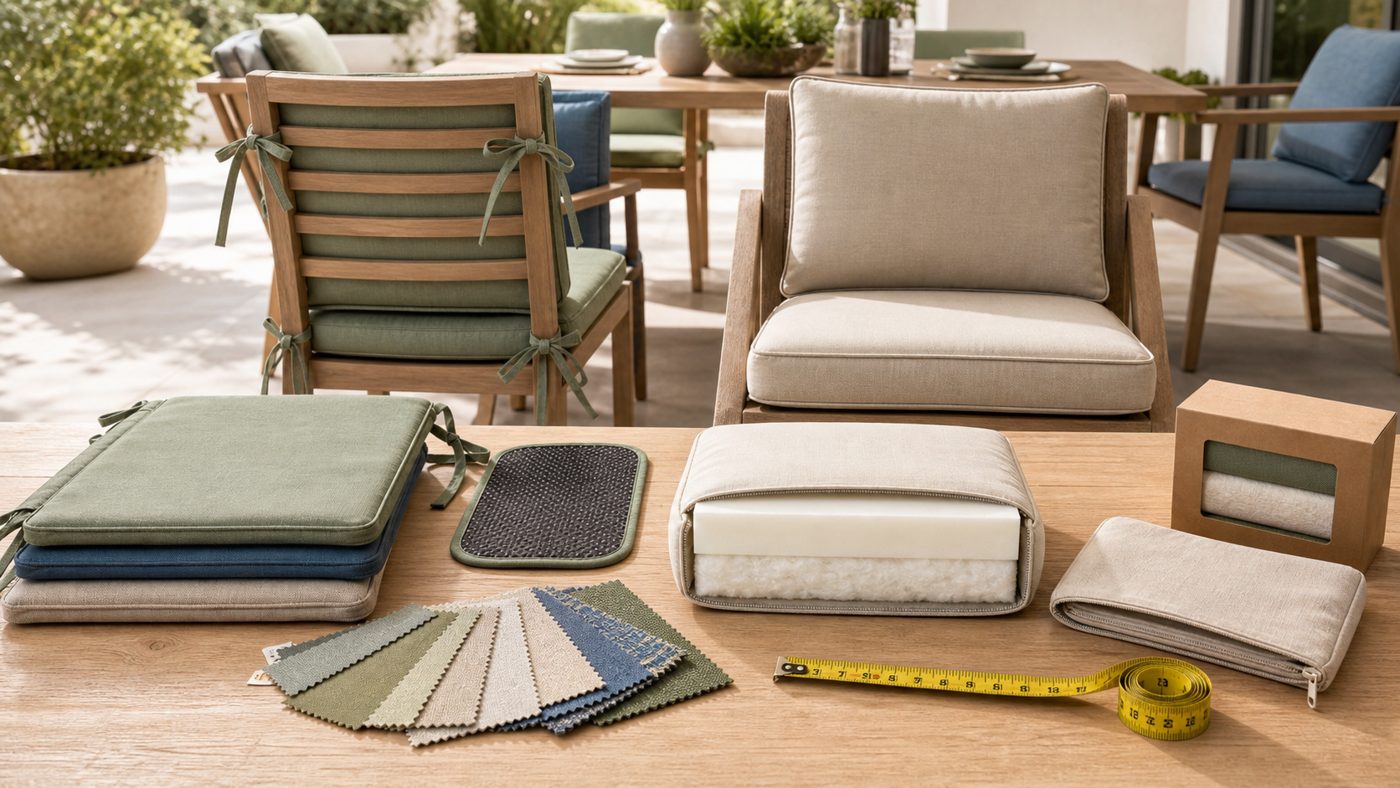
I often see buyers start with a picture and ask for a quotation. That can work for a simple item. It does not work well when the buyer is building a chair pad or outdoor seat cushion program. Small details change the cost and the user experience. A tie, a non-slip backing, a foam thickness, a piped edge, or a folded package can change the whole product.
This guide explains how I compare chair pads and seat cushions for OEM buyers. If you are planning this product line, you can also review our custom chair pads and outdoor seat cushion page for the commercial route.
What is the real difference between chair pads and seat cushions?
The difference is not only the name. It is the use case.
A chair pad is often a light comfort layer for dining chairs, bistro chairs, folding chairs, or seasonal seating. A seat cushion is often thicker and more structured, so it supports longer sitting and heavier outdoor furniture use.
The buyer should start with the chair
The first question should be: what chair is this product made for? A dining chair pad needs a slimmer profile, neat ties or anti-slip backing, and easy storage. A patio seat cushion may need thicker foam, piping, a zipper, UV-resistant fabric, and better water behavior. A bench cushion needs length stability and packaging control. A folding chair pad needs a lighter structure and a smarter attachment method.
| Item | Typical structure | Better use case | Common mistake |
|---|---|---|---|
| Chair pad | Thin foam or fiberfill, ties, simple shape | Dining chairs, bistro chairs, folding chairs | Making it too thick for the chair |
| Seat cushion | Thicker foam, piping, zipper, stronger cover | Patio chairs, lounge chairs, outdoor furniture | Ignoring water drainage and compression |
| Bench pad | Long rectangular pad, ties or anti-slip backing | Garden benches, entry benches, patio benches | Poor carton planning and folding marks |
| Floor cushion | Larger surface, softer filling | Casual seating, resort or picnic use | Weak fabric for outdoor abrasion |
When buyers define the chair first, the quotation becomes clearer. The factory can recommend the right foam, fabric, sewing method, and packing plan.
Which materials matter most for outdoor chair pads?
Outdoor chair pads need fabric and filling that match sun, moisture, storage, and cleaning.
The most important materials are the cover fabric, foam or fiber filling, backing fabric, ties, zipper, and care label. For outdoor use, buyers should check fading, water behavior, and recovery after compression.
The fabric decision affects every later step
Fabric is not just a surface. It decides color, hand feel, printing route, weather resistance, sewing behavior, and cost. Polyester, Oxford, solution-dyed fabric, recycled polyester, and coated fabrics can all work, but they do not solve the same problem. A chair pad for a covered balcony does not need the same standard as a cushion near a pool. If a consumer uses the product outside and the color fades quickly, they will not blame the weather. They will blame the brand.
Filling is the second big decision. Foam gives shape and support. Fiberfill feels softer but may flatten faster. Some products need a balance of comfort and fast recovery. If the buyer asks only for “soft,” the result may not be stable. The factory needs target thickness, density, hand feel, and packing method.
| Material decision | Buyer question | Supplier check |
|---|---|---|
| Cover fabric | Will it fade outside? | Color fastness and UV direction |
| Foam | Will it stay comfortable? | Density, thickness, recovery |
| Backing | Will it slip? | Anti-slip dots, coated backing, or ties |
| Ties | Will they break? | Width, bartack, placement |
| Packaging | Will it recover after shipping? | Compression test and carton size |
I prefer to make these decisions before sampling. It saves time and reduces wrong samples.
How should buyers plan size, ties, non-slip backing, and packaging?
Buyers should define the product around use, not only around a picture.
The key specifications are finished size, thickness, corner shape, tie position, non-slip backing, zipper need, care label, folded size, carton quantity, and retail display method. These details decide comfort and cost.
Small details become big bulk problems
Size is the first place where errors appear. A chair pad that is 1 cm too large may look messy. A chair pad that is 1 cm too small may feel cheap. For a round chair, the curve matters. For a square chair, the corner radius matters. For a tied chair pad, the tie position must match the chair frame. If buyers skip these points, the product can look acceptable on a table but fail on the chair.
Non-slip backing also needs a real decision. Some buyers want ties because they look classic. Some want anti-slip backing because it is faster for consumers. Some want both. Each choice affects cost, sewing, packaging, and visual style.
| Detail | Why it matters | Best practice |
|---|---|---|
| Finished size | Controls fit and comfort | Measure actual chair, not only product photo |
| Thickness | Controls support and carton size | Match comfort level to retail price |
| Tie placement | Controls stability | Test on real chair frame |
| Backing | Controls slipping | Choose backing by surface material |
| Packaging | Controls shelf value and shipping cost | Decide folded size before final quotation |
OEM buyers should send target chair dimensions, use scenario, retail price direction, and packaging preference before asking for a final price.
When should a brand develop a full chair pad collection?
A collection is stronger when the buyer wants brand feeling and repeat orders.
A full chair pad collection is useful when a brand needs matching colors, several sizes, indoor-outdoor options, and higher retail display value. It helps buyers test more demand with one coordinated visual story.
A coordinated series makes the buyer look more professional
Many brands start with one chair pad because it feels safer. That is understandable. But a single item can limit the shelf story. A coordinated chair pad collection can include dining chair pads, bench pads, outdoor seat cushions, lumbar pillows, table textiles, and storage bags. The buyer can keep the same color family or pattern direction across the group. This makes the collection easier to display and easier for customers to understand.
The hardest part is color consistency. If a buyer sources different items from different factories, the same color name may not look the same. Fabric batch, dyeing route, printing method, water quality, and finishing can all change the final color. This is why a collection should be planned as one program when possible.
| Collection method | Best use | Control point |
|---|---|---|
| Same fabric, several sizes | Clean retail story | Fabric batch control |
| Same color, several products | Strong brand identity | Dye lot and sample retention |
| Pattern plus solid color | Seasonal launch | Pattern scale and matching |
| Indoor-outdoor set | Wider market test | Fabric hand feel and care label |
For a new brand, I usually suggest a small coordinated collection rather than too many unrelated products. It gives better data and a stronger brand image.
Which sourcing pages help buyers move from comparison to samples?
If the product direction is already clear, buyers can compare the custom chair pads and outdoor seat cushion page with the Outdoor Patio product program. This helps separate a single chair pad project from a broader patio textile collection with matching colors, packaging, and replenishment logic.
Which custom chair pads manufacturer page should buyers use next?
If the buyer is ready to move from comparison to samples, I suggest using our custom chair pads manufacturer page. It keeps chair pad manufacturer decisions clear around outdoor chair pads, foam, ties, non-slip details, low MOQ limits, packaging and private label programs.
Cushion program next step
When buyers need more than one seating SKU, use one specification route for chair pads, seat cushions and replacement cushions. The supplier should control fabric, foam, ties, zipper route, removable covers, packaging and color direction together. This keeps chair pads and custom patio cushions from looking like unrelated products.
Plan custom outdoor cushions and replacement pads
Conclusion
Chair pads and seat cushions should be chosen by use case, structure, and retail plan.
My Role
I help buyers translate a simple seating idea into a practical OEM product. My work is to reduce wrong samples, unclear specifications, and bulk surprises before they become expensive.