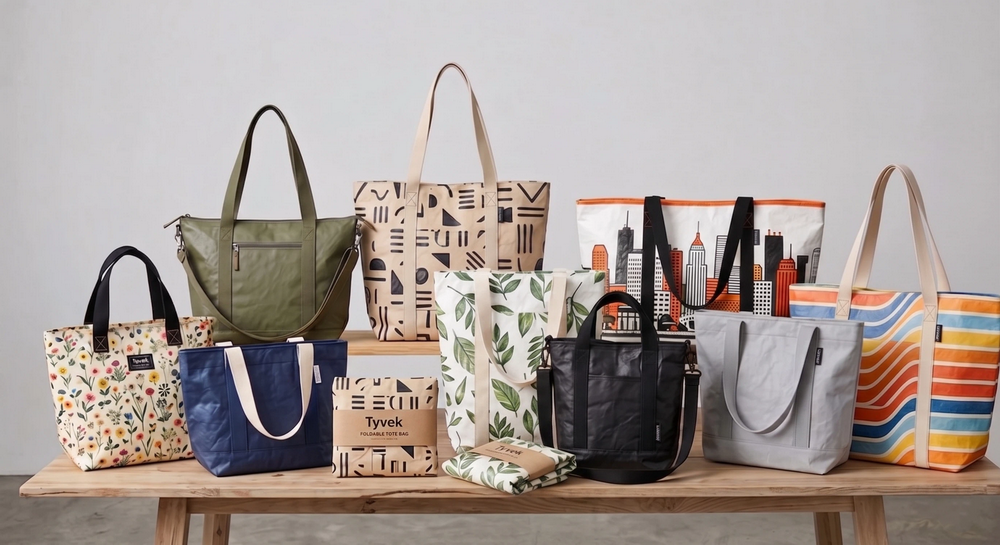
In today’s competitive B2B market, a tote bag is no longer just packaging or a simple carryall. It has become part of the product experience, the brand story, and the customer’s first impression. For buyers who want something more distinctive than cotton canvas or non-woven bags, custom Tyvek-style tote bags offer a compelling alternative.
With their signature paper-like texture, lightweight feel, and strong everyday durability, Tyvek-style tote bags combine modern aesthetics with practical performance. For retail brands, promotional product buyers, event organizers, and importers, they offer a smart balance of visual differentiation, logistics efficiency, and customization flexibility.
Ready to develop the product?
If Tyvek is being evaluated for a retail or merchandise program, define the use, load, sewn construction, branding and packing before sampling.
This guide explains what Tyvek-style tote bags are, why B2B buyers are choosing them, how they compare with other tote materials, and what to confirm before placing a custom order.
Quick Answer: Why Are B2B Buyers Choosing Tyvek-Style Tote Bags?
B2B buyers choose custom Tyvek-style tote bags because they offer a premium paper-like look, lighter shipping weight, strong tear resistance, and excellent branding potential. Compared with traditional canvas or non-woven bags, they help brands create a more modern presentation while improving storage and logistics efficiency.
They are especially suitable for:
- premium retail packaging
- branded event giveaways
- foldable daily-use tote bags
- lifestyle and fashion-oriented promotions
- custom OEM and ODM bag programs
What Is a Tyvek-Style Tote Bag?
A Tyvek-style tote bag is typically made from flash-spun high-density polyethylene (HDPE) fibers. Although it looks and feels similar to textured paper, it is actually a durable synthetic material known for being lightweight, tear-resistant, and water-resistant.
In the B2B bag market, buyers usually see two main structure types:
Hard Structure Tyvek-Style Material
This structure is stiffer, smoother, and more paper-like. It works well for buyers who want a clean, minimalist, and more structured look. It is often preferred for premium retail packaging and fashion-forward branded projects.
Soft Structure Tyvek-Style Material
This version is softer, more flexible, and more fabric-like in hand feel. It is ideal for foldable tote bags, travel-friendly designs, and daily-use promotional bags that need to feel more relaxed and easy to carry.
For OEM and ODM projects, choosing between hard and soft structure affects not only the bag’s appearance, but also its foldability, drape, storage, and overall perceived value.
Why Tyvek-Style Tote Bags Stand Out in the B2B Market
The appeal of Tyvek-style tote bags goes beyond function. Their unique appearance gives brands a distinctive visual language that many standard tote materials cannot match.
A Modern Paper-Like Aesthetic
Tyvek-style material has a recognizable “crinkle” texture that feels clean, modern, and design-led. Unlike canvas, which feels traditional and natural, or non-woven polypropylene, which often looks promotional and low-cost, Tyvek-style bags communicate a more premium and contemporary image.
For brands targeting younger consumers, design-conscious shoppers, or eco-aware audiences, this texture supports stronger storytelling and shelf appeal.
Lightweight for Better Shipping Efficiency
Weight matters in B2B sourcing, especially for importers, wholesalers, and cross-border e-commerce sellers. Tyvek-style bags are significantly lighter than canvas bags, which can help reduce shipping costs, simplify warehousing, and improve carton efficiency.
For high-volume programs, these savings become commercially meaningful.
Strong and Reusable for Everyday Use
Even though the material looks paper-like, it offers strong tensile strength and good everyday durability. It resists tearing better than real paper, handles repeated use well, and performs reliably in retail, travel, and event settings.
For buyers, that means better customer experience and longer-lasting brand exposure after distribution.
Excellent Surface for Custom Branding
Tyvek-style tote bags are also attractive because they support a range of printing methods. Buyers can use simple logo-based branding or develop more advanced full-panel artwork depending on the project.
This makes the material suitable for:
- private label tote bags
- branded retail packaging
- promotional bags for campaigns
- event merchandise
-
OEM or ODM custom bag collections
Key Material Benefits for B2B Buyers
When evaluating tote bag materials, most buyers are balancing appearance, cost, usability, and logistics. Tyvek-style tote bags perform well because they address all four.
Lightweight but Durable
Tyvek-style material is ultra-lightweight compared with many traditional tote options. This makes it easier to transport, store, and distribute in larger quantities without adding unnecessary shipping weight.
At the same time, its fiber structure provides strong tear resistance, helping the bag stay functional through repeated use.
Water-Resistant and Easy to Maintain
Unlike cotton bags, which absorb moisture easily, Tyvek-style material offers good water resistance for daily practical use. This makes it more suitable for retail, commuting, outdoor use, and event distribution where bags may be exposed to light moisture or handling.
For end users, it also feels cleaner and easier to wipe down than many fabric alternatives.
Visually Distinctive for Brand Positioning
One of the biggest reasons buyers choose Tyvek-style tote bags is that they do not look generic. The material immediately sets the product apart from low-cost giveaway bags and standard cotton totes.
For brands that want a more premium, minimal, industrial, or lifestyle-driven presentation, that visual differentiation can be more valuable than price alone.
Flexible for OEM and ODM Customization
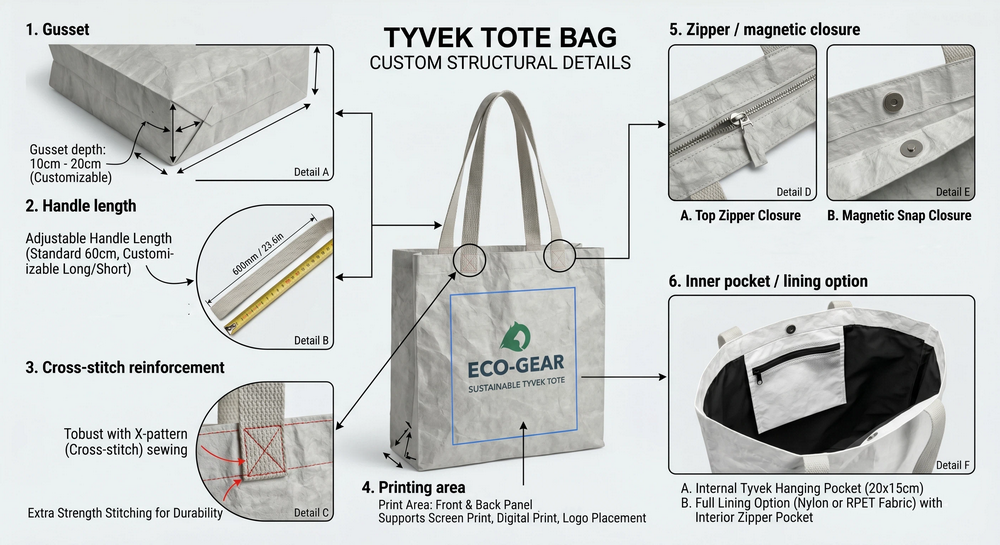
A good supplier can customize more than the print. Depending on the project, buyers may be able to adjust:
- bag dimensions
- bottom and side gussets
- handle length and width
- stitching reinforcement
- inner lining
- zipper, magnet, or Velcro closure
- inner pockets
- labels and packaging
This makes Tyvek-style bags suitable not only for simple promotional orders, but also for more developed OEM and ODM bag programs.
Tyvek-Style Tote Bags vs Other Popular Tote Materials
Different tote materials serve different commercial goals. The right choice depends on whether the buyer prioritizes cost, appearance, sustainability messaging, durability, or logistics efficiency.
| Feature | Tyvek-Style Bag | Cotton Canvas | Non-Woven PP | RPET |
|---|---|---|---|---|
| Aesthetic | Modern, paper-like, premium | Classic, natural | Basic, promotional | Functional, sporty |
| Weight | Ultra-lightweight | Heavy | Light | Medium |
| Water Resistance | Good | Low | Moderate | High |
| Tear Resistance | High | Moderate to high | Low to moderate | High |
| Storage Efficiency | Excellent | Low | Good | Good |
| Brand Positioning | Design-forward | Traditional | Budget-focused | Sustainability-focused |
Tyvek-Style vs Cotton Canvas Tote Bags
Canvas tote bags remain popular because they feel familiar and natural. However, they are heavier, bulkier to ship, and less water-resistant. For brands that want a more modern and lightweight solution, Tyvek-style tote bags offer a stronger logistics advantage and a more differentiated visual identity.
Tyvek-Style vs Non-Woven Polypropylene Bags
Non-woven bags are often selected for low-cost promotions and large-volume giveaways. They are practical, but they are also widely perceived as generic. If your project needs a more premium look for retail, gifting, or branded packaging, Tyvek-style bags offer a clear upgrade in perceived value.
Tyvek-Style vs RPET Tote Bags
RPET bags are useful for brands that want a strong recycled-plastic sustainability story. Tyvek-style bags, on the other hand, are often chosen for texture, presentation, and design impact. If the priority is a cleaner, more unique tactile experience, Tyvek-style material is often the better fit.
Which Material Is Best for Different B2B Use Cases?
In practical sourcing terms:
- choose Tyvek-style tote bags for premium retail, lifestyle branding, event gifting, and foldable lightweight bags
- choose canvas for a more traditional natural look
- choose non-woven PP for low-cost promotional distribution
- choose RPET when recycled material positioning is the main selling point
Which B2B Buyers Benefit Most from Tyvek-Style Tote Bags?
Tyvek-style tote bags are not limited to one market segment. They are especially useful for buyers who want both design appeal and practical performance.
Retail Brands
Retail brands often use tote bags as part of the packaging experience. Tyvek-style bags help create a more premium and reusable alternative to disposable paper bags, especially for fashion, lifestyle, beauty, and home categories.
Event Organizers
For exhibitions, conferences, press events, and branded activations, Tyvek-style tote bags offer a lightweight option that attendees are more likely to keep and reuse. Their distinctive appearance also improves brand visibility beyond the event itself.
Promotional Product Importers
Importers and distributors can use Tyvek-style bags to expand beyond commodity tote bag programs. They work well for customers who want something more design-led than basic non-woven or standard cotton options.
E-commerce and Lifestyle Sellers
Online brands benefit from products that photograph well and feel different from mass-market alternatives. Tyvek-style bags can support premium positioning, gift-with-purchase campaigns, limited-edition merchandise, or branded add-on products.
Private Label Buyers
Private label programs benefit from the material’s strong visual identity and custom flexibility. With the right OEM or ODM supplier, buyers can build a product that aligns with their brand aesthetic, packaging direction, and intended sales channel.
Best Business Uses for Custom Tyvek-Style Tote Bags
Because they combine portability, visual appeal, and customization potential, Tyvek-style tote bags fit a wide range of commercial uses.
Premium Retail Packaging
For brands that want reusable packaging with stronger perceived value, Tyvek-style bags work as a modern alternative to paper gift bags or low-cost fabric totes.
Promotional Campaigns and GWP Programs
For gift-with-purchase promotions, product launches, or seasonal campaigns, these bags feel more elevated than standard giveaway bags while staying practical for everyday reuse.
Trade Shows and Corporate Events
Their lightweight structure makes them comfortable to carry for longer periods, while the printable surface supports strong logo visibility and campaign artwork.
Travel and Outdoor Use
Soft-structure Tyvek-style bags are especially suitable for foldable daily-use totes, beach bags, and lightweight travel bags because they pack flat and resist light moisture.
Branded Merchandise
Brands looking to create useful, visually distinctive merchandise can use Tyvek-style tote bags as part of a broader accessories or lifestyle collection.
What to Check Before Ordering Custom Tyvek-Style Tote Bags
A successful B2B bag project depends on more than choosing a material. Before placing an order, buyers should confirm the commercial and technical details that affect usability, cost, and final presentation.
Size, Gusset, and Load Requirement
Bag size should match the intended use, not just a standard template. Buyers should confirm:
- width and height
- bottom gusset or side gusset
- target load capacity
- handle drop and usability
For retail or event use, a standard tote shape may be enough. For bulkier products or premium packaging, a structured gusseted bag may perform better.
Handle Construction and Reinforcement
For daily-use tote bags, handle stitching matters. Reinforced cross-stitching or stronger attachment methods can improve reliability, especially when the bag is designed for heavier items.
Printing Method and Artwork
Printing choice affects both look and cost. Buyers should discuss:
- logo placement
- artwork complexity
- number of print colors
- desired finish
- print durability under use
Simple branding may suit basic logo printing, while all-over designs or large-scale custom graphics may require more advanced print solutions.
MOQ, Lead Time, and Packaging
Before approving development, buyers should confirm:
- minimum order quantity
- sample lead time
- production lead time
- packing quantity per carton
- export carton dimensions
These details are essential for landed cost calculation and inventory planning, especially for importers and seasonal retail programs.
Sustainability Language and Claims
Tyvek-style material is made from HDPE and may be recyclable through appropriate collection systems. Buyers should use accurate language in product marketing and avoid vague or unsupported sustainability claims.
In most cases, a clear description such as recyclable HDPE material is more credible than broad and generic wording.
Quick B2B Buying Checklist for Custom Tyvek Tote Bags
Before requesting a quotation, prepare the following information:
- preferred structure: hard or soft
- target bag size and gusset
- handle length and reinforcement requirement
- printing method and artwork coverage
- zipper, pocket, lining, or closure requirements
- estimated order quantity
- packaging preference
- destination market and compliance needs
This helps suppliers quote more accurately and reduces unnecessary back-and-forth during development.
How to Choose the Right Tyvek-Style Tote Bag Supplier
Choosing the right supplier is not only about price. For B2B buyers, the best partner should be able to support development, customization, communication, and consistent quality.
Evaluate the Physical Sample
Always review a real sample whenever possible. Check:
- material hand feel
- structure and shape retention
- stitch quality
- print sharpness
- handle comfort
- closure performance
- overall finishing consistency
A good sample tells you far more than a specification sheet.
Assess Customization Capability
A capable OEM or ODM supplier should be able to support more than standard bag production. Look for flexibility in:
- custom sizing
- closure options
- lining materials
- branding labels
- pocket construction
- packaging solutions
This is especially important if the bag is part of a retail or private label program rather than a simple promotional order.
Confirm Communication and Compliance Support
For shipments to the EU, US, or other regulated markets, buyers may need supporting documentation related to material safety or compliance. A professional supplier should be able to explain available documents and communicate clearly about material structure, testing, and production details.
Look for Practical Development Support
The best suppliers do more than follow instructions. They help buyers refine the project by recommending the right structure, printing method, packaging format, or feature set based on the intended market and sales channel.
That kind of support is particularly valuable in OEM and ODM projects where the final product needs to align with both aesthetics and commercial realities.
FAQ: Tyvek-Style Tote Bags for B2B Buyers
What is a Tyvek-style tote bag made of?
A Tyvek-style tote bag is typically made from flash-spun HDPE fibers. It looks like paper, but it is a durable synthetic material designed for lightweight strength and reusability.
Are Tyvek-style tote bags waterproof?
They are generally water-resistant rather than fully waterproof. They perform well in everyday use and light moisture exposure, but actual water performance depends on bag construction, seams, and closures.
Are Tyvek-style tote bags recyclable?
Tyvek-style material is typically based on HDPE and may be recyclable through suitable collection systems. Buyers should describe recycling claims carefully and according to local disposal infrastructure.
What is the difference between hard and soft structure Tyvek-style material?
Hard structure is stiffer and more paper-like, making it suitable for structured retail looks. Soft structure is more flexible and fabric-like, making it better for foldable and daily-use tote bags.
Are Tyvek-style tote bags better than canvas tote bags?
That depends on the project. Tyvek-style bags are better when the buyer wants lower shipping weight, water resistance, and a more modern paper-like look. Canvas may still be preferred for a traditional natural aesthetic.
Final Thoughts
For B2B buyers, a custom Tyvek-style tote bag is more than a packaging or promotional item. It is a practical sourcing solution for brands that want stronger visual differentiation, lighter logistics, and better everyday reusability.
Compared with canvas, non-woven polypropylene, and RPET, Tyvek-style tote bags occupy a valuable middle ground: they feel more premium than basic promotional bags, more distinctive than standard fabric totes, and more efficient to store and ship than heavier alternatives.
For retail brands, event organizers, importers, and private label buyers, they offer a strong combination of design flexibility and commercial practicality. When the right structure, printing method, and supplier are chosen, Tyvek-style tote bags can become a long-lasting and highly visible extension of the brand itself.
Request a Quote for Custom Tyvek-Style Tote Bags
Looking for a reliable supplier for custom Tyvek-style tote bags? We support OEM and ODM projects for retail packaging, promotional programs, private label collections, and branded event bags.
To get a faster and more accurate quotation, share your preferred bag size, hard or soft structure, printing requirements, quantity, and target market. Our team can help you evaluate the right construction, branding method, and packaging solution based on your project goals.
If you are still comparing options, we can also support sample development and product recommendations for different retail, promotional, and packaging applications.