A private label outdoor collection should begin with one customer scene and one visual system, not a long list of unrelated products. The buyer defines the target market, hero product, supporting SKUs, artwork direction, color references, materials, packaging and approval route before sampling.
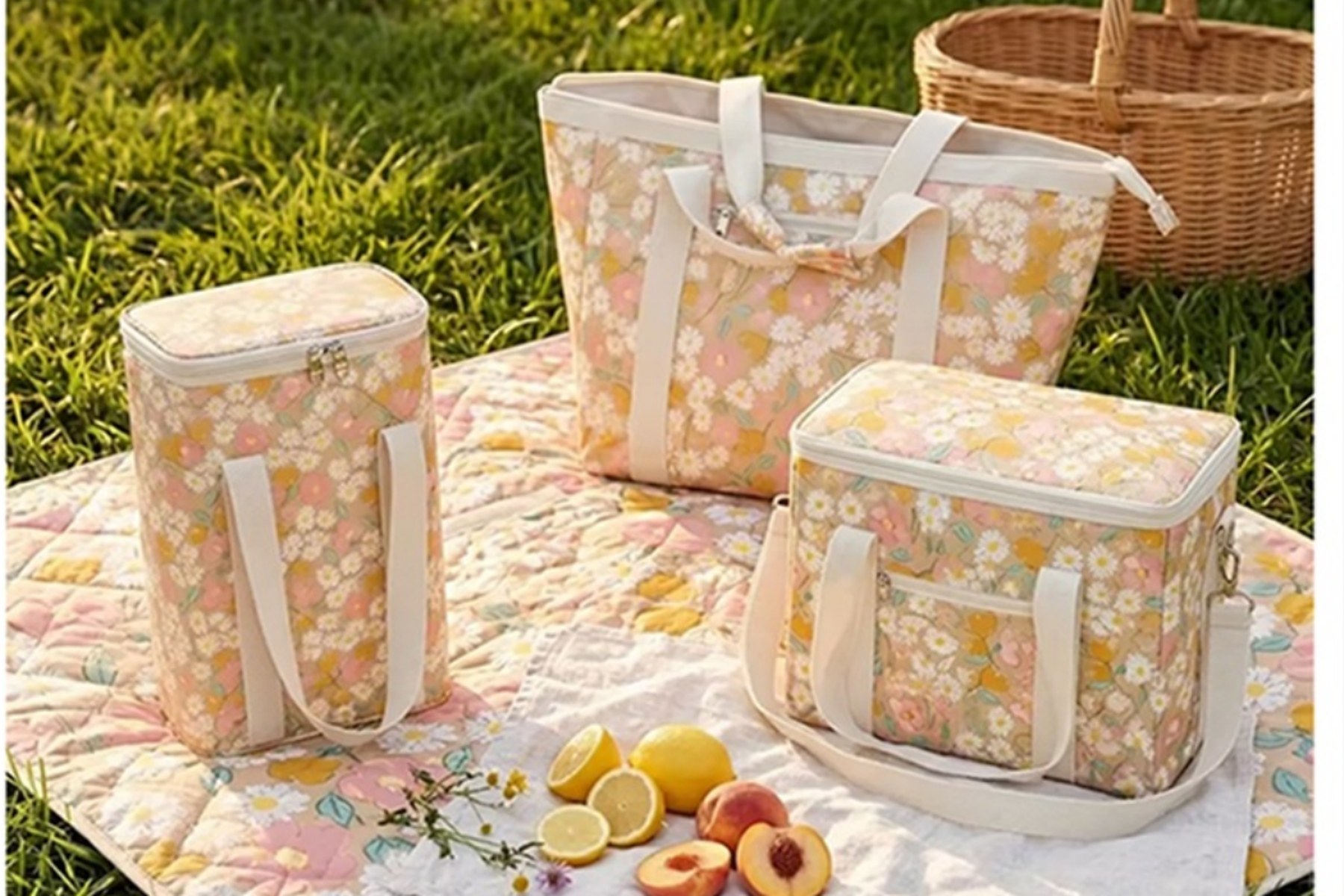
For LISO, a matching collection can carry the same pattern and planned color story across picnic mats, cooler bags, beach bags, towels and outdoor cushions. The construction still changes by product. The collection is coordinated visually, but every SKU keeps its own functional specification.
What makes an outdoor collection commercially coherent?
A collection is coherent when the products belong to the same use scene, share a recognizable design language and can be presented as one retail program. Matching artwork alone is not enough.
| Planning layer | Buyer decision | Why it must be fixed before sampling |
|---|---|---|
| Target customer | Retail chain, importer, brand, wholesaler or e-commerce seller | Changes the product mix, packaging and approval path |
| Use scene | Beach day, picnic, patio dining, resort or outdoor travel | Prevents unrelated SKUs from entering the range |
| Hero product | The item that anchors the collection | Gives the range a clear starting point |
| Supporting products | Items that extend the same scene | Creates a logical collection instead of a catalogue dump |
| Artwork system | Pattern, color family, scale and placement | Keeps the range recognizable across different shapes |
| Product specification | Material, lining, filling, closure, handle and care route | Protects function while the appearance stays coordinated |
| Packaging system | Labels, hangtags, inserts and retail packs | Makes the range look consistent at launch |
The same artwork can extend across several categories, but the product role and approval points are different.
| Product family | Role in the range | Specification questions |
|---|---|---|
| Cooler bags | Functional hero or add-on | Size, lining route, insulation structure, zipper, handles and cleaning |
| Beach bags | High-visibility brand carrier | Body material, handle construction, closure, pocket plan and logo |
| Picnic and beach mats | Large artwork surface and scene anchor | Finished size, top fabric, backing, folding route, carry handle and packaging |
| Towels | Color and pattern extension | Fibre composition, size, weight, print or weave route and care label |
| Outdoor cushions | Patio or seating extension | Finished dimensions, fabric, filling, cover, zipper, ties and use scene |
| Chair pads | Dining or stadium seating extension | Chair reference, thickness, strap or tie position, cover and cleaning route |
The buyer does not need to launch every category at once. A first brief can identify the hero product and the products that genuinely support its scene. Additional categories should be added only when the material, artwork and quantity plan remain practical.
Can one artwork file be used on every product?
Usually not without adjustment. A print that reads well on a picnic mat may become too small or too busy on a wine cooler, chair pad or bag pocket.
Before sampling, confirm:
- pattern repeat and scale for each product;
- crop direction and placement on visible panels;
- orientation at seams, pockets, piping and closures;
- background color and trim color references;
- whether artwork must align across paired panels;
- the approved digital file and version owner.
When an instrumental color tolerance is part of the buyer's specification, the method and acceptance limit should be named rather than implied. ISO 105-J03 describes a method for calculating color differences between textile specimens. It does not create a universal pass level for every product; the buyer and supplier still need an agreed end-use tolerance.
How should color be controlled across different materials?
The same color reference can look different on Oxford fabric, polyester, towel fabric, coated material, lining or trim. The practical control point is not the screen image. It is the approved result on the actual material route.
Use a collection approval set:
- artwork and color references;
- strike-off, lab dip or material swatch where applicable;
- product sample on the intended material;
- approved pre-production reference;
- agreed comparison method for bulk and repeat orders.
Outdoor exposure requirements should also be specified by end use. If a buyer requires an outdoor weathering test, the test method and acceptance criteria belong in the brief. ISO 105-B03 covers color fastness to weathering by outdoor exposure; linking to the standard is not a claim that every material or order has been tested to it.
What changes for the United States, European Union and United Kingdom?
Target market belongs in the collection brief because label language and fibre-composition requirements are not identical everywhere.
| Market | Official starting point | Collection-planning implication |
|---|---|---|
| United States | The FTC textile and wool labelling guide explains that covered textile products generally need fibre content, country of origin and the responsible company identity | Confirm which SKUs are covered and prepare the correct label information before packaging approval |
| European Union | Regulation (EU) No 1007/2011 governs textile fibre names and related composition labelling for products in scope | Confirm fibre names, component treatment and target-market language before final artwork |
| United Kingdom | GOV.UK textile labelling guidance states that textile labels must show fibre content and identifies manufacturer and retailer responsibilities | Keep the UK label route separate from an EU-only artwork assumption |
These links are planning references, not a substitute for product-specific compliance review. Bags, insulated products, cushions, mats and towels can have different constructions and regulatory scopes. The importer should confirm the final requirement for each SKU and sales market.
What should be approved before bulk production?
The collection should pass through shared gates, while each product keeps its own technical approval.
| Gate | Shared collection check | SKU-level check |
|---|---|---|
| Brief | Target market, scene, product list and launch window | Finished size and intended use |
| Artwork | Pattern, color family, scale plan and file version | Placement, crop and panel direction |
| Materials | Approved color and material family | Fabric, lining, filling, trim and closure |
| Sample | Collection viewed together | Construction, fit, carrying or seating function |
| Packaging | One label and visual system | SKU name, fibre information, care and pack format |
| Bulk | Approved comparison references | Inspection points and quantity by SKU |
What should a buyer send in a collection RFQ?
Send enough information for the supplier to propose a practical route. A useful first brief includes:
- target country and sales channel;
- planned product families and the hero SKU;
- reference sample, moodboard or artwork file;
- color references and pattern direction;
- dimensions or size range for each product;
- material and functional requirements by SKU;
- quantity tiers by SKU, without forcing every item into one number;
- logo, labels, hangtags and packaging requirements;
- sample approval date and target launch window;
- required tests, standards or buyer manuals, if applicable.
LISO can review a reference sample or collection brief, then discuss the OEM/ODM route, sampling, customization, production controls and packaging as one program. Public prices are not listed because the specification, materials, quantity and packaging determine the quotation.
Frequently asked questions
Is a matching collection the same as using one print everywhere?
No. One print can be the visual anchor, but scale, placement, material and trim often need to change by product. The goal is consistency, not identical construction.
Should a new buyer start with every product category?
No. Start with the hero product and the supporting items that complete one customer scene. Expand only after the specification and quantity plan remain workable.
Can LISO develop cooler bags, beach bags, mats, towels and cushions as one range?
Yes. These categories can be planned under one pattern and color direction. Each SKU still needs a separate material, construction, sample and quality-control specification.
Does LISO publish a fixed collection price?
No. LISO prepares quotations from the buyer's product list, dimensions, materials, artwork, quantity tiers, labels and packaging requirements.
Build the collection brief
Use the Custom Outdoor Matching Collections solution to compare the product routes and prepare one collection RFQ. The commercial destination is the solution page; this guide supports the planning decision rather than replacing it.