Many custom puffer blanket projects fail before sampling because the buyer chooses fabric and filling without a clear use scene.
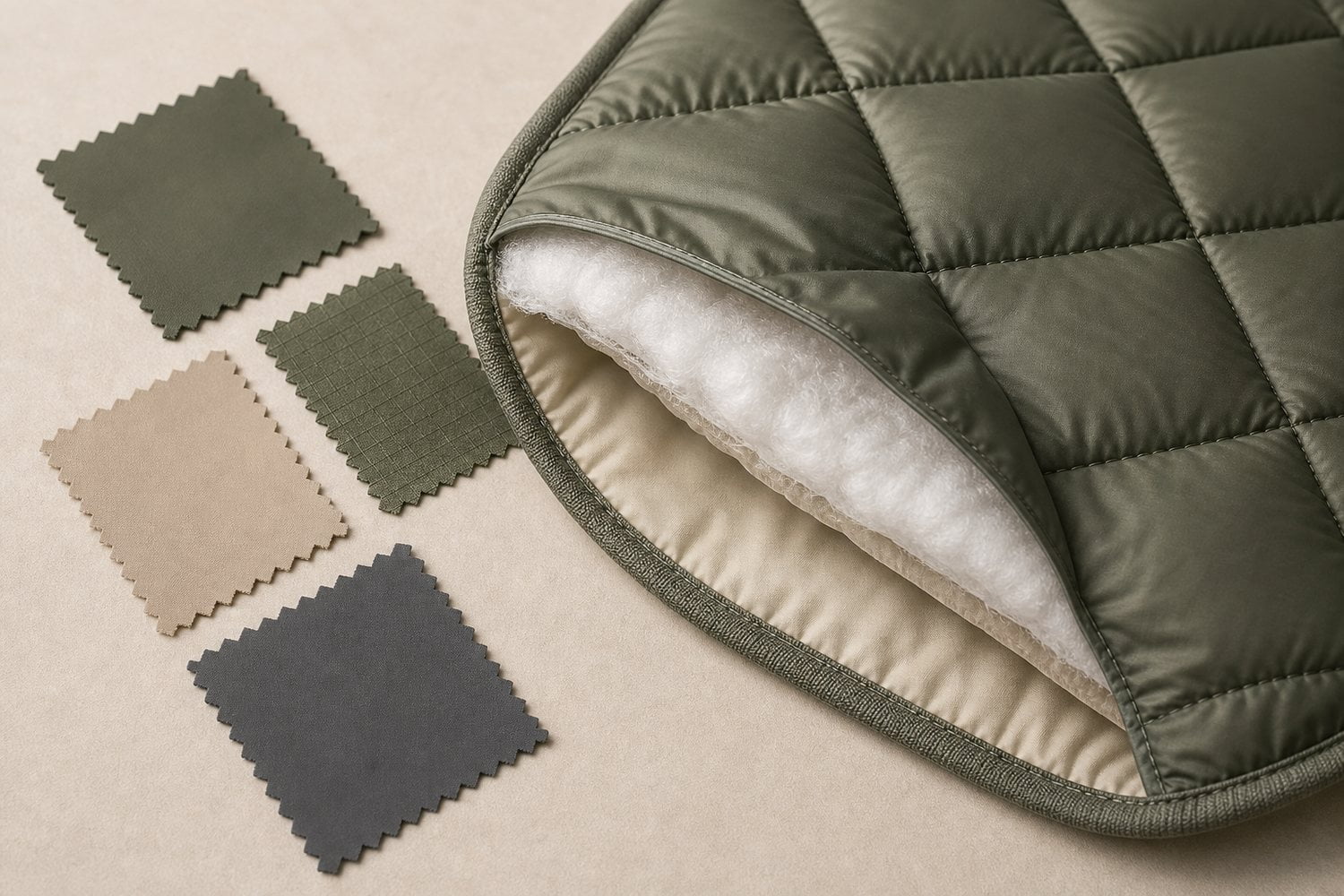
For custom puffer blankets, shell fabric controls cost, print, handfeel and durability. Filling controls warmth, softness, packed size and recovery. Buyers should choose both together, not as separate decisions.
I always ask the buyer one question first: where will this blanket be used? A corporate gift, camping blanket, stadium blanket, car blanket, and patio add-on do not need the same fabric and filling.
Which shell fabric should buyers choose for custom puffer blankets?
Polyester taffeta is usually my first recommendation when the buyer needs cost control and a printed design. It is lower cost than nylon. It can carry large patterns, logos, event graphics, or brand artwork very well. This is why it works for gifts, brand merchandise, and promotional programs.
Nylon is worth considering when the buyer wants a higher-end handfeel. It can feel softer and more premium. But it costs more, and I do not always suggest it for large printed designs.
Oxford is also possible. It is not my first choice for a soft puffer blanket because the handfeel can be rough. It fits some rugged or low-cost projects. Pongee can be used when the buyer wants a softer side against the skin. Fine 20D pongee can feel good, but I would usually use it on the inner side because cost and print route can become higher.
| Fabric | I recommend it when | I would be careful when |
|---|---|---|
| Polyester taffeta | The buyer wants print, cost control and gift value | The buyer wants very soft premium handfeel |
| Nylon | The buyer wants a higher-end outdoor feel | The buyer needs low cost and large printed artwork |
| Pongee | The buyer wants a soft inner side | The buyer wants low-cost full-surface printing |
| Oxford | The buyer needs rugged or budget use | The buyer wants a soft retail gift product |
How does filling GSM change warmth, weight and packing size?
Filling GSM decides the real feel of the blanket. It also decides the packed volume.
A lighter 60 to 80gsm filling is better for promotional gifts, brand merch, and low-cost event programs. It gives the buyer a useful product without making the packed size too large. It also helps control cost.
A 120gsm filling can work as a middle route. It gives more body than a thin gift blanket, but it is still not as bulky as a heavy outdoor blanket.
For real outdoor use, car travel, camping, stadium cold weather, or a retail product line, 180gsm or 200gsm is stronger. It feels warmer. It has better perceived value. It can become a main product instead of only a giveaway.
| Filling | Best for | Trade-off |
|---|---|---|
| 60-80gsm | Gifts, merch, light use, low cost | Less warmth and loft |
| 120gsm | Balanced light outdoor use | May not satisfy colder scenes |
| 180-200gsm | Camping, car, patio night, retail line | Bigger packed size and higher cost |
What is the difference between down-like polyester fiberfill and spray-bonded cotton?
Down-like polyester fiberfill gives a softer and fuller feel. It can improve loft and comfort. I prefer it when the blanket needs to feel more premium.
Spray-bonded cotton is a practical choice when budget is limited. It can help the buyer hit a lower target price. But the buyer should still check thickness, softness, and recovery after compression.
The mistake is not choosing the lower-cost filling. The mistake is using a low-cost or low-GSM filling in the wrong scene. If the blanket is sold for cold camping or serious outdoor use, the end customer will feel the weakness quickly.
Which fabric and filling combination fits each sales channel?
For corporate gifts, I often suggest polyester taffeta with lighter filling. It prints well, keeps cost manageable, and works well with a stuff sack.
For camping retail, I would improve fabric strength and filling. Nylon or stronger polyester can be used, and the filling should match the warmth target.
For stadium blankets, the structure matters as much as the fabric. Snaps, size, logo area, and packing must be planned. For patio add-ons, color and print coordination with cushions and chair pads matter more.
| Channel | Practical route |
|---|---|
| Corporate gift | Polyester taffeta plus 60-80gsm filling |
| Brand merchandise | Printed polyester taffeta plus better packaging |
| Camping retail | Stronger shell plus 180-200gsm filling |
| Stadium program | Snap structure plus clear logo placement |
| Patio collection | Printed blanket matched with cushions and chair pads |
What sample tests should importers request before bulk production?
I would not approve a custom puffer blanket from a photo only. The buyer should check the actual sample.
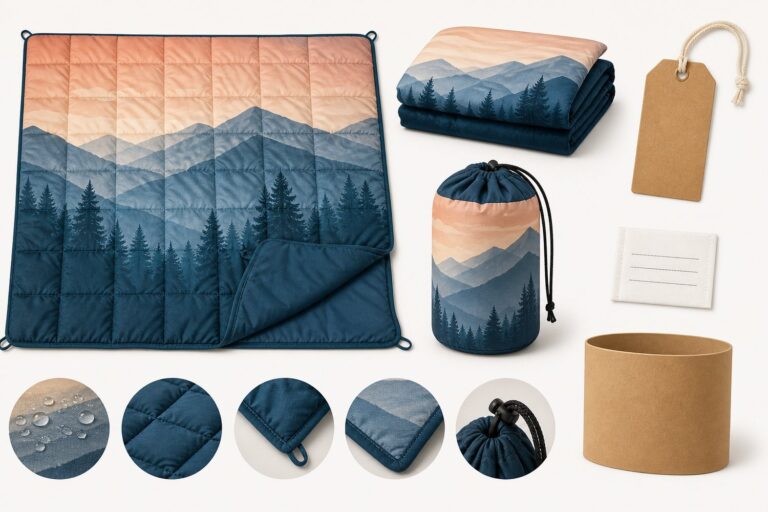
Important checks include stitching strength, quilting spacing, binding quality, print clarity, filling recovery, packed size, stuff sack opening, drawstring quality, and how the blanket feels after being compressed.
If the buyer is worried about outdoor use, water repellency and fabric coating should also be checked. If the buyer plans to sell a premium product, handfeel and recovery matter more than a small price difference.
This article should connect with the Outdoor Blankets product page and the Outdoor Patio Living solution, because fabric and filling decisions become stronger when they are planned as part of a full outdoor textile route.
Related product pages for this sourcing decision
- Outdoor Blankets product page
- Outdoor Patio product hub
- Outdoor Patio Living solution
- Custom outdoor cushions
- Outdoor chair pads
- Sand-free waterproof beach mat
Related puffer blanket sourcing guides:
- Puffer Blanket vs Picnic Blanket: What Should Importers Source?
- What Makes a Packable Outdoor Blanket Retail-Ready?
Conclusion
A good custom puffer blanket starts with the right fabric and filling match, not only a pretty print.
My Role
I help buyers choose the fabric and filling route before sampling. Send your market, use scene, target cost, and artwork. I can suggest a practical specification.