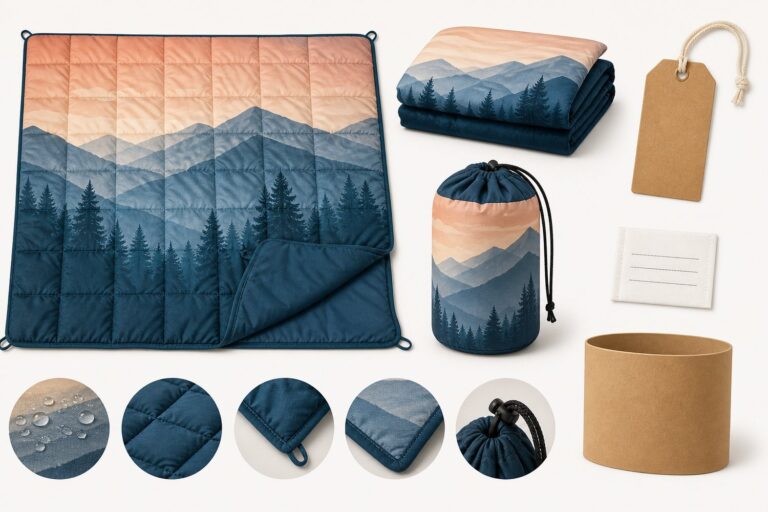
Many buyers ask for a picnic blanket when they really need a warmer, packable product. That mistake can weaken the whole sourcing plan.
A puffer blanket is better when the buyer needs warmth, portability, gift value, car use, stadium use, camping, or a wearable outdoor blanket. A picnic blanket is better when the product is mainly used on damp grass, sand, or picnic ground.
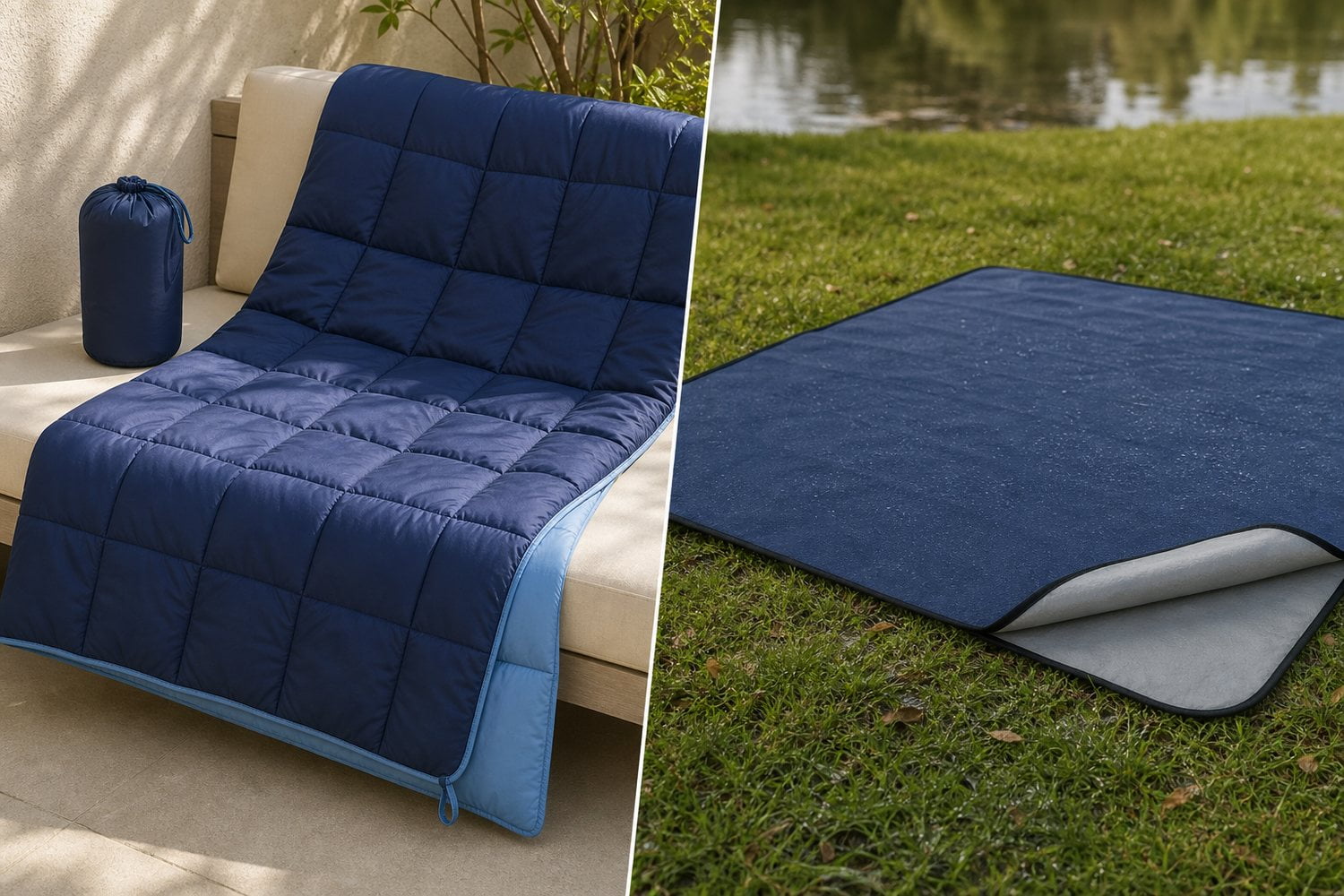
I do not treat these two products as the same item. They can share a print story. They can sit inside the same outdoor lifestyle collection. But they solve different problems for the end consumer and create different production decisions for the importer.
What is the real difference between a puffer blanket and a picnic blanket?
A puffer blanket is a filled outdoor blanket. It usually uses polyester taffeta, nylon, pongee, or similar shell fabric with synthetic filling inside. A picnic blanket is usually flatter. It focuses more on ground use, waterproof backing, and grass or park scenes.
The most important difference is the job of the product.
| Product | Main job | Buyer risk |
|---|---|---|
| Puffer blanket | Warmth, portability, gift value, car use, patio use, stadium use | Wrong filling GSM, weak stitching, poor stuff sack |
| Picnic blanket | Ground use, picnic use, waterproof backing, easy cleaning | Weak backing, trapped moisture, bulky folding |
| Beach mat | Sand-friendly use, light weight, compact carry | Confusing water-repellent with waterproof |
A puffer blanket can sometimes be placed on the ground like a picnic blanket. But it is not born only for picnics. It is a multi-use outdoor textile. A buyer can keep it in the car, use it in a patio at night, bring it to a stadium, pack it for camping, or wear it around the shoulders when snap buttons are added.
Which product is better for brand merchandise and promotional gifts?
A puffer blanket usually has higher perceived value than a picnic blanket. I see this clearly in gift and brand merchandise channels. The product feels more like a useful premium item, not only a ground mat.
There are three reasons.
First, the surface can carry a strong print. Polyester taffeta is cost-friendly and good for large printed artwork. A brand can put a landscape, event design, mascot, logo pattern, or seasonal story on the blanket.
Second, the product has a packing moment. A matching stuff sack, drawstring bag, hangtag, or compact fold makes it feel like a gift. A flat picnic blanket can also be packaged well, but the puffer blanket has more value when the user opens it.
Third, the product has more use scenes. A corporate gift buyer may not know if the receiver will picnic often. But almost everyone can use a warm packable blanket in a car, office, stadium, garden, or campsite.
Which product is better for camping, stadium and patio use?
If the buyer is targeting camping, stadium, car travel, event rewards, brand fans, or patio comfort, I usually recommend starting with a puffer blanket.
For stadium use, snap buttons and logo placement matter. The user may sit with the blanket on the seat or wear it over the shoulders. For camping, fabric durability, filling recovery, and water resistance matter more. For patio use, the blanket can become a soft add-on beside cushions, chair pads, pillows, and bean bags.
A picnic blanket is still the right answer when the need is very clear: the buyer wants a product mainly for picnics, damp ground, park use, or grass use. In that case, waterproof backing and ground durability become more important than warmth.
What specifications should importers confirm before sampling?
Before asking a factory for a quote, the buyer should not only say outdoor blanket. That phrase is too broad.
I would ask for these details first:
| Specification | Why it matters |
|---|---|
| Size | It decides use scene, packing size, and cost |
| Shell fabric | It affects price, print quality, handfeel, and durability |
| Filling GSM | It changes warmth, softness, loft, and packed volume |
| Structure | Snap cape, corner loops, storage bag, reversible color, quilting shape |
| Logo method | Full print, woven label, patch, embroidery, hangtag, or packaging |
| Target channel | Retail, gift, camping, stadium, patio, car, resort, or event |
| MOQ target | Low MOQ is easier when existing materials and prints are realistic |
For many puffer blanket projects, MOQ can be lower than buyers expect. In some cases, 50 to 100 pieces can be possible. But the buyer must understand the trade-off. Low MOQ works better when the fabric route, print method, and packaging are planned together.
How can LISO help buyers choose the right outdoor blanket route?
I usually do not begin with the product name. I begin with the use scene.
If the buyer says the product is for corporate gifts, I may suggest polyester taffeta, lighter filling, strong print, and a clean stuff sack. If the buyer says camping retail, I may suggest stronger fabric, better filling, corner loops, and compression testing. If the buyer says patio collection, I will check whether the print can match cushions, chair pads, pillows, or bean bags.
This is why the Outdoor Blankets product page should connect with the Outdoor Patio product hub and the Outdoor Patio Living solution. The buyer should see the product as part of a wider outdoor textile program.
Related product pages for this sourcing decision
- Outdoor Blankets product page
- Outdoor Patio product hub
- Outdoor Patio Living solution
- Custom outdoor cushions
- Outdoor chair pads
- Sand-free waterproof beach mat
Related puffer blanket sourcing guides:
- What Makes a Packable Outdoor Blanket Retail-Ready?
- How to Choose Fabric and Filling for Custom Puffer Blankets?
Conclusion
Choose puffer blankets for warmth, portability, gift value, and wider use. Choose picnic blankets when ground use is the main need.
My Role
I help buyers turn a broad outdoor blanket idea into a clear sourcing brief. Share your use scene, size, filling target, fabric preference, and MOQ expectation. I can suggest the right product route before sampling.