Many outdoor product buyers ask for a quote too early.
They send one product photo, ask for a unit price, compare three factories, and then try to build a retail range after the quotation.
That process works for simple single-SKU replacement orders. It is weaker when the buyer wants to launch a patio, garden, beach, resort, or private label outdoor collection.
For collection sourcing, the better first question is not:
What is the cheapest unit price?
The better first question is:
Which collection level fits our channel, MOQ, launch budget, and retail goal?
At LISO, we usually separate outdoor collection planning into three levels:
- Entry
- Core
- Premium
These are not just price levels.
They are sourcing structures.
Each level answers a different buyer problem.
Why Does a Three-Level Collection Model Work for Outdoor Buyers?
Retailers and brand owners often need more than one offer level.
A three-level structure is common in pricing and assortment planning because it helps buyers compare a basic option, a stronger mid-range option, and a more complete premium option.
For outdoor products, this logic is useful because buyers rarely have the same risk tolerance.
A new Amazon seller may need a low-MOQ test set.
A garden center may need a seasonal display with enough SKUs to create a complete patio story.
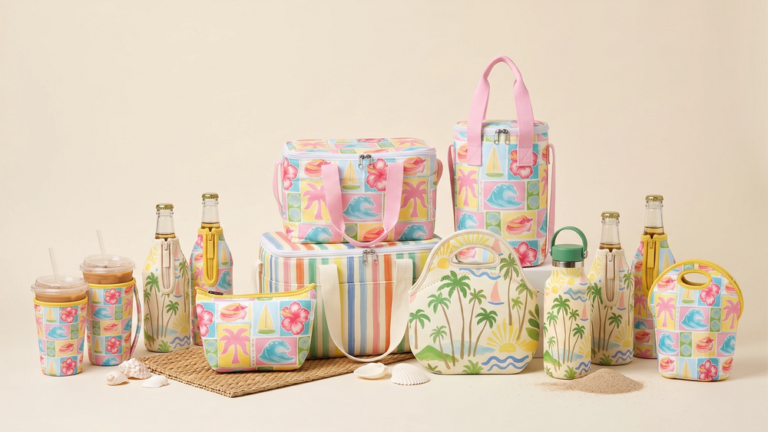
A resort retail buyer may need a premium branded collection that looks consistent across towels, bags, cooler bags, and beach mats.
The same product category can serve all three buyers, but the SKU mix should not be the same.
What Is the Main Rule for Choosing Entry, Core, or Premium?
The collection level should be decided by the buyer's commercial goal, not by product count alone.
Use this rule:
Entry reduces launch risk. Core builds a sellable seasonal range. Premium creates a private label program.
If a buyer only wants to test one category, Entry is usually enough.
If a buyer wants a stronger shelf, store, or online assortment, Core is usually the practical level.
If a buyer wants brand differentiation, coordinated packaging, content assets, and repeat ordering, Premium is the right discussion.
Which Collection Level Fits Each Buyer Situation?
| Buyer situation | Recommended level | Main reason |
|---|---|---|
| Testing a new product category | Entry | Lower complexity and faster sampling |
| Adding a small seasonal offer | Entry or Core | Depends on MOQ and channel |
| Building a garden center patio display | Core | Needs enough SKUs to merchandise together |
| Launching a private label outdoor line | Premium | Needs brand, packaging, and repeatable SKU system |
| Selling on Amazon/eBay | Entry or Core | Start focused, then expand variations and bundles |
| Supplying resorts or hotels | Core or Premium | Consistency and presentation matter |
| Promotional gift program | Entry or Core | Logo, packaging, and MOQ control matter |
| Outdoor furniture brand add-on range | Core or Premium | Needs material and color matching |
When Should a Buyer Choose an Entry Collection?
Entry is for buyers who need proof before scale.
The goal is not to build the full range immediately. The goal is to test demand, validate the product direction, and control first-order risk.
Entry works best when the buyer has:
- a limited launch budget
- a lower MOQ target
- one main sales channel
- a short buying window
- simple packaging needs
- limited internal product development resources
What Should an Entry Patio Set Include?
For patio and garden buyers, an Entry set usually includes:
- seat cushion
- back cushion
This gives the buyer a basic seating offer without adding too much SKU complexity.
It is suitable for:
- Amazon/eBay sellers testing patio cushions
- small garden centers adding one seasonal line
- outdoor furniture sellers testing replacement cushions
- promotional buyers who need a practical outdoor gift set
What Should an Entry Beach Set Include?
For beach and summer buyers, an Entry set usually includes:
- sand-free beach mat
- beach bag
This creates a simple beach-day offer with two products that naturally work together.
It is suitable for:
- marketplace sellers
- promotional gift companies
- resort shops testing a small seasonal range
- distributors validating a new customer segment
What Should Buyers Customize at Entry Level?
Entry customization should stay focused.
Recommended options:
- logo
- one fabric or material route
- one or two colors
- basic packaging
- hangtag
- barcode
- carton mark
- Amazon label if needed
Avoid making the first order too complex.
Too many colors, too many prints, or too many packaging formats can slow sampling and increase cost before the buyer knows whether the product will sell.
What Is the Entry Level Decision Rule?
Choose Entry if the buyer says:
- "We want to test this category."
- "We need a lower MOQ."
- "We only need a simple branded version."
- "We need to launch quickly."
- "We do not know which SKU will sell yet."
Entry is not weak.
It is a controlled test.
When Should a Buyer Choose a Core Collection?
Core is the most practical level for many B2B buyers.
It is large enough to look like a real collection, but not so large that the buyer has to carry too much inventory risk.
Core works best when the buyer has:
- an established customer base
- a defined seasonal selling window
- a need for better merchandising
- a need for coordinated packaging
- enough volume to support several SKUs
- interest in cross-selling or bundling
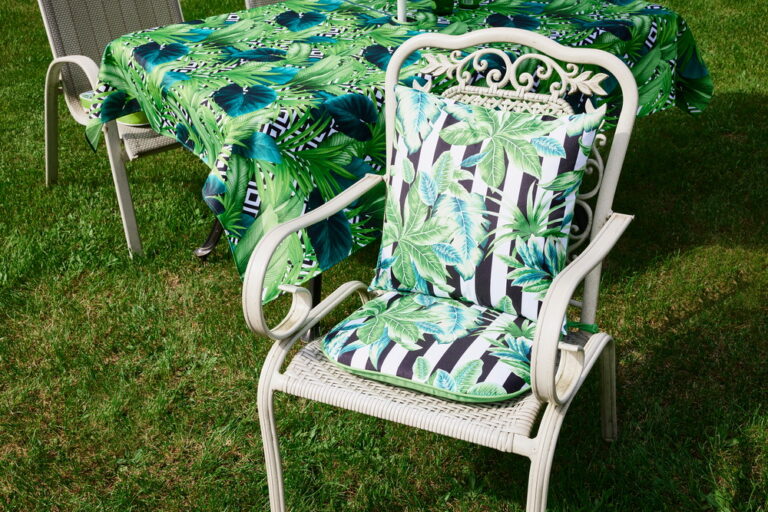
What Should a Core Patio Set Include?
For patio and garden programs, a Core set usually includes:
- seat cushion
- back cushion
- throw pillow
- furniture cover
This structure lets the retailer sell a more complete outdoor seating story.
The cushion and back cushion create the core use case. The throw pillow adds style and margin flexibility. The furniture cover adds a practical protection product and creates another reason for the customer to buy.
Core patio sets are suitable for:
- US garden centers
- European home retailers
- outdoor furniture brands
- seasonal home stores
- distributors serving patio retailers
What Should a Core Beach Set Include?
For beach and resort programs, a Core set usually includes:
- sand-free beach mat
- cooler bag
- beach towel
- beach bag
This structure creates a complete beach-day offer.
The mat, towel, bag, and cooler bag cover the main use moments: sitting, drying, carrying, and keeping food or drinks cool.
Core beach sets are suitable for:
- resort and hotel retail
- summer lifestyle brands
- Amazon and eBay sellers building bundles
- beach shops
- promotional companies building seasonal gift programs
What Should Buyers Customize at Core Level?
Core customization can go deeper than Entry.
Recommended options:
- logo
- fabric
- Pantone color
- coordinated colorway
- hangtag
- barcode
- instruction card
- packaging design
- carton mark
- Amazon labeling
- basic product photography direction
At Core level, consistency matters more than novelty.
The buyer should avoid approving each SKU in isolation. The color, trim, label, package, and product photos should be reviewed as one collection.
What Is the Core Level Decision Rule?
Choose Core if the buyer says:
- "We need a seasonal range, not just one product."
- "We want the products to look coordinated."
- "We need better product photos and cross-selling."
- "We want to reduce supplier communication."
- "We have enough volume for 3-5 SKUs."
Core is usually the best starting point when the buyer already knows the category has demand.
When Should a Buyer Choose a Premium Collection?
Premium is for buyers who want to build a branded product program, not just buy outdoor goods.
This level should be used when the buyer needs stronger differentiation, more complete presentation, and repeat-order discipline.
Premium works best when the buyer has:
- a private label brand
- a larger retail plan
- multiple selling channels
- stronger packaging requirements
- a need for exclusive colors or prints
- repeat-order expectations
- content asset needs
- higher consistency requirements
What Should a Premium Patio Collection Include?
For patio and garden programs, a Premium collection may include:
- seat cushion
- back cushion
- throw pillow
- furniture cover
- storage bag
- optional table textile
- optional pouf
- optional matching pet mat or picnic item
This structure gives the buyer enough SKUs to build a full outdoor living story.
It is suitable for:
- private label brands
- chain retailers
- outdoor furniture brands
- large garden centers
- distributors with repeat seasonal orders
What Should a Premium Beach Collection Include?
For beach and resort programs, a Premium collection may include:
- sand-free beach mat
- cooler bag
- beach towel
- beach bag
- optional picnic blanket
- optional bottle bag
- optional wet/dry pouch
- optional travel storage item
This structure supports a stronger lifestyle range.
It is suitable for:
- resort and hotel retail
- beach lifestyle brands
- European home retailers
- summer campaign programs
- gift and promotional programs with higher presentation requirements
What Should Buyers Customize at Premium Level?
Premium customization should be planned as a system.
Recommended options:
- logo system
- custom fabric
- exclusive print
- Pantone palette
- coordinated product family design
- packaging structure
- hangtag
- barcode
- instruction card
- carton mark
- Amazon labeling
- line sheet
- lifestyle photo direction
- product video shooting support
- launch content assets
LISO can also support coordinated in-house pattern design.
For buyers who need videos or lifestyle assets, production in the United States or Europe can be expensive. LISO can help introduce more cost-efficient shooting support in China during product development.
This does not replace the buyer's brand strategy. It helps the buyer create more usable product content before the products arrive in the market.
What Is the Premium Level Decision Rule?
Choose Premium if the buyer says:
- "We are building a private label collection."
- "We need exclusive colors or prints."
- "Packaging and presentation are important."
- "We need repeat orders and replenishment control."
- "We need a line sheet and launch assets."
- "We want to reduce direct price comparison with generic products."
Premium should not be chosen only because it looks bigger.
It should be chosen when the buyer can use the extra SKUs, branding, and content to support a stronger retail plan.
What Is the Wrong Way to Choose a Collection Level?
Many buyers choose the collection level by asking:
Which option has the lowest FOB price?
That is too narrow.
FOB price matters, but it is not the only cost.
The buyer should also consider:
- sample rounds
- supplier communication time
- packaging development
- photography cost
- listing content
- inspection complexity
- replenishment risk
- slow-moving inventory risk
- whether the range looks coherent to the end customer
A cheaper product can become expensive if it creates extra coordination work or weak retail presentation.
What Is the Better Way to Choose a Collection Level?
Use five questions before requesting a quote.
Use this step order:
- Confirm the sales channel and buyer type.
- Set the realistic MOQ range for the first order.
- Decide how much brand consistency the buyer needs.
- Check whether product photos, line sheets, or videos are required before launch.
- Decide whether the order is a one-time test, a seasonal repeat, or a private label program.
What Is the Sales Channel?
Different channels need different collection depth.
Amazon and eBay sellers usually need a focused hero SKU, strong images, clear variations, and a practical bundle strategy.
Garden centers and home retailers need products that look strong on display and can fit a seasonal assortment.
Resort and hotel buyers need brand consistency, quality, and presentation.
Promotional gift buyers need logo placement, packaging, delivery timing, and MOQ control.
The channel decides the SKU structure.
What MOQ Can the Buyer Support?
MOQ should be discussed at the collection level, not only at the product level.
For Entry, the buyer may want a lower MOQ per SKU.
For Core, the buyer needs enough quantity to support 3-5 coordinated SKUs.
For Premium, the buyer needs a realistic repeat-order plan because custom prints, packaging, and exclusive colorways require more development work.
The mistake is adding too many SKUs without enough volume behind them.
How Important Is Brand Consistency?
If the buyer only needs a simple replacement product, consistency is less important.
If the buyer is building a collection, consistency becomes central.
The supplier should align:
- fabric
- color
- trim
- label
- logo position
- packaging
- carton mark
- barcode logic
- photo direction
This is where one coordinated supplier can reduce friction compared with multiple isolated suppliers.
Will the Buyer Need Product Content?
For marketplace sellers and independent brands, product content is not optional.
They need images, comparison angles, packaging shots, usage scenes, and sometimes video.
If the products are sourced separately, the buyer often has to rebuild the visual story later.
If the collection is planned together, product content can be considered earlier:
- consistent color direction
- matching lifestyle scene
- bundle photos
- set comparison images
- retail display logic
- launch video direction
This is especially useful for Amazon/eBay sellers and independent brands.
Is This a One-Time Order or a Repeat Program?
Entry can work for a one-time test.
Core works better for seasonal repeat orders.
Premium should be planned as a repeatable program.
For repeat orders, the supplier should keep one source of truth for:
- approved material
- approved color
- approved print file
- approved packaging
- SKU structure
- label and barcode files
- carton mark logic
- inspection standard
Repeatability is a major reason to build a collection system instead of sourcing disconnected products.
What Factory Experience Shows How a Buyer Can Scale from Entry to Premium?
One LISO customer in Australia started with small test quantities of around 200 pieces per SKU.
At the beginning, the goal was not to build a large range immediately. The first goal was to validate the product structure and brand direction.
LISO supported the product planning, private label development, visual direction, and e-commerce setup. Over time, the buyer moved from small SKU testing into stable monthly container-level sales.
The important lesson is not that every buyer should start large.
The lesson is that a buyer should start with a structure that can grow.
Entry can test the market.
Core can build the seasonal range.
Premium can turn the range into a repeatable private label program.
What Should Buyers Include in a Practical RFQ?
Before asking for a quote, send these details:
- target market
- sales channel
- preferred collection level: Entry, Core, or Premium
- product references
- expected MOQ per SKU
- target retail price if available
- required materials
- logo requirement
- color or Pantone direction
- packaging requirement
- barcode or Amazon label requirement
- launch timing
- inspection requirement
- expected repeat-order plan
This helps the supplier recommend a realistic SKU mix instead of quoting disconnected products.
Which Level Should You Start With?
Use this simple rule.
Start with Entry if:
- you are testing demand
- you need lower MOQ
- you need fast samples
- you have one main channel
- your packaging requirement is simple
Start with Core if:
- you need a seasonal range
- you want coordinated product photos
- you need 3-5 SKUs
- you want bundles or cross-selling
- you already know the category has demand
Start with Premium if:
- you are building a private label collection
- you need exclusive design
- you need stronger packaging
- you need repeatable replenishment
- you need launch content and line sheet support
What Is the Final Takeaway?
Entry, Core, and Premium are not just small, medium, and large options.
They are three different sourcing structures.
Entry helps buyers test.
Core helps buyers sell a coordinated seasonal range.
Premium helps buyers build a private label program with stronger differentiation and repeatability.
The right level depends on channel, MOQ, customization depth, product content, and replenishment plan.
FAQ: What Do Buyers Ask Before Choosing Entry, Core, or Premium?
Is Entry only for low-price products?
No. Entry means lower complexity, not necessarily low quality. It is useful when the buyer wants to test demand, control MOQ, simplify sampling, and avoid building too many SKUs before the sales channel proves itself.
Is Core usually the best first collection for retailers?
Often, yes. Core gives a buyer enough SKUs to create a real patio or beach story without carrying the larger inventory and customization load of a Premium private label program.
When is Premium worth the extra development work?
Premium is worth it when the buyer can use exclusive colors, custom packaging, launch content, repeat-order planning, and a fuller SKU system to support a private label or multi-channel retail program.
Should MOQ be calculated by product or by collection?
MOQ should be checked both ways. Product-level MOQ controls factory efficiency. Collection-level MOQ controls buyer inventory risk. A practical plan balances the two instead of adding SKUs without enough volume.
Can Amazon or eBay sellers use this model?
Yes. Marketplace sellers usually start with Entry or Core. They need focused SKUs, clear photos, bundle logic, and repeatable packaging. Premium makes sense only when the seller has proven demand and a stronger brand plan.
What should LISO review before recommending a SKU mix?
LISO should review the buyer's target market, channel, MOQ target, product references, packaging needs, customization depth, launch date, and repeat-order expectation before recommending Entry, Core, or Premium.
How Can Buyers Request an Entry/Core/Premium Collection Line Sheet?
If you are planning a patio, garden, beach, resort, or outdoor private label range, LISO can help you choose the right collection level.
Send your target market, sales channel, MOQ target, product references, packaging needs, and launch timing. Our team can recommend a practical Entry, Core, or Premium SKU mix.
CTA: Request an Entry/Core/Premium Collection Line Sheet
—
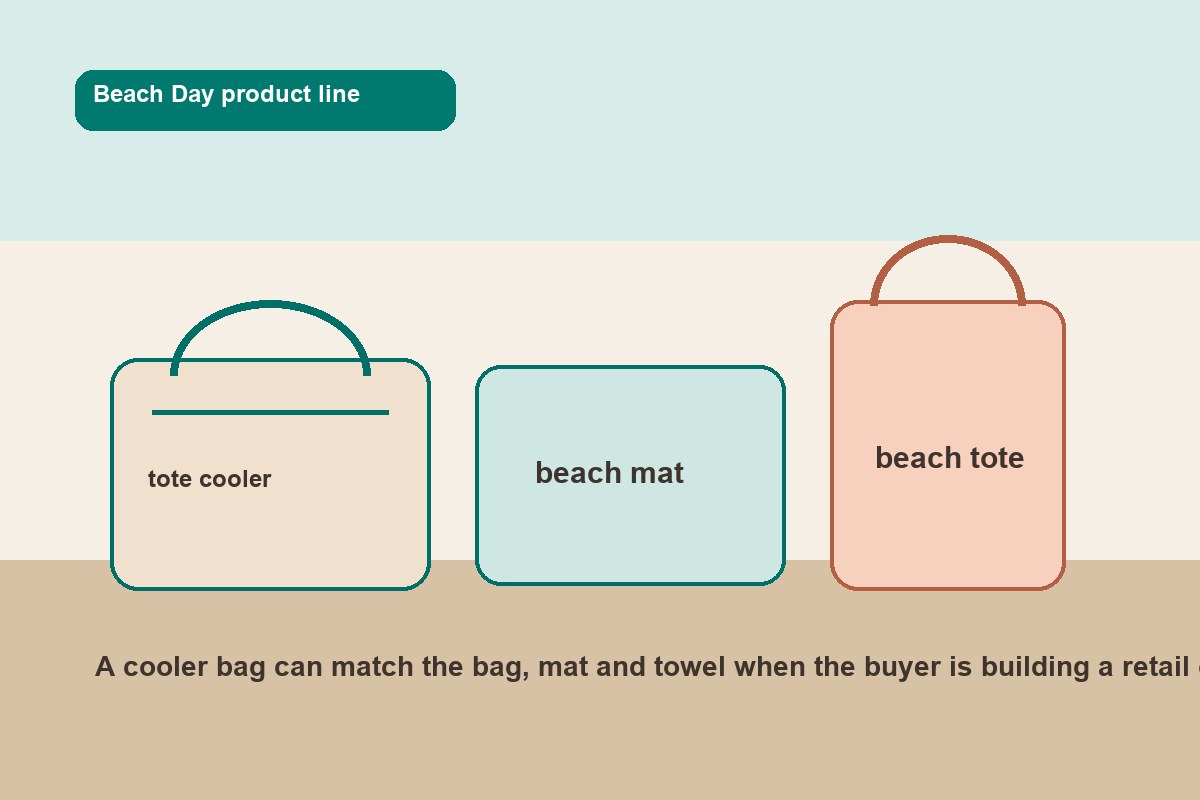
Beach SKU mix decision
Choose the cooler bag level before sampling the full beach range.
An entry beach set may use a simple lunch cooler. A core collection may need a tote or collapsible cooler. A premium resort or retail program may need stronger lining, thicker insulation, custom print, reinforced zipper and branded packaging. The right cooler route helps buyers control MOQ and shelf value.
Which LISO Resources Are Related?
- Private Label Patio & Beach Collections hub
- Single SKU vs Coordinated Outdoor Collection
- Outdoor Patio Living solution
- Beach Day Essentials solution
- Coordinated Outdoor Cushion Collection for Importers
- From RFQ to PO in 10 Days
Which External Sources Were Reviewed?
- Good-better-best tiering: https://en.wikipedia.org/wiki/Good%E2%80%93better%E2%80%93best
- Retail assortment planning: https://en.wikipedia.org/wiki/Retail_assortment_strategies
- Centralized purchasing tradeoffs: https://www.investopedia.com/terms/c/central-purchasing.asp
- Supplier consolidation research: https://arxiv.org/abs/2210.11479
- B2B digital buying behavior: https://www.mckinsey.com/capabilities/growth-marketing-and-sales/our-insights/the-multiplier-effect-how-b2b-winners-grow