Reusable textile shopping bags
Custom Reusable Shopping Bags & Tote Bags for Global Brands
Develop custom shopping bags, custom tote bags and foldable reusable formats around the sales channel, expected load, material, print coverage, handle construction and retail presentation.
Scope: reusable textile and sewn shopping/tote bags. This page does not claim paper shopping bag or disposable plastic carryout bag manufacturing.
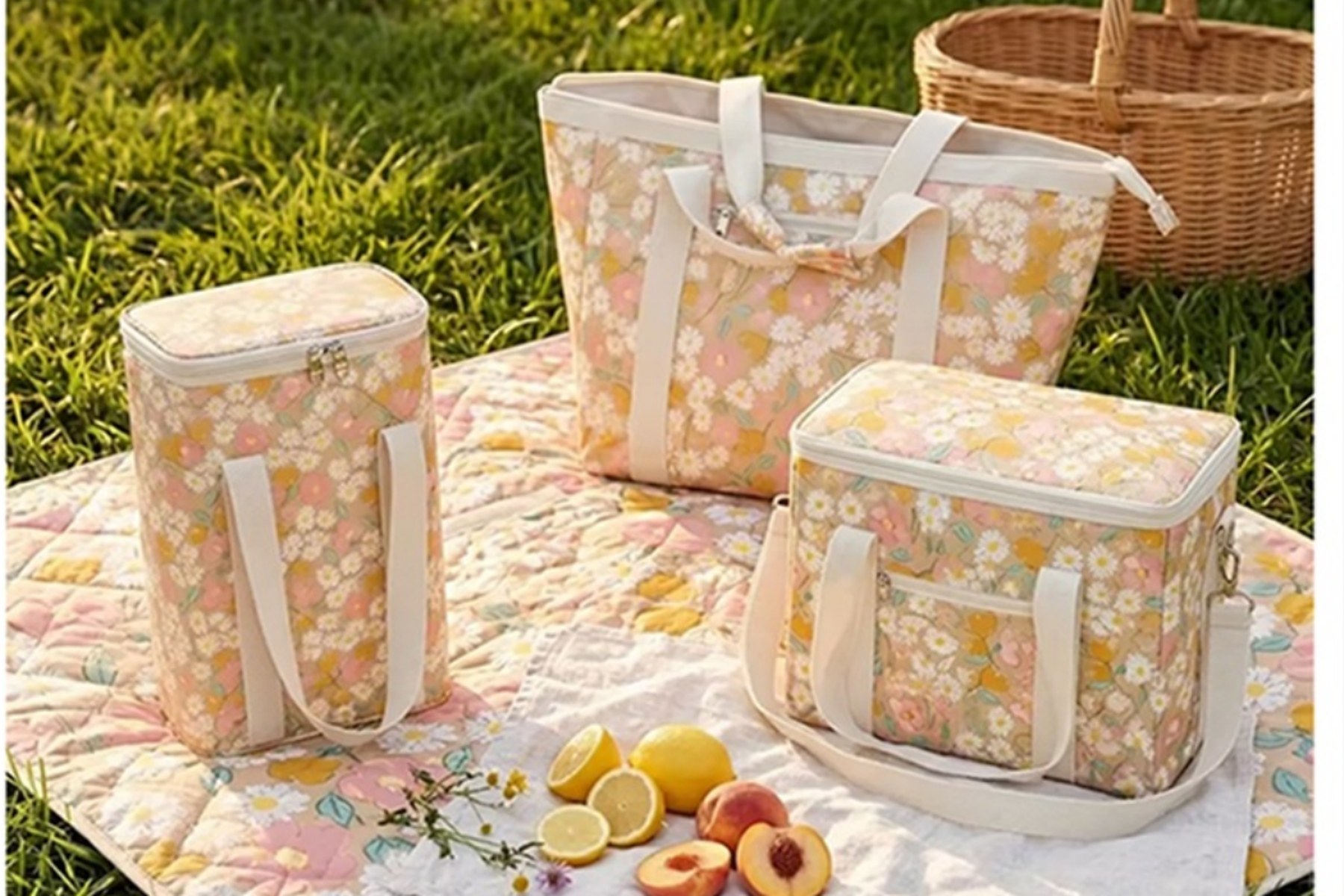
Product scope
Start with the bag’s job and distribution channel
Shopping bag, tote bag and reusable bag are overlapping market terms. This page owns the commercial family in Phase 1; deeper material pages are created only when they can express a distinct product program.
Printed Reusable Shoppers
Wide-opening shopping formats for retail, grocery, beach, picnic and travel programs, specified around load and cleaning needs.
Review the verified concept →Custom Tote Bags
A primary category on this page: everyday, merchandise and promotional tote formats with configurable size, handle and branding.
Explore custom tote bags →
Canvas & Cotton Route
A category entry only in Phase 1. Fabric weight, structure and print decisions will support a dedicated page only after product depth is verified.
Compare material routes →Foldable Shopping Bags
Packable structures planned around folded size, closure, handle comfort, capacity and repeated-use expectations.
Read the specification guide →Non-Woven & Woven PP
Cost-positioned shopping formats where basis weight, lamination, seam or ultrasonic construction and print route must be specified.
Compare material routes →Matching Collection Bags
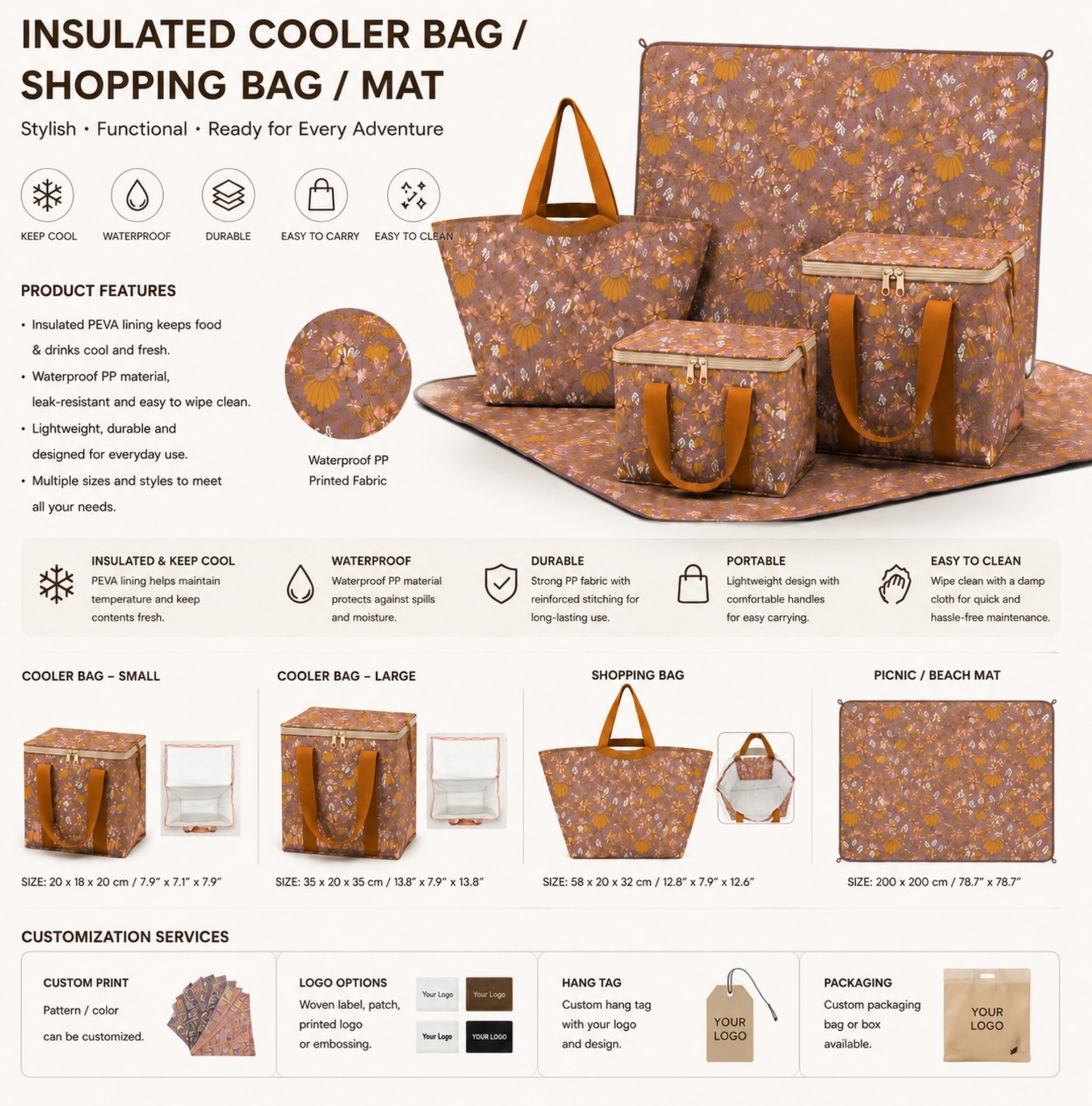
Use one print and trim direction across a shopping bag, cooler bag and picnic or beach mat for a coordinated seasonal range.
See the matching system →LISO development concept
A reusable printed shopper designed as part of a matching range
The current LISO catalog concept shows a 58 × 20 × 32 cm printed PP shopping bag with a wide flat base, reinforced handle attachment, inner zipper pocket and wipe-clean PEVA lining. These details describe the shown concept, not every shopping bag produced.
Custom tote bags
Give the highest-demand tote intent a clear owner
This section owns custom tote bag, wholesale tote and logo-tote language within the Phase-1 shopping page. It remains B2B: size, handle drop, gusset, closure, pocket, print area and packaging are specified for a product program.
Retail & merchandise
Everyday totes for boutiques, museums, bookstores, launches and branded merchandise need clear presentation and repeat-use value.
Promotional & event
Logo visibility matters, but handle comfort, useful size and distribution packing determine whether the bag is actually reused.
Travel & seasonal
Tote formats can bridge travel, beach and picnic use when closure, pockets, cleaning and capacity match the scene.
Material route
A material name is not an environmental claim
Choose material around hand feel, structure, print, cleaning, load and target price. Recycled, reusable or certified-content language is used only when the applicable scope and documentation are confirmed.
| Material route | Useful when | Key decisions | Claim boundary |
|---|---|---|---|
| Canvas / cotton | Natural hand feel and merchandise positioning | Fabric weight, shrinkage, print, handle and structure | Do not call it lower-impact without evidence |
| Polyester / nylon | Lightweight, foldable or printed programs | Weave, coating, print route, seams and expected load | Fiber name alone does not prove performance |
| Woven / non-woven PP | Retail and promotional cost positioning | Basis weight, lamination, seam/ultrasonic construction and print | Reusable/recyclable claims require market-specific support |
| Recycled-content route | Programs with documented material requirements | Certified scope, percentage, chain of custody and labeling approval | Confirm documents per order and market |
Print and branding
Match the artwork route to the bag construction
Print coverage, color count, fabric surface and intended wear determine the method. Labels and packaging then carry the same approved brand system.
Printed artwork
Screen, transfer, digital or sublimation routes are selected only where the material and coverage are compatible.
Tactile branding
Embroidery, woven labels and patches can add texture when backing, stitch density and placement are engineered.
Retail finishing
Hangtags, care labels, barcode placement, folded presentation and carton planning complete the program.
Matching collections
One print system, different product constructions
A shopping bag, cooler and mat can share artwork, color and trim direction while retaining the material and structure required for each product. The collection brief controls consistency without pretending the products are interchangeable.
Development workflow
Approve structure, branding and packing as one specification
Use case
Retail, grocery, promotional, merchandise, travel or matching range.
Construction
Size, gusset, base, closure, handles, pocket and expected load.
Artwork
Material-compatible print or branding route and color approval.
Production
Approved sample, checkpoints, folded packing and shipment plan.
Buying resources
Resolve material and merchandising questions before the RFQ
Use these focused guides to narrow the fabric, construction and retail direction. Return here when the product brief is ready for sampling and quotation.
Tote bag buying guide
Compare common materials, closures, handles, sizes and branding choices for B2B programs.
Read the buying guide →Canvas weight guide
Understand how fabric weight changes hand feel, structure, print behavior and intended use.
Compare canvas weights →Tyvek buyer guide
Review lightweight sewn Tyvek formats and the specification questions behind a custom brief.
Review Tyvek options →Tyvek branding guide
Compare print and branding considerations for a lightweight reusable merchandise bag.
Plan Tyvek branding →Tote retail trends
Use trend research as merchandising input, then validate it against your own customer and channel.
Review tote trends →Foldable shopper specification
Compare built-in pockets, separate pouches, closures, folded size, handle structure and packing choices.
Specify a foldable shopper →Handle, gusset and load guide
Translate the intended load and carry method into dimensions, reinforcement and an approval test plan.
Plan the bag structure →Need a different bag family?
Travel bags and organizers use different structures, capacities and purchasing criteria.
Explore travel product lines →Shopping & tote RFQ
Describe how the bag will be used
Usage, load, distribution and packing affect the cost more than a generic request for an “eco shopping bag.”
- Retail, grocery, promotional or merchandise use
- Target size, gusset and handle drop
- Expected load and cleaning needs
- Material direction and print coverage
- Quantity range and destination market
- Labels, hangtags and packing
Buyer questions
Frequently asked before sampling
Does LISO make paper or disposable plastic shopping bags?
This page covers reusable textile and sewn shopping/tote bags. Paper shopping bags and disposable plastic carryout bags are outside the stated scope.
What is the MOQ for a custom shopping bag?
It depends on the construction, material, print coverage, whether an existing pattern can be used and the packaging requirement. The applicable quantity is confirmed with the quotation.
Is every reusable bag eco-friendly?
No. Reusable does not automatically prove a lower environmental impact. Claims should identify the actual material, recycled content or verified certification scope and the market where the claim will be used.
Can one print be used across shopping bags and cooler bags?
Yes, when the artwork and color route are adapted to each product's material, print method and construction.
What information improves the first sample?
Provide intended use, target size, expected load, material preference, print coverage, handle direction, quantity range, target market and reference artwork.
Build a shopping bag people can actually use again
Start with the intended job, load and distribution method, then choose construction and branding.