Choosing a picnic blanket is not about choosing a pattern first.
If your brand starts with color, print, or a vague “premium feel” target, you will usually fix the real problems later in sampling. In this category, most delays come from one mistake: the product brief mixes too many priorities into one SKU.
A picnic blanket can win on:
- portability
- comfort
- outdoor protection
- visual identity
- sustainability
- retail price efficiency
It rarely wins on all of them at the same time.
If your brand is entering this category, the smarter move is to decide what job the product needs to do first. Then choose the construction that supports that job.
1. Start with the SKU Role
Before you discuss fabric, backing, or pattern, define the role of the product.
Common SKU Roles
1) Entry-level category test
Best for brands that want:
- fast development
- lower MOQ risk
- simple price communication
- easier market validation
2) Family outdoor use
Best for brands that need:
- stronger comfort story
- better ground protection
- broader use cases
- clearer functional value
3) Travel or compact outdoor carry
Best for brands that want:
- ultralight positioning
- easy packing
- smaller carton volume
- clean e-commerce messaging
4) Premium lifestyle line
Best for brands that need:
- stronger design identity
- better perceived quality
- more brand differentiation
- higher price acceptance
If your team cannot clearly name the SKU role in one sentence, the construction is probably not defined well enough yet.
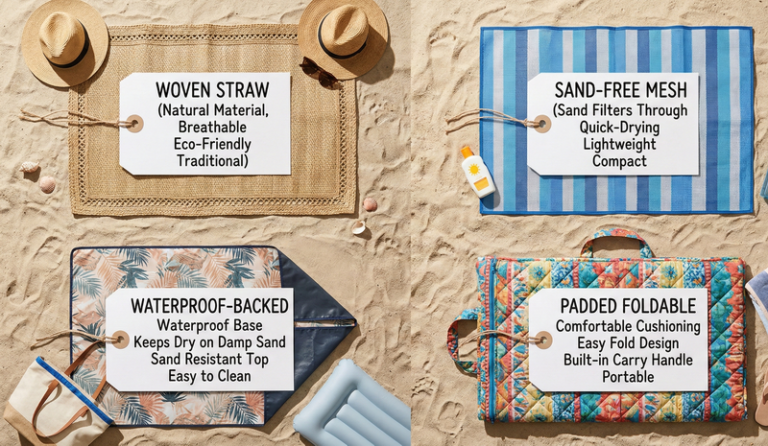
2. Know the Three Main Construction Routes
Most picnic blanket projects fall into three construction families.
A. Textile-led Construction
Typical features:
- lighter weight
- lower bulk
- easier folding
- cleaner visual presentation
Best for:
- travel
- festival
- gifting
- promotional or seasonal retail
- first-round category testing
Main limitations:
- less cushioning
- weaker outdoor comfort on uneven ground
- lower functional separation from a standard blanket unless materials are chosen carefully
B. Padded Construction
Typical features:
- added fill or layered comfort
- more protective ground feel
- stronger family-use positioning
Best for:
- family outdoor use
- baby and kids programs
- pet-related retail
- longer sitting sessions
- buyers who need a clearer comfort story
Main limitations:
- higher weight
- larger fold size
- more shipping volume
- more complexity in finish and edge handling
C. Hybrid Construction
Typical features:
- balance between visual appeal and outdoor use
- moderate bulk
- broader retail adaptability
Best for:
- mid-market private label
- brands testing multiple channels
- lifestyle products that still need practical function
Main limitations:
- easier to over-design
- can become unclear if priorities are not locked early
- more likely to create sample revision loops
3. Choose Based on Trade-offs, Not Preferences
Procurement mistakes usually happen when teams treat all features as equal.
They are not.
If You Choose More Cushioning, You Usually Accept:
- more bulk
- higher freight cost
- reduced packability
If You Choose a More Compact Structure, You Usually Accept:
- less ground comfort
- lower padding story
- more dependence on fabric quality to create value
If You Choose a More Premium-looking Face, You May Also Face:
- longer development time
- higher material cost
- more complex matching between face and backing
The right question is not “Which construction is best?”
The right question is:
Which construction supports your sales story with the least internal conflict?
4. Use Channel Logic to Guide Construction
Different channels usually need different picnic blanket logic.
Retail Chains
Often prefer:
- stable specs
- clear compliance path
- easy packaging logic
- clean price ladder
Best direction:
- straightforward hybrid or padded build
- clear positioning
- low sampling ambiguity
E-commerce Brands
Often prefer:
- high visual clarity
- compact fold communication
- easy comparison points
- strong unboxing and listing images
Best direction:
- ultralight or visually clean hybrid
- tight storytelling around portability or fabric identity
Lifestyle Brands
Often prefer:
- better texture
- stronger surface design
- more premium hand feel
- more brand distinction
Best direction:
- yarn-dyed, jacquard, or refined hybrid construction
Outdoor or Travel Brands
Often prefer:
- lighter carry
- efficient packing
- practical outdoor use
- performance-driven positioning
Best direction:
- textile-led or ultralight hybrid
- lightweight waterproof backing
- reduced trim complexity
If your brand sells into more than one channel, do not force one blanket to solve every retail need. Split the line instead.
5. Decide Your Premium Route Early
In this category, premium is not one thing.
Two buyers can both ask for “better quality” and mean completely different products.
Common Premium Routes
Comfort-led premium
You win through:
- thicker feel
- better cushioning
- stronger outdoor comfort
- more substantial hand feel
Portability-led premium
You win through:
- ultralight construction
- smaller fold size
- better carry convenience
- cleaner travel positioning
Textile-led premium
You win through:
- better face fabric
- woven identity
- more refined texture
- stronger lifestyle presentation
Sustainability-led premium
You win through:
- recycled materials
- cleaner finish story
- compliance readiness
- better documentation for retail programs
If your brand is still at the validation stage, portability-led premium is often easier to execute than comfort-led premium. It reduces freight pressure and creates a simpler online selling point.
If your brand already sells into family or home-adjacent channels, comfort-led premium may create a stronger reason to buy.
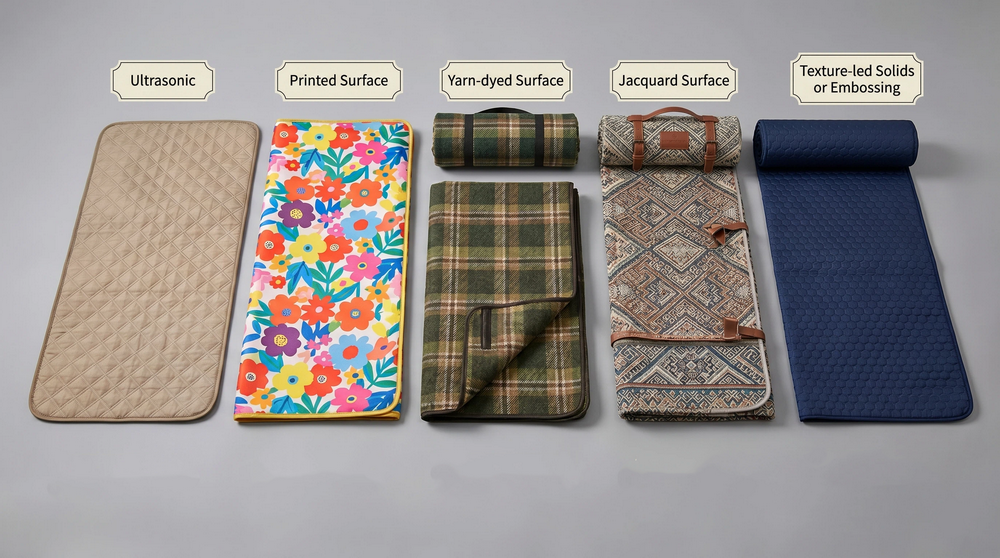
6. Surface Direction Should Match Business Needs
Do not choose the surface only because it looks better in the first mockup.
Choose it because it supports your launch model.
Printed Surface
Best when you need:
- faster artwork changes
- seasonal flexibility
- lower commitment to one long-running design language
Yarn-dyed Surface
Best when you need:
- evergreen core styles
- stronger textile identity
- better perception in checks and stripes
Jacquard Surface
Best when you need:
- more visual depth
- stronger premium differentiation
- a woven rather than applied look
Texture-led Solids or Embossing
Best when you need:
- modern minimalist collections
- less dependence on print trends
- cleaner premium communication
Quick Comparison
| Surface route | Strongest advantage | Main trade-off |
|---|---|---|
| Printed | Fast assortment changes | Can feel less premium if the base fabric is weak |
| Yarn-dyed | Better long-term identity | Less flexible for fast seasonal turnover |
| Jacquard | Premium woven depth | Higher development complexity |
| Embossed / textured solid | Clean, modern look | Depends heavily on material quality |
7. Construction Choice Should Also Support Margin
A good-looking blanket that creates constant sample revisions is not a good procurement decision.
Margin is affected by more than unit price.
You should also evaluate:
- freight efficiency
- fold consistency
- defect risk
- trim complexity
- surface stability
- packaging volume
- ease of repeating production
For example:
- A bulkier padded build may look stronger in sample review, but cost more in freight and storage.
- An ultralight design may look simpler, but improve margin through better carton utilization and easier online positioning.
- A premium woven face may support higher pricing, but only if the market actually sees and values that difference.
If your brand is price-sensitive, then simpler construction often protects margin better than feature-heavy development.
8. A Practical Selection Framework
Use this order to make faster decisions.
Step 1: Define the Main Use Case
Choose one:
- family leisure
- compact travel
- outdoor comfort
- premium gifting
- lifestyle retail
Step 2: Define the Premium Route
Choose one:
- comfort
- ultralight
- textile identity
- sustainability
- easy-care
Step 3: Match the Construction
- textile-led
- padded
- hybrid
Step 4: Choose the Surface Route
- printed
- yarn-dyed
- jacquard
- texture-led solid
Step 5: Align Packaging and Freight Logic
Check:
- fold size
- carton efficiency
- carry format
- retail presentation
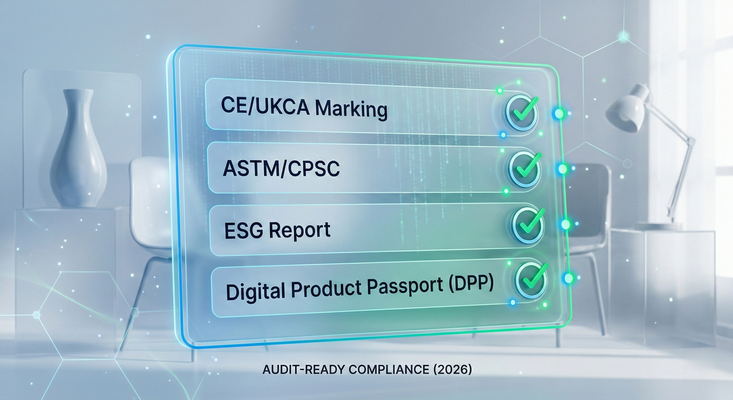
Step 6: Confirm Compliance and Documentation Needs
Especially if you sell into:
- EU retail
- premium wholesale
- larger chain programs
9. Quick Buyer Guide
| If your brand is at this stage | Best starting direction |
|---|---|
| Testing the category | Lightweight hybrid with a simple visual story |
| Building a core line | Stable construction with yarn-dyed or refined surfaces |
| Targeting family channels | Padded comfort-led build |
| Entering travel / outdoor lifestyle | Ultralight textile-led or hybrid structure |
| Selling into premium retail | Stronger material story + better surface identity |
Final Takeaway
The right picnic blanket construction is not the one with the most features.
It is the one that lets your brand sell a clear story with fewer internal trade-offs.
If your brand is early in the category, then simplify the brief.
If your brand already knows the channel, then let the retail logic drive the structure.
If your team keeps revising samples, then the issue is probably not the sample. It is the product hierarchy behind it.
Choose the role first.
Choose the premium route second.
Choose the construction third.
That is usually how good picnic blanket projects move faster and cost less to fix.