When I source the wrong material or miss one compliance point, I do not just lose margin. I lose trust, orders, and repeat business.
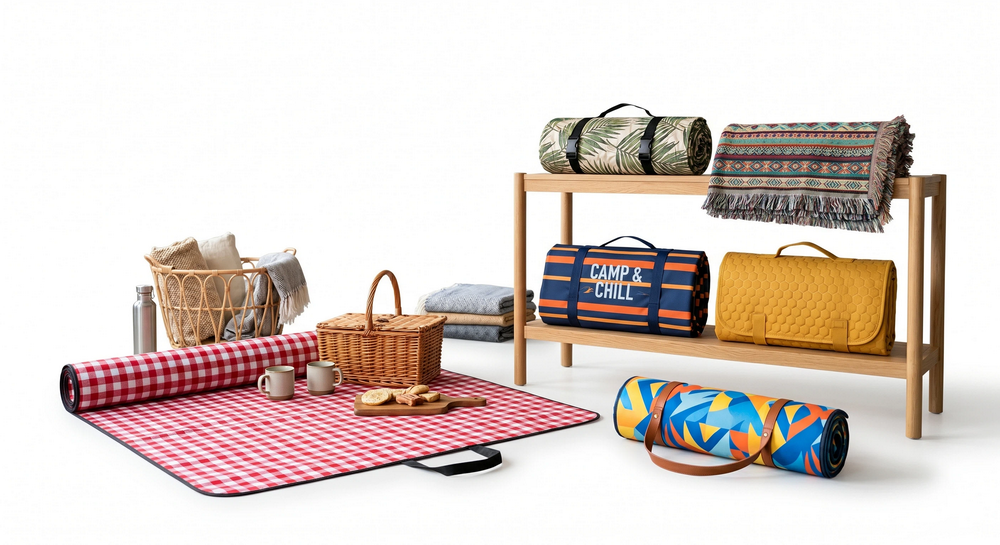
The best custom picnic blankets usually combine durable top fabrics, reliable waterproof backing, practical padding, and clear compliance support such as OEKO-TEX, GRS, and social audit readiness. I find that buyers now care about comfort, performance, and proof at the same time.
When I talk with buyers, I see one clear shift. A picnic blanket is no longer just a picnic blanket. It now needs to work for parks, campsites, beaches, RV trips, and family travel. That is why I always look at materials and compliance together, not as two separate topics.
Which Top Fabric Works Best for a Custom Picnic Blanket?
Many buyers start with color or print. I understand that. Still, I always begin with the top fabric, because the face material shapes the product’s feel, use case, and market position.
The best top fabric depends on the target market. I often use Oxford fabric for durability, fleece for comfort, and recycled polyester when buyers want a stronger sustainability story with better claim support.
When I review a custom picnic blanket project, I first ask where and how the product will be used. That question helps me avoid weak material choices. If the blanket is meant for rugged outdoor use, I usually lean toward Oxford fabric, because it offers better abrasion resistance and a more structured feel. If the target user is a family buyer who wants softness and warmth, I often look at fleece or similar brushed surfaces. If the buyer wants to position the item as more eco-conscious, I explore recycled polyester options that can align with GRS supply claims when the chain is managed correctly.
I also find it useful to compare the trade-offs in a simple way:
| Material Option | Main Strength | Main Limitation | Best Fit |
|---|---|---|---|
| Oxford Fabric | Durable and practical | Less soft to the touch | Outdoor-heavy use |
| Fleece | Soft and comfortable | Can feel less rugged | Family and comfort markets |
| Recycled Polyester | Supports sustainability positioning | Needs traceable claim support | Eco-focused projects |
In my experience, the wrong top fabric creates problems that appear later. A blanket may look good in the sample room, but then feel too stiff, pill too quickly, or fail to match the retail story. That is why I do not treat top fabric as a surface decision only. I treat it as the first strategic choice.
What Should Buyers Look for in Padding and Waterproof Backing?
A picnic blanket can have a nice print and still fail in real use. I have seen this happen many times. The product looks fine on a hanger, but once it touches wet grass or hard ground, the user sees every weakness.
I look for balanced padding and dependable waterproof backing. Good padding improves comfort and insulation, while the right backing helps block ground moisture without making the product too heavy or too rigid.
For padding, I usually think in practical terms. The buyer does not need the thickest possible layer. The buyer needs enough cushioning to improve comfort while keeping the blanket foldable and cost-effective. In many projects, I consider needle-punched cotton or pearl cotton style filling in a moderate range, because it can support both comfort and packability. What matters most to me is not just thickness. It is consistency after use, folding, and washing.
For the backing, waterproof performance matters, but material feel and compliance direction matter too. Traditional PVC-backed constructions still exist in the market, mostly because they are familiar and cost-driven. Still, in more premium or environmentally sensitive projects, I see more interest in TPU-coated or PEVA-based routes. I do not present these as magic answers. I present them as better-fit options for some programs, especially when weight, hand feel, or chemical concerns are part of the discussion.
I often explain the choice like this:
| Component | What I Check First | Why It Matters |
|---|---|---|
| Padding | Comfort vs bulk | Affects user experience and portability |
| Backing | Water resistance and flexibility | Affects outdoor performance |
| Construction | Quilting or lamination stability | Affects durability after repeated use |
I have learned that buyers do not only remember a good blanket. They remember a bad wet-ground experience. That is why I treat padding and waterproof backing as performance essentials, not hidden cost lines.
Which Compliance Standards Actually Matter in B2B Orders?
This is where many product discussions become vague. I prefer clarity. In B2B business, I do not think compliance is just a document set for the file folder. I think it is part of the product itself.
The most relevant standards often include social audit readiness, harmful-substance testing, and recycled-content claim support. In many projects, buyers focus on amfori BSCI or Sedex SMETA, OEKO-TEX Standard 100, and GRS documentation when recycled materials are promoted.
When I speak with buyers, I notice that compliance expectations vary by market, but the direction is clear. Buyers want fewer risks. They want cleaner claims. They want documents that match the sales story. If a product is sold as skin-contact friendly, buyers may ask about OEKO-TEX Standard 100 because it helps show that the textile has been tested for harmful substances. If a product is marketed with recycled content, GRS-related chain support and transaction records matter because sustainability claims need proof, not just labels on artwork. If the buyer works with major retail channels, social audit frameworks such as amfori BSCI or Sedex SMETA often become part of supplier review.
I usually organize the conversation this way:
| Compliance Area | What Buyers Usually Want | My Practical View |
|---|---|---|
| Social Responsibility | Factory audit visibility | Helps build sourcing confidence |
| Chemical Safety | Fabric testing support | Important for skin-contact products |
| Recycled Claims | Traceable documentation | Necessary for credible eco claims |
| Water-Repellent Chemistry | PFAS-free direction where needed | More important in stricter markets |
I also pay close attention to finish chemistry. In stricter markets, especially where PFAS restrictions affect textiles, buyers are asking harder questions about water-repellent finishes. I do not use dramatic language when I explain this. I simply say that compliance pressure is rising, and buyers should align finish choices with the rules of their destination market.
From my point of view, the biggest mistake is not failing a test. The biggest mistake is building a sales message that the documentation cannot support. Once that gap appears, trust becomes expensive to repair.
Conclusion
I believe the best custom picnic blankets win when material choice, real use performance, and compliance proof all support the same product story.