You want to sell eco-friendly beach bags, but high material costs are eating into your margin.
Commercial sourcing path: If this topic is part of a retail, resort, promotion or private-label sourcing brief, use LISO's private label beach bag sample plan to review recycled and cotton material choices, claim wording and sampling risk before sending specs.
Your buyers ask for sustainable products. Your retail partners want a credible green story. But every time you quote organic cotton, your numbers get tighter. What looks like the “safe” material choice often turns into the most expensive one.
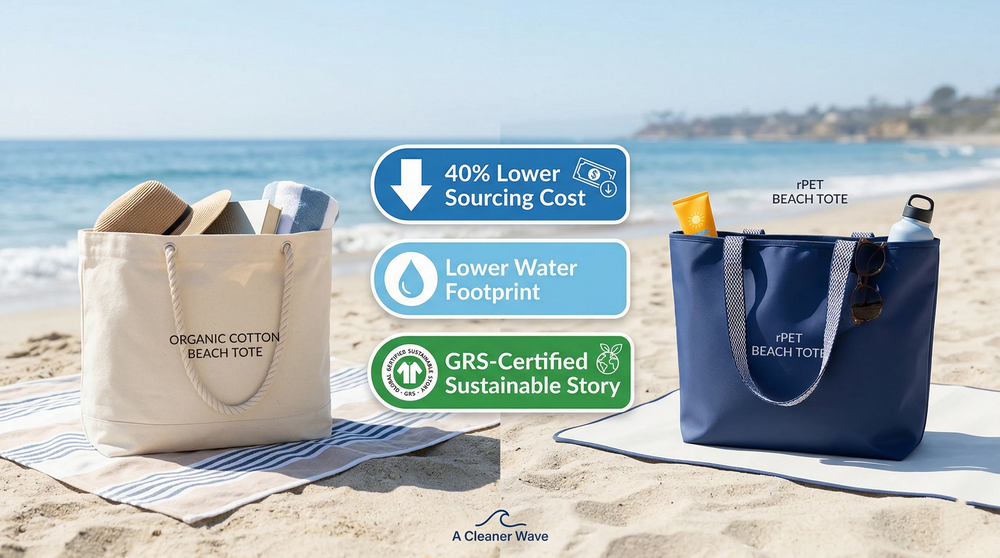
For many importers, wholesalers, and private label brands, Recycled PET (rPET) is now the smarter option.
It helps you lower sourcing costs, maintain a strong sustainability claim through GRS certification, and offer a beach bag that performs better in real use. If your goal is to build an eco-friendly beach bag line that is both sellable and profitable, you need to compare materials based on business reality, not old assumptions.
Quick Answer
For most eco-friendly beach bag programs, rPET is a better sourcing choice than organic cotton.
It typically gives you:
- lower material cost
- lower water impact
- better durability for beach use
- stronger moisture resistance
- a credible sustainability story through GRS-certified recycled content
Organic cotton may still work if your entire brand depends on a natural-fiber image. But if you care about margin, scalability, certification, and product performance, rPET often makes more sense.
Why So Many Buyers Still Overpay for Organic Cotton
A lot of buyers still believe cotton is the greenest option by default.
That assumption sounds reasonable on the surface. Cotton feels natural. It looks familiar. It fits the kind of eco-language many brands have used for years.
But once you move from branding language to sourcing math, the picture changes.
I have seen many buyers stay committed to organic cotton simply because they believe it is the only material customers will accept as “eco-friendly.” They keep paying more, hoping the market will reward them for it. Sometimes it does. Often, it does not.
Today’s market wants more than a natural story. Buyers also want:
- a competitive landed cost
- a recognized sustainability certification
- reliable supply
- strong product performance
- a message consumers can understand quickly
That is where rPET beach bags have become much more compelling.
Is Cotton Really the Greenest Choice for Beach Tote Bags?
If you focus on natural fibers, it is easy to assume cotton is automatically the best environmental choice.
But when you look at the bigger picture, cotton is not as simple as it seems.
Cotton production is resource-heavy. It requires large amounts of water, significant land use, and, in conventional farming, a high dependence on pesticides. Organic cotton solves part of that story, especially around chemicals, but it still depends heavily on water and land.
That matters more than many brands realize.
If you are paying a premium for organic cotton because you want an eco-friendly product, but the material still carries a heavy resource burden, then your “safe” sustainability choice may not be as strong as it appears.
Environmental Impact Comparison
| Resource Used | Standard Cotton | Organic Cotton | Recycled PET (rPET) |
|---|---|---|---|
| Water Consumption | High | High | Low |
| Pesticide Use | High | None | None |
| Carbon Footprint | High | Medium | Low |
| Land Required | High | Very High | None (Waste-Based) |
The Land Use Problem Buyers Often Ignore
Organic cotton usually delivers lower yield per acre than conventional cotton. That means more farmland is needed to produce the same amount of fabric.
For small artisanal collections, that may not feel important. For wholesale and large-volume production, it matters a lot.
More land use means more agricultural dependency, more pressure on raw material supply, and often higher long-term costs. If your beach bag line is meant to scale, that premium does not stay theoretical. It ends up in your quotation.
Why Cotton’s Water Footprint Also Hurts Your Profit Margin
The sustainability discussion is important, but for many importers the bigger issue is cost.
Cotton prices are influenced by farming conditions, water availability, harvest pressure, and global raw material volatility. When growing conditions become more expensive, fabric prices rise with them.
That becomes painful in categories like beach bags, where fabric weight, body size, and reinforcement often make material one of the biggest cost drivers in the entire product.
I have seen buyers insist on organic cotton because they wanted a safer sustainability image for retail. But once they compared the final unit economics, the numbers were hard to justify.
Cost Breakdown for Wholesale Importers
| Cost Factor | Organic Cotton (12oz) | Recycled PET Canvas | Price Difference |
|---|---|---|---|
| Material Cost (USD) | $2.80 | $1.40 | 50% Lower for rPET |
| Export Tax / Fees | Standard | Standard | Neutral |
| Labor Cost | High | Medium | 10% Lower for rPET |
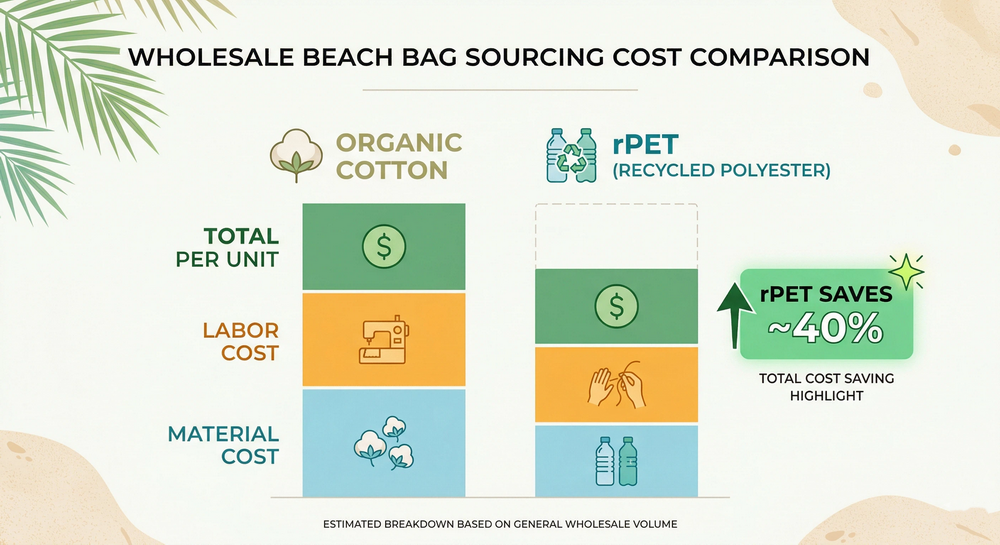
| Total Per Unit | $4.50 | $2.70 | ~40% Total Saving |
For buyers working with private label programs, that kind of gap changes everything.
A material difference of this size can decide whether your beach bag program feels premium and scalable, or expensive and fragile.
Why rPET Usually Gives You Better Sourcing Stability
Another major advantage of rPET is supply predictability.
Cotton depends on farmland, weather, irrigation, and harvest cycles. rPET comes from recycled plastic feedstock, which makes it less exposed to the same agricultural swings.
That often means:
- more stable quotations
- less exposure to seasonal crop volatility
- easier cost planning for repeat orders
- better control for long-term sourcing programs
Lower cost is important. But lower volatility is often just as valuable.
Can rPET Really Work in the European Market?
Many importers still hesitate at this point.
They worry buyers will see the word polyester and immediately think “cheap plastic.”
A few years ago, that concern was stronger. Today, the conversation has changed.
Many European buyers now respond very well to recycled-material stories, especially when those stories connect to plastic waste reduction, ocean cleanup, or circular product design.
And in the beach category, that message feels especially natural.
A cotton tote gives you a “natural material” story.
An rPET tote gives you a recovered waste turned into useful product story.
For many consumers, a beach bag made from recycled bottles feels relevant in a way that organic cotton sometimes does not. It connects directly to the environmental problem they can already see: plastic waste near beaches, coastlines, and oceans.
That makes rPET easier to sell than many buyers expect.
Consumer Perception vs. Real Performance
| Feature | Organic Cotton | Recycled PET (rPET) |
|---|---|---|
| Hand Feel | Soft / Natural | Smooth / Durable |
| Water Resistance | Low | High |
| Marketing Story | Clean Farming | Plastic Recovery / Ocean Cleanup |
| Durability | Medium | Very High |
Why rPET Is Often a Better Product for Beach Use
This is one of the strongest practical arguments for switching.
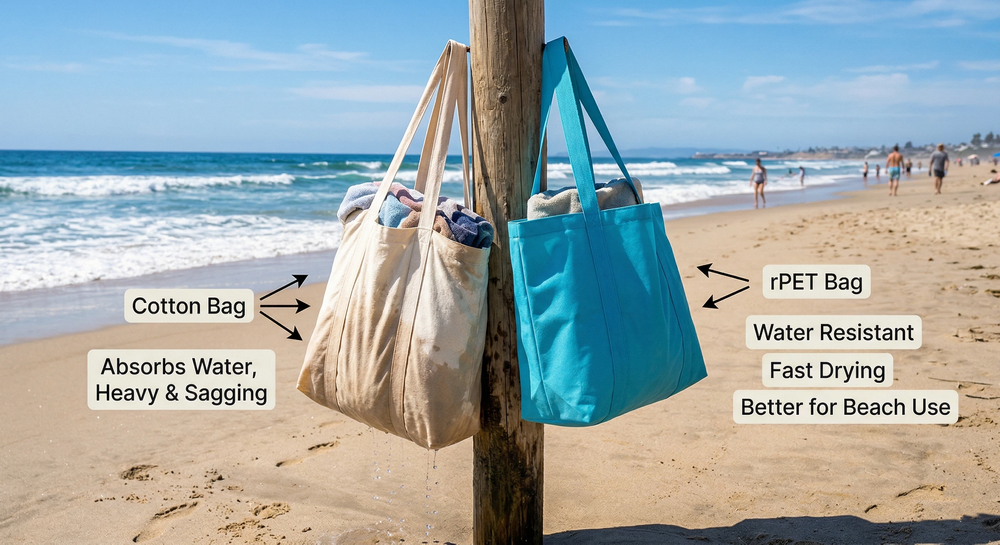
A cotton beach bag can absorb water quickly. It gets heavier when wet, stays damp longer, and can be inconvenient in humid or coastal environments.
An rPET beach bag behaves differently. It dries faster, resists moisture better, and usually holds its structure more effectively when used near sand and sea.
So this is not only a sustainability or margin decision.
It is often a product-improvement decision too.
And that matters because durability is part of sustainability. A bag that lasts longer needs to be replaced less often. For many brands, that is a better environmental story than simply using a natural fiber at a higher cost.
How GRS Certification Helps You Keep a Strong Green Story
One reason buyers stay attached to organic cotton is certification confidence.
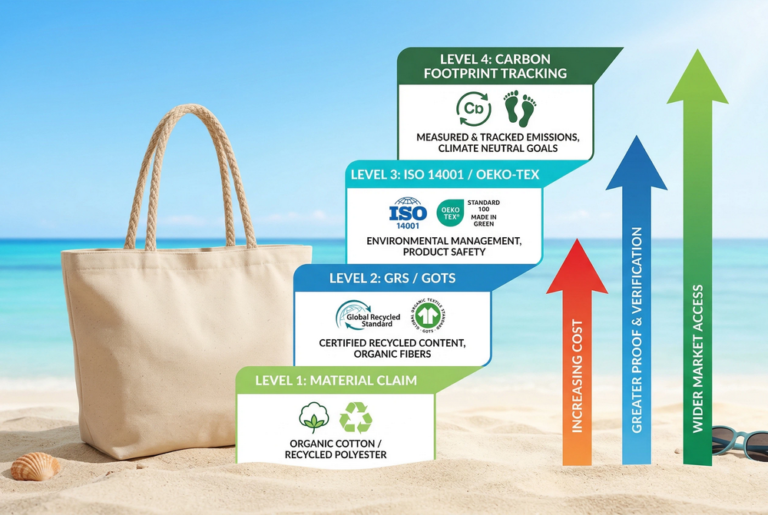
They assume they need GOTS to look credible in front of retailers. But for recycled materials, GRS (Global Recycled Standard) is one of the most useful and widely recognized certifications available.
That gives importers a strong commercial advantage.
Instead of paying the premium that comes with organic cotton, you can build your sustainability story around GRS-certified recycled material and still meet buyer expectations for traceability and credibility.
GOTS vs. GRS
| Feature | GOTS (Organic Cotton) | GRS (Recycled Standard) |
|---|---|---|
| Main Requirement | Organic Farming | Recycled Content |
| Supply Chain Tracking | Full Traceability | Full Traceability |
| Social Standards | Included | Included |
| Chemical Restrictions | Included | Included |
| Market Recognition | Very High | Very High |
GRS helps prove that the recycled content is verified and tracked through the supply chain. For many retailers and importers, that is exactly what they need.
If your beach bag line is built around recycled fabric, GRS gives you a professional, recognized framework to support the claim.
Why This Matters for Wholesale Buyers
With GRS-certified rPET beach bags, you can tell a strong story:
- the bag uses verified recycled material
- the recycled content is traceable
- the sustainability claim is backed by recognized certification
- the product is practical for beach and resort use
- the sourcing model is more cost-efficient than organic cotton
That is a serious market position.
You are not weakening your eco-story by moving away from organic cotton. You are updating it to fit the way modern sustainability and sourcing actually work.
How to Position rPET Without Making It Sound Cheap
This is where many suppliers get it wrong.
They describe the fabric in a flat, technical way. They say “recycled polyester,” and the product instantly sounds ordinary.
The answer is not to hide the material.
The answer is to frame it correctly.
Better positioning language includes:
- GRS-certified recycled PET canvas
- beach tote made from recycled water bottles
- low-water alternative to organic cotton
- durable recycled fabric designed for coastal use
- recycled beach bag material with fast-drying performance
That language does three important things at once:
- it supports the sustainability claim
- it highlights product performance
- it protects your premium brand image
The narrative should not be:
We chose the cheaper material.
It should be:
We chose a certified recycled material that lowers water impact, improves beach performance, supports a modern sustainability story, and helps keep the product commercially competitive.
That is a much stronger message for both buyers and end customers.
So Which Material Should You Choose?
Choose organic cotton if your brand depends heavily on:
- natural-fiber identity
- soft, traditional hand feel
- organic farming as a central part of the brand story
Choose rPET if your priorities are:
- lower sourcing cost
- stronger margins
- more stable supply
- better beach performance
- faster drying and moisture resistance
- a certified recycled-material story
For many importers, wholesalers, and private label brands, rPET is the more practical and scalable option.
It gives you a more modern balance of cost, function, and sustainability.
FAQ
Is rPET more sustainable than organic cotton for beach bags?
It depends on which environmental metric you focus on, but rPET often performs better in areas like water use, waste recovery, and product durability. Organic cotton may still appeal to brands centered on natural fibers, but rPET often offers a better sustainability-to-cost balance.
Is GRS certification enough for European buyers?
In many cases, yes. GRS is widely recognized for recycled materials and is useful for supporting recycled-content and traceability claims in wholesale and retail supply chains.
Does rPET feel cheap compared with cotton canvas?
Not necessarily. Modern rPET fabrics can be developed with structure, weight, and finish that feel suitable for premium tote bags. Product design and presentation make a big difference.
Which material is better for waterproof beach tote bags?
rPET is usually the better option because it handles moisture better, dries faster, and performs more reliably in beach environments.
Is organic cotton still worth using?
Yes, in some cases. If your brand story is strongly tied to natural fibers or organic farming, organic cotton may still make sense. But if you need better margin and stronger functional performance, rPET is often the smarter business decision.
Final Thoughts
If you are still treating organic cotton as the only credible material for eco-friendly beach bags, it may be time to rethink the assumption.
Today’s buyers want more than a natural story. They want certification, function, commercial viability, and a sustainability claim that makes sense in the real world.
That is why more brands are re-evaluating the role of rPET vs organic cotton for eco-friendly beach bags.
If your goal is to reduce sourcing cost, protect your margins, maintain a strong sustainability position, and offer a bag that actually performs better at the beach, rPET is no longer the compromise option.
For many wholesale programs, it is the smarter choice.
<h2>Turn the Material Choice Into a Beach Bag Sampling Brief</h2> <p>If your team is comparing rPET, organic cotton, canvas or coated polyester for a private label beach bag program, the material choice should connect directly to logo method, lining, handle strength, MOQ and packaging. LISO can help buyers turn that material decision into a retail-ready beach bag specification.</p> <p><a href="https://lisohome.com/product/beach-day-essentials/beach-bags/">View Beach Bag Manufacturing Options</a></p>