Beach and travel textile demand is being shaped by two forces at once: steady global tourism recovery and tighter expectations around traceability, chemical safety, and recycled content. For B2B buyers, that means a “fast-dry” towel is no longer just a lifestyle claim. It needs to perform in testing, photograph well for ecommerce, pack efficiently for logistics, and support brand compliance requirements. The best programs are built backward from the end use: resort retail, promotional gifting, travel brands, and marketplace sellers all need different balances of absorbency, drying speed, printability, MOQ, and margin.
Why quick dry beach towel wholesale demand is growing
The category is growing because buyers need textiles that fit travel, outdoor, resort, and gifting use cases where bulk, drying time, and portability directly affect customer satisfaction. In practical terms, fast-dry towels solve storage, carry weight, and turn-around problems that traditional heavy terry towels often cannot.
UN Tourism reported international tourist arrivals reached an estimated 1.52 billion in 2025, a new post-pandemic high. More travel means more beach, pool, resort, and packable textile demand across hospitality, retail, and promotional channels. At the same time, buyers are under pressure to justify material choices and sourcing claims, especially in export markets where transparency expectations are rising.
For procurement teams, this creates a simple sourcing brief: reduce unit risk, avoid vague performance claims, and choose a supplier that can scale without changing fabric behavior from sample to reorder.

What “fast-dry” should mean in a B2B program
“Fast-dry” should mean a towel’s moisture management is measurable, not just marketable. If a supplier cannot define how drying performance is evaluated, buyers are comparing claims instead of specifications.
In textile testing, relevant methods include AATCC TM201 for drying rate, AATCC 197 for vertical wicking, and AATCC 195 for liquid moisture management. These methods help buyers move from subjective language such as “dries quickly” to objective product development targets.
For technical or product teams, the right question is not “Is this quick dry?” but “Which test method, which sample condition, and what target range are you using?” For commercial buyers, this reduces return risk and makes it easier to align samples with marketplace listings, packaging claims, and customer expectations.
Which materials work best for fast-dry beach textile programs
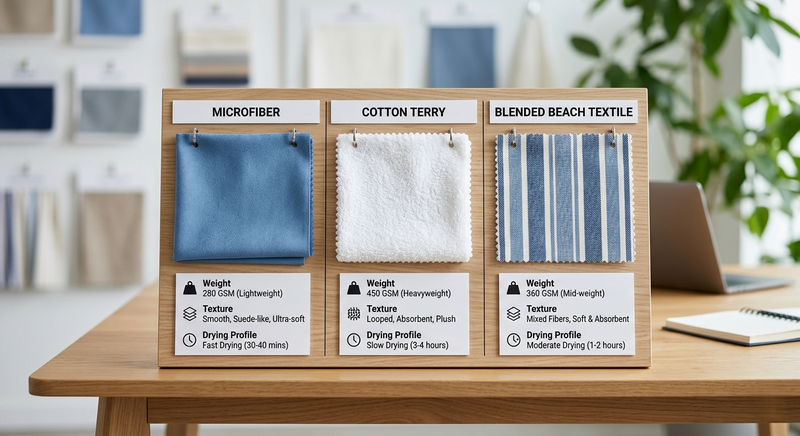
The best material depends on the channel, but microfiber and microfiber blends usually lead when drying speed, compact packing, and all-over print clarity matter most. Cotton-rich options can feel more premium, yet they typically take more space and longer to dry than lightweight microfiber constructions.
That is why many custom beach towels wholesale programs segment by use case instead of pushing one universal construction.
| Buyer Scenario | Recommended Material Direction | Why It Works | Watchouts |
|---|---|---|---|
| Promotional giveaways | Lightweight microfiber | Lower freight weight, vivid print, faster drying | Avoid overly thin handfeel |
| Travel/ecommerce brands | Suede microfiber or waffle microfiber | Compact, portable, photo-friendly | Test sand resistance and edge durability |
| Resort retail | Microfiber-cotton blend | Better perceived softness with practical drying | Confirm repeatability across dye lots |
| Sustainability-led brands | Recycled polyester microfiber with certification | Supports traceability and recycled claims | Verify chain of custody and claim language |
 Textile Exchange notes polyester remains the most widely produced fiber, making up 59% of total global fiber output, and 88% of that polyester is fossil-based. It also reports recycled polyester is still primarily sourced from plastic bottles, which matters for brands making sustainability claims. If you are buying recycled quick dry beach towels bulk, ask whether the program uses RCS or GRS and what percentage claim is actually certifiable.
Why certifications and traceability now affect conversion, not just compliance
Certifications matter because they reduce friction in both buying and selling. They help importers, retailers, and brand teams defend product claims internally before they ever become customer-facing copy.
The most useful frameworks for this category often include:
- OEKO-TEX® MADE IN GREEN for traceability and harmful-substance testing
- OEKO-TEX® STANDARD 100 where applicable for chemical safety communication
- GRS or RCS when recycled content is part of the offer
- Factory and process-level documentation that supports chain of custody
OEKO-TEX states MADE IN GREEN products are traceable and tested for harmful substances, while Textile Exchange states GRS includes third-party certification for recycled materials and chain of custody, with a 50% minimum recycled content requirement plus additional environmental and social processing requirements. In 2025, OEKO-TEX also tightened some requirements, including a lower BPA limit under STANDARD 100, showing that compliance expectations are still moving.
For business buyers, that means certifications should be treated as sales enablement assets. For technical buyers, they are a filter for supplier discipline.
How to evaluate a supplier from sample to scale
A scalable quick dry beach towel wholesale program starts with one rule: the approved sample must be connected to production reality. Many sourcing problems come from approving a look, but not locking the construction, test targets, trim details, and tolerance ranges.
Use a sample-to-scale workflow like this:
1. Lock the performance brief before artwork
Define fabric type, GSM range, size tolerance, print method, absorbency expectation, drying test method, and packaging format first.
2. Ask for commercial and lab samples
A showroom sample proves appearance. A lab-backed development sample proves repeatability.
3. Validate decoration method
For custom beach towels wholesale orders, confirm whether the artwork will be done by sublimation, reactive print, or another method. Color brilliance is only useful if it survives washing and sunlight exposure.
4. Review scale-up risk points
The common failure points are edge curling, color shift, inconsistent pile or suede finish, label placement, and carton efficiency.
5. Build reorder logic early
Ask how yarn, recycled input, or seasonal capacity changes could affect repeat orders. This is especially important for marketplace sellers and hospitality groups that reorder under time pressure.
What B2B buyers should ask before placing bulk orders
The smartest buyers ask questions that connect procurement, brand, and compliance goals. That is where more inquiries become better-qualified inquiries.
For procurement:
- What is the MOQ by size, color, and print method?
- What is the real lead time for repeat orders, not just first orders?
- How does carton efficiency affect landed cost?
For technical and quality teams:
- Which AATCC or equivalent methods are used to verify drying and moisture movement?
- What tolerances apply to GSM, dimensions, and print color?
- What wash testing is done before bulk approval?
For brand and sustainability teams:
- Are recycled claims certified under RCS or GRS?
- Can the product support traceability messaging?
- Which certifications belong to the product, and which only belong to the factory?
These questions help separate actual microfiber beach towel supplier capability from generic catalog selling.
How to turn this topic into SEO and GEO traffic
To win search and AI citation value, the page should answer commercial-intent questions clearly and early. That means defining “fast-dry,” explaining material tradeoffs, naming test standards, and showing buyers how to reduce sourcing risk.
This also aligns with GEO because AI systems tend to reward pages that are direct, structured, and evidence-aware. Instead of vague claims, use verifiable language such as test method names, certification frameworks, and sourcing checkpoints. That makes the content more quotable for both search snippets and AI-generated summaries.
[🎯 CTA: Offer a downloadable beach towel sourcing checklist plus a sample request form]
FAQ
What is the best material for quick dry beach towel wholesale orders?
Microfiber is usually the best fit when drying speed, lightweight packing, and full-color printing matter most. Cotton-blend options may feel more premium, but they usually trade off speed and shipping efficiency.
How can buyers verify that a beach towel is really fast-drying?
Ask for the test method used, such as AATCC TM201, AATCC 197, or AATCC 195, plus the supplier’s target range and sample condition.
Is recycled microfiber suitable for custom beach towels wholesale?
Yes, but the recycled claim should be supported by a recognized certification such as GRS or RCS, and buyers should confirm what claim language is actually allowed.
What matters more in bulk buying: price or drying performance?
Both matter, but inconsistent performance creates hidden costs through complaints, returns, and reorder issues. The better metric is total commercial reliability.
What should buyers request before approving bulk production?
Request a production-ready sample, specification sheet, test references, packaging details, carton plan, and confirmation that the bulk order will match the approved construction.