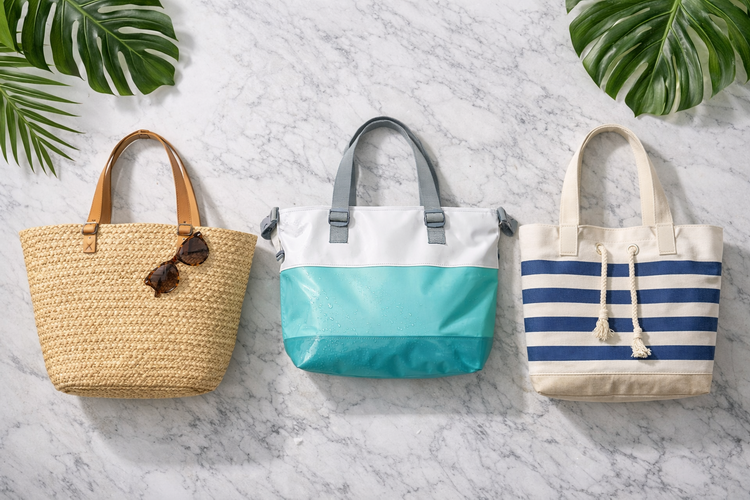
Private label beach bags often fail because buyers customize the visible logo but ignore the product route. The bag looks branded, but it may not feel retail-ready.
Commercial sourcing path: If this topic is part of a retail, resort, promotion or private-label sourcing brief, use LISO’s private label beach bag manufacturing options to review logo method, trims, packaging, material route and sample decision points before sending specs.
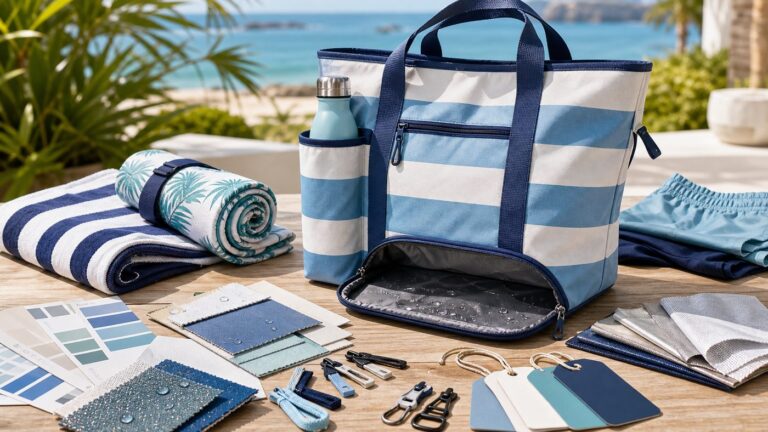
Private label beach bags need more than a logo. Importers should decide fabric, lining, zipper, handle, pocket structure, label, hangtag, carton mark, packaging and collection match before approving the sample.
When a buyer says “private label,” I ask what the label must prove. Is it a resort gift? Is it a retail shelf program? Is it an ecommerce product line? Is it part of a beach bag, beach mat, towel and cooler bag set? Each answer changes the product.
Which private label beach bag options actually matter?
The most important options are fabric route, handle construction, lining, closure, logo method, packaging and collection consistency. These details affect consumer use, retail look, after-sale risk and reorder confidence.
| Custom option | Buyer value | Common mistake |
|---|---|---|
| Fabric | Controls price, weight, durability and print quality. | Choosing by color only. |
| Lining | Protects wet towels and improves cleaning. | Calling all linings waterproof without defining use. |
| Handle | Controls comfort and load strength. | Approving a weak handle because it looks clean in photos. |
| Logo | Creates brand recognition. | Using a logo method that does not match the fabric. |
| Packaging | Improves retail presentation and warehouse control. | Treating packaging as an afterthought. |
Should a beach bag be developed as one SKU or part of a collection?
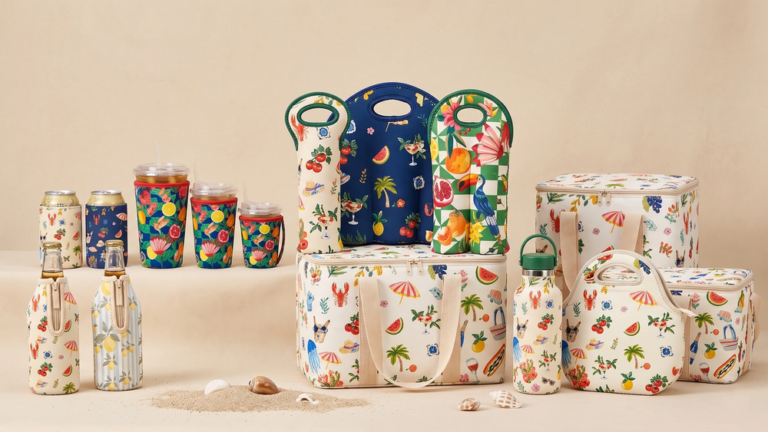
A single SKU is useful for quick testing, but a coordinated collection can create stronger shelf appeal and higher order value. Beach bags often work better when matched with mats, cooler bags, towels or wet-dry pouches.
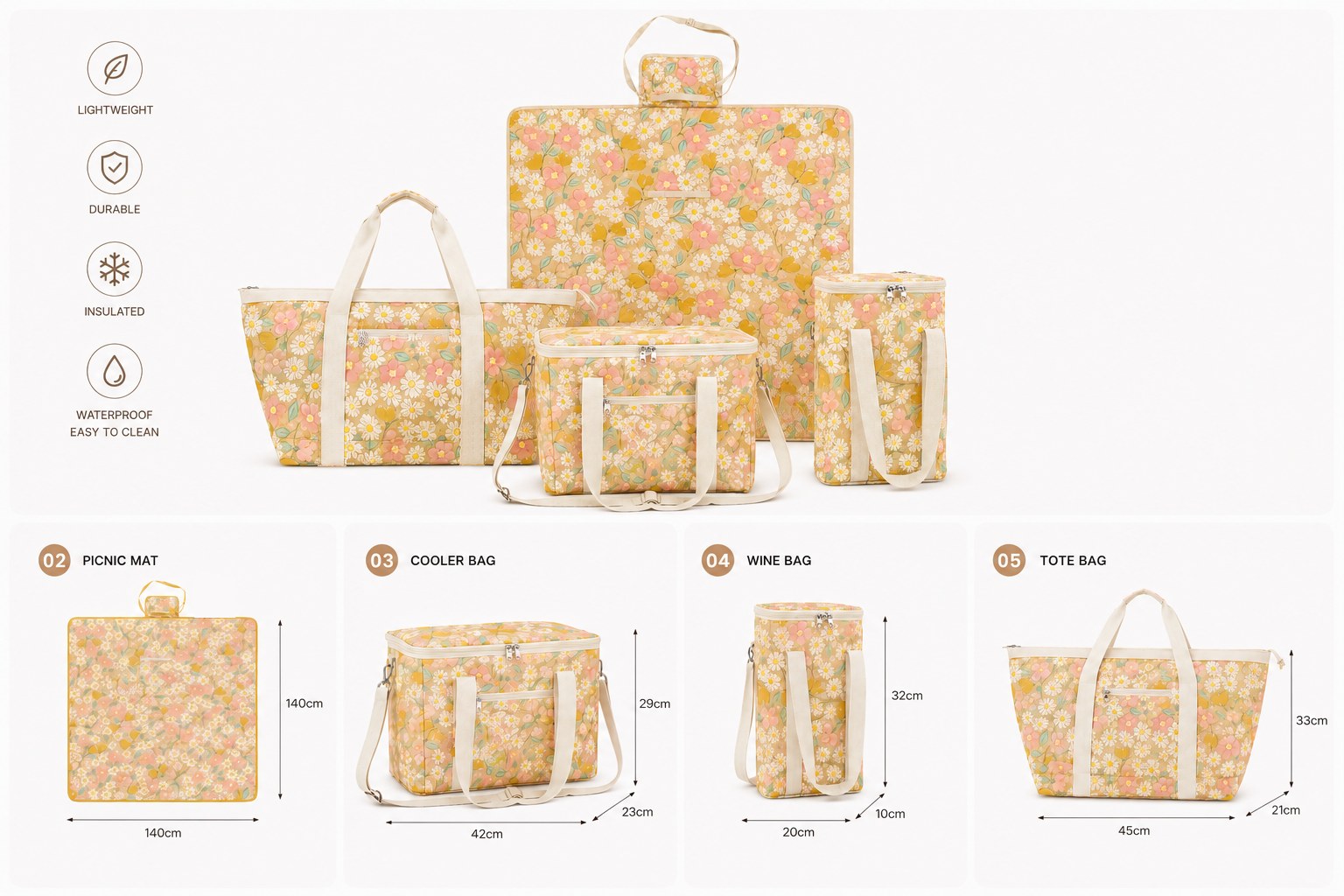
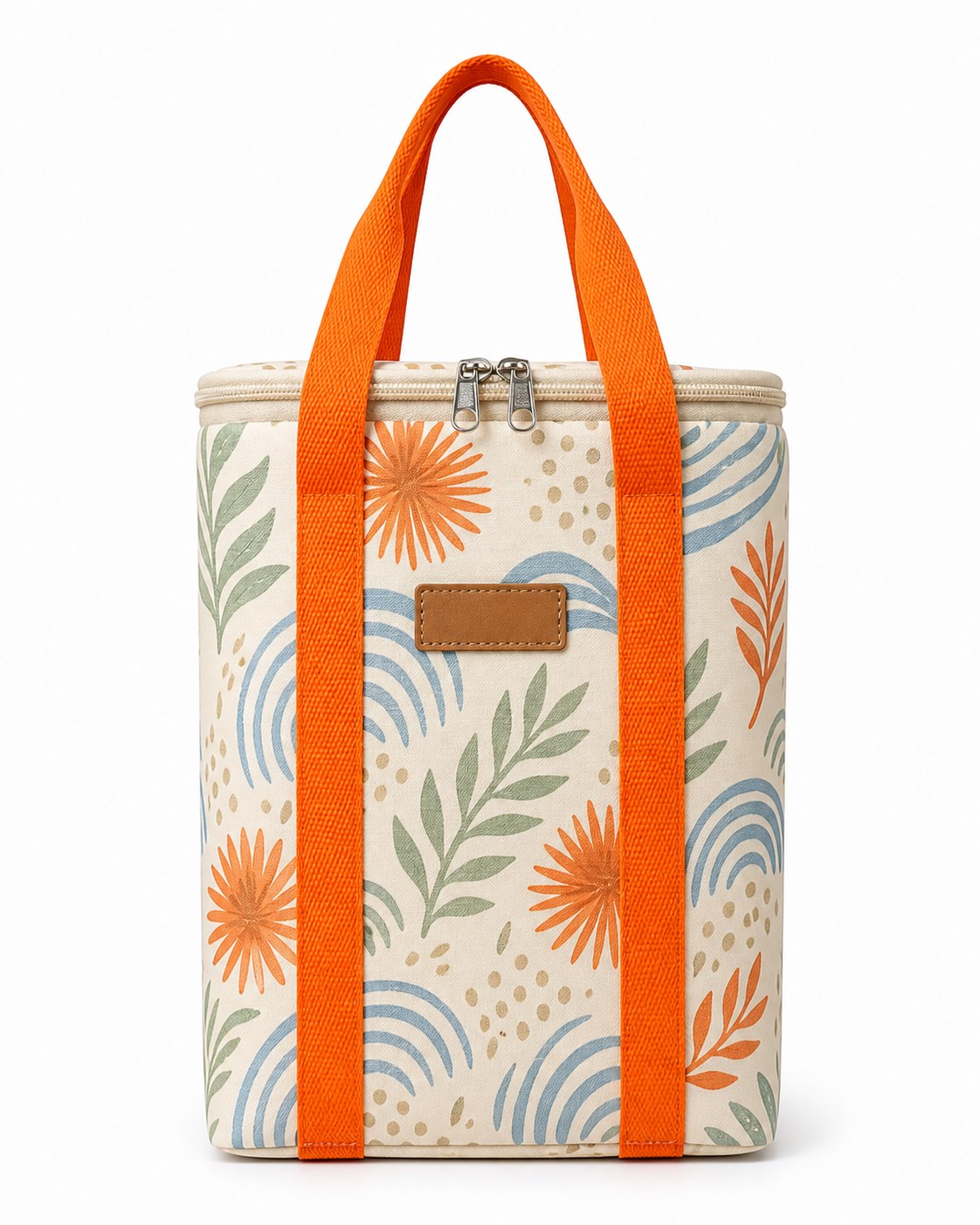
I do not believe every buyer should build a large collection from day one. That creates inventory pressure. But I do believe a buyer should design the first beach bag with the future collection in mind. The same color story, print scale, handle color and packaging logic can later extend into a beach mat, cooler bag, wine bag, towel or pouch. This is how a small product test becomes a repeatable product program.
How should importers control logo, tag and packaging decisions?
Importers should decide the logo method after choosing fabric, not before. A woven label, printed logo, embroidery, leather patch, zipper pull and hangtag all create different cost and quality outcomes.
For example, a printed logo may be clean on some fabrics but weak on textured materials. Embroidery can look premium, but it can also create puckering if the fabric is too light. A woven label is safer for many beach bag programs because it gives a stable brand detail and can be repeated across other items. Packaging should also match the channel. Resort buyers may need a clean gift-ready look. Retailers may need barcode labels and shelf-ready cartons. Promotional buyers may care more about compact packing and price.
Should buyers use one pattern across several beach products?
For many new brands, one pattern across several beach products is more useful than many unrelated designs. It helps the buyer create a clear visual story and makes the range easier for retailers to understand.
This is especially true for Beach Day products. A matching beach bag, mat, cooler bag, wine bag or towel can raise basket value because the end customer sees a complete day-out solution. It also helps the brand look more professional. The risk is color and scale control. A print that works on a large mat may look crowded on a small pouch. A logo that looks clean on a tote may look too large on a compact cooler bag. The factory should help adjust pattern scale, label placement and trim color across the series.
For a buyer with limited budget, I would not start with ten SKUs. I would start with two or three connected items. This gives enough range to test collection logic, but it keeps development cost and inventory risk under control.
What should a private label buyer ask before approving the beach bag sample?
Before approval, buyers should ask whether the sample matches the future bulk route. Sample quality should not be a one-off presentation. It should represent material availability, sewing method, packing method and repeat order control.
- Can the same fabric and color be repeated for the bulk order?
- Will the same logo method be used in production?
- Is the packing method realistic for the target MOQ?
- Can the design extend into beach mats, cooler bags or towels?
- Does the bag look good online and in a retail display?
Private label beach bag program
LISO can help buyers plan fabric, logo, label, packaging and collection matching before sampling a private label beach bag range.
Related Beach Bag Sourcing Pages
Conclusion
Private label beach bags work best when branding, function and collection logic are planned together. A logo alone does not create a sellable product program.