Cheap beach bags can look attractive in photos, but the real risk appears after sand, salt water, wet towels, repeated carrying and retail returns.
Commercial sourcing path: If this topic is part of a retail, resort, promotion or private-label sourcing brief, use LISO’s bulk beach bag sourcing options to review low-cost risk, waterproof wording, construction checks and sample planning before sending specs.
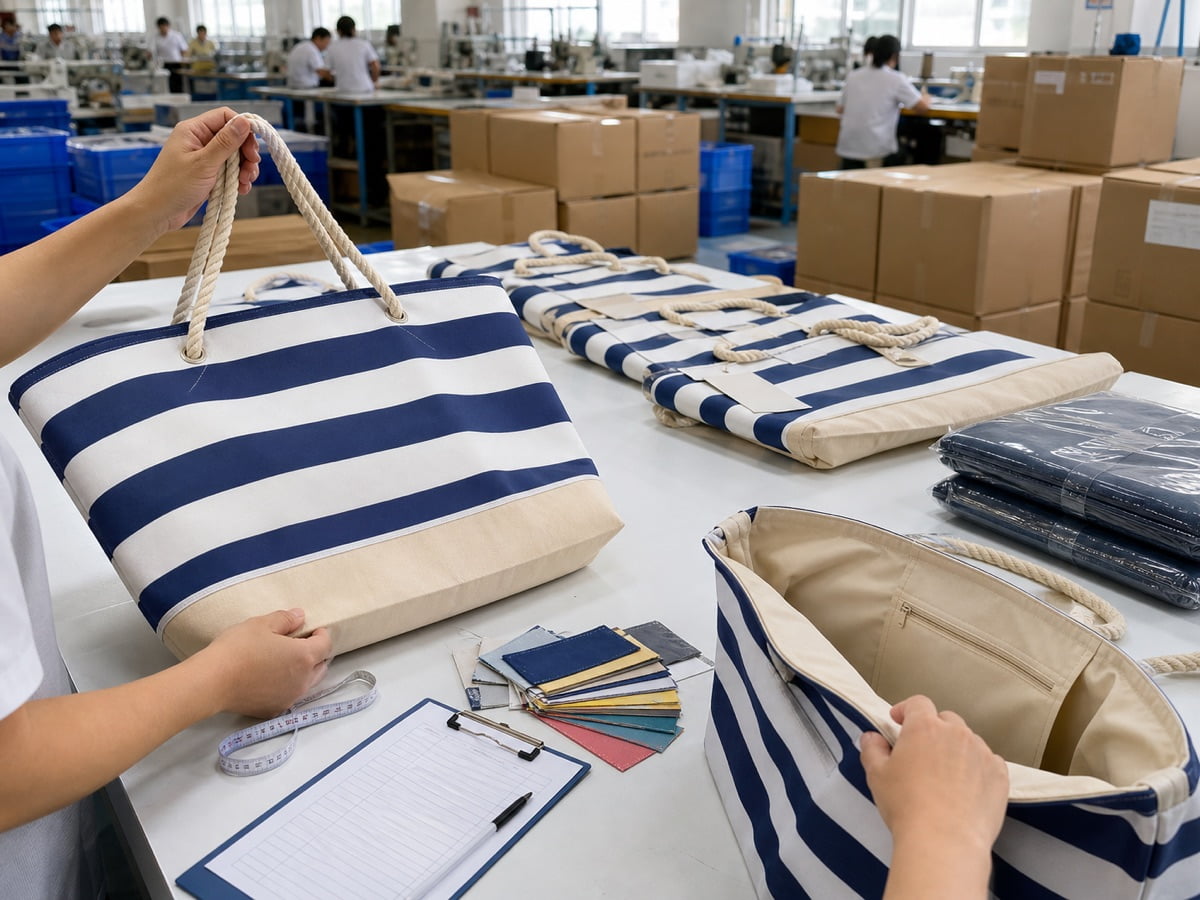
Beach bag quality control should check fabric strength, color fastness, coating, handle load, seam reinforcement, zipper quality, lining, odor, carton packing and sample-to-bulk consistency before shipment.
I understand why importers ask for a lower price. Price matters. But the lowest price is not always the lowest cost. A weak beach bag can damage a brand faster than it saves a buyer money.
Why do cheap beach bags fail after one season?
Cheap beach bags often fail because the supplier reduces fabric weight, lining quality, handle strength, seam reinforcement, zipper quality or packing protection. These choices are not always obvious in a sample photo.
| Failure point | What consumers see | What buyers should check |
|---|---|---|
| Weak handle | The bag tears when carrying towels or bottles. | Handle webbing, stitch density and reinforcement points. |
| Poor lining | The inside smells, cracks or leaks moisture. | Material route, coating, cleaning method and odor control. |
| Color fading | The print looks old after sun and wet use. | Color fastness expectation and use scene. |
| Bad zipper | The bag feels cheap and breaks quickly. | Zipper type, puller, opening size and stress points. |
| Poor packing | Goods arrive crushed or hard to display. | Folding method, inner packing and carton plan. |
Why is “waterproof beach bag” a risky phrase?
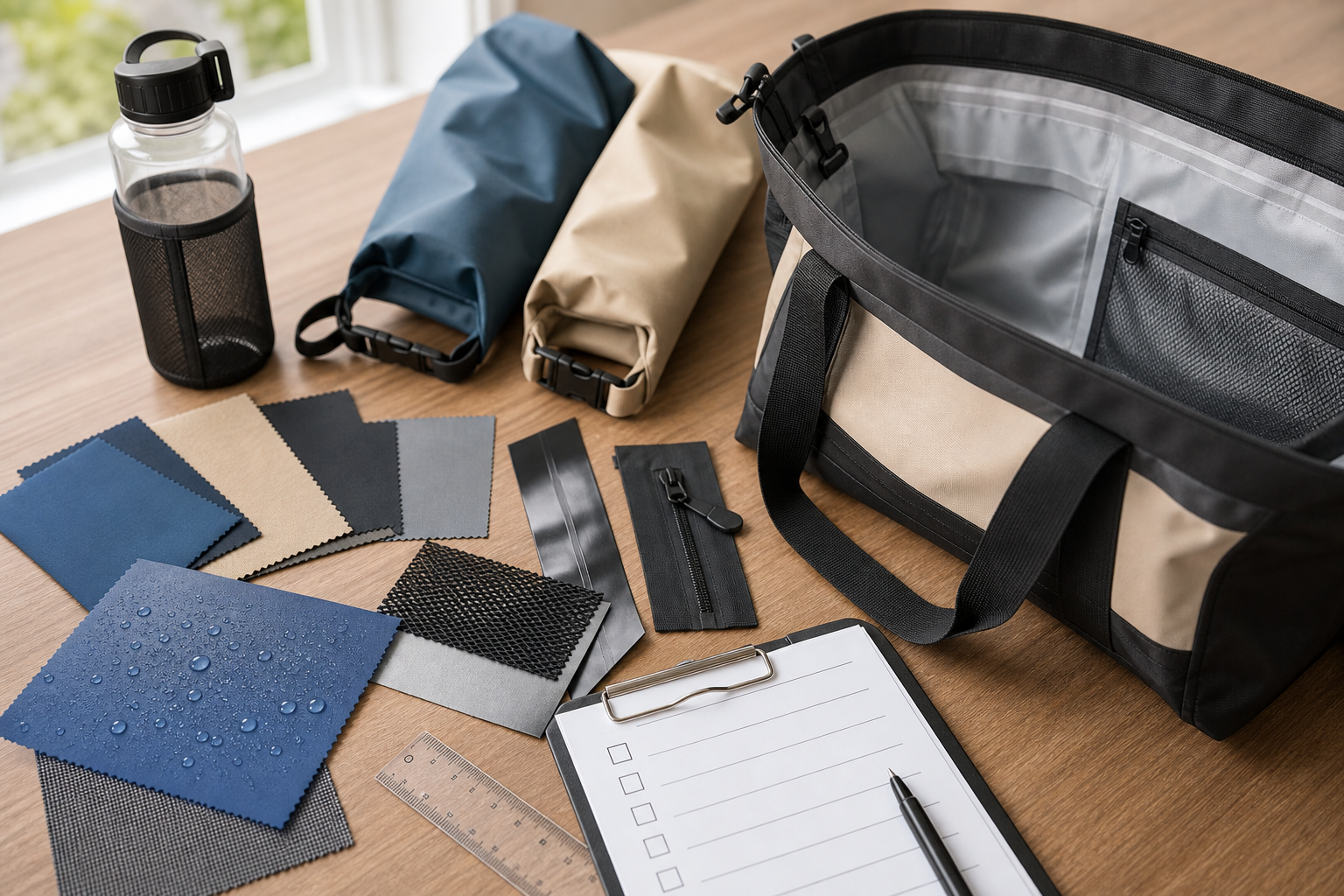
The word waterproof can create misunderstanding. Some beach bags are water-resistant, some have waterproof-friendly lining, and some need stronger construction. Buyers should define what water exposure the bag must handle.
A bag used near a pool or beach may meet salt water, sunscreen, wet towels, sand and chlorine. A factory that only says “waterproof” without explaining fabric, lining, seams and zipper risk may not be professional enough for serious B2B sourcing. I prefer to define the use case first. Does the buyer need a wipeable lining? A wet pocket? A coated shell? Drainage? A zipper? A fully sealed dry-bag style? These are different products.
How can importers avoid sample-good bulk-bad problems?
Importers can avoid sample-good bulk-bad problems by keeping approved samples, confirming bulk materials, checking production details and asking for inspection points before shipment. The goal is repeatable quality, not a perfect one-off sample.
Some suppliers make beautiful samples because they want the order, then relax during bulk production. This creates color inconsistency, weak seams, rough labels and packaging mistakes. LISO’s approach is to keep the sample route connected to production reality. If the buyer wants low MOQ, we explain the material limits. If the buyer wants a premium retail result, we define the cost drivers. If the bag must match a beach mat or cooler bag, we control the color and print direction early.
Why can low MOQ and the lowest price conflict?
Low MOQ is useful for market testing, but low MOQ does not automatically mean the lowest unit price. The main limit is usually fabric, printing, trims or packaging. If a buyer wants a very special fabric, color or print at a very small quantity, the waste and setup cost may rise.
This is why I prefer a practical low-MOQ plan instead of a blind low-price request. A buyer can often start smaller by using available fabrics, a controlled print method, a standard zipper, a realistic package route, or a small coordinated range that shares materials. That is different from asking the factory to make a fully custom product at a promotional price. The first route can protect quality. The second route usually forces the supplier to remove quality somewhere.
For beach bags, this tradeoff matters because the consumer uses the bag in wet, sunny and heavy-load conditions. A small saving on handle webbing, lining or sewing can create a bigger after-sale cost later.
Which inspection points matter most for beach bag buyers?
The most important inspection points are fabric, print, lining, handle load, seams, zipper, odor, logo position, packaging and carton marks. These details decide whether buyers receive a product they can sell with confidence.
- Pull and stitch test on handles and stress points.
- Check lining, coating and odor before packing.
- Compare production color with the approved sample.
- Open and close zippers repeatedly on random units.
- Check folded size, packaging label and carton mark before shipment.
These checks are simple, but they make the difference between a beach bag that only looks good in a sample room and a beach bag that survives real consumer use.
Beach bag quality route
LISO can review beach bag material, lining, handle, seam, packing and MOQ decisions before sampling or bulk production.
Related Beach Bag Sourcing Pages
Conclusion
A cheap beach bag becomes expensive when it creates returns. Strong quality control protects the buyer’s brand, not only the factory’s shipment record.