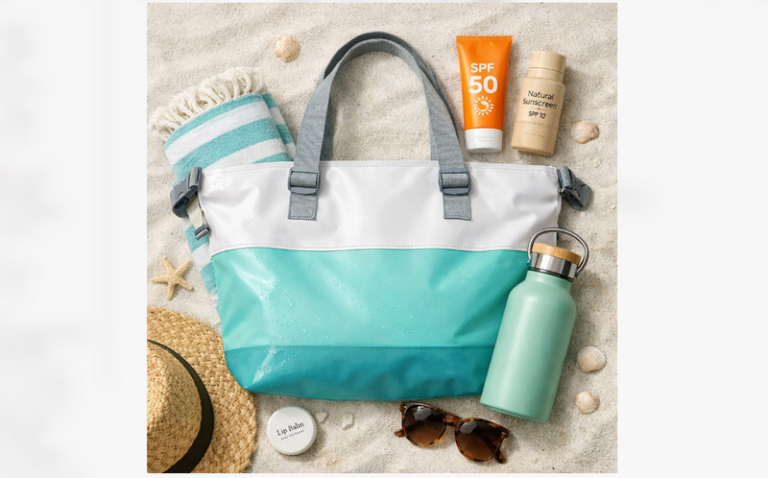
A traveler hangs an organizer beside a hotel sink. Another leaves a structured Dopp kit on the counter. A beauty customer slips a flat cosmetic pouch into a handbag, while a hotel guest opens a compact amenity set. These are different product briefs—not four versions of “we need a toiletry bag.”
At LISO HOME / Hangzhou LISO Home Co., Ltd., we have supported OEM/ODM soft goods development in Hangzhou since 2013. Our starting point for a private-label toiletry or cosmetic bag is the use scenario, then the contents, construction and approval criteria. Quote the intended product first; do not price a simple pouch and add a hanging system, extra compartments and a gift box later.
This checklist helps travel brands, beauty and personal-care brands, hospitality buyers, Amazon sellers and US/EU/AU importers prepare an RFQ that a sample room can actually build.
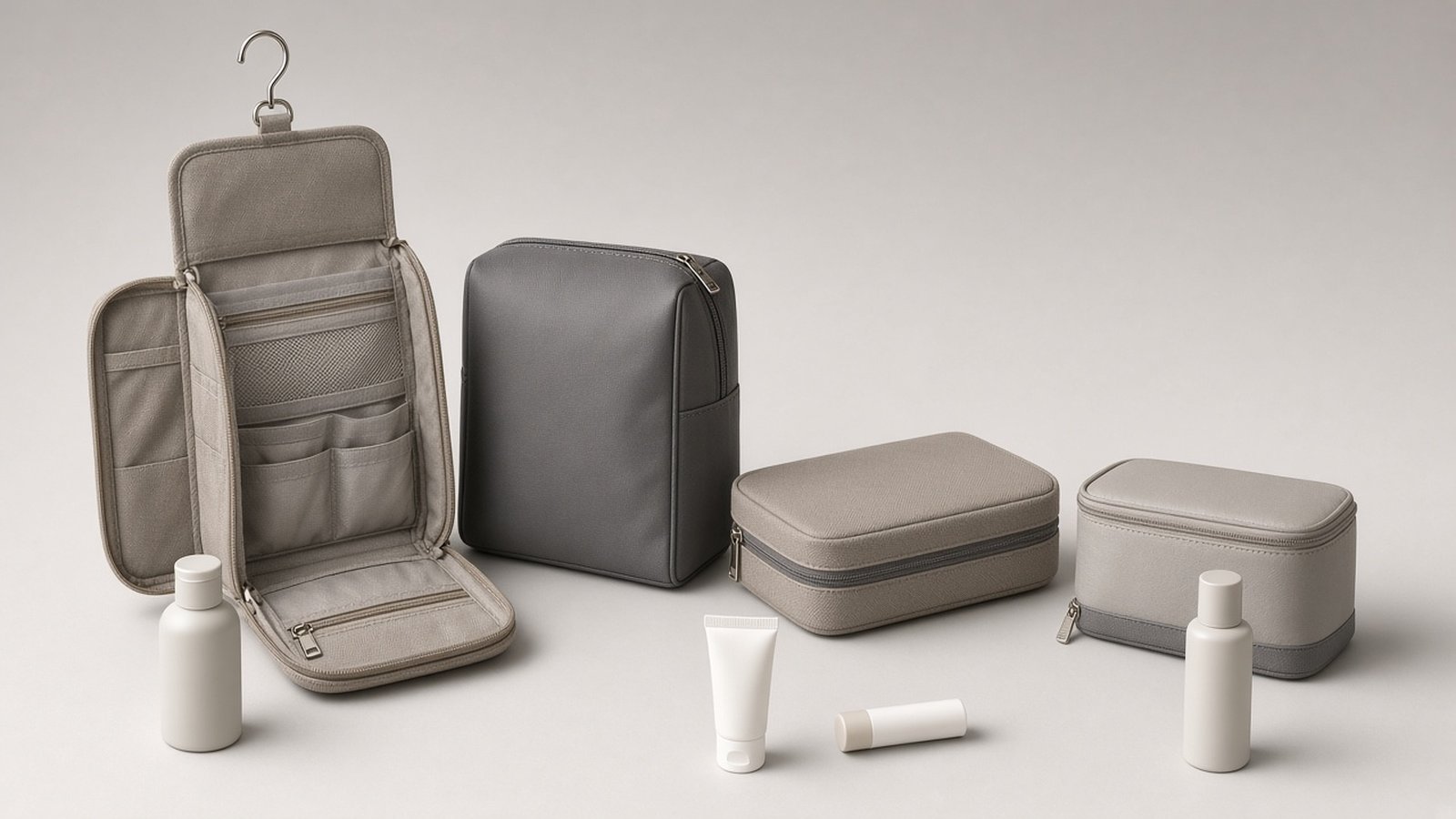
Four common private-label formats: each use scenario leads to a different structure.
Which bag format fits our customer, channel and price point?
Choose the format around where the bag is used, what it carries and how it is sold. No single structure suits every customer segment or price point.
A hanging toiletry bag prioritizes access in a small bathroom. A structured Dopp kit prioritizes counter use and a stable shape. A flat pouch prioritizes low bulk. A gift-with-purchase (GWP) beauty kit prioritizes the presentation and fit of a defined assortment.
| Bag type | Suitable use case | Structure | Typical lining direction | Hook | RFQ watch-outs |
|---|---|---|---|---|---|
| Hanging toiletry bag | Travel routines, hotel bathrooms, organized bottle access | Fold-open panels, pockets and reinforced suspension point | Wipe-clean coated fabric or selected film/laminate | Usually required | Loaded balance, hook opening, attachment reinforcement and closed thickness |
| Structured Dopp kit | Grooming, counter use, premium travel accessories | Gusseted body with selected support layers | Wipe-clean lining matched to shape and handfeel | Usually omitted | Usable opening, standing stability, bottle height and packed volume |
| Flat cosmetic pouch | Handbag essentials, makeup accessories, entry-price retail | Flat or lightly gusseted zip pouch | Lightweight coated lining where cleaning is needed | Usually omitted | Narrow zipper access, brush length, sharp tool contact and logo area |
| GWP beauty or amenity kit | Beauty promotions, hotel amenities, curated gifting | Pouch or case fitted to a fixed assortment | Selected for formula exposure and presentation | Only if the scenario needs it | Exact contents, packing sequence, campaign deadline and packaging bulk |
For hospitality, confirm whether the bag is a reusable guest accessory or packaging for an amenity assortment. For Amazon, specify the packed sellable unit as well as the product. For beauty kits, state whether contents will be packed by your team or another party; do not assume filling or co-packing is included.
Explore our toiletry bag OEM program as a format reference, then request a project-specific specification and quotation.
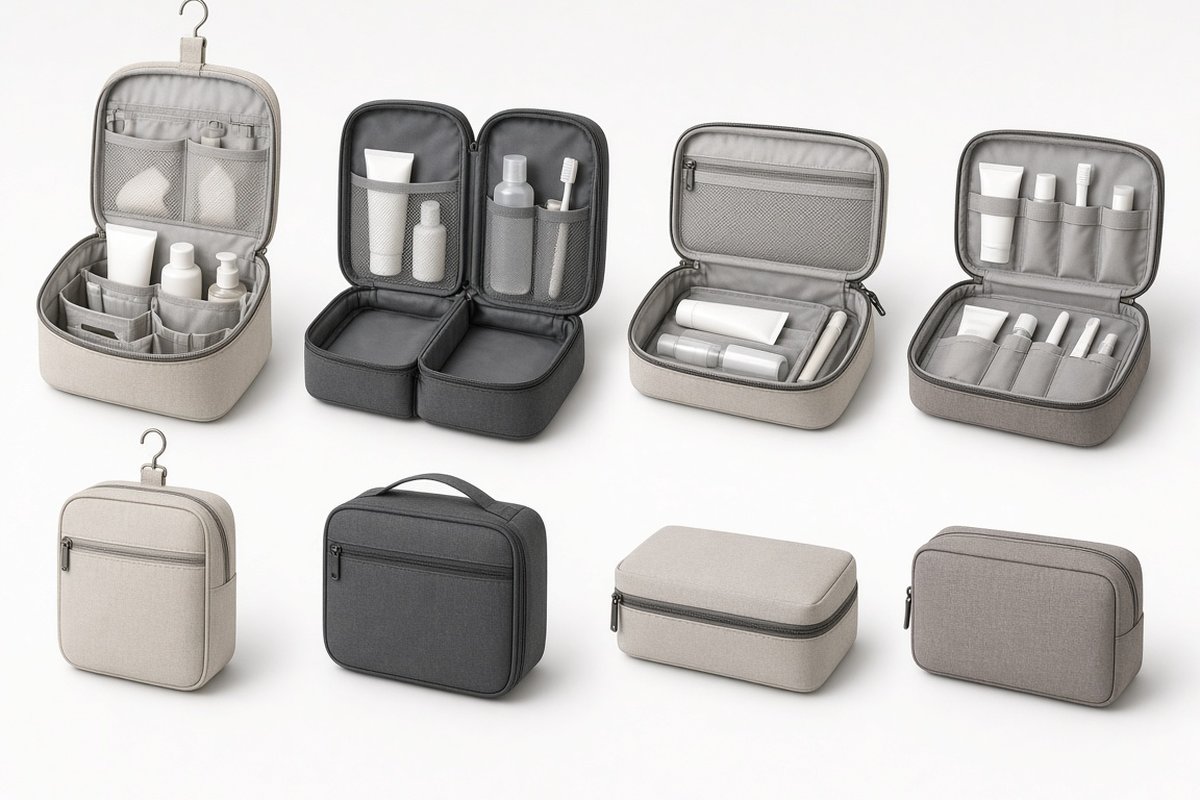
Compare access, gussets, hooks and inner pockets before writing the RFQ.
What must our RFQ specify before the factory quotes or samples?
Specify the use, finished dimensions, contents, materials, hardware, branding, packaging, order scope and approval requirements together. A reference photo communicates appearance; it does not settle these decisions.
| RFQ field | What to specify | Why it matters |
|---|---|---|
| Use and channel | Customer, destination markets, bathroom/handbag use, retail or amenity channel, target price position | Sets the feature and cost priorities |
| Finished size and contents | External and usable internal dimensions; bottle heights including caps; tube diameters; brush lengths; quantities | Prevents an attractive sample that cannot carry the intended assortment |
| Outer fabric and lining | Fiber, weave, finished weight, coating/lamination, handfeel, color and lining thickness where relevant | Makes material comparisons meaningful |
| Zipper and hook | Zipper type/size, puller, opening path; hook material, opening and intended loaded weight | Defines access, hardware and reinforcement needs |
| Wet/dry separation | Contents on each side, removable or fixed pockets, exposure scenario and acceptance check | Separates organization features from leakage claims |
| Branding | Artwork, method, dimensions, placement and color reference | Enables a realistic logo trial on the actual material |
| Packaging and barcode | Labels, hangtags, inserts, polybag/sleeve/box, barcode files and placement, carton limits | Affects fulfillment, packing labor and freight |
| Quantity and schedule | Units by SKU/color, trial and repeat quantities, sample stages, required delivery milestone | Exposes material minimums and scheduling dependencies |
| Compliance and QC | Market, intended age group, claims, documentation, test scope, tolerances and inspection plan | Defines evidence and acceptance before spending on samples |
| Commercial basis | Target cost, currency, named shipping place/port, proposed FOB/CIF/DDP basis, quote validity and exclusions | Prevents comparing unlike quotations |
How do we turn finished dimensions into a reliable fit check?
Send the real contents or a dimensioned contents list, not capacity in liters alone. Measure the tallest bottle with its cap or pump in the travel position, the widest tube section and the longest brush or tool.
External height is not usable pocket height. Seams, lining, padding, elastic and zipper curvature consume space. A bottle can fit inside the body yet fail to pass through the opening. Ask the sample maker to check insertion, removal and closure with the complete assortment loaded—not one bottle at a time.
Record whether bottles must stand upright and whether the bag must close without compressing pumps or bending tubes. For a hanging format, repeat the fit check while suspended: pocket sag and shifting contents can change access.
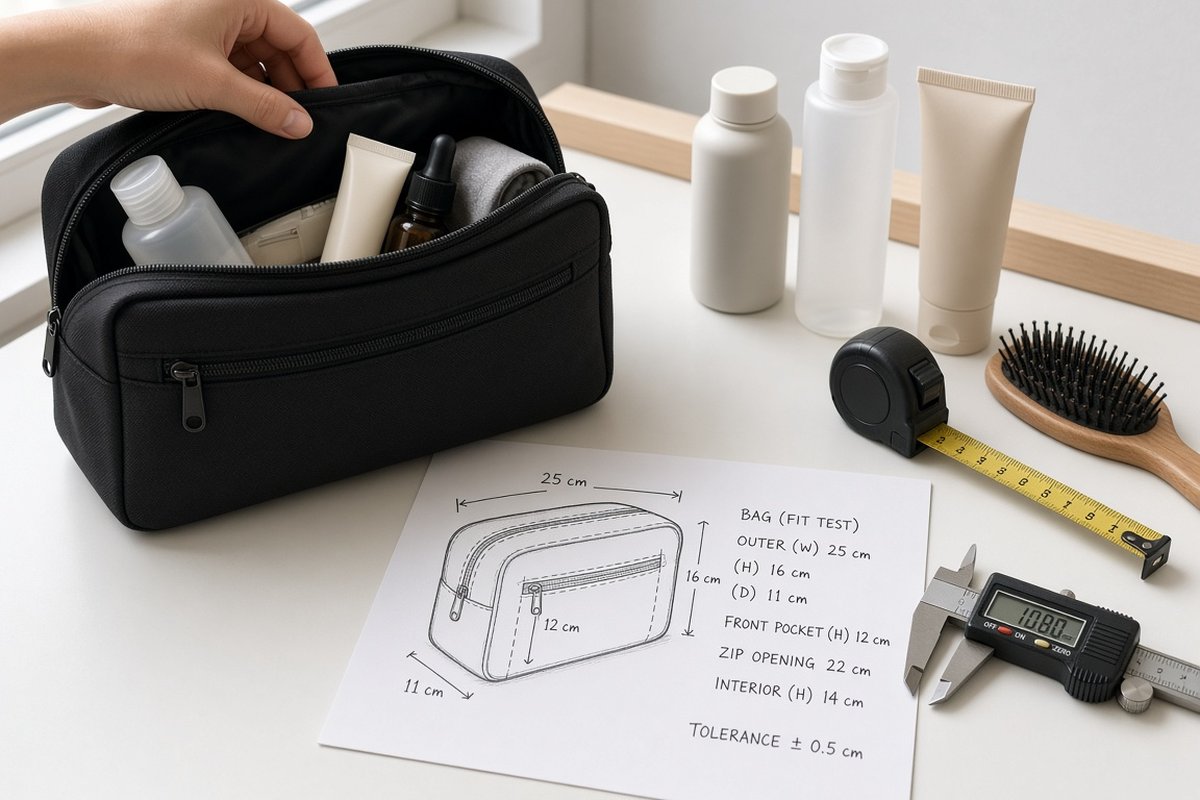
Fit-test with real contents, measured cap-to-base, before approving size.
How should we compare TPU, PEVA and PU-coated linings?
Compare the actual lining assembly for leak resistance, cleaning, flexibility and compliance requirements. The polymer name alone does not establish finished-bag performance.
- TPU film or laminated fabric: Consider it when a flexible barrier or removable wipe-clean compartment fits the design. Specify thickness, backing and seam route. Check creasing, adhesion and cleaning with the intended products.
- PEVA film: Consider it for a film-lined pocket or pouch where its hand and construction suit the price point. Trial the chosen grade for puncture, fold behavior, seam integrity and cleaning; “PEVA” is not a durability result.
- PU-coated textile: Consider it when a textile hand, sewability and lower-bulk construction matter. Specify the coating and substrate. Check coating continuity, flexing, adhesion and whether the texture traps residue.
Smooth surfaces can be easier to wipe than textured ones, but seams, binding and corners can still retain product. Ask for a cleaning trial using representative shampoo, lotion or makeup and the intended cleaning instructions. Avoid promising compatibility with every cosmetic formula or disinfectant.
Leak resistance depends on the lining, seams, needle holes, zipper and pocket junctions together. Agree the liquid or damp-item exposure, orientation, duration and acceptable transfer before testing. A wipe-clean lining does not automatically make a bag waterproof.
For compliance, identify the actual grade, colorants, coatings and other components. None of these material labels proves chemical compliance by itself. For outer-fabric selection, our 600D vs 900D travel-bag guide explains why denier alone is not a quality specification.
What should we specify for the zipper, hook and wet/dry sections?
Specify how the bag opens and carries its intended load, then agree checks on the finished assembly. Hardware appearance is not enough.
For the zipper, confirm the type, size, slider, puller and opening geometry. Test one-handed access where relevant and run the slider around loaded corners. Keep loose lining and binding clear of the slider path.
For a hanging bag, state the filled weight, hook opening, likely support surface and suspension direction. Agree a project-specific static-load and repeated-hanging check, including duration, repetitions and acceptable deformation. Inspect the hook attachment and supporting seams as well as the hook itself.
For wet/dry separation, identify what “wet” means: a damp toothbrush, a used washcloth or a leaking bottle are different exposures. A separate removable pouch may suit some routines; fixed compartments may suit others. Neither route is automatically leakproof.
Which logo and packaging decisions cannot wait until bulk production?
Approve the branding on the selected fabric and approve the complete packed unit before freezing the quote. Both decisions can change construction, cost and carton volume.
Woven labels offer a sewn brand identifier; heat transfer needs adhesion and heat compatibility trials; embroidery needs suitable support and can introduce needle holes. Embossing or debossing requires a compatible surface. Confirm artwork scale, placement, color reference and appearance after the agreed flex or cleaning check.
LISO supports options including woven labels, heat transfer, embroidery, Pantone matching, care labels, hangtags, barcode labels, insert cards, polybags and cartons. Availability and suitability must be confirmed for the project.
For barcode-led channels, supply the final code, label dimensions and placement instructions; verify scan readability on the packed unit. A gift box or rigid insert can prevent nesting and increase shipping volume even when the bag itself is unchanged. Request packed dimensions, pieces per carton and gross weight from a packing trial.
How should we frame MOQ, lead time and market compliance?
Treat MOQ and schedule figures as planning guidance until the material, customization and approval route are confirmed. Define compliance by destination, intended user and claims—not by a generic certificate list.
Typical LISO planning references are around 100 pieces for selected existing designs and often around 1,000 pieces for custom OEM/ODM programs. Common sample windows are approximately 7–10 business days after design confirmation, with complex developments often requiring 14–21 days. These are not guarantees; confirm each project, including material availability, logo trials, packaging and revisions. Ask separately for bulk-production and transit timing after approval.
For EU orders, identify applicable REACH requirements and the components needing evidence. For California sales, assess relevant Proposition 65 exposure and warning obligations with appropriate compliance support. For Australia, confirm the applicable local product, labeling and importer requirements rather than assuming a US/EU document pack transfers unchanged.
If making recycled-content claims, define the claimed components and percentages and request relevant GRS scope and chain-of-custody evidence, including transaction documentation where applicable. Apply CPSIA requirements when the product is intended for children; do not add children’s-product requirements to every adult toiletry bag by default.
LISO can coordinate documentation and third-party testing when required. Factory audit or management-system evidence is not a substitute for product-specific compliance. Use our compliance and documentation overview to begin the document discussion, then confirm current scope with your compliance team or laboratory.
Why is a digital render not physical sample approval?
A render approves visual direction, not material behavior or finished-product function. Physical approval must cover handfeel, loaded shape, operation, odor, decoration and packing.
A structured Dopp kit may look upright digitally but collapse with an uneven load. A hanging organizer may look balanced until heavy bottles pull one panel forward. A smooth-looking lining may feel stiff or show fold marks in person.
Review the sample empty, fully loaded, hanging where relevant and packed for sale. Check zipper feel, hook behavior under the agreed load, accessible pockets, noticeable odor, logo finish and carton volume. Record observations against a sample ID and specification revision; a photograph labeled “approved” is too vague.
Our packing-cube sample failure guide covers related render-to-construction issues. For toiletry bags, keep the approval focus on bathroom use, bottle fit, cleaning and suspension rather than copying a packing-cube test plan.
Which sample failures should buyers catch before approving production?
Catch failures under realistic contents, loading and packaging conditions. Empty tabletop inspection misses several purchasing risks.
- Contents do not fit: Check usable opening and pocket dimensions against the whole assortment. Revise the pattern or contents plan rather than forcing closure.
- The hook bends or the bag tilts: Review the loaded weight, hook geometry, reinforcement and weight distribution. A thicker hook alone may not solve the attachment problem.
- Lining seeps or is hard to wipe: Locate the transfer route or residue trap. Review seams, zipper junctions, surface texture and cleaning access before changing the material name.
- The zipper bites fabric: Check lining clearance, binding, tape alignment and corner geometry with the bag full.
- The logo method does not suit the fabric: Review puckering, poor adhesion, distortion or surface damage using a production-representative decoration trial.
- Gift packaging increases carton volume: Test the actual box, insert card and folded arrangement. Approve the freight implications before treating packaging as a cosmetic change.
These are review scenarios, not claims about a particular customer project or measured failure rate.
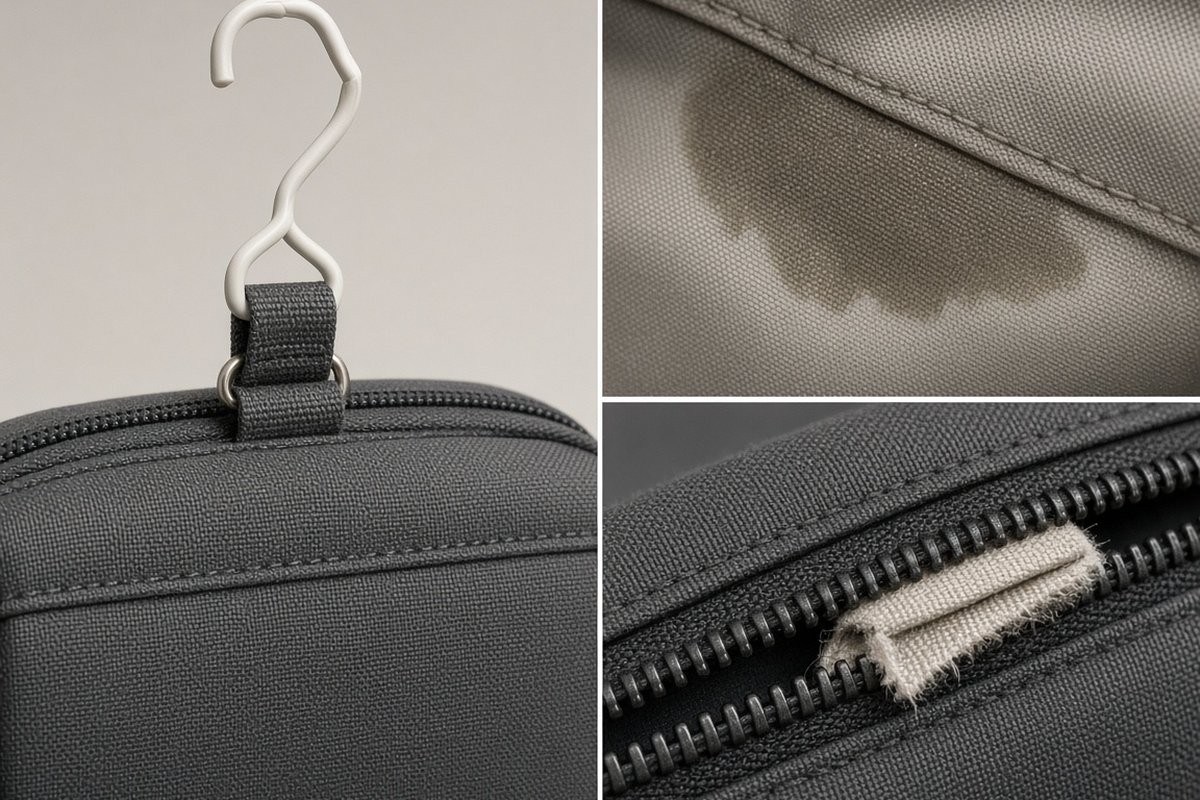
Illustrative examples of common sample failures to check for.
How do we lock the approved sample into bulk-production QC?
Freeze the approved reference, measurable specification, materials and inspection plan together. A golden sample is a physical benchmark, not permission to leave tolerances undefined.
- Identify the golden sample. Record the SKU, revision, date and approval status. Keep matching references with the buyer and factory where practical, including lining and branding swatches.
- Set dimension tolerances. Define measuring points, units and whether the bag is empty, loaded, open or closed. Use tolerances appropriate to the sewn structure, not a universal allowance.
- Define defect standards. Agree critical, major and minor defect examples. A wrong barcode, sharp exposed hardware and uneven stitching have different consequences. AQL sampling is common practice, but the inspection level, limits and defect classification must be agreed; it does not guarantee every unit is defect-free.
- Approve a pre-production sample. Confirm production-intent materials, hardware, logo, labels and packaging. Document and approve any substitution before production proceeds.
- Inspect at useful checkpoints. Check incoming material identity and color; inspect early sewing for lining clearance and hook reinforcement; verify dimensions, zipper movement, workmanship and relevant loaded checks before shipment.
- Audit the packed shipment. Confirm assortment, quantities, barcode scanning, carton marks, pieces per carton, dimensions and weight against the approved packing plan.
Keep test protocols separate from claimed results: specify what will be checked, by whom, on which samples and against which acceptance values. Final inspection can identify nonconforming goods; it cannot repair an under-specified design.
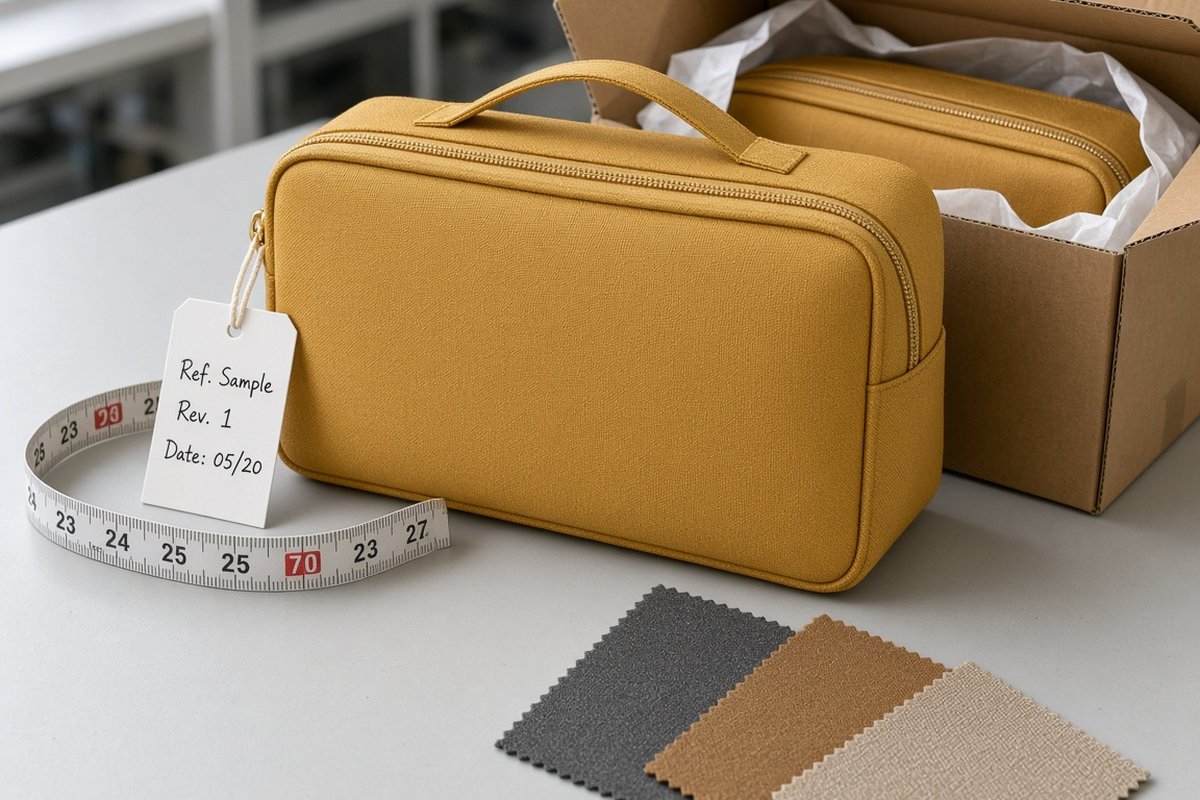
Lock bulk with a signed golden sample, tolerances and packing checks.
Can we copy a sourcing checklist directly into our next RFQ?
Yes. Complete the fields below and attach reference images, artwork and a contents list. Mark unresolved decisions explicitly so quotations do not hide different assumptions.
- [ ] Brand/program, buyer contact and destination markets: ___
- [ ] Customer, channel, intended age group and target price position: ___
- [ ] Format: hanging / structured Dopp / flat pouch / GWP or amenity kit: ___
- [ ] Finished external and usable internal dimensions; measuring points: ___
- [ ] Contents, quantities, cap-inclusive bottle heights, tube diameters and brush lengths: ___
- [ ] Required orientation, access and loaded-shape expectations: ___
- [ ] Outer fabric, lining grade/construction, color, handfeel and approved swatches: ___
- [ ] Zipper, puller, hook opening, loaded weight and reinforcement requirements: ___
- [ ] Wet/dry layout, cleaning instructions and agreed exposure/load checks: ___
- [ ] Logo artwork, method, dimensions, placement and approval trial: ___
- [ ] Care labels, hangtags, barcodes, inserts and individual packaging: ___
- [ ] Packed-unit dimensions, carton targets and packing responsibility: ___
- [ ] Quantity by SKU/color; MOQ assumptions; sample stages and delivery milestone: ___
- [ ] Target cost, shipping basis/named location, validity and exclusions: ___
- [ ] Applicable compliance, claim evidence, test scope and costs: ___
- [ ] Golden sample, tolerances, defect standards, inspection plan and change-control owner: ___
How can a toiletry bag become part of a coordinated collection?
Build around a shared travel routine rather than adding unrelated SKUs. A toiletry organizer can sit alongside packing cubes, a flat cosmetic pouch or a coordinated pouch set with distinct jobs.
Use a consistent color story, branding placement and labeling system, but allow each item its appropriate material and structure. A cube may prioritize light weight; a toiletry pocket may prioritize wiping; a small cosmetic pouch may prioritize handbag access.
This gives buyers a collection-level proposition instead of relying only on single-SKU price comparisons. It does not guarantee higher margins or sales. Check set composition, nesting, packaging, individual replacement options and MOQ by component before quoting a bundle. Our travel-organizer collection architecture article develops that assortment approach.
What should we send LISO to start a toiletry or travel-organizer program?
Send the use scenario, contents list, target dimensions, quantity, destination market and packaging direction. Include which features are mandatory and which may change to meet your price point.
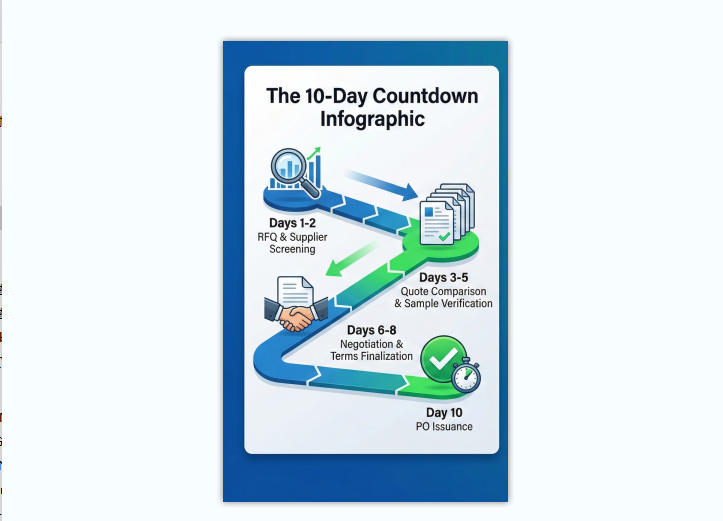
We can discuss the material, construction, sampling and approval route within a broader travel organization and storage program. Email [email protected] with your brief. The goal is a clear specification before sampling—not a quick price built on hidden assumptions.
What else do private-label toiletry bag buyers ask?
The short answers below address common decisions that should be settled before sample approval.
Can we get an accurate quote from a photo alone?
A photo supports an initial estimate, not a fully comparable production quote. Add dimensions, real contents, material direction, lining, hardware, branding, packaging, quantities and destination requirements. Ask the supplier to list any assumptions and exclusions.
Is a hanging toiletry bag more suitable than a structured Dopp kit?
It depends on the routine and customer. Hanging bags suit suspended access and compartment organization; structured Dopp kits suit counter use and a stable case format. Compare loaded usability, price position and packed volume before choosing.
Does a waterproof lining make the whole toiletry bag leakproof?
No. Seams, needle holes, zipper teeth and material junctions can still allow transfer. Specify a finished-product exposure check and acceptance criteria before making a leakage or waterproof claim.
What MOQ and sample timing should we budget for?
Typical planning references are around 100 pieces for selected existing designs and often around 1,000 pieces for custom OEM/ODM. Samples commonly take about 7–10 business days after design confirmation, or 14–21 days for complex work. Confirm project-specific availability and timing; these are not guarantees.
Can we call a clear pouch TSA-approved?
Do not treat a clear pouch as a TSA approval certificate. For the standard US carry-on liquids rule, TSA specifies containers of 3.4 ounces/100 milliliters or less, fitting in one quart-sized clear plastic zip-top bag per passenger. A larger clear cosmetic case is not automatically suitable. Review the current TSA travel checklist and liquids rule, including exceptions; check current airport rules for other markets.
What must be approved before bulk production starts?
Approve the production-intent sample, specification revision, materials, logo, labels, packaging, tolerances and inspection criteria. Record changes in writing and confirm the schedule after approval. A golden sample without a matching specification leaves avoidable ambiguity.