The Short Answer (If You're in a Hurry)
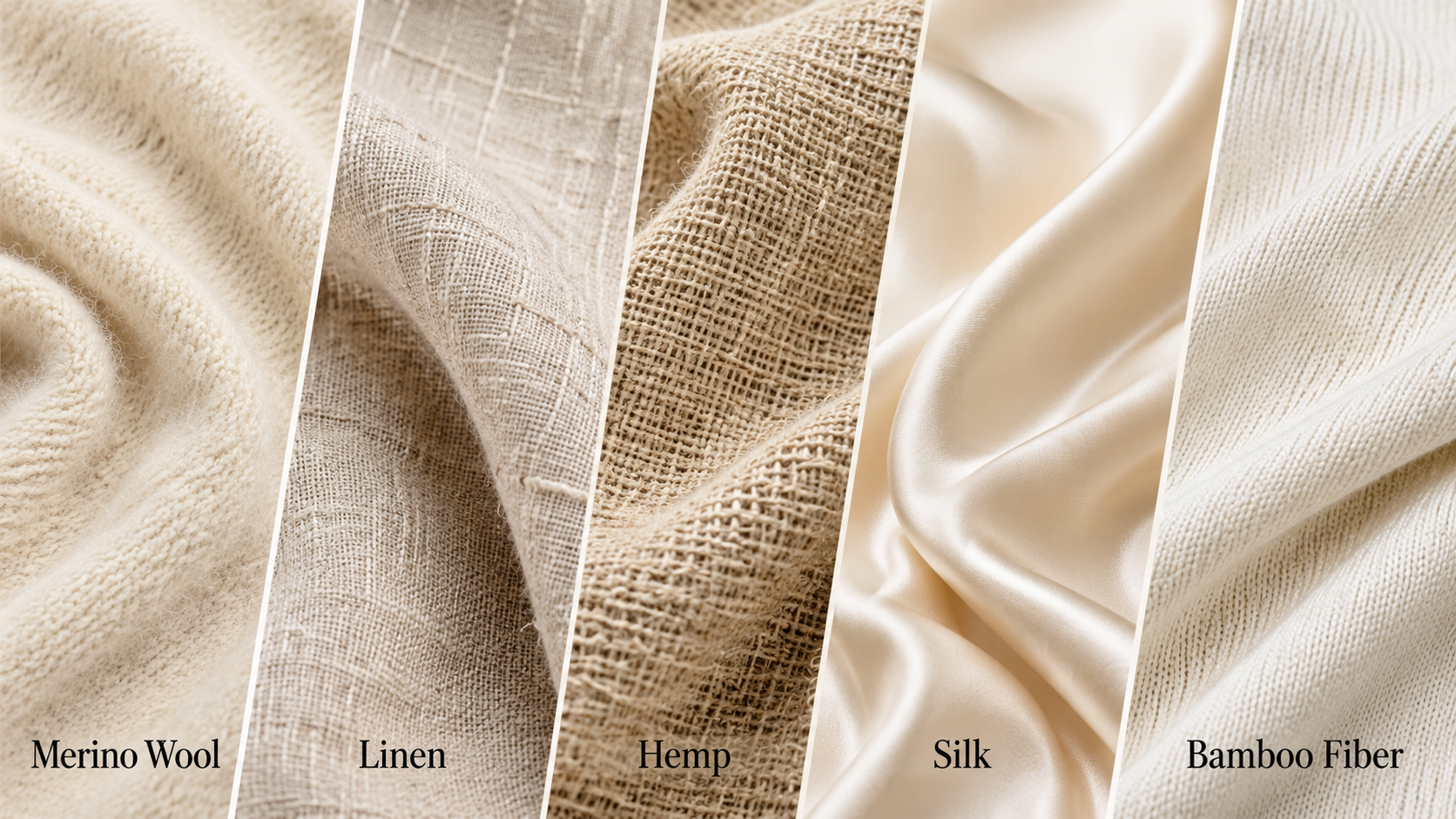
Five fabric categories have credible, science-backed natural antibacterial properties: merino wool, linen, hemp, silk, and raw bamboo fiber. Of these, merino wool and linen have the strongest, most consistent research support. Bamboo viscose — the "bamboo fabric" sold by most brands — is a different story and requires extra caution before making antibacterial claims. If you're sourcing products to market as naturally antibacterial, the fabric choice (and how it's processed) will determine whether your claim holds up to regulatory scrutiny.
This guide breaks down the science behind each fabric, explains which claims are defensible, and outlines what B2B buyers and brand owners should ask their suppliers before committing to a product line.
📌 Key Takeaways
<div style="background:#f0fdf9;border-left:4px solid #0d9488;border-radius:8px;padding:1.25rem 1.5rem;margin:1.5rem 0 2rem 0;font-size:0.95rem;line-height:1.7;"> <div style="font-weight:700;color:#0d9488;margin-bottom:0.75rem;font-size:0.8rem;text-transform:uppercase;letter-spacing:0.06em;"> 📌 Key Takeaways </div> <ul style="margin:0;padding-left:1.25rem;color:#1e3a38;"> <li>Consumer demand for antibacterial textile products is rising sharply — Reddit threads on this topic are generating hundreds of comments, signaling a real sourcing opportunity for brand owners.</li> <li>Merino wool's <strong>lanolin coating</strong> and linen's <strong>rapid moisture-release structure</strong> are the two most scientifically defensible "naturally antibacterial" claims.</li> <li>Bamboo viscose/rayon — the most common form of "bamboo fabric" on the market — loses its natural antibacterial compound during chemical processing; the FTC has charged brands for making false claims.</li> <li>The antibacterial property of a fabric depends not just on the raw material, but on the <strong>degree of processing</strong> — a crucial due-diligence question to ask any OEM supplier.</li> <li>For pet bedding, travel products, and home textiles, selecting the right naturally antibacterial fabric is a <strong>product differentiation strategy</strong>, not just a marketing claim.</li> </ul> </div>
Why Antibacterial Fabric Is Now a Real Market Signal
Last week, I was scrolling through Reddit — specifically communities focused on home goods, pet care, and wellness — and I noticed something striking. Thread after thread, consumers were asking the same question: "What fabrics are naturally antibacterial? I don't want chemical treatments on my sheets/pet bed/travel gear."
Some were even asking whether they should buy antibacterial copper inserts or silver-ion tablets to put in their washing machines, which tells you something important: people are aware that bacteria is a problem in textiles, and they're willing to pay more to solve it — they just don't yet know which fabric choices naturally address it.
For brand owners and retailers, this is a clear signal. The "naturally antibacterial" positioning is no longer a niche wellness claim. It's becoming a mainstream purchase criterion in:
- Pet product categories (dog beds, pet blankets, carrier liners)
- Bedding and sleep textiles (pillowcases, weighted blankets, mattress protectors)
- Outdoor and travel gear (cooler bag liners, travel pillows, portable pet strollers)
The challenge is that the market is full of exaggerated or outright false claims. If you're a brand owner or buyer looking to enter or expand in this category, you need to know what the science actually says — and what your supplier should be able to prove.
The Science: How Can a Fabric Be "Naturally" Antibacterial?
Before diving into specific materials, it's worth understanding the two mechanisms by which a fabric can resist bacterial growth without chemical treatment:
Mechanism 1: Active Antibacterial Compounds The fiber contains a naturally occurring substance that inhibits bacterial reproduction — damaging cell membranes, disrupting protein synthesis, or preventing the bacteria from multiplying. Lanolin in wool and lignans in raw hemp are examples.
Mechanism 2: Environmental Hostility (Passive Resistance) The fiber's physical structure makes it an inhospitable environment for bacteria — usually by managing moisture so effectively that bacteria don't get the damp conditions they need to thrive. Linen and merino wool both work this way.
The key distinction for brand owners: Mechanism 1 survives more aggressively in marketing claims, but Mechanism 2 is often more durable after washing and processing. The best naturally antibacterial fabrics use both.
5 Fabrics With Genuine Natural Antibacterial Properties
1. Merino Wool — The Gold Standard
Merino wool is the most robustly supported naturally antibacterial fiber in commercial textile production, and it works through both mechanisms described above.
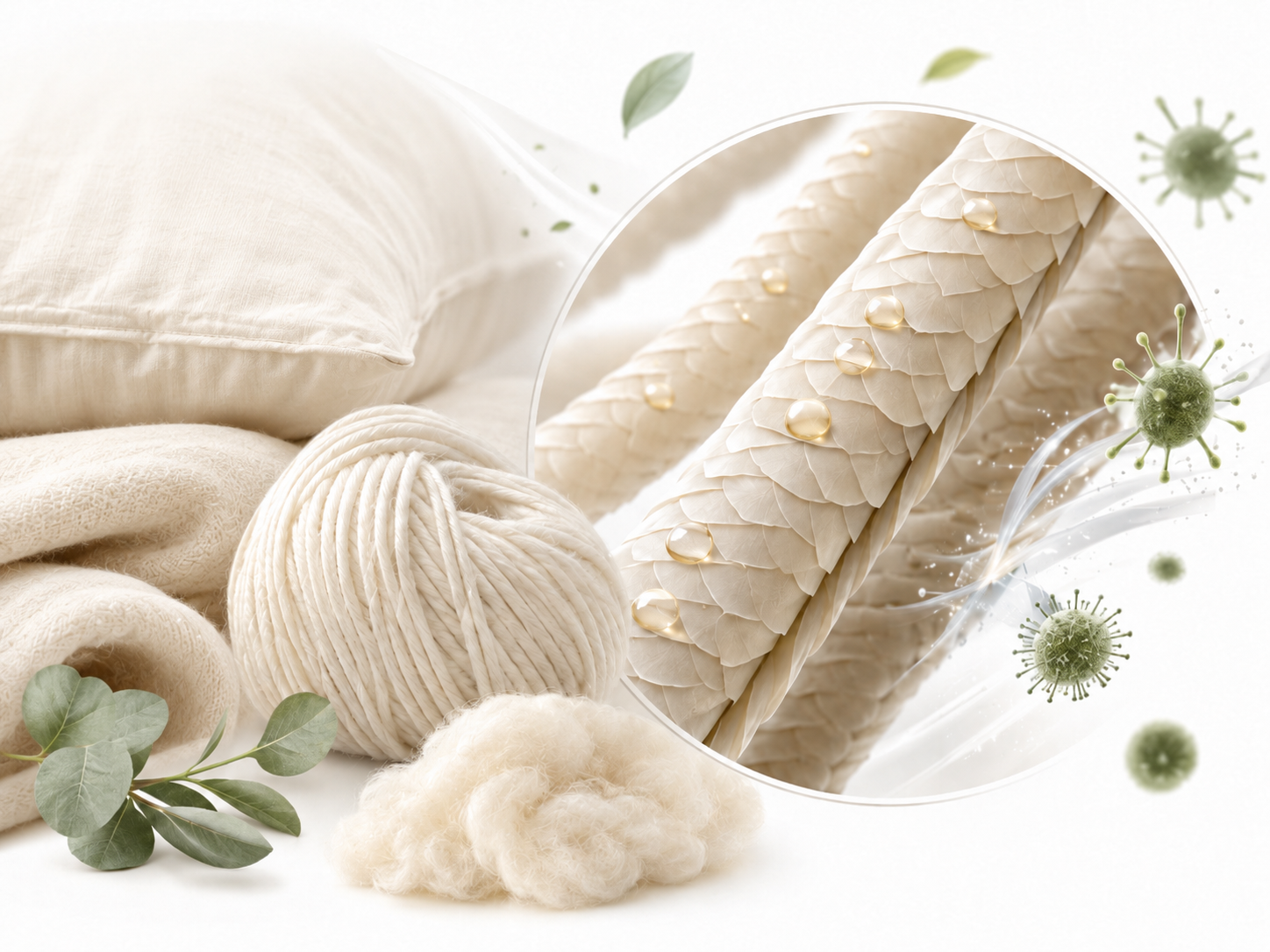
The active compound: Lanolin. Every merino fiber is coated in lanolin, a waxy secretion that acts as a mild natural disinfectant. Lanolin has been documented to deter odor-causing bacteria directly, functioning as an antibacterial agent embedded in the fiber structure itself.
The passive structure. Merino fibers are covered in microscopic overlapping scales (cuticles). These scales make it physically difficult for bacteria to attach and form colonies. Combined with the lanolin coating, this creates a dual-layer defense that most synthetic fabrics can only replicate through chemical treatment.
The moisture advantage. Merino can absorb up to 30% of its own weight in moisture without feeling damp on the skin. Critically, it holds that moisture within the fiber structure — not on the surface — so it doesn't create the wet environment bacteria need to multiply. This is why merino garments can be worn multiple days without developing odor, something no cotton or polyester product can match without chemical intervention.
Sourcing note for brand owners: The antibacterial performance of merino depends on fiber diameter (measured in microns). Finer fibers (15–18.5 microns) retain more lanolin and are used in premium apparel. Coarser merino (20–24 microns) is common in pet products and home textiles where softness requirements differ. Ask your supplier to specify micron count and lanolin content.
2. Linen (Flax) — Quiet and Consistent
Linen doesn't have the marketing story of merino wool, but its antibacterial performance is well-established and particularly relevant for bedding, pet sleeping surfaces, and travel textiles.
The mechanism is primarily passive: linen absorbs moisture quickly and releases it back to the air extremely fast — faster than cotton, faster than most synthetic blends. This rapid moisture cycling means bacteria never get the sustained damp environment they require. Linen also has a natural resistance to mold and mildew that comes from the inherent structure of flax fibers.
Linen's advantage for B2B buyers is durability of claim. Unlike bamboo (more on this shortly), linen is processed through retting and mechanical separation — methods that don't strip the fiber of its natural properties the way chemical dissolution does. What you see in a finished linen product closely reflects what was in the raw fiber.
Product fit: Linen works particularly well for flat textiles — pet blankets, travel mats, pillow covers, and outdoor cushion covers — where its breathability and quick-dry properties compound the antibacterial benefit.
3. Hemp — Strong Properties, If Processed Correctly
Raw hemp has natural antibacterial properties that have been recognized for centuries. Like linen, it is a bast fiber (extracted from plant stalks), and its processing is significantly less chemically intensive than bamboo viscose production.
Hemp's antibacterial activity comes from a combination of its porous fiber structure (which resists moisture accumulation) and naturally occurring phenolic compounds. In humid conditions — exactly the environment where pet bedding and outdoor textiles are often used — hemp shows measurable inhibition of bacterial growth.
The important caveat: Hemp's antibacterial properties depend heavily on how it is processed. Mechanical processing (similar to linen) preserves more of the natural compounds. Intensive chemical processing degrades them. When sourcing hemp-containing fabrics, ask your manufacturer to specify the processing method and whether they can provide antibacterial performance test results on the finished fabric.
4. Silk — Proteins as Natural Defense
Silk contains sericin, a natural protein that coats the fibers. This protein has documented resistance to bacteria and fungi — the smooth surface structure of silk makes it difficult for microbes to attach, and the sericin itself creates a chemically hostile surface for common pathogens.
Silk is less common in functional product categories (pet travel, outdoor gear) due to cost and care requirements, but it is highly relevant for premium bedding products — cooling pillowcases, sleep masks, and luxury pet blankets — where the antibacterial claim compounds naturally with the comfort and hypoallergenic positioning.
Note: Much of silk's antibacterial benefit comes from sericin, but many silk finishing processes deliberately remove sericin to improve texture. If antibacterial performance is part of the product claim, confirm with your supplier that the sericin is retained, or that the finished fabric has been independently tested.
5. Raw Bamboo Fiber (Bamboo Linen) — Promising, But With Serious Caveats
This is the most nuanced entry on this list, and the one that carries the most legal risk if mishandled.
Bamboo plants contain a natural compound called bamboo kun, which has documented antibacterial and antifungal properties. Research published in Chinese and Indian academic journals has shown this compound can inhibit common pathogens including Staphylococcus aureus and E. coli. So far, so good.
The problem: most "bamboo fabric" on the market is bamboo viscose or bamboo rayon.
To create bamboo viscose, the raw bamboo is dissolved in chemical solvents (typically sodium hydroxide) and extruded into fibers. This process is chemically intensive enough that the bamboo kun compound — and any other natural antibacterial properties — is very unlikely to survive in the finished fabric. The product is functionally a viscose fiber that happens to have originated from bamboo pulp. Its performance is not meaningfully different from generic rayon.
The U.S. Federal Trade Commission (FTC) has taken enforcement action against brands claiming antibacterial properties for bamboo viscose products, and this risk extends to any brand owner selling into U.S. markets.
The exception: Bamboo linen — produced through mechanical retting similar to flax linen, without chemical dissolution — does retain more of the natural fiber structure and potentially some of its antibacterial character. However, this material is significantly harder to source, more expensive, and less common than bamboo viscose. If a supplier offers you "naturally antibacterial bamboo fabric" at standard viscose pricing, ask specifically which production process was used.
The Claim You Should Never Make Without Evidence
Across all five fabric categories, the same principle applies: a naturally antibacterial raw material does not guarantee a naturally antibacterial finished product.
Processing strips properties. Finishing agents can neutralize natural compounds. Blending with synthetic fibers changes performance.
If you are planning to market a product with an antibacterial claim — even one based on naturally antibacterial fibers — you need test data on the finished fabric, not just on the raw material. Standard testing methods include:
- AATCC 100 (Antibacterial Finishes on Textile Materials, U.S. standard)
- ISO 20743 (Antimicrobial Activity of Antibacterial Finished Products)
- JIS L 1902 (Testing for Antibacterial Activity, commonly used in Asia)
A credible OEM/ODM supplier should be able to provide test reports for finished goods on request, or facilitate third-party lab testing as part of the sampling process.
What This Means for Your Product Line
The natural antibacterial trend is not a fad. Consumers are genuinely searching for it, regulatory frameworks are becoming clearer, and brands that can make defensible, evidence-backed claims in this space have a real competitive advantage.
For brand owners and retailers looking at how to enter or expand this category, the strategic recommendation is:
Choose your fabric first, then build your claim. Don't start with the marketing angle and work backward to find a fabric that sort of fits. Start with a fabric whose natural properties are well-documented (merino, linen, or hemp for most product applications), work with an OEM supplier who can test the finished product, and build a claim backed by data.
For pet products specifically — dog beds, pet blankets, stroller liners, carrier pads — the naturally antibacterial angle is particularly powerful because consumers already understand that pet environments are high-bacteria environments. A linen or merino-blend pet bed marketed with this positioning speaks directly to a real concern.
Frequently Asked Questions
Q: Is cotton naturally antibacterial? Cotton itself does not have inherent antibacterial properties. Its absorbency can help wick moisture away from the skin, but it also holds that moisture within the fiber, which can actually support bacterial growth over time. Cotton products marketed as antibacterial have typically been chemically treated.
Q: Can a fabric lose its antibacterial properties after washing? Yes — especially for fabrics where the antibacterial properties depend on a surface coating (like lanolin in wool, or finishes applied to cotton). Linen's structural properties are more durable through washing. Merino retains most of its properties through normal washing cycles, though harsh detergents can strip lanolin. Always check whether your supplier's test data reflects performance after multiple wash cycles.
Q: Is "antimicrobial" the same as "antibacterial"? Not exactly. Antibacterial means the fabric resists bacteria specifically. Antimicrobial is a broader term covering bacteria, fungi, mold, mildew, and some viruses. Most naturally occurring fabric properties that resist bacteria also provide some degree of antifungal resistance. When making product claims, use the term that your test data actually supports.
Q: What's the regulatory risk of making antibacterial claims on fabric products in the U.S.? Significant, if the claims aren't supported by data. The FTC regulates false advertising, and the EPA classifies products that make pesticidal claims (including antibacterial claims) as potentially requiring registration. Working with a supplier who can provide compliant test reports, and consulting with a product compliance specialist for your target markets, is strongly recommended before making public claims.
Q: Can I blend naturally antibacterial fibers with synthetic fibers? Yes, and it's common — for cost management or to achieve specific performance characteristics (stretch, durability, weight). However, blending generally dilutes the antibacterial effect. Test your finished blend, not just the natural fiber component, before making any claims.
Closing Note
The consumer demand for naturally antibacterial textiles is real, growing, and currently underserved by brands that can make credible, evidence-based claims. The opportunity exists — but so does the risk of getting the sourcing and the claim wrong.
At LISO HOME, we've manufactured soft goods for B2B clients across the U.S., U.K., Australia, and Canada for over 13 years. Our OEM/ODM experience spans pet travel products, home bedding, and outdoor textiles — exactly the categories where natural antibacterial fabric performance is most relevant to end consumers right now.
If you're evaluating your product line for this category and want to discuss fabric options, testing requirements, or custom development, feel free to reach out directly.
Contact: [email protected] WhatsApp: +86-15158762528
We typically respond within 24 hours and can arrange fabric sampling and test report review as part of our standard B2B inquiry process.
LISO HOME (Hangzhou LISO Home Co., Ltd.) is a B2B OEM/ODM soft goods manufacturer based in Hangzhou, China, specializing in pet travel products, outdoor textiles, and home soft furnishings. We work directly with brand owners, retailers, and distributors in English-speaking markets.