Compare foam filled bean bags and traditional bead-filled options for comfort, durability, shipping, and total cost—so you can choose the right fill for hotels, offices, schools, and retailers.
Overview
What are Foam Filled Bean Bags?
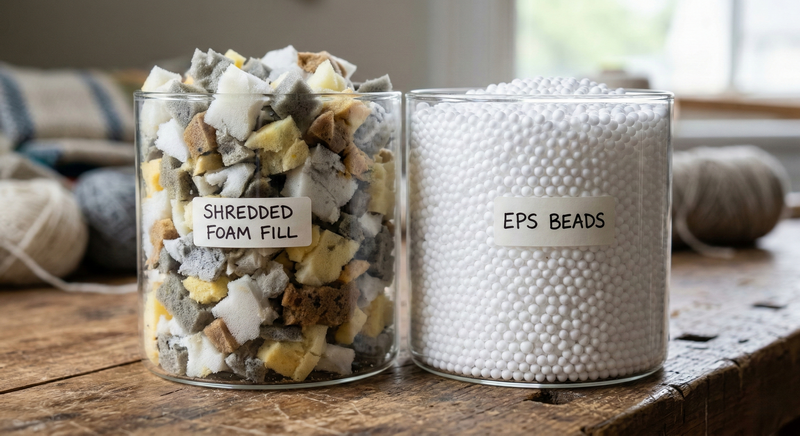
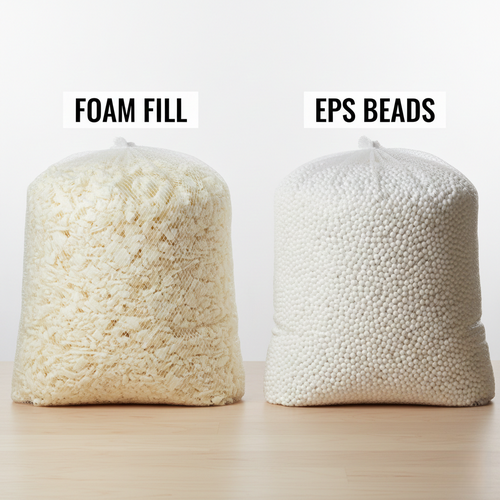
Foam filled bean bags are bean bag chairs filled with shredded foam, memory foam blends, or high-resilience (HR) foam pieces instead of small plastic beads.
They typically feel more like a soft lounge chair than a “sack,” because the foam pieces interlock and provide a more supportive cushion. As a result, foam filled bean bags are often positioned as premium seating for commercial environments.
Common B2B use cases include hotel lobbies, co-working lounges, campus common areas, showroom seating, and higher-end DTC/retail assortments.
What are EPS Bead Bean Bags?
EPS bead bean bags (expanded polystyrene bead fill) use lightweight beads that flow easily, creating the classic “sink-in” bean bag feel.
They are popular because they can be very light, often lower in unit cost, and easy to move and stack.
However, beads can compress over time and may require refilling. They can also be noisier and, if an inner liner fails, messy for commercial operations.
Head-to-Head Comparison
1) Comfort & Support (Commercial Seating Feel)
Foam fill is usually more supportive because it distributes pressure and reduces the “bottoming out” sensation during longer sits.
EPS beads feel softer at first, but the support can vary by bead density and how much the beads have compressed.
| Comfort Factor | Foam Filled Bean Bags | EPS Bead Bean Bags |
|---|---|---|
| Long-session comfort | Strong (more cushion-like) | Medium (can “sink” too much) |
| Pressure distribution | Better | Variable |
| Shape stability | Better | Lower (shifts easily) |
| Noise during use | Quieter | Often noisier (bead friction) |
Winner: Foam Filled Bean Bags — better for hospitality lounges and offices where people sit longer.
2) Durability & Shape Retention (High-Traffic Reality)
Foam filled bean bags generally retain shape longer in daily-use settings, especially with HR foam or memory foam blends.
EPS beads tend to compress as air escapes and beads break down, leading to flatter seating and more frequent maintenance.
For B2B, the key question is: How many “sits per day” will each unit handle before it feels tired? If you’re furnishing a busy lounge, that matters more than the initial invoice.
Winner: Foam Filled Bean Bags — typically lower replacement frequency and fewer “complaint moments.”
3) Maintenance & Operations (Refills, Mess, Service Calls)
Foam fill usually means fewer refills, but quality varies. Cheaper foam can clump or degrade, while better foam blends bounce back longer.
EPS bead products often need periodic refilling, especially in commercial use. That adds cost and operational friction.
Operational considerations B2B buyers often overlook:
- Inner liner quality and zipper durability
- Availability of refill materials
- Whether covers are machine washable (and how often you expect to wash them)
- How quickly a unit can be returned to service after cleaning
Winner: Foam Filled Bean Bags — fewer refills and less mess risk (assuming a solid inner liner).
4) Shipping, Storage & Installation (Landed Cost)
EPS beads are extremely light, which can reduce freight cost per unit—especially for parcel shipping.
Foam-filled products are often heavier and may ship larger (depending on compression packaging), which can increase landed cost.
However, the landed cost story isn’t only freight. It’s also:
- Damage rates (punctures, seam failures)
- Returns and replacements
- Labor time for refilling or repairs
Winner: EPS Bead Bean Bags for pure shipping weight; Foam can still win in TCO if you avoid refills/replacements.
5) Safety, Compliance & Brand Risk (B2B Reputation)
Foam filled bean bags can be easier to position as “premium and safe” if materials and certifications are clearly documented.
Depending on your market, B2B buyers may ask about:
- CertiPUR-US® (for certain foams)
- OEKO-TEX® (for textiles)
- CA TB117-2013 (flammability standard often referenced in the U.S. furniture context)
- REACH / RoHS (depending on region and product scope)
Important: compliance needs vary by country and by whether the product is marketed for children. Make sure your product documentation matches your buyer’s regulatory environment.
Winner: Tie — both can be compliant, but foam products often communicate “premium safety story” more easily when documentation is strong.
--
Comprehensive Comparison Table / 综合对比表
| Criteria | Foam Filled Bean Bags | EPS Bead Bean Bags | Winner |
|---|---|---|---|
| Comfort for long sitting | High | Medium | Foam |
| Shape retention | High | Medium-Low | Foam |
| Maintenance effort | Low-Medium | Medium-High (refills) | Foam |
| Shipping weight | Medium-High | Low | EPS |
| Noise during use | Low | Medium | Foam |
| Upfront unit cost | Medium-High | Low-Medium | EPS |
| Best for high-traffic commercial | Yes | Sometimes | Foam |
| Overall (B2B TCO) | Often best | Depends on usage | Foam |
Pros and Cons
Foam Filled Bean Bags Pros & Cons
| ✅ Pros | ❌ Cons |
|---|---|
| Premium, supportive comfort | Higher unit and freight cost (often) |
| Better shape retention in daily use | Quality varies by foam type and density |
| Typically fewer refills/less maintenance | Heavier to move vs bead fill |
| Quieter seating experience | May require larger storage space if not compressed |
EPS Bead Bean Bags Pros & Cons
| ✅ Pros | ❌ Cons |
|---|---|
| Lightweight, easy to move and store | More frequent refills in high traffic |
| Often lower upfront cost | Noisier and can feel less supportive |
| Lower shipping weight | Risk of mess if liner/zipper fails |
| Classic “sink-in” bean bag feel | Compresses faster over time |
Choose Foam Filled Bean Bags If...
- You’re furnishing hotel lobbies, co-working spaces, office lounges, campus commons, or any area with daily, high-traffic use.
- Your brand cares about a premium seating feel and fewer comfort complaints.
- You want to reduce operational friction: fewer refills, fewer service calls, and more stable performance.
- You sell into customers who evaluate TCO (total cost of ownership), not just unit price.
To compare foam types, cover fabrics, and compression packaging, include the expected use, order quantity, and destination in your RFQ.
Choose EPS Bead Bean Bags If...
- Your use case is light-to-moderate: pop-ups, short-term activations, entry-level retail lines, or low-frequency seating.
- Your main priority is lowest landed cost and easy transport.
- You have a plan for refill logistics and maintenance (or your customers do).
For a landed-cost comparison, provide the destination, order quantity, fill type, and proposed packaging format.
Our Verdict
Foam filled bean bags are the safer default for B2B buyers who want dependable comfort and lower lifecycle headaches in commercial spaces.
While EPS bead bean bags can be attractive on price and shipping weight, they tend to introduce hidden costs—refills, faster compression, and occasional operational mess—that matter more once products are deployed at scale.
If your goal is to drive inquiries and win procurement decisions, position your foam filled bean bags around:
- Usage intensity (daily sits)
- Comfort longevity
- Lower maintenance
- TCO rather than unit price
Frequently Asked Questions
Q: Are foam filled bean bags better than bead-filled bean bags for commercial use?
A: Yes, foam filled bean bags are often better for commercial use because they provide more consistent support, quieter seating, and better shape retention under daily traffic. Bead-filled options can be cheaper upfront but may compress faster and require refills, increasing total cost over time.
Q: Do foam filled bean bags need refilling?
A: Foam filled bean bags usually need refilling less often than EPS bead bean bags. However, refill needs depend on foam quality, usage intensity, and whether the product uses high-resilience foam or lower-density scraps.
Q: What is the best fill for hotels and office lounges?
A: Foam filled bean bags are typically the best fill for hotels and office lounges because guests and employees sit for longer sessions and expect stable comfort. Foam also tends to look more “structured” in premium spaces.
Q: Which option is cheaper for bulk orders: foam filled bean bags or EPS bead bean bags?
A: EPS bead bean bags are often cheaper per unit, but foam filled bean bags can be cheaper over the lifecycle in high-traffic environments due to fewer refills and longer replacement cycles. The best choice depends on your landed cost and expected daily usage.
Q: What should B2B buyers ask suppliers before purchasing foam filled bean bags?
A: Ask about foam type (HR foam vs memory foam blend), inner liner construction, fabric durability, cleaning instructions, compression packaging, warranty terms, and any compliance documents relevant to your market (such as CertiPUR-US® for foam or OEKO-TEX® for textiles).
Key Takeaways
- Foam filled bean bags usually win for comfort, quietness, and long-term shape retention in B2B deployments.
- EPS bead bean bags can win for lowest upfront and shipping weight, but often cost more over time in high-traffic use.
- For procurement, model TCO: refills + replacements + labor + downtime, not just unit price.
- Ask suppliers for foam specs, liner durability, fabric performance, and compliance documentation to reduce risk.
- The “best” choice depends on usage intensity and your customer’s maintenance expectations.
Share the venue type, expected usage, fabric preference, and target cost for a specification review.