If you’re sourcing a memory foam bean bag for retail, hospitality, education, or promotional projects, you’re likely balancing three things at once: comfort, durability, and consistent mass production. This Q&A-style guide answers the questions B2B buyers ask most—so you can evaluate specifications, avoid quality pitfalls, and request quotes with confidence.
Q1: What is a memory foam bean bag, and how is it different from EPS bead filling?
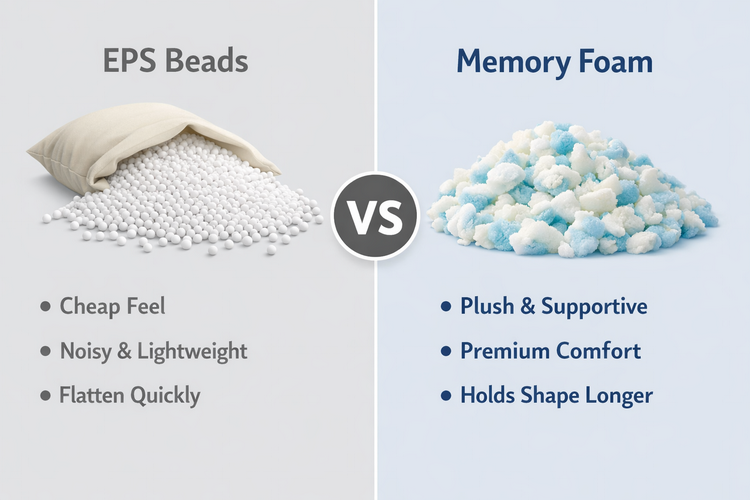
A memory foam bean bag uses shredded memory foam (or blends) as the filling instead of traditional EPS beads. For commercial buyers, the differences matter:
- Feel & support: Memory foam contours better, typically feels more “sofa-like,” and reduces pressure points.
- Noise: Foam filling is usually quieter than beads.
- Maintenance: Foam can “settle” over time and may need re-fluffing; beads can compress and leak if the liner fails.
- Perceived value: Foam-filled loungers often position better for premium categories (boutique hotels, higher-end retail, modern office spaces).
B2B takeaway: If your customers expect premium comfort and a quieter lounge experience, foam generally supports a stronger value proposition than beads.
Q2: What types of memory foam filling are used in bean bags?
Suppliers commonly offer:
- Shredded memory foam (standard): Balanced softness and support; most common choice.
- Shredded high-density foam blend: More structure and longer shape retention—good for heavy-use environments.
- Gel-infused memory foam (optional): Cooling marketing angle; benefits depend on design and cover breathability.
- Mixed foam (memory + poly foam): Controls cost while keeping the “foam feel.”
What to request in your inquiry:
- Foam composition (memory vs poly ratio)
- Density range
- Fill weight per size
- Whether foam is new, recycled, or mixed (important for consistency)
Q3: Which industries buy memory foam bean bags in bulk?
Common B2B use cases include:
- Hospitality: hotel lounges, resort villas, poolside (with the right outdoor cover)
- Education: reading corners, libraries, student lounges
- Co-working & offices: relaxation zones, collaboration spaces
- Retail: home furnishing stores, lifestyle brands, seasonal promotions
- Events & promotions: branded lounge seating, pop-up activations
B2B insight: Hospitality and education usually care most about flammability compliance, abrasion resistance, and easy-clean covers.
Q4: What sizes are most popular for bulk orders?
Popular categories:
- Kids / Teen: easier shipping, strong online conversion
- Standard lounge: main volume driver for home and office
- Large / XL: premium price point; often used for hospitality
- Ottoman / footstool add-ons: increases AOV and bundle appeal
Tip: If you’re building a product line, offer 2–3 core sizes plus an ottoman rather than too many SKUs.
Q5: What cover materials are best for memory foam bean bags (B2B perspective)?
Material choices should match the environment and your customer’s cleaning needs:
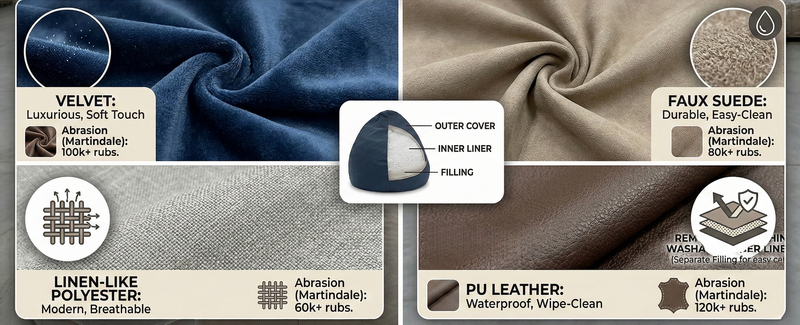
- Velvet / microsuede: soft, premium look, great for retail; moderate stain resistance
- Faux fur: high comfort appeal, seasonal best-seller; needs strong stitching and shedding control
- Linen-like polyester: modern aesthetic, breathable, stable for mass production
- PU leather / faux leather: wipe-clean, great for cafes and offices; check cracking resistance
- Outdoor polyester (with coating): for patios; confirm water resistance and UV performance
 Ask your supplier for:
 - Fabric weight (GSM)
- Martindale or Wyzenbeek abrasion rating (if available)
- Colorfastness and shrinkage standards
- Cleaning method: spot clean vs removable machine-wash cover
Q6: Do memory foam bean bags need an inner liner?
For B2B projects, an inner liner is strongly recommended.
Benefits:
- Safer and cleaner filling containment
- Easier cover removal and washing
- Reduced risk of fill escaping during heavy use or returns handling
Procurement note: Confirm liner fabric type, zipper quality, and whether the liner is stitched with reinforced seams.
Q7: How do I evaluate quality before placing a bulk PO?
Use this checklist during sampling:
Comfort & shape
- Does it rebound after sitting?
- Does it feel “lumpy” (inconsistent foam size) or evenly filled?
Construction
- Double stitching on stress points
- Strong zipper (metal preferred for heavy-use programs)
- Secure zipper garage or flap (for safety and aesthetics)
Fabric performance
- Abrasion resistance
- Seam slippage
- Pilling and snagging tests (especially for velvet and woven fabrics)
Filling consistency
- Foam particle size uniformity
- No strong odor or excessive dust
- Fill weight matches spec
Best practice: Request 2 samples—one for showroom review, one for “abuse testing” (repeated sit/roll/zip cycles).
Q8: Are memory foam bean bags compressed for shipping? How long do they expand?
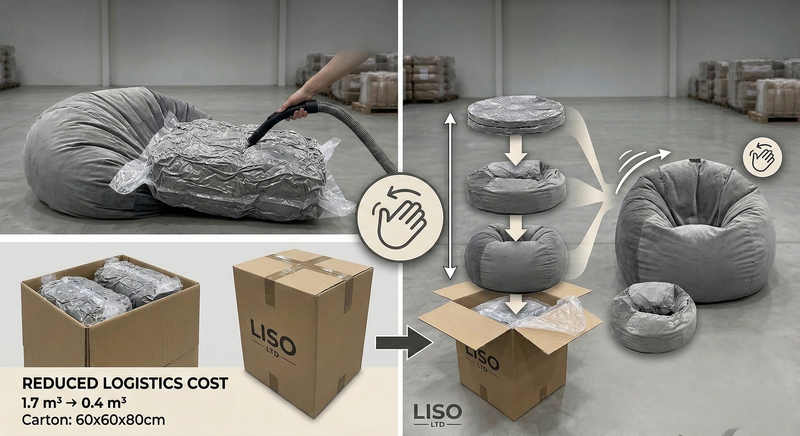
Yes—most are vacuum-compressed to reduce shipping volume. Expansion times vary by fill and compression method, often 24–72 hours for full loft.
For B2B fulfillment: ask the supplier to provide:
- Carton size per SKU
- Compressed vs expanded dimensions
-
Label instructions for end customers (“Allow 1–3 days to fully expand”)
Q9: What compliance or safety standards should B2B buyers consider?
Requirements depend on your market and customer segment, but common areas include:
- Flammability standards for upholstered products (especially hospitality and public spaces)
- Chemical compliance (restricted substances)
- Labeling (country-of-origin, fiber content for covers, care labels)
- Packaging compliance (recycling marks, suffocation warnings where required)
Important: Ask suppliers what test reports they can provide and whether they support third-party testing for your destination market.
Q10: What customization options are realistic for B2B orders?
Typical B2B customization includes:
- Custom colors (Pantone-matched fabrics)
- Custom sizes or fill weights (within production limits)
- Private label: woven labels, hangtags, packaging sleeves
- Embroidery or logo patch (events, promotional seating)
- Bundle sets (bean bag + ottoman)
To speed up quoting: provide your target material, size, estimated order quantity, logo placement, and shipping destination.
Q11: What’s the typical MOQ for a memory foam bean bag supplier?
MOQ varies based on fabric and customization. In general:
- Lower MOQ for stock colors/sizes
- Higher MOQ for custom dye, special fabrics, or branded packaging
Negotiation tip: If you’re testing the market, ask for a mixed-size or mixed-color MOQ within one container or batch.
Q12: How do I write a quote request that gets fast, accurate pricing?
Here’s the information most factories need to quote quickly:
- Product type: memory foam bean bag
- Size(s): standard / large / XL (or exact dimensions)
- Cover material and color
- Inner liner: yes/no
- Fill type: shredded memory foam / blend; target fill weight
- Quantity per SKU
- Branding: label/hangtag/packaging
- Destination port / delivery terms (EXW/FOB/CIF/DDP if applicable)
- Target timeline
Pro tip: Attach reference photos and specify your must-haves (e.g., removable cover, double stitching, metal zipper).
Q13: What are common problems in memory foam bean bag production (and how to avoid them)?
1) Underfilling
- Leads to flat look and poor reviews
✅ Request fill weight tolerance and QC checks.
2) Inconsistent foam
- Lumps, uneven rebound
✅ Ask about foam sourcing and particle size control.
3) Weak seams and zippers
- Returns spike in hospitality or student areas
✅ Require reinforced stitching and zipper specs.
4) Odor issues
- Some foam can off-gas
✅ Ask for ventilation time after production and confirm packaging method.
Q14: What should I put on a B2B product page to improve SEO and conversions?
For SEO + GEO (search + generative discovery), include:
- Clear spec table: size, cover material, fill type, liner, carton size
- Use-case sections: hospitality, education, office, retail
- FAQ block (like this article) with scannable answers
- “Compare fillings” section (memory foam vs EPS beads)
- Trust signals: QC process, certifications, sample policy
- Strong CTA for inquiries
Ready to Source a Memory Foam Bean Bag in Bulk?
If you’re planning a bulk order for memory foam bean bag loungers—whether for retail shelves, hotel projects, campus spaces, or branded events—prepare these details and contact us:
- Target size(s) and quantity
- Preferred cover material and color
- Branding requirements (label/logo/packaging)
- Destination market and compliance needs
Send your requirements and we’ll reply with recommended specifications, MOQ, lead time, and a tailored quote.
Related sourcing topics: shredded memory foam filling, removable washable covers, commercial lounge seating, private label bean bag chairs, hospitality soft seating.