Introduction
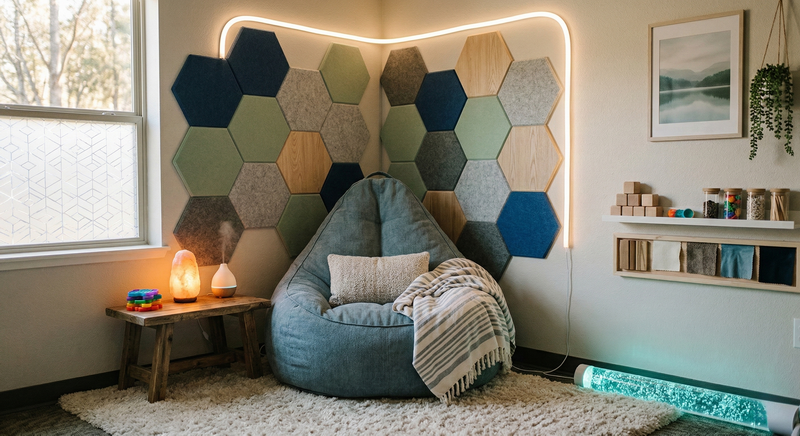
Bean bag chairs are widely marketed as “relaxing,” but B2B buyers (wholesalers, procurement teams, project contractors) often need more than testimonials—especially for corporate lounges, student housing, hospitality, healthcare waiting areas, and retail experience zones.
The key question is straightforward: Have the relaxing effects of bean bag chairs been studied in measurable ways (muscle activity, autonomic nervous system, comfort metrics)? The answer is yes, but the research footprint is still small and highly specific.
[📊 Cite: Peer-reviewed / academic study on bean bag chair napping physiology; broader seating comfort research on posture/pressure/load distribution.]
What “Relaxation” Means in Seating Research
In research terms, “relaxation” usually refers to objective and subjective indicators:
- Objective physiology: reduced muscle activation (e.g., neck/shoulder EMG), and changes in heart rate variability (HRV) that can reflect shifts in autonomic balance.
- Objective biomechanics: how posture + pressure distribution + load distribution at the seat interface relate to comfort or discomfort.
- Subjective comfort: perceived comfort, fatigue, and willingness to stay seated over time.
In other words, a chair can feel relaxing because it:
1) reduces local muscle tension,
2) reduces pressure hotspots by distributing load across a larger area, and/or
3) supports a posture that reduces sustained effort.
What Studies Exist on Bean Bag Chairs Specifically?
1) Direct physiological evidence: napping on a bean bag chair
A notable controlled, crossover experiment evaluated daytime napping on a bean bag chair versus a similarly shaped urethane chair. The researchers measured sleep variables plus electromyography (EMG) and heart-rate variability (HRV).
What they found (high level):
- Neck/shoulder region muscle activity decreased (trapezius EMG was significantly lower) when napping on the bean bag chair.
- HRV metrics showed a significant effect in the LF/HF ratio between bedding conditions, and the authors interpret this as consistent with a relaxation-supportive environment.
- Sleep architecture measures did not show major differences, but physiological relaxation markers did.
Why this matters for buyers: this is rare—it links bean bag chairs to measurable relaxation-related signals, not just “comfort claims.”
[📊 Cite: Study measuring EEG/EMG/HRV during napping on a bean bag chair.]
2) The important limitations (what the study does NOT prove)
This is where most buyers should be cautious:
- Small sample size and short exposure: results are meaningful but not “final word.”
- The setting is napping, not eight hours of upright sitting or task work.
- The bean bag chair tested was a specific product type; outcomes can vary with fill, shape, and how reclined the posture is.
So, the most accurate statement is:
Bean bag chairs have been studied in at least one controlled physiological context (napping), showing measurable signs consistent with relaxation—but the evidence base is still limited and context-dependent.
What Broader Ergonomics Research Can (and Can’t) Tell Us
Even when research isn’t “bean bag chair–specific,” it helps explain why bean bag chairs can feel relaxing—and when they might backfire.
Comfort is strongly linked to posture + pressure + load distribution
Seating comfort research repeatedly points to three dominant variables:
- Posture
- Interface pressure
- Load distribution across contact area
 These factors correlate with perceived comfort/discomfort and can be measured with common tools (pressure mapping, posture analysis, subjective scales).
[📊 Cite: Academic ergonomics research identifying posture, pressure, and load distribution as key comfort drivers.]
Where bean bag chairs can outperform rigid seating
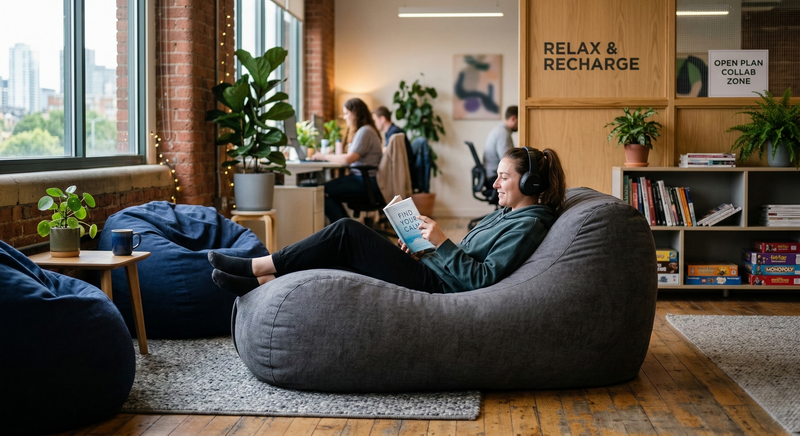
Bean bag chairs can:
- Increase contact area and reduce pressure peaks by conforming to the body.
- Encourage a reclined posture that some people experience as lower-effort than upright seating.
- Promote micro-adjustments (users subtly shift) that may reduce static loading—depending on design.
Where bean bag chairs can underperform (especially for “work seating”)
Bean bag chairs can also:
- Provide less structured lumbar support, which may increase fatigue for typing/desk tasks.
- Create posture variability that feels “cozy,” but isn’t ideal for long-duration upright work.
This is why the best procurement approach is use-case based: bean bag chairs are often excellent for lounging, decompression, break rooms, and experiential spaces, but not a replacement for task chairs.
Practical Takeaways for B2B Procurement
The procurement question to reframe everything
Instead of “Are bean bag chairs relaxing?” ask:
“Relaxing for what duration and context—10-minute decompression, 30-minute nap, 60-minute lounge session, or multi-hour task work?”
That single question will determine your spec, testing, and order mix.
Spec sheet priorities that actually influence relaxation outcomes
Here’s a practical spec framework you can use in RFQs and supplier comparisons:
| Spec Category | What to Specify | Why It Matters for “Relaxation” |
|---|---|---|
| Fill type | Micro-beads, EPS beads, shredded foam, memory-foam blend | Affects conformity, pressure distribution, heat retention, and how quickly the chair “bottoms out.” |
| Inner liner + refillability | Liner strength, double-zipper, refill port, refill policy | Maintains support over time; prevents flattening that reduces comfort and increases awkward postures. |
| Shape/profile | Lounger vs chair shape vs structured “high-back” | Determines recline angle and neck/shoulder support—key for muscle relaxation. |
| Size + volume | User range (5th–95th percentile), seat depth, back height | Fit drives posture quality; poor fit kills comfort fast in shared spaces. |
| Cover material | Breathability, abrasion rating, cleanability, anti-slip base | Comfort + maintenance for high-traffic environments. |
| Safety/compliance | Flammability requirements, labeling, CPSIA (if applicable), local regs | Required for institutional buyers; reduces procurement risk. |
| Packaging/logistics | Compression packing, carton size, landed cost, defect rate SLAs | Impacts total landed cost and fulfillment speed at scale. |
How to evaluate bean bag chairs for relaxation (without overcomplicating it)
If you’re buying at scale, use a simple two-layer evaluation:
1) Short-session comfort test (10–20 min)
- Recruit 8–12 users across sizes.
- Test “first impression comfort” and pressure hotspot complaints. 2) Long-session lounge test (45–60 min)
- Evaluate neck/shoulder fatigue and reposition frequency.
- Track “would you stay seated?” and “would you choose this again?”
This mirrors how comfort research separates immediate comfort from time-based discomfort onset.
[📊 Cite: Systematic review and methods commonly used in sitting/working furniture evaluation.]
A Simple Evaluation Checklist for Large Orders
Use this checklist to reduce returns and improve end-user satisfaction:
- Define the primary use case (break room vs gaming lounge vs waiting room vs nap pod).
- Select two fill options for pilot (e.g., micro-beads vs shredded foam blend).
- Require refillability + durable liner for institutional deployments.
- Pilot test for 60 minutes, not just 5 minutes.
- Add cleanability and compliance requirements directly into the PO/spec.
- Ask suppliers for QC controls (stitching, zipper specs, liner burst testing, cover abrasion).
Key Takeaways
- Yes, bean bag chairs’ relaxing effects have been studied, but the direct evidence is limited to specific contexts (notably napping physiology).
- The strongest direct finding: reduced neck/shoulder muscle activity and HRV changes during napping on a bean bag chair versus a comparison chair.
- Broader seating science shows comfort is driven by posture, pressure, and load distribution—a useful framework for evaluating bean bag chairs objectively.
- For B2B buyers, the winning approach is use-case + specs + pilot testing, not generic “comfort claims.”
- The best bean bag chair for procurement is the one that matches your environment: refillable, durable liner, right shape, and easy-clean cover.
[🎯 CTA: If you’re sourcing bean bag chairs in bulk, request a spec sheet + sample kit (fill options, cover materials, compliance docs) so you can run a 60-minute comfort pilot before placing a container-level order.]
FAQ Schema
Q: Have the relaxing effects of bean bag chairs been studied scientifically?
A: Yes, but the research base is small. A controlled crossover study measuring physiology during napping found lower neck muscle activity and HRV changes on a bean bag chair versus a comparison chair, suggesting measurable relaxation signals in that context.
Q: Does that mean bean bag chairs are better than ergonomic task chairs for long sitting?
A: Not necessarily. Bean bag chairs can be excellent for lounging or decompression, but task chairs provide structured support for upright work. Comfort depends on posture, pressure distribution, and duration of use.
Q: What should wholesalers and procurement teams look for in “relaxation-grade” bean bag chairs?
A: Prioritize fill type, refillability, durable inner liner, shape/profile (recline support), size fit range, cleanability, and compliance requirements for your market.
Q: What’s the biggest mistake B2B buyers make when sourcing bean bag chairs?
A: Testing only for 1–2 minutes. Short “first-sit comfort” can be misleading; run a 45–60 minute lounge test to see whether discomfort appears over time.
Q: Are there objective ways to test comfort besides surveys?
A: Yes. Many furniture studies use pressure mapping, posture analysis, and muscle activity measures. Even without lab tools, you can pilot with time-based comfort scoring and reposition frequency tracking.