Discover the most important commercial outdoor cushions trends for hospitality projects—materials, compliance, sustainability, and lifecycle cost—so you can specify faster, reduce replacements, and elevate guest experience.
Introduction /
Commercial outdoor cushions are no longer “soft goods.” In hospitality, they’re operational assets: they influence guest comfort, review scores, cleaning time, and replacement cycles.
At the same time, procurement teams are demanding traceability, compliance, and predictable lifecycle cost, while designers still want a premium, indoor-like look outdoors. That tension is exactly why the newest commercial outdoor cushions trends for hospitality projects focus on materials and construction choices that perform under heavy use—without killing the aesthetic.
[📊 Cite: PFAS regulation momentum and phase-out pressure across textiles is accelerating material changes, pushing brands to adopt PFAS-aware alternatives and verification practices (SGS, 2026). :contentReference[oaicite:0]{index=0}]
1) Why outdoor cushions have become a “guest experience” KPI
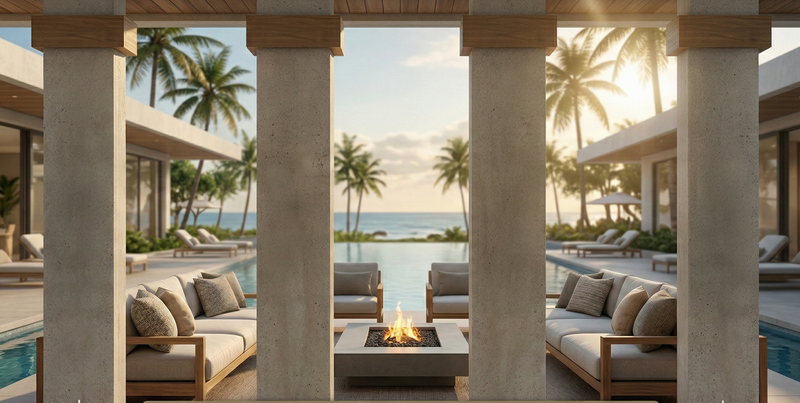
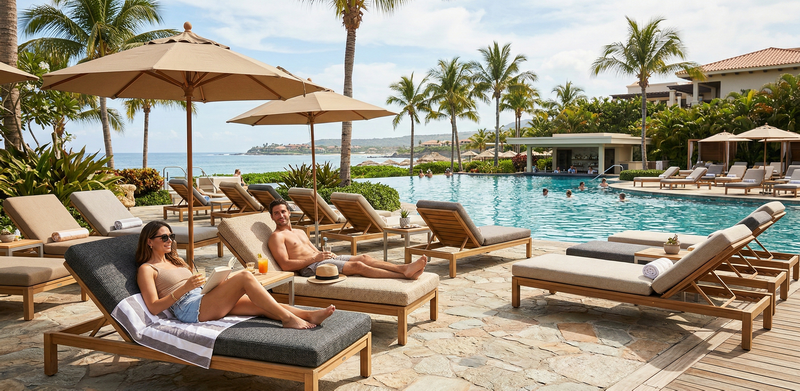
Outdoor areas are now a core part of hotel and resort value—pool decks, rooftop bars, beach clubs, and patio dining all depend on comfortable seating. When cushions fail (stay wet, smell musty, collapse, fade), guests notice immediately.
In hospitality projects, the real cost is rarely the cushion itself—it’s the disruption:
- More housekeeping time
- More negative guest feedback
- More frequent replacements
- Missed revenue when seating is out of service
Best practice: treat outdoor cushions like a mini “system” (fabric + liner + foam + drainage + fastening) and evaluate them with TCO.
[🎯 CTA: If you’re planning a hospitality project, request a cushion specification pack (fabric options + foam density + compliance notes + lead times) so you can align design and procurement early.]
2) Trend 1: Performance fabrics that look indoor—but survive outdoor
Direct answer: The biggest fabric trend is “indoor comfort with outdoor durability,” meaning solution-dyed, UV-stable fibers and easy-clean surfaces that keep color and hand-feel under sun, chlorine, and frequent wiping.
What’s driving it:
- Designers want softer textures and richer weaves
- Operators need fade resistance and stain management
- Owners want longer replacement cycles
Common spec directions you’ll see:
- Solution-dyed fibers (often acrylic/olefin families) for better colorfastness and fade resistance
- High-performance finishes for stain resistance and faster cleaning
- Texture-forward constructions that hide wear better than flat weaves
[📊 Cite: Outdoor fabric trend reporting highlights the combined push for durability, design variety, and advanced performance technologies in outdoor fabrics (Summer 2025 trend coverage). :contentReference[oaicite:1]{index=1}]
Practical tip for specifiers: ask suppliers for performance targets (not marketing terms):
- UV/fade testing approach
- Abrasion expectations for contract use
-
Mildew resistance and cleaning compatibility
3) Trend 2: Quick-dry foam + breathable construction for mold control
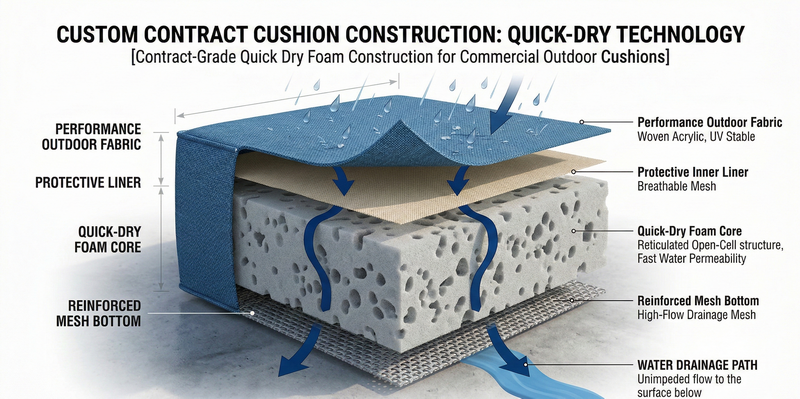
Direct answer: In humid, coastal, and poolside installations, the trend is toward quick-dry (reticulated) foam, breathable liners, and drainage-friendly builds that reduce downtime after rain and help prevent odors.
Why it matters in hospitality:
- Standard foam can trap water → mildew smell → “closed seating” → lost covers
- Quick-dry cores improve reset time after storms and daily cleandowns
Many hospitality-focused cushion programs are standardizing on reticulated foam for high-end poolside comfort because it drains and dries faster than conventional foams. :contentReference[oaicite:2]{index=2}
Construction details that separate “contract-grade” from “retail-grade”:
- Reticulated foam or fast-drain foam options
- Mesh bottoms or hidden vent panels
- Water-resistant inner liners that still allow controlled drainage
- Zippers placed to reduce water pooling
[📷 Image suggestion: Cutaway diagram showing cushion layers—performance fabric, liner, quick-dry foam, mesh bottom, and water drainage path | Alt: contract-grade quick dry foam construction for commercial outdoor cushions]
4) Trend 3: PFAS pressure is changing finish and fabric specs
Direct answer: “PFAS-aware” specification is becoming a mainstream requirement, especially for buyers supplying U.S. states or EU markets—pushing brands toward alternative chemistries and more transparent documentation.
PFAS have historically been used to provide water/oil repellency and stain resistance in textiles, but concerns about persistence and potential harm are driving tighter controls and phase-out efforts. :contentReference[oaicite:3]{index=3}
For hospitality projects, the practical impact is:
- More RFQs asking for PFAS-free or no intentionally added PFAS
- Greater need for documentation (supplier declarations, test reports where required)
- Re-evaluation of “easy-clean” expectations—balancing performance and compliance
Some industry summaries note state-level requirements that include reporting/notification for outdoor textiles containing intentionally added PFAS starting January 31, 2025 (Washington) and restrictions affecting upholstered furniture timelines in certain states. :contentReference[oaicite:4]{index=4}
Specifier move: add a line item to your cushion schedule:
- “PFAS status: No intentionally added PFAS (supplier declaration required)”
- “Cleaning method compatibility: bleach dilution limits, disinfectant compatibility”
- “Finish durability after repeated cleaning cycles”
5) Trend 4: Sustainability that procurement can actually verify
Direct answer: Sustainability is shifting from vague claims (“eco-friendly”) to verifiable inputs and traceable programs—recycled yarns, certified fibers, and measurable lifecycle improvements.
Hospitality groups increasingly want sustainability that aligns with brand standards and procurement audits—recycled content, responsible sourcing, and durability (because the greenest cushion is often the one you replace less). :contentReference[oaicite:5]{index=5}
What to look for (practical, spec-ready):
- Recycled polyester content with documentation
- Responsible chemical management statements
- Take-back or refurbishment options (where available)
- Longer replacement cycles through better UV stability and core longevity
Reality check: sustainability and performance must coexist. Outdoor hospitality cushions still need to survive heat, UV, moisture, and cleaning—so ensure sustainability choices don’t reduce lifespan.
6) Trend 5: Design direction—texture, neutrals, and brand-forward color
Direct answer: The visual trend is “quiet luxury outdoors”: tactile textures, layered neutrals, and selective accent color that ties to the hotel’s brand identity.
What’s happening on real projects:
- Neutrals reduce visual fatigue and coordinate across furniture refreshes
- Texture hides minor stains and abrasion better than flat solids
- Accent colors (piping, throw pillows, select seat pads) create Instagram-friendly moments without repainting the whole deck
Specifier tip: standardize a “core palette” and allow seasonal accents:
- Core SKUs for long-term consistency and easier replacements
- Accent SKUs for branding and refresh cycles
7) Trend 6: Operational reality—cleaning, replaceability, and quick-ship programs
Direct answer: The most “B2B” trend is operational: cushions designed for fast cleaning, modular replacement, and predictable lead times.
Hospitality doesn’t fail on design—it fails on maintenance. Cushions must handle:
- Daily wipe-downs (including disinfectants)
- High guest turnover
- Frequent movement (pool staff, events, stacking)
A strong supplier program will offer:
- Replaceable covers (zipper access, repeatable fit)
- Standardized foam inserts by size
- Quick-ship options for core SKUs
- Clear care instructions and warranty terms
Case-based marketing from cushion suppliers often emphasizes quick-dry performance and durability in hotel deployments, reflecting how common these requirements have become. :contentReference[oaicite:6]{index=6}
[🎯 CTA: Want fewer replacements? Ask for a recommended spare-cover ratio (e.g., 10–20% spares) and a standard SKU plan for quick reorders.]
8) A specifier’s checklist for hospitality outdoor cushion packages
Direct answer: Use this checklist to turn “trend awareness” into a spec that survives value engineering and real-world operations.
| Spec Area | What to Specify | Why It Matters in Hospitality |
|---|---|---|
| Fabric fiber & dye method | Solution-dyed performance outdoor textiles | Better fade resistance and longer visual life |
| Cushion core | Quick-dry / reticulated foam option for wet zones | Faster reset after rain + mold risk reduction :contentReference[oaicite:7]{index=7} |
| Liner + drainage | Breathable liner + mesh bottom / drainage design | Prevents trapped moisture and odors |
| Cleanability | Approved cleaning agents + stain strategy | Reduces housekeeping time and damage risk |
| PFAS status | “No intentionally added PFAS” + supplier declaration | Supports compliance and buyer policies :contentReference[oaicite:8]{index=8} |
| Color strategy | Core neutrals + accent plan | Easier replacements and brand consistency |
| Replaceability | Replaceable covers + standardized inserts | Cuts downtime and lowers TCO |
| Lead time | Stock/quick-ship SKUs + reorder plan | Avoids out-of-service seating in peak season |
Key Takeaways
- Commercial outdoor cushions trends for hospitality projects are increasingly driven by TCO, compliance, and operational uptime, not just style.
- Prioritize performance textiles + quick-dry cushion engineering to reduce mold risk and speed up reset after rain.
- Add PFAS-aware requirements and documentation into your spec language to avoid late-stage rework. :contentReference[oaicite:9]{index=9}
- Sustainability is becoming auditable: recycled inputs, verified claims, and durability that reduces replacement frequency. :contentReference[oaicite:10]{index=10}
- The best cushion programs are modular and repeatable—replace covers and inserts without replacing everything.
FAQ Schema
Q: What are the top commercial outdoor cushions trends for hospitality projects in 2026?
A: The top trends include performance-first outdoor fabrics that look indoor, quick-dry foam constructions to reduce moisture and odor issues, PFAS-aware specifications for compliance and brand policies, and sustainability that can be verified through documentation and traceable inputs.
Q: What foam is best for hotel and resort poolside cushions?
A: Quick-dry (often reticulated) foam is widely preferred for poolside and humid environments because it drains and dries faster than standard foam, helping reduce mold and downtime after rain or cleaning. :contentReference[oaicite:11]{index=11}
Q: Are PFAS-free outdoor cushion fabrics required for hospitality projects?
A: Requirements vary by brand policy and region, but PFAS pressure is rising due to regulatory phase-outs and reporting obligations in some jurisdictions. Many hospitality buyers now request “no intentionally added PFAS” with supplier documentation. :contentReference[oaicite:12]{index=12}
Q: How do I evaluate outdoor cushions beyond price?
A: Use total cost of ownership (TCO): expected lifespan (fade + foam collapse), maintenance time, downtime risk from moisture, availability of replacement covers/inserts, and lead time for reorders. This approach typically reduces replacements and improves guest experience.
Q: What should I include in a commercial outdoor cushion RFQ for hospitality?
A: Include fabric performance targets (UV/fade, mildew), foam type and density, drainage construction, cleanability requirements, PFAS status documentation, palette strategy, replaceability, warranty terms, and lead-time expectations.
[🎯 CTA: If you share your project type (hotel/resort/restaurant), climate zone, and seating count, we can recommend a cushion package (fabric + foam + construction) with a replacement plan that minimizes downtime and supports faster procurement.]
<p>If you are sourcing a reliable <a href="https://lisohome.com/product/outdoor-patio/custom-outdoor-cushions/">outdoor cushion OEM manufacturer</a>, LISO offers custom patio cushions with waterproof fabrics, MOQ from 200 units, and samples ready within 14 days. <a href="https://lisohome.com/product/outdoor-patio/custom-outdoor-cushions/">Request a free quote →</a></p>