How Home Textile Brands Should Choose Linen and Hemp Fabrics? Linen and hemp fabrics are increasingly popular in the home textile market due to their natural texture, breathability, durability, and eco-friendly attributes. From premium bedding and curtains to sofa covers and table linens, these fabrics have wide applications.
However, selecting linen or hemp fabrics is not just about choosing “pure linen” or “cotton-linen.” Brands must consider brand positioning, target market, product applications, and supply chain capabilities. This article provides a deep Q&A guide for B2B buyers, sourcing managers, and home textile brands.
What Are the Common Linen and Hemp Fabrics Used in Home Textiles?
Common fabrics in the home textile industry include natural bast fibers and blended fabrics:
-
Linen (Flax)
Breathable, moisture-absorbent, cool to the touch, natural texture. Slightly stiff initially. Ideal for bedding, curtains, tablecloths, napkins, and decorative cushions. -
Ramie
Strong, lustrous, and crisp. Typically used in table linens, decorative cushions, and accent fabrics. -
Hemp
Coarser, very durable, eco-friendly. Suitable for sofa covers, cushions, curtains, and functional bedding. Requires fine processing for soft hand-feel in bedding. -
Jute
Coarse fiber mainly for carpets, storage baskets, wall décor, and decorative fabrics. -
Sisal
Strong and wear-resistant, used for rugs, mats, and decorative items.
Why Are Linen and Hemp Fabrics Suitable for Home Textiles?
- Breathable and Moisture-Absorbent: Ideal for bedding, pillows, summer blankets, and curtains.
- Natural Texture: Fibers provide rustic and natural visual effects, suitable for natural, wabi-sabi, French country, or Scandinavian interiors.
- Eco-Friendly: Low pesticide and water footprint; aligns with sustainable lifestyle brands.
- Softening with Washes: Water-washed linen softens over time, suitable for premium lifestyle products.
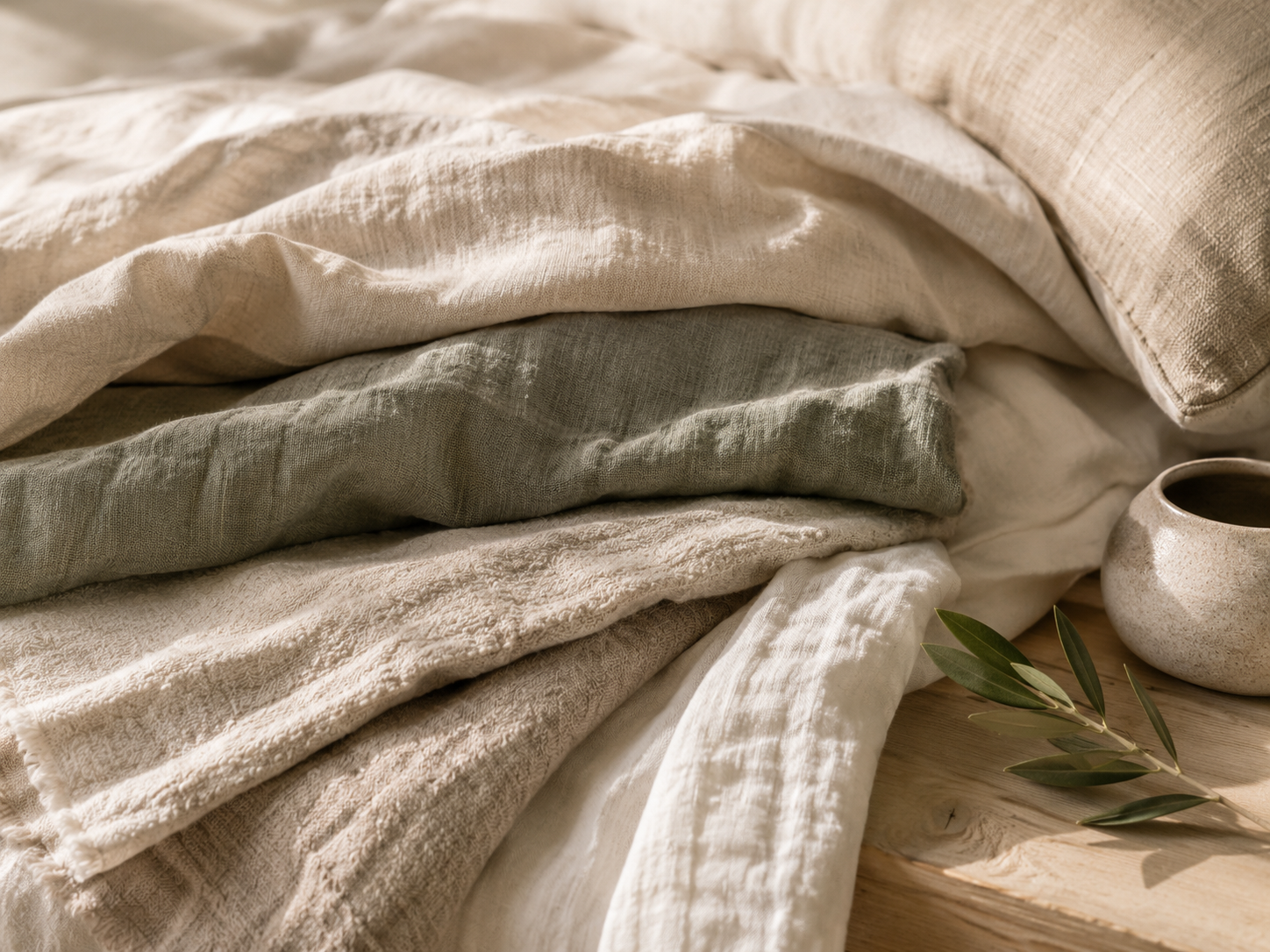
Which Linen or Hemp Fabrics Should Be Used for Specific Home Textile Products?
| Product | Recommended Fabrics | Not Recommended | Rationale |
|---|---|---|---|
| Bedding sets | Water-washed linen, cotton-linen, linen-cotton, linen-viscose blends | Jute, sisal, coarse ramie | Comfort and skin contact |
| Summer blankets / Air-conditioning blankets | Linen-cotton, linen-viscose, linen-tencel | Coarse pure linen | Cool touch and softness |
| Curtains | Linen, cotton-linen, linen-polyester, linen-look blackout | Thin pure linen for blackout | Drape, light blocking, wrinkle resistance |
| Sofa covers | Cotton-linen, linen-polyester, hemp blends | Thin pure linen | Wear resistance, dimensional stability |
| Decorative cushions | Linen, ramie, color-woven cotton-linen, jacquard linen | Coarse jute | Texture and decoration |
| Tablecloths / Placemats | Linen, ramie, cotton-linen | Easily deformed thin fabrics | Crispness and visual appeal |
| Rugs / Storage | Jute, sisal, coarse linen | Thin fine linen | Durability and decoration |
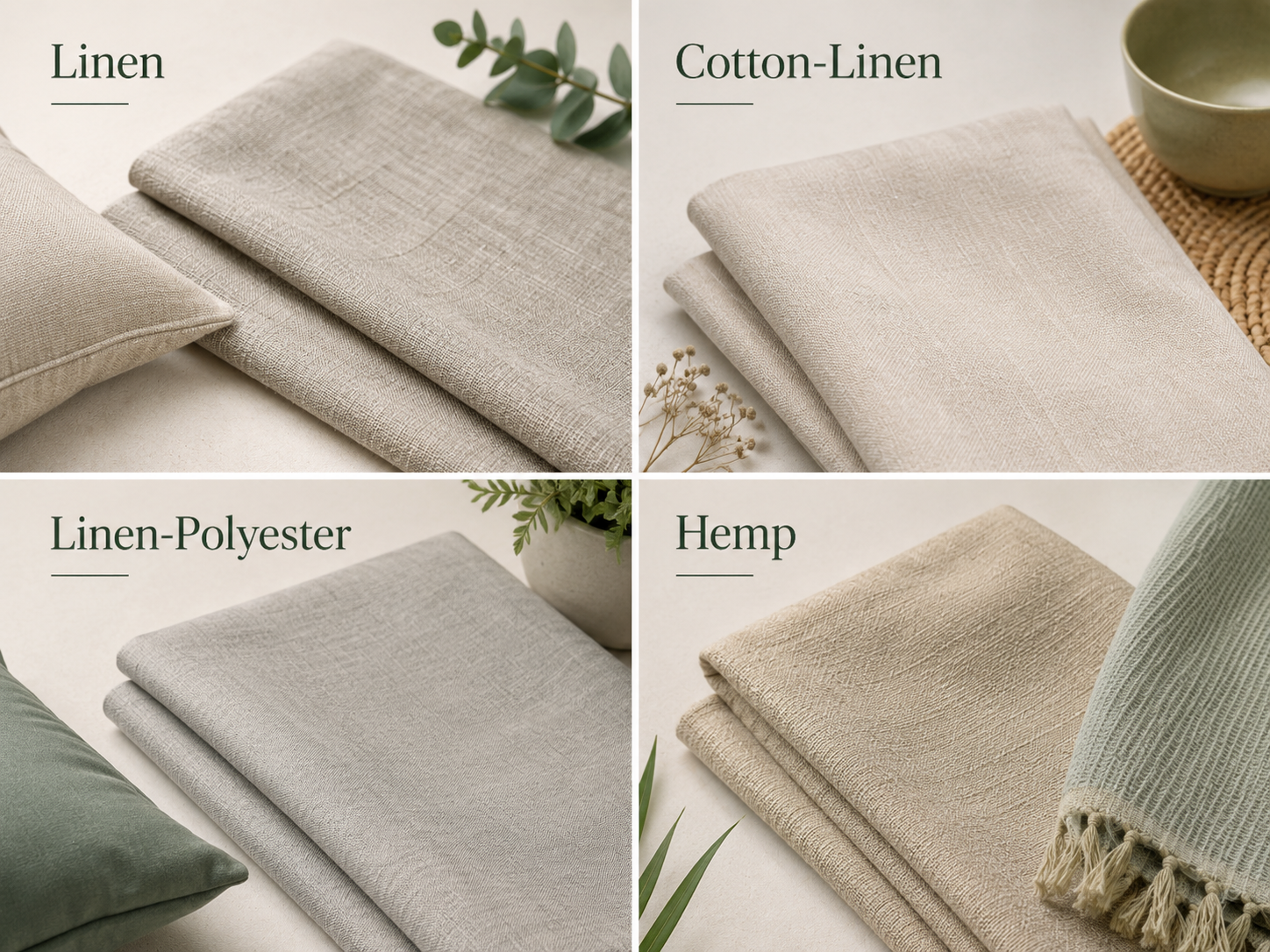
How Should Premium Home Textile Brands Choose Linen and Hemp Fabrics?
- Recommended Fabrics: Water-washed linen, European linen, high-count linen, linen-cotton blends, linen-silk blends, plant-dyed linen, slub linen.
- Applications: Premium bedding, fitted sheets, duvets, pillowcases, curtains, tablecloths, napkins, gift sets.
- Strategy: Embrace natural wrinkles as a design feature, emphasizing texture and softness after washing.
Three-tier Fabric Strategy:
| Tier | Recommended Fabrics | Purpose |
|---|---|---|
| Premium | 100% water-washed linen | Brand positioning |
| Main Sales | Linen-cotton, cotton-linen | Comfort and sales conversion |
| Comfort Line | Linen-viscose, linen-tencel | Softness and drape |
| Decorative | Color-woven cotton-linen, jacquard linen | Visual differentiation |
| Curtains | Cotton-linen, linen-polyester | Wrinkle resistance and stability |
Is Pure Linen Suitable for Mass-Market Home Textiles?
Not recommended for large-scale use:
- Challenges: Higher price, initially stiff, wrinkles easily, higher care requirement.
- Recommended Fabrics: Cotton-linen blends, linen-polyester, linen-look fabrics, cotton-polyester-linen blends.
- Selling Points: Natural texture, breathable, easy care, cost-effective.
How Can Designer Brands Use Linen to Differentiate?
- Recommended Fabrics: Color-woven cotton-linen, slub linen, coarse linen, ramie blends, jacquard linen, washed linen, plant-dyed linen, patchwork linen.
- Styles: Wabi-sabi, French country, Eastern Zen, tropical resort, Scandinavian.
- Applications: Cushions, table runners, curtains, bed runners, sofa throws, décor sets.
- Strategy: Leverage slubs, weaving patterns, patchwork, and dyeing for visual identity.
How Should Functional Home Textile Brands Choose Linen or Hemp?
- Recommended Fabrics: Hemp blends, linen-cotton, linen-viscose, linen-tencel.
- Functionality: Breathable, moisture-absorbent, cool touch, antimicrobial, durable, eco-friendly.
- Applications: Bedding, sofa covers, cushions, summer blankets.
- Procurement Focus: Antibacterial rate, breathability, moisture absorption, shrinkage, colorfastness, wear resistance, hand feel, batch consistency.
Linen Selection for Hotels, Resorts, and Projects
- Recommended Fabrics: Linen-polyester blends, cotton-linen-polyester blends, linen-look blackout fabrics, high durability linen.
- Applications: Curtains, bed runners, cushions, sofa covers, décor fabrics.
- Focus: Wash durability, wrinkle resistance, shrinkage, colorfastness, flame resistance, batch consistency, lead time, maintenance cost.
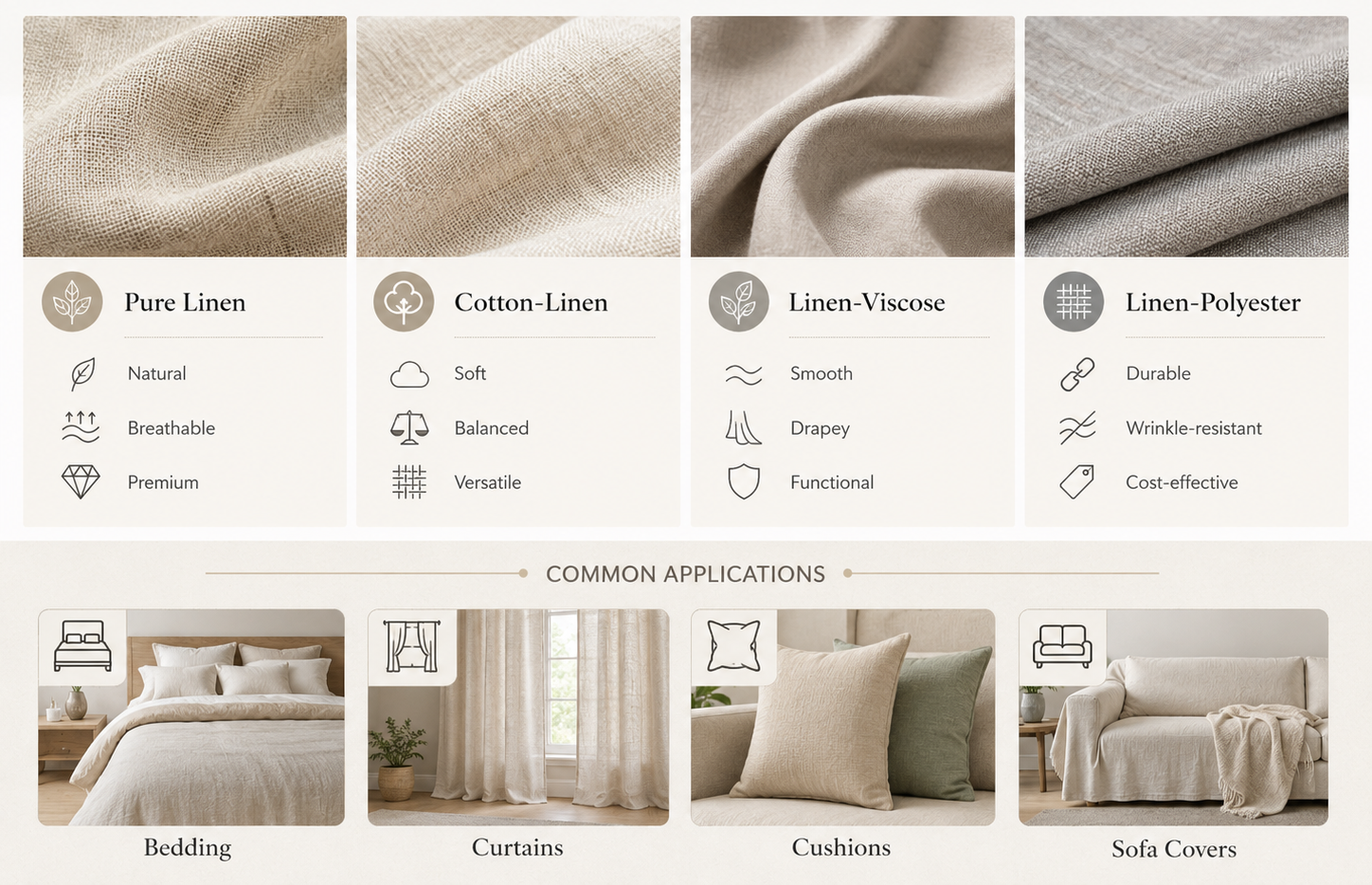
How to Choose Between Pure Linen, Cotton-Linen, Linen-Viscose, and Linen-Polyester?
| Fabric Type | Advantages | Disadvantages | Suitable Brands | Product Use |
|---|---|---|---|---|
| 100% Water-washed Linen | Premium, natural, breathable, softens with washes | Expensive, wrinkles easily | High-end | Bedding, curtains, table linens |
| Cotton-Linen | Soft, moderate price | Less textured than pure linen | Mid-to-high-end, mass-market | Bedding, curtains, sofa covers |
| Linen-Viscose | Soft drape | Less natural feel | Mid-to-high-end comfort line | Bedding, summer blankets, curtains |
| Linen-Tencel | Soft, cool, drape | Higher cost | Mid-to-high-end, functional | Summer bedding |
| Linen-Polyester | Wrinkle-resistant, durable, stable | Less natural feel | Mass-market, projects | Curtains, sofa covers |
| Hemp Blends | Durable, eco-friendly | Coarse, needs processing for soft touch | Functional, eco-friendly | Sofa covers, bedding, cushions |
| Linen-Look Fabric | Cost-effective, stable | Not natural linen | Mass-market, projects | Curtains, décor fabrics |
Key Indicators for B2B Linen Fabric Procurement
- Composition: 100% linen, linen-cotton, cotton-linen, linen-viscose, linen-polyester, hemp blends, linen-look fabrics.
- GSM / Weight: Adjusted by product type.
- Shrinkage: Prefer pre-shrunk or water-washed fabrics.
- Colorfastness: Washing, rubbing, sunlight, perspiration.
- Hand Feel Changes: Pre- and post-wash feel, wrinkles, dimensions.
- Batch Consistency: Color variation, slub uniformity, width stability, weight deviation, lead time.
Channel-Specific Linen Fabric Recommendations
| Channel | Recommended Fabrics | Core Focus |
|---|---|---|
| Premium Online Brands | Water-washed linen, European linen, linen-cotton | Brand prestige, natural look |
| Distributors / Wholesalers | Cotton-linen, linen-viscose, linen-polyester | Cost control, supply stability |
| Hotels / Projects | Linen-polyester, linen-look blackout, cotton-linen-polyester | Wash durability, wrinkle resistance |
| Boutique / Resort Interiors | Linen, cotton-linen, jute decorative | Natural style, ambiance |
| Designer Brands | Color-woven cotton-linen, slub linen, ramie blends | Differentiation, visual identity |
| Functional Brands | Hemp, linen-tencel, linen-viscose | Breathable, cool, antimicrobial, eco-friendly |
Final Recommendations for Home Textile Brands
Brands should clarify positioning first:
- High-end: Water-washed linen, European linen, linen-cotton.
- Mid-to-high-end: Cotton-linen, linen-viscose, linen-tencel.
- Mass-market: Cotton-linen, linen-polyester, linen-look fabrics.
- Designer brands: Color-woven, jacquard, slub, plant-dyed fabrics.
- Hotels / Projects: Linen-polyester, linen-look blackout, high-stability blends.
Strategy: Pure linen establishes brand prestige, cotton-linen and linen-viscose drive sales, and linen-polyester or linen-look fabrics cover pricing and channels.
FAQ (SEO Optimized)
-
Which linen fabric is best for bedding?
Water-washed linen, cotton-linen blends, and linen-viscose offer breathability, comfort, and natural texture. -
Is pure linen suitable for all home textiles?
Pure linen is ideal for premium bedding, curtains, and table linens, but blends may be more practical for sofa covers, hotel projects, or budget collections. -
What is the difference between linen and cotton-linen fabrics?
Linen has stronger texture and better breathability; cotton-linen is softer, more affordable, and easier for mass-market consumers. -
Which fabric is better for curtains, linen or linen-polyester?
Linen gives a natural premium look; linen-polyester blends are more wrinkle-resistant, stable, and suitable for commercial or hotel projects. -
How should a home textile brand build a linen fabric product line?
Use pure linen for premium image products, cotton-linen or linen-viscose for main sales, and linen-polyester or linen-look fabrics for entry-level offerings.