Choosing the right duvet cover fabric can make or break your B2B bedding business. Understanding materials, durability, and trends is crucial for profitable procurement.
This guide explores the top fabrics for duvet covers in 2026, including cotton, Percale, Sateen, Tencel, linen, bamboo, silk, and blends, with pros, cons, B2B insights, and actionable purchasing strategies.
Each fabric offers unique properties. Picking the right one means balancing comfort, durability, price, MOQ, and certifications for your business.
What are the advantages of long-staple cotton duvet covers?
Long-staple cotton is prized for softness and durability, making it a go-to choice for high-end hotels and B2B bulk buyers.
Staple length ranges 28–34 mm, yarn count 40s–100s, thread count 300–400 TC, and shrinkage after washing is only 2–3%. It works well year-round.
| Dive deeper Paragraph: Long-staple cotton has uniform, fine fibers, producing smooth and soft fabric. Key B2B considerations: |
Metric | Recommended | Notes |
|---|---|---|---|
| Yarn count | 60s–100s | Softer feel for luxury lines | |
| Thread count | 300–400 TC | Enhances durability and sheen | |
| Shrinkage | 2–3% | Ensures consistency in bulk shipments |
Ideal for high-end hotels, luxury resorts, and brand customization. Suggested MOQ ≥500 units. Choose GOTS or Oeko-Tex certified suppliers to meet B2B quality standards.
Who should buy Percale duvet covers?
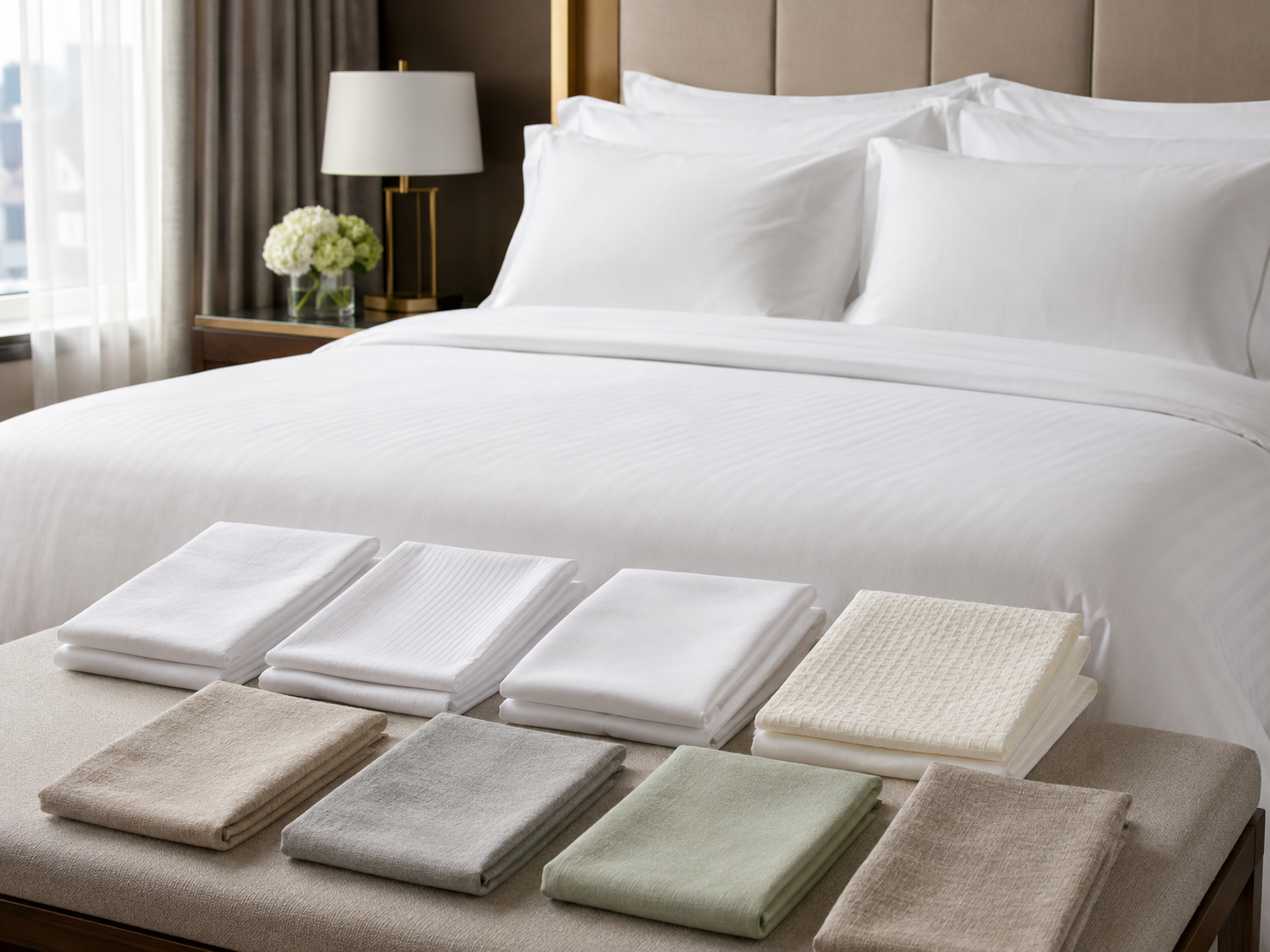
Percale is crisp and breathable, ideal for summer, but purchasing decisions should consider client needs and climate.
Percale uses 40s–80s yarn, thread count 200–400 TC. It is breathable, durable, and washes well, perfect for hot or humid regions.
Percale is woven in a plain weave, giving it a smooth, matte finish. Key B2B points:
- Yarn and TC: 40s–80s, 200–400 TC suits most bulk buyers.
- Durability: Maintains feel after 50+ washes; low pilling.
-
Use cases: Summer hotels, guesthouses, mass-market bedding. Metric Recommended Notes Yarn count 40s–80s Balance comfort and cost Thread count 200–400 TC Breathable yet durable MOQ ≥300 units Avoid overstock risk Buyers should select Oeko-Tex certified fabrics for higher trust and easier resale.
 ---
---
Why do high-end clients prefer Sateen duvet covers?
Sateen’s satin weave provides a luxurious sheen and soft feel, ideal for B2B premium lines, though price and durability require consideration.
Yarn count is usually 60s–120s, thread count 300–600 TC, offering a smooth and glossy surface. Best for fall/winter and luxury hotels, priced 20–30% higher than Percale.
Sateen’s satin weave gives a high-luster finish but is prone to abrasion and pilling. B2B focus:
- Yarn and TC: 60s–120s, 300–600 TC for softness and luxury.
- Season & clientele: Autumn/winter, premium hotel chains.
-
Cost: 20–30% higher than Percale; manage MOQ accordingly. Metric Recommended Notes Yarn count 60s–120s Maximum softness and sheen Thread count 300–600 TC Enhance luxury feel and durability MOQ ≥200 units Fits high-end custom orders Opt for GOTS or Oeko-Tex certified Sateen to strengthen B2B brand reputation.
How does Tencel perform for B2B duvet covers?
Tencel (Lyocell) is eco-friendly and moisture-wicking, increasingly popular in sustainable bedding lines.
Tencel fibers are smooth, absorbent, and durable. 30s–60s yarn count with 200–300 TC creates soft, breathable fabric suitable for eco-conscious buyers.
Tencel’s closed-loop production is environmentally friendly, and it maintains softness and strength after repeated washes.
- Fiber properties: Stronger than cotton, smooth, moisture-wicking.
- B2B advantage: Appeals to sustainability-focused retailers and hotels.
-
MOQ & pricing: MOQ 300–500 units; price slightly higher than cotton. Metric Recommended Notes Yarn count 30s–60s Soft yet strong Thread count 200–300 TC Breathable and comfortable Certifications FSC, Oeko-Tex Reinforces sustainable branding
What are the benefits and challenges of linen duvet covers?
Linen is strong, breathable, and naturally textured, appealing for premium and eco-friendly lines.
Linen has medium yarn count 30s–50s, 150–200 TC, highly durable with excellent moisture management. Best for summer and resort-style products.
[image placeholder]
Linen’s irregular texture and natural appearance provide a premium, relaxed feel. Key B2B considerations:
- Durability: Stronger than cotton; softens over time.
- Season: Best for summer or tropical climates.
-
MOQ: 200–400 units; price is higher due to fiber sourcing. Metric Recommended Notes Yarn count 30s–50s Coarse yet durable Thread count 150–200 TC Optimal for airflow MOQ 200–400 units Premium niche markets Ensure Oeko-Tex or European flax sourcing for eco-conscious clients.
How suitable is bamboo fabric for B2B duvet covers?
Bamboo fabric is naturally antibacterial and soft, appealing for mid- to high-end hospitality and wellness markets.
Bamboo yarn 30s–60s, 200–300 TC, smooth and breathable, with natural odor resistance and moisture-wicking.
Bamboo’s eco-friendly and antibacterial properties make it a strong selling point.
- Durability: Soft, moderate tensile strength; lasts 2–3 years under frequent washes.
- Use cases: Wellness resorts, boutique hotels, eco-focused retailers.
-
MOQ & price: MOQ 300+ units; slightly higher than cotton, lower than silk. Metric Recommended Notes Yarn count 30s–60s Soft, smooth feel Thread count 200–300 TC Balance softness and durability Certifications Oeko-Tex, FSC Reassures eco-conscious clients
Silk offers unmatched luxury and temperature regulation, but requires careful handling and higher pricing.
Mulberry silk 16–22 momme, 400–600 TC equivalent, lightweight, hypoallergenic, and glossy, ideal for boutique hotels and luxury gifting.
Dive deeper Paragraph:
Silk’s natural sheen and soft texture make it appealing for exclusive clients.
- Strength: Delicate; requires careful laundering.
- MOQ & pricing: MOQ 100–200 units; high price per unit.
-
Target market: Boutique, luxury, or international export. Metric Recommended Notes Momme 16–22 Standard luxury weight Thread count 400–600 TC equivalent Smooth and lustrous Care Hand wash/dry clean Educate B2B clients for long life
What are the advantages of blended fabrics?
Blends combine cotton, polyester, or Tencel to balance cost, durability, and feel, fitting large-scale B2B operations.
Common blends like 60/40 cotton-polyester offer 200–300 TC, improved wrinkle resistance, lower cost, and bulk scalability.
Blended fabrics optimize cost and performance.
- Durability: Polyester adds strength; cotton maintains softness.
- B2B benefit: Lower MOQ, consistent quality, easier shipping.
-
Applications: Budget hotels, bulk suppliers, subscription bedding. Blend Thread Count Advantages 60/40 cotton-poly 200–300 TC Cost-effective, durable 70/30 Tencel-cotton 200–250 TC Eco-friendly, soft, breathable
What 2026 trends should B2B buyers watch?
Sustainability and performance fabrics dominate 2026 trends. Buyers must align with eco-conscious and high-durability demands.
Tencel, bamboo, and certified cotton are trending. Demand for GOTS, Oeko-Tex, and FSC certifications is growing. MOQ flexibility and customization are key.
B2B buyers need to track market trends:
- Eco fabrics: Tencel, bamboo, organic cotton for sustainability.
- High-performance: Wrinkle-resistant, antibacterial, and thermoregulating.
- Certification compliance: GOTS, Oeko-Tex, FSC increase resale value.
-
Customization: Color, logo, thread count, and packaging drive client loyalty. Trend Implication Recommendation Eco-friendly Buyer preference shift Stock certified fabrics Performance Longevity & comfort Offer high TC, wrinkle-resistant Customization Competitive differentiation Flexible MOQ & colors
What common mistakes should B2B buyers avoid?
Choosing fabrics based solely on cost can hurt long-term profits. Quality, certifications, and MOQ matter more.
Avoid ignoring shrinkage, thread count, durability, and certification. Misjudging MOQ or target clients can lead to stock loss and poor margins.
Frequent B2B mistakes:
- Buying low-TC fabrics for high-end clients.
- Ignoring shrinkage, pilling, and colorfastness.
- Overlooking certifications that influence end-user trust.
- Neglecting MOQ constraints or bulk shipping costs.
Solution: Establish procurement standards including TC, yarn count, certifications, MOQ, and target market alignment.
Conclusion
Choosing the right duvet cover fabric in 2026 requires balancing comfort, durability, certifications, and market trends. B2B buyers gain the most by combining quality insight with actionable procurement strategies.