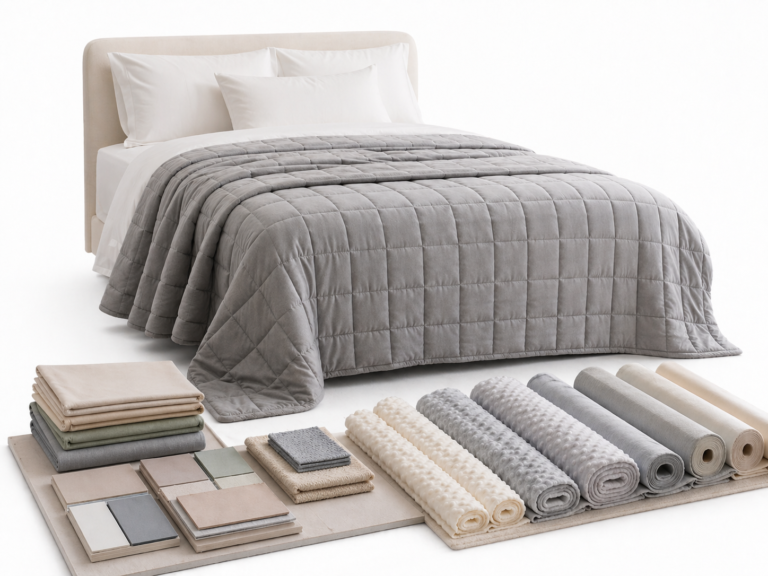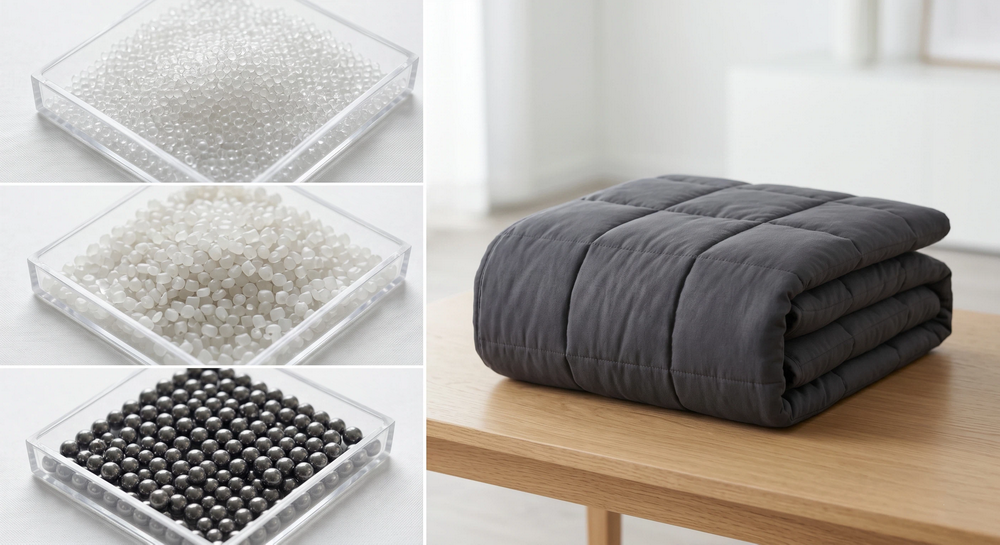
Weighted blankets rely on their filling materials to provide deep pressure stimulation (DPS). The choice of filling directly affects comfort, durability, washability, and compliance, which are crucial for B2B manufacturing and market positioning.
Weighted blankets need uniform weight distribution. Poorly chosen filling can lead to leakage, clumping, or non-compliance, increasing returns and production challenges.
Weighted blankets’ performance starts with filling selection. Poor material choices increase defects, reduce customer satisfaction, and create compliance risks. As manufacturers, controlling filling quality is a core strategy to minimize returns and ensure OEM flexibility.
Glass Beads vs Plastic Pellets vs Sand: Which Filling Fits Your Needs?
Why is material choice critical for B2B suppliers?
Material impacts manufacturing consistency, cost efficiency, and compliance. Glass beads are dense, smooth, and highly uniform, reducing clumping. Plastic pellets are lighter and cheaper but prone to static. Sand offers the lowest material cost but has significant operational challenges like leakage and clumping after washing.
Material Performance Breakdown
| Material | Cost | Density (g/cm³) | Washability | Durability | Notes |
|---|---|---|---|---|---|
| Glass Beads | High | 2.5–3.0 | Excellent, retains shape | Very high | Preferred for high-end blankets, especially cooling versions. Non-toxic, OEKO-TEX 2026 & REACH compliant. |
| Plastic Pellets | Medium | 0.9–1.2 | Good, some static & noise | Medium | Flexible for OEM customization, lower price, moderate compliance requirements. |
| Sand | Very Low | 1.6–2.0 | Poor, clumps after washing | Low | Low cost advantage offset by leakage risk, hygiene, and compliance difficulties. |
What Are the Main Manufacturing Challenges with Sand Fillings?
Sand is inexpensive but introduces serious operational risks. Washing leads to clumping, which creates uneven weight distribution. Leakage is common, especially at seams. Regulatory compliance is harder because sand may contain impurities or non-certified minerals, increasing audit risks. These issues often lead to higher return rates, negating cost savings.
Cost vs Risk Analysis
While sand reduces raw material expenses by 40–60% compared to glass beads, additional labor and quality control costs arise from:
- Multi-layer inner lining for leak prevention.
- Smaller quilting squares (<10cm × 10cm) to prevent movement.
- High-strength nylon five-line stitching for durability.
- Frequent batch testing for hygiene compliance.
The net effect often reduces profitability despite low material cost, especially in regulated B2B markets.
Why Do Glass Beads Dominate the High-End Market?
Glass beads provide uniform weight and excellent washability. They enable OEMs to produce cooling weighted blankets due to high thermal conductivity. Compliance with OEKO-TEX 2026 and REACH ensures they meet the demands of premium retailers and professional end-users.

Manufacturing and Compliance Advantages
Glass beads allow:
- Precise weight calibration per OEM request.
- Minimal movement, reducing quilting complexity.
- Higher resistance to repeated washes.
- Reduced return rates due to consistent product experience.
- Full flexibility in size and weight customization for clients.
These factors make them indispensable for high-end B2B products where client specifications and regulatory compliance are non-negotiable.
How to Control Filling Movement and Leakage?
Manufacturers use multiple strategies:
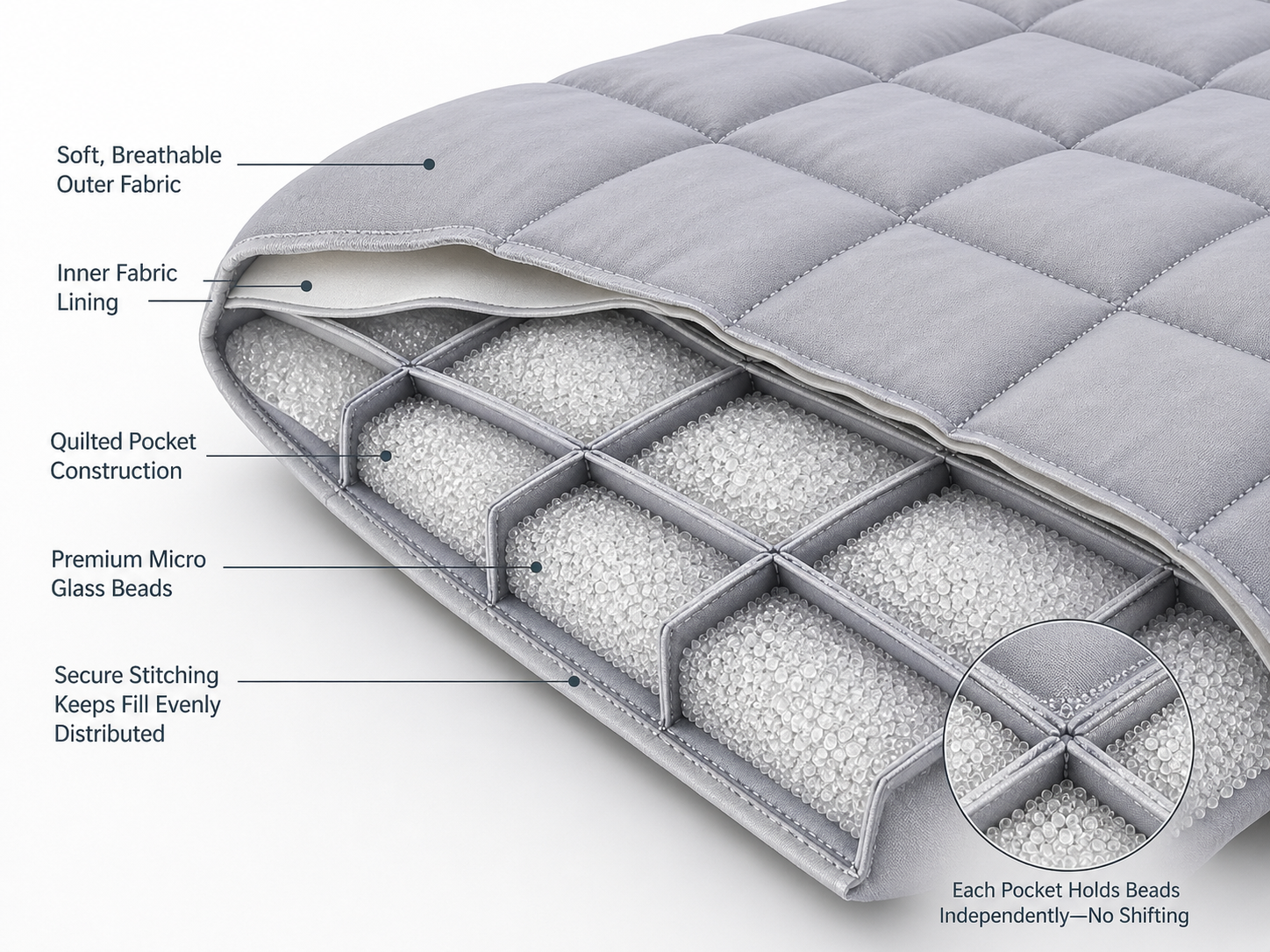
- Small quilting squares (<10cm × 10cm): prevents beads or pellets from shifting.
- Double inner lining: reduces leakage risk for both beads and sand.
- High-strength nylon five-line stitching: strengthens seam integrity under weight stress.
- Layered distribution design: ensures uniform DPS while maintaining flexibility.
These methods help maintain product quality, reduce returns, and satisfy both compliance and OEM customization requirements.
Practical Implementation
By combining small squares with double lining, manufacturers minimize the risk of sand or pellets moving. High-end products rely on glass beads, where these measures enhance already high performance. For sand, even with these protections, operational risk remains high, and compliance costs increase.
What Should B2B Buyers Consider When Selecting Filling Material?
- High-end market: Glass beads for uniform weight, washability, and compliance.
- Mid-tier / cost-sensitive products: Plastic pellets for moderate cost and flexibility.
- Promotional / extremely low-cost products: Sand only if leakage and clumping risks are managed and compliance is not strict.
Strategic Procurement
B2B buyers should focus on:
- Return rate control via proven filling and quilting methods.
- Compliance verification (OEKO-TEX 2026 / REACH).
- OEM customization flexibility (sizes and weights tailored to orders).
- Long-term durability to reduce warranty costs.
For high-end and cooling blankets, glass beads remain the only viable solution to meet professional standards.
Conclusion
Selecting weighted blanket fillings requires balancing cost, durability, compliance, and OEM flexibility. Glass beads dominate high-end markets, sand offers cost savings with high risk, and plastic pellets serve mid-tier needs. Contact us to access the 2026 material testing report for informed procurement.As a leading weighted blanket manufacturer, Liso Home offers customizable filling options. Contact us for a bulk quote.