Weighted blankets are cozy, but picking the wrong fabric can ruin your sleep. Let's explore how to choose the best material for comfort, safety, and durability.
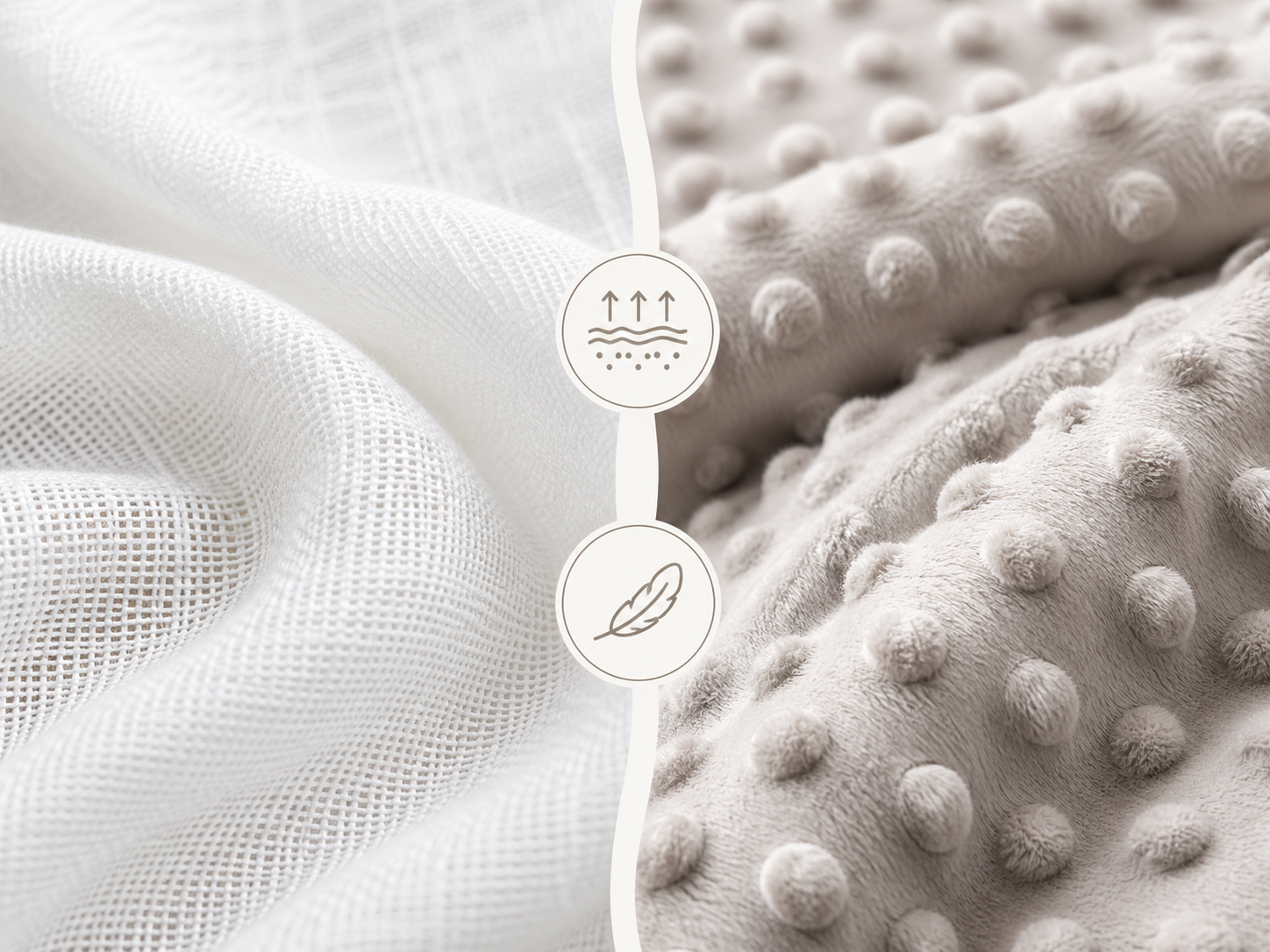
Weighted blankets can feel hot if the fabric traps heat. Choosing breathable materials like bamboo fiber or cooling synthetic fibers can help wick moisture and stay cool.
Will a Weighted Blanket Make Me Too Hot in Summer?
Many people worry about overheating. The right fabric can make a huge difference.
Bamboo and cooling fibers allow air circulation and moisture absorption, keeping you cooler than traditional cotton.
Bamboo fibers are naturally breathable and have excellent moisture absorption. They allow sweat to evaporate faster, which keeps the skin dry. Cooling synthetic fibers are engineered to disperse heat, often called "cool touch" fabrics. When choosing a summer blanket, check the GSM (grams per square meter). Lower GSM fabrics feel lighter, while higher GSM offers more warmth. For hot nights, a bamboo cover with a GSM between 300-400 is ideal. Always avoid polyester-only blankets in summer—they trap heat and reduce airflow.
Why Do Some Weighted Blankets Have Small Raised Dots?
The dots are more than decoration. They are sensory tools.
Raised dots on Minky fabric provide tactile stimulation, calming the nervous system.
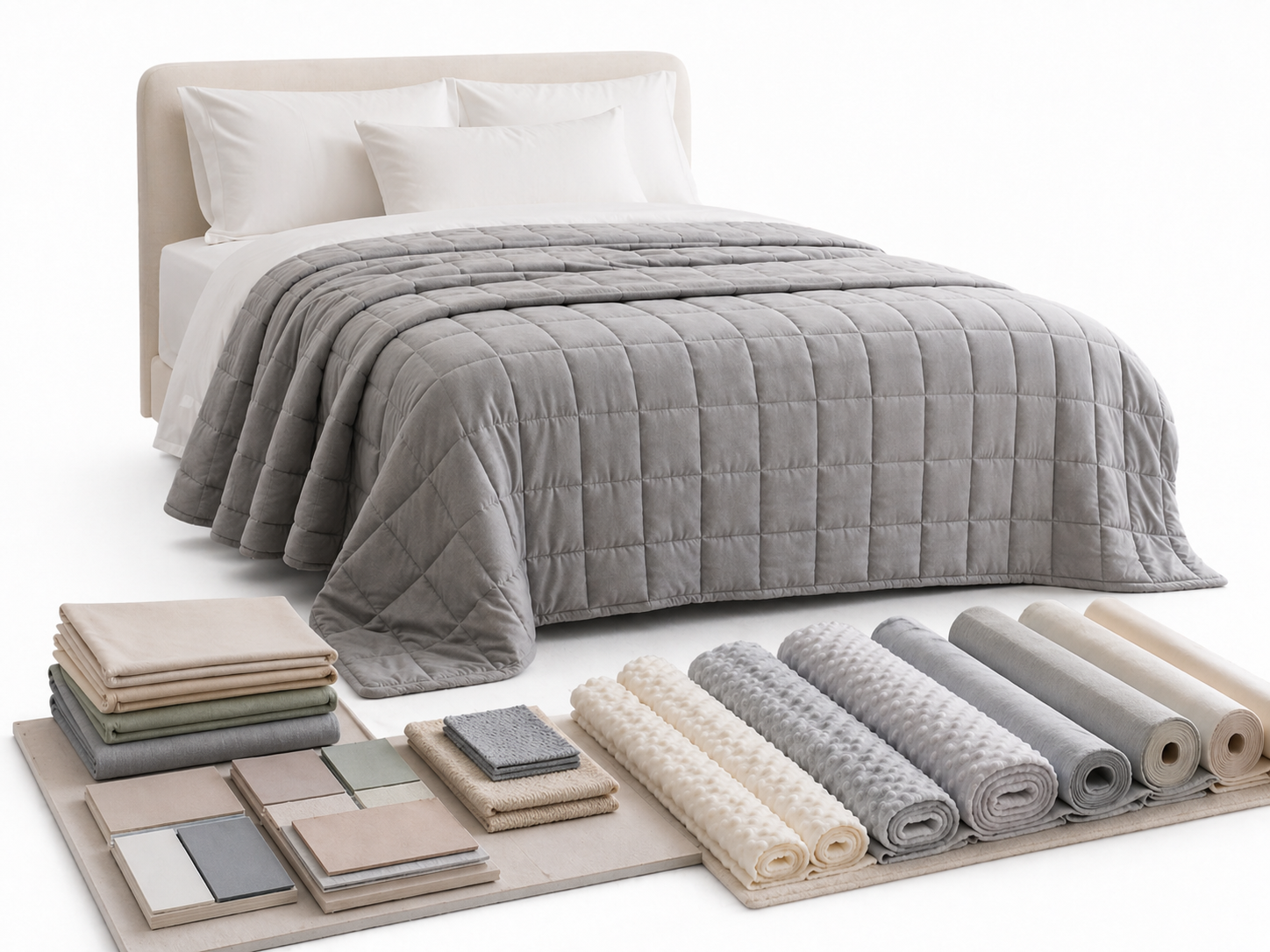
Minky fabric is soft and plush, often with small raised dots. These dots press gently on the skin, giving a light massage effect known as deep touch pressure. This can lower heart rate and reduce stress. While visually subtle, the texture enhances comfort for those with sensory sensitivity. Some blankets use uniform dot patterns, while others mix sizes to vary pressure points. For someone prone to anxiety or restless sleep, a dot-textured Minky weighted blanket may improve sleep quality significantly.
How Can Eco-Conscious Buyers Choose the Right Fabric?
Environmental impact matters. Many fabrics now offer sustainable options.
GRS-certified rPET fabrics use recycled plastic bottles, reducing waste while remaining durable and soft.
Global Recycled Standard (GRS) ensures the material contains recycled content and is produced responsibly. rPET fabrics are made by melting down used PET bottles into fiber. They offer comparable softness to traditional polyester and maintain good tensile strength. For eco-conscious buyers, GRS-certified blankets provide both sustainability and longevity. Check product labels carefully—some manufacturers mix recycled and virgin fibers, but true GRS compliance guarantees transparency. Using rPET also reduces landfill waste, making it a responsible choice for daily sleep items.
Is 100% Cotton Always the Best Choice?
Cotton is breathable, but it’s not perfect.
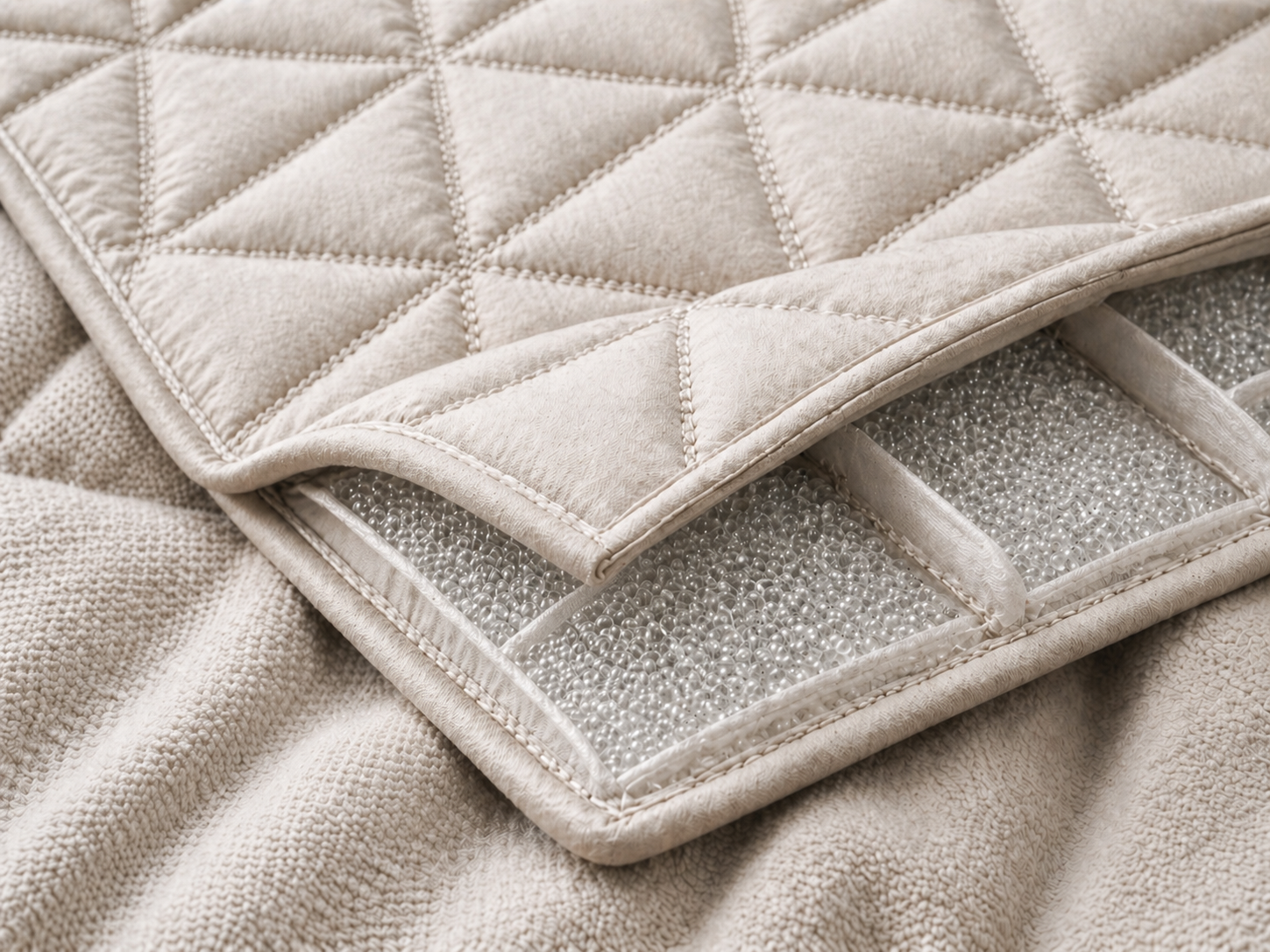
Cotton balances airflow and comfort, but heavier blankets may need reinforced stitching to prevent bead leakage.
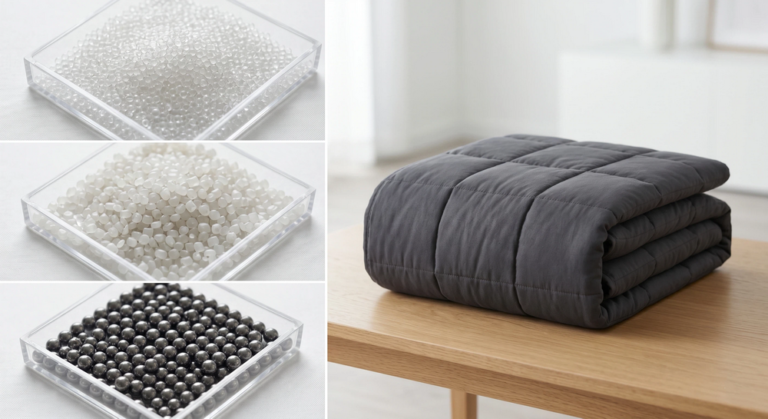
Cotton fibers allow heat to escape, reducing night sweats. They are also hypoallergenic and soft, which suits sensitive skin. However, cotton alone does not prevent small weighted beads from shifting or leaking. Manufacturers often use double-layer stitching or internal grids to hold beads in place. While cotton is natural, the combination of cotton with a secure bead compartment offers the best of both worlds. Consider your local climate: pure cotton blankets suit mild to warm nights, while blended fabrics may work better in cooler regions.
How to Ensure Weighted Blanket Fabrics Are Safe and Non-Toxic?
Sleep safety is critical, especially for children and sensitive adults.
OEKO-TEX Standard 100 certification guarantees fabrics are free from harmful chemicals and safe for direct skin contact.
OEKO-TEX tests for substances like formaldehyde, heavy metals, and pesticides. A certified blanket ensures the dyes, fibers, and fillings are non-toxic. Without this certification, synthetic or dyed fabrics may contain irritants that trigger allergies or skin reactions. When buying, check for the OEKO-TEX Standard 100 label. It applies to cotton, bamboo, and synthetic fibers alike. Certification gives peace of mind, especially for infants or allergy-prone sleepers. Always verify the label and batch number if possible to confirm authenticity.
Will Washing Damage the Fabric? How Should I Maintain It?
All blankets need care, but material choice affects longevity.
Different fabrics withstand washing differently. GSM and fiber type influence lifespan and softness retention.
Bamboo and cotton fabrics can shrink if washed in hot water. Minky and synthetic fibers may lose softness after repeated washing but tolerate gentle cycles better. Heavier blankets with higher GSM require slow spin cycles to avoid bead clumping. Always use mild detergent, avoid bleach, and air-dry when possible. Some blankets allow low-heat tumble drying, which preserves the plush feel. Regular maintenance prolongs life and prevents fiber matting, ensuring both comfort and hygiene over years of use.
Ready to Elevate Your Brand with Premium Weighted Blankets?
Choosing the right fabric is just the beginning. As a leading OEM/ODM manufacturer, Liso Home helps global brands and retailers source high-quality, sustainable, and functional fabrics tailored to their specific market needs.
- Custom Fabric Options: From cooling bamboo to luxurious Minky.
- Wholesale Support: Competitive pricing for bulk orders.
- Quality Assurance: Technical expertise in filling stability and material durability.