Key Safety Features to Look for in Dog Harnesses and Collars
When choosing a harness or collar for a dog, many people first focus on appearance, color, or price. However, the factor that truly determines whether it is worth buying is safety.
A well-designed harness or collar can make daily walks easier while reducing the risk of injury, escape, or loss.
Below, we will look at the most important safety features of dog harnesses and collars, including fit, materials, buckles, reflective details, pressure-reducing structures, escape-proof design, and more.
Why Is Proper Fit So Important?
Whether you choose a harness or a collar, fit is the most basic safety requirement.
If it is too loose, the dog may slip out of it. If it is too tight, it may cause friction, pressure, or even affect breathing and movement. The right size should fit the dog’s body securely without choking or restricting it.
A simple way to check the fit is to place two fingers between the harness or collar and the dog’s body after it is worn. This helps ensure stability while leaving enough room for comfortable movement.
Before purchasing, it is recommended to measure the dog’s neck circumference, chest circumference, and weight, then refer to the product size chart to choose the right size. For growing puppies, regular readjustment is also necessary.
How Do Durable Materials Improve Reliability?
The material of dog gear directly affects its service life and safety.
High-quality harnesses and collars are usually made from nylon, polyester, genuine leather, or high-strength webbing. These materials should be wear-resistant, tensile-resistant, and not easy to break, especially for active dogs, dogs that love running, or dogs that tend to pull.
If the material is too thin, the stitching is loose, or the edges wear easily, the product may break when the dog suddenly rushes forward. When choosing a product, pay attention to the thickness of the webbing, the density of the stitching, and whether stress points are reinforced.
Can Secure Buckles and Closures Help Prevent Escape?
Buckles and metal rings are among the most critical connection parts of harnesses and collars.
Safe buckles should open and close smoothly, but they should not come loose easily. The D-ring that connects to the leash should also be strong enough to withstand the force generated when the dog pulls.
For stronger dogs, it is recommended to choose thickened plastic buckles, metal buckles, or double-locking structures. Before each walk, you can also quickly check whether the buckle is fully fastened, whether the leash ring is deformed, and whether any stitching has come loose.
These small checks can effectively reduce the risk of sudden escape.
Why Do Reflective Details Matter for Visibility?
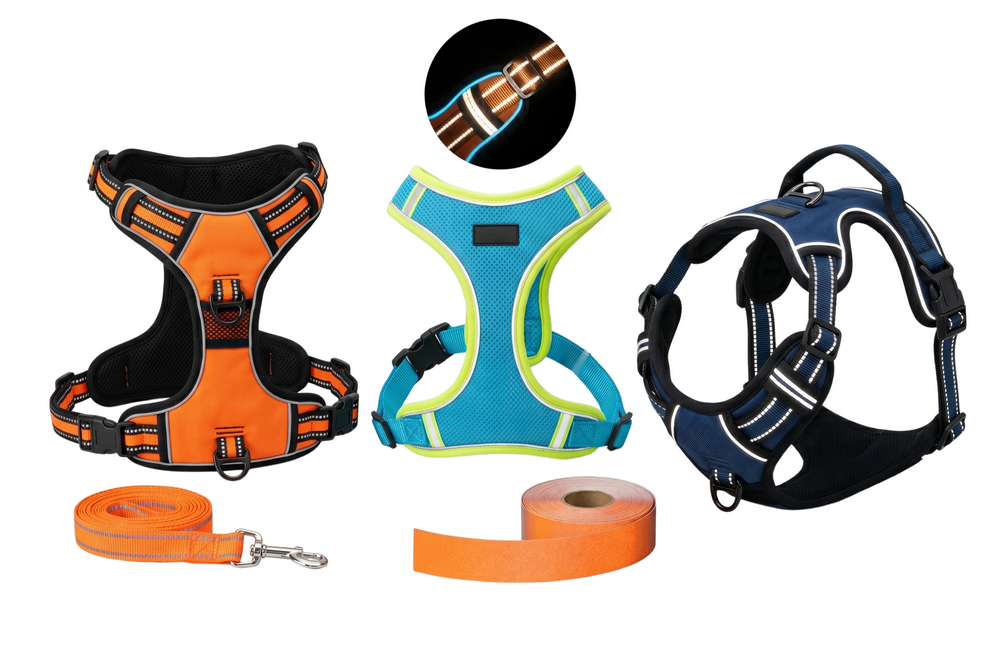
If you often walk your dog in the early morning, evening, or at night, reflective design is very important.
Reflective strips, reflective stitching, or reflective edges on harnesses and collars can improve the dog’s visibility under car headlights or streetlights, making it easier for pedestrians, cyclists, and drivers to notice the dog.
This type of design is especially useful on city roads, around residential areas, in parking lots, or in dimly lit environments. For dogs with dark-colored fur, reflective details are even more practical.
How Can a Harness Reduce Pressure on the Neck and Spine?
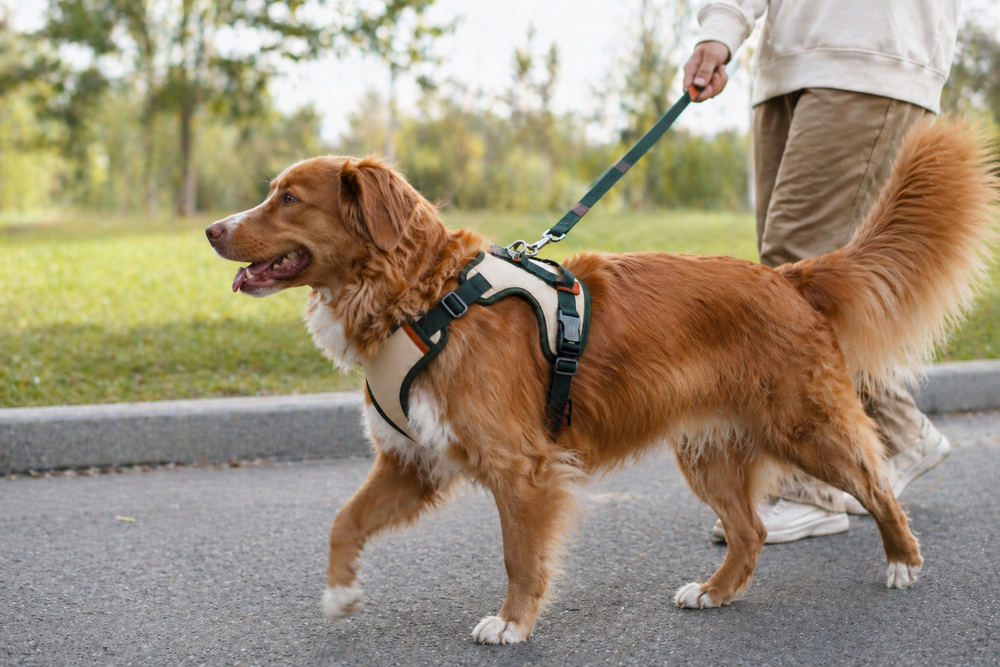
Compared with regular collars, one important advantage of harnesses is that they can distribute leash pressure.
When a dog suddenly lunges forward, pulls excitedly, or backs away after being frightened, concentrating all the force on the neck may put pressure on the trachea, cervical spine, or throat. A properly designed harness can distribute force across the chest and shoulders, reducing the impact on the neck and spine.
For small dogs, short-nosed breeds, senior dogs, or dogs with sensitive necks, harnesses are usually more suitable than collars for daily leash use.
Why Does Padding Make a Difference in Protection and Comfort?
The comfort of a harness or collar also affects whether a dog is willing to wear it.
Products with soft padding can reduce friction and help prevent hair loss, redness, or skin discomfort after long periods of wear. Common padding areas include the chest, shoulders, underarms, and inner neck.
For dogs with sensitive skin, short coats, or high activity levels, padded design is especially important. It not only improves comfort but also provides extra protection when the dog pulls.
Why Is Escape-Proof Design Crucial for Certain Dogs?
Some dogs naturally have slender bodies and smaller heads, or they are very skilled at backing out of gear. Examples include Greyhounds, Whippets, Shiba Inus, Huskies, and similar breeds. These dogs are more likely to escape when using ordinary harnesses or collars.
Escape-proof harnesses usually use a more secure wraparound structure, multiple adjustment points, or an additional waist strap to reduce the chance of the dog slipping out.
If your dog is timid, easily startled, likes to back away, or has escaped from leash gear before, an escape-proof design is not just a bonus feature. It is an essential safety function.
Can a Handle Provide Better Emergency Control?
Some harnesses are designed with a handle on the back, which can be very practical in many situations.
For example, when crossing the road, encountering unfamiliar dogs, entering an elevator, getting in or out of a car, or when the dog suddenly becomes excited and rushes in a certain direction, the owner can quickly control the dog’s position using the handle.
For large dogs, strong pullers, or dogs in training, a handle can provide more direct control than a leash and improve safety in emergencies.
How Can Identification Features Help Recover Lost Dogs?
Collars and harnesses can also serve as identification tools.
Products with ID tags, name patches, phone number labels, or customizable embroidered information can help others quickly contact the owner if the dog gets lost.
Even if the dog is microchipped, visible external identification is still very valuable. When an ordinary person finds a lost dog, they usually cannot read the microchip immediately, while contact information on the collar can be used much faster.
Why Do Different Breeds Need Different Safety Features?
Not every dog is suitable for the same type of harness or collar.
Small dogs need lightweight, soft designs that do not put pressure on the trachea. Large dogs need stronger load-bearing capacity and sturdy buckles. Short-nosed breeds are better suited to harnesses that reduce neck pressure. Senior dogs need comfortable, easy-to-wear structures that provide support.
If the dog has a strong pulling habit, a front-clip harness can help guide direction. If the dog is timid and prone to escape, an escape-proof style should be prioritized.
When choosing a harness or collar, consider the dog’s body size, personality, age, health condition, and daily use scenarios instead of focusing only on appearance.
How Do Quality Control and Manufacturing Standards Build Trust?
Safety products need not only reasonable design but also reliable manufacturing.
High-quality brands usually conduct quality checks on stitching, buckles, webbing, metal rings, and stress points to ensure the product is not likely to break or come loose during daily use.
When purchasing, look for clear size instructions, material descriptions, load-bearing information, usage recommendations, and after-sales support. The more complete the product details are, the more likely it is that the brand takes product safety seriously.
Conclusion: Why Should Safety Always Come First?
A good dog harness or collar should not only look nice. It should also be safe, comfortable, sturdy, and suitable for the dog’s body structure and daily habits.
When choosing one, focus on the following points:
- Whether the size fits properly
- Whether the material is durable
- Whether the buckles are secure
- Whether it has reflective design
- Whether it can reduce pressure on the neck
- Whether it has escape-proof features
- Whether it allows easy addition of identification information
Only a product that truly suits the dog can make every outing safer and more reassuring.
For owners, choosing the right harness or collar is not only about making leash control easier. It is also a way to protect the dog’s health and safety.