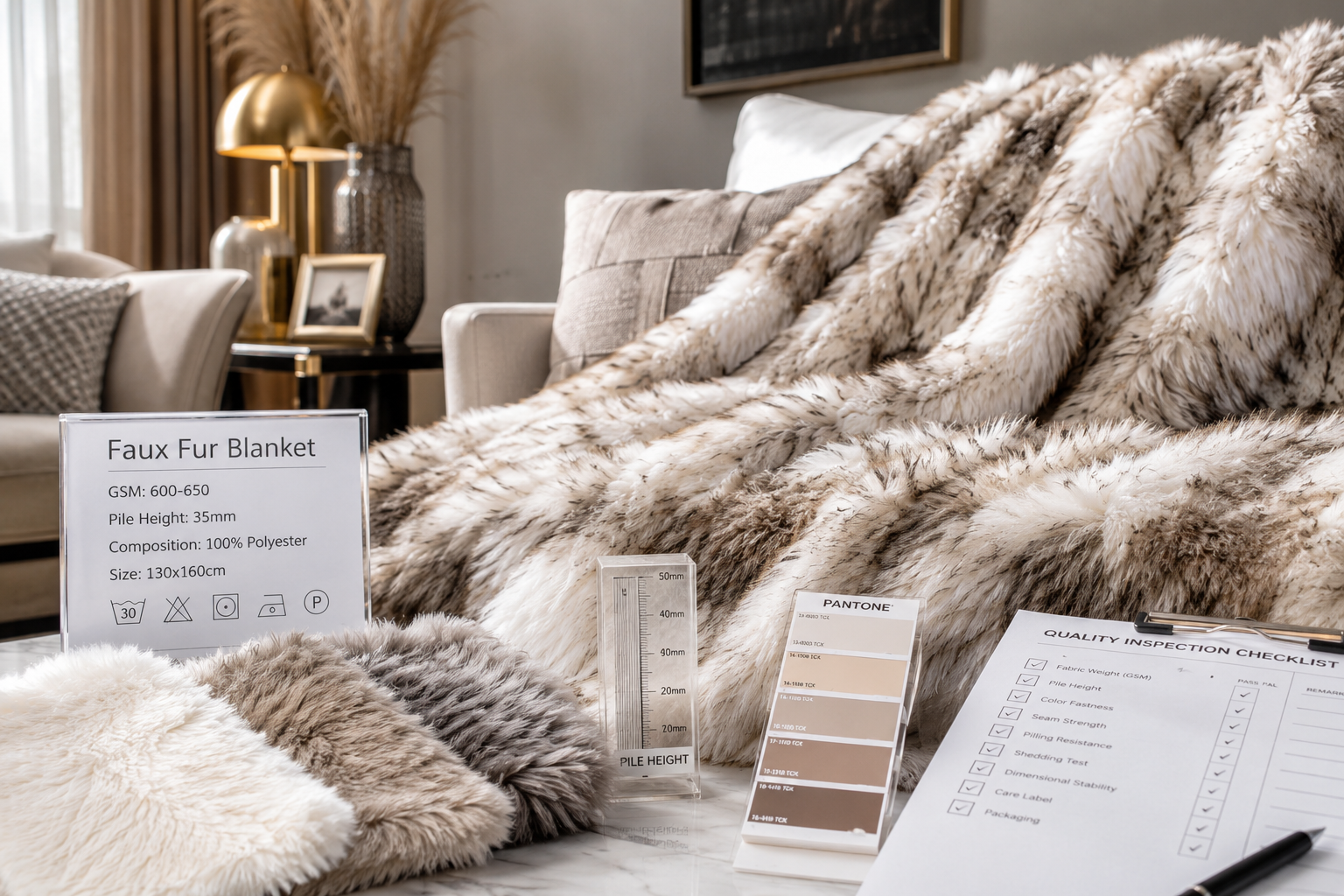
Faux fur blankets are popular in home textile collections because they combine softness, warmth, visual texture, and a premium retail look. For retailers, home textile brands, gift companies, hotels, and e-commerce sellers, they are especially valuable for winter collections, holiday gifting, sofa throws, bed throws, and premium lifestyle product lines.
However, sourcing faux fur blankets is not only about choosing a soft fabric or attractive color. For B2B buyers, the real challenge is controlling product consistency in bulk production.
Before placing an order, buyers need to confirm key details such as material, GSM, pile height, backing fabric, shedding control, color fastness, shrinkage, stitching, packaging, and testing requirements. If these specifications are unclear, bulk orders may face problems such as heavy shedding, color variation, unstable sizing, poor hand feel, packaging deformation, or customer complaints.
This guide explains how to evaluate faux fur blankets from a B2B sourcing perspective and how to choose the right product structure for your market.
1. What Is a Faux Fur Blanket?
A faux fur blanket is made from synthetic fibers designed to imitate the look and feel of natural fur. It is usually produced with polyester, acrylic, modacrylic, recycled polyester, or blended fibers.
Compared with regular fleece or sherpa blankets, faux fur blankets focus more on:
- Long-pile texture
- Soft and fluffy hand feel
- Luxury visual appearance
- Strong decorative value
- Warm and cozy user experience
Common applications include:
- Winter throw blankets
- Sofa throws and bed throws
- Boutique home textile products
- Hotel and vacation rental soft furnishings
- Holiday gift blankets
- Custom branded promotional gifts
- Premium home decor collections
For B2B buyers, the key value of a faux fur blanket is not only whether it looks attractive in photos. The real value is whether the supplier can maintain consistent softness, color, pile effect, size, stitching, and packaging quality during bulk production.
2. Common Materials Used for Faux Fur Blankets
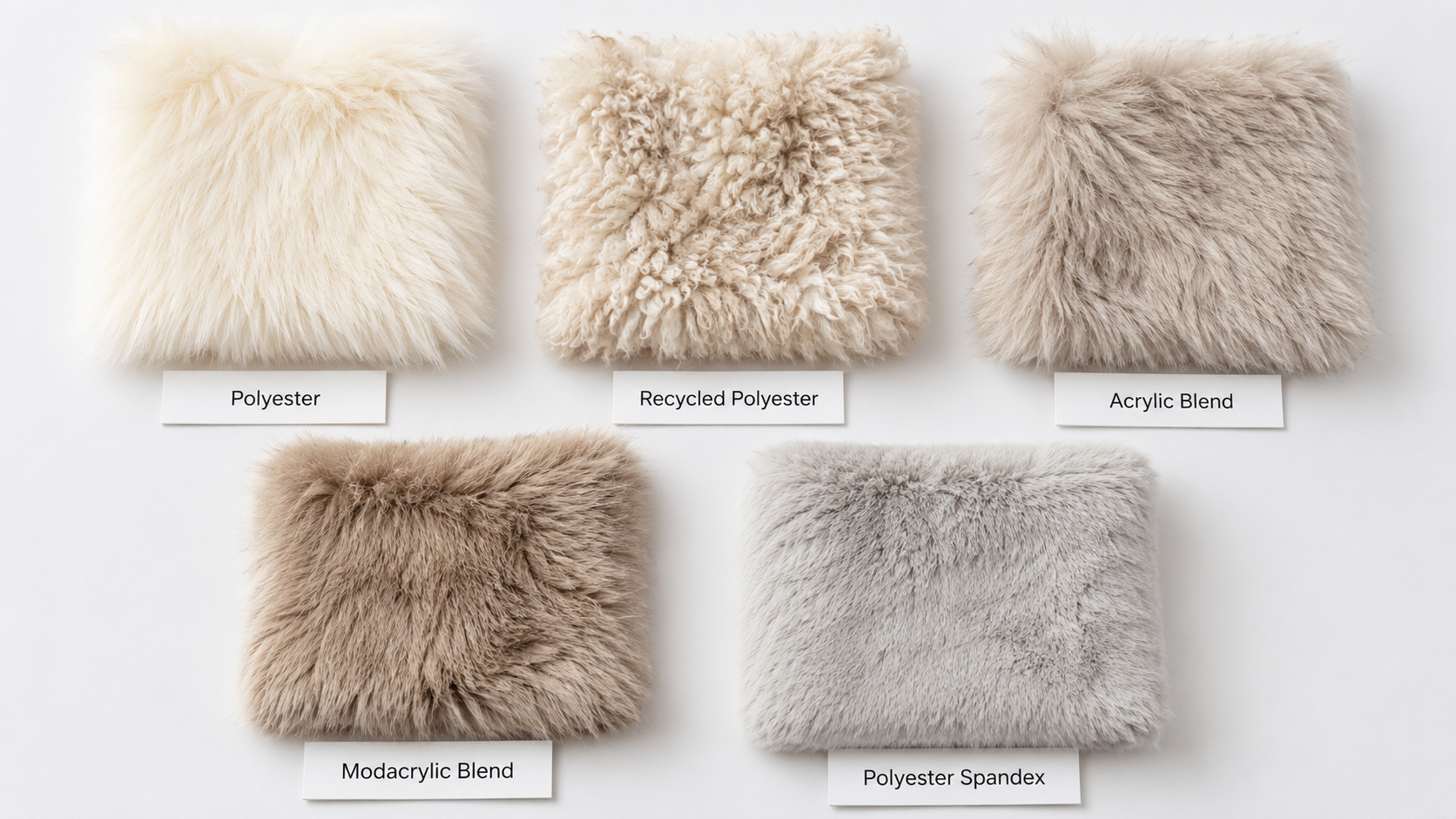
Most faux fur blankets are made from polyester or polyester blends. Polyester is widely used because it offers stable cost, rich color options, good durability, easy care, and strong suitability for mass production.
| Material | Key Features | Suitable For |
|---|---|---|
| 100% Polyester | Cost-stable, soft, durable, easy to dye | Standard faux fur blankets |
| Recycled Polyester | Supports sustainable product lines | Eco-conscious brands and European markets |
| Acrylic Blend | Fluffy, wool-like or fur-like appearance | Mid-to-high-end decorative blankets |
| Modacrylic Blend | Can support flame-retardant development, higher cost | Hotels and special projects |
| Polyester + Spandex | Better stretch, softness, and recovery | Premium comfort-focused blankets |
For most brands and retailers, 100% polyester faux fur is the most practical option. It balances cost, softness, color development, production stability, and bulk order scalability.
If your brand focuses on sustainability, recycled polyester faux fur can also be considered. In this case, buyers should confirm recycled content, certification documents, MOQ, cost difference, and whether the hand feel meets the target market requirement.
3. What Does GSM Mean in Faux Fur Blankets?
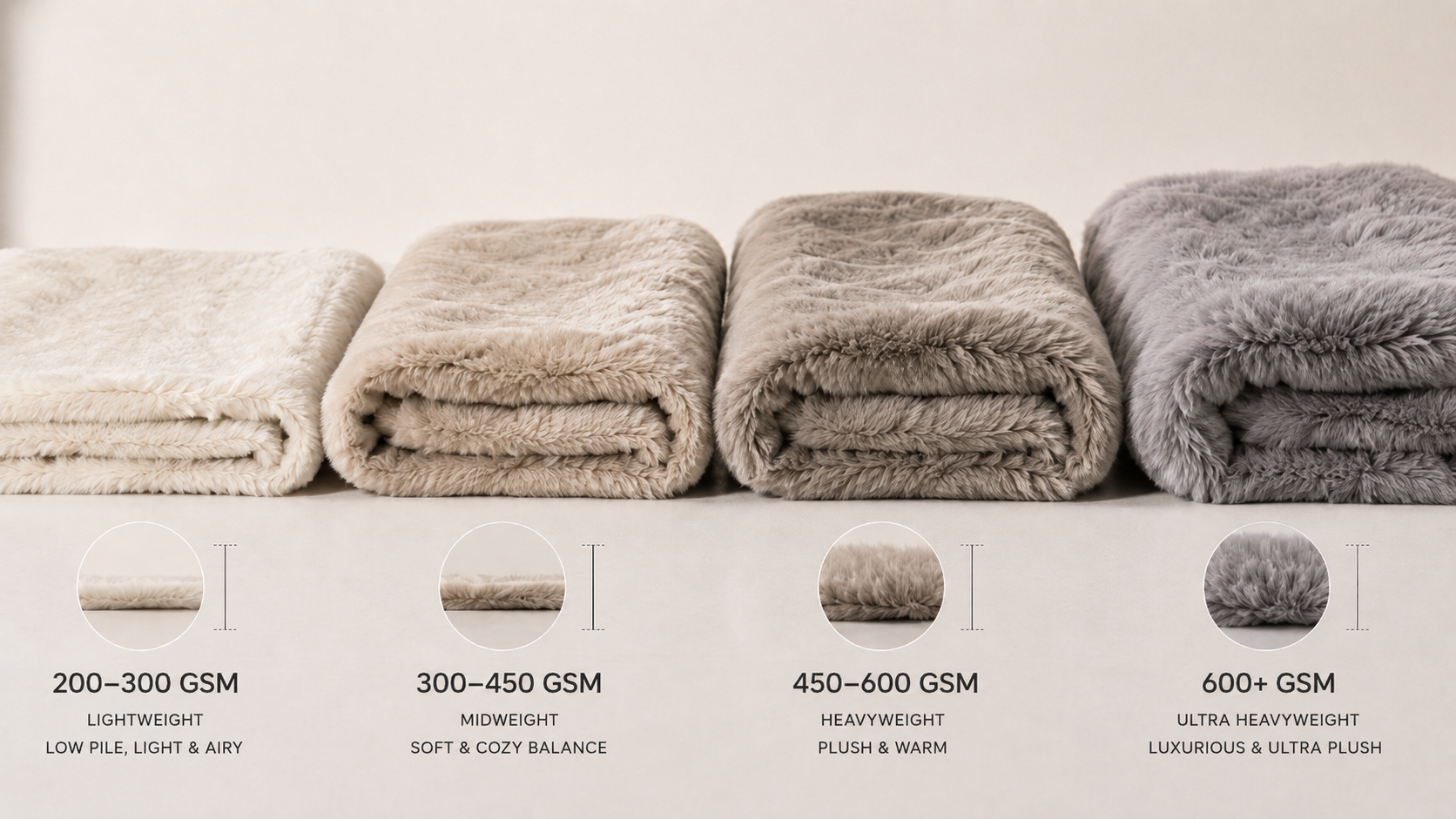
GSM means grams per square meter. It is one of the most important specifications for evaluating fabric weight, thickness, warmth, hand feel, and cost.
In general, higher GSM means the blanket feels heavier, thicker, warmer, and more premium. However, higher GSM also increases material cost, shipping cost, and storage volume. Buyers should choose GSM based on retail price, target market, product positioning, and logistics strategy.
| GSM Range | Product Features | Suitable Applications |
|---|---|---|
| 200–300 GSM | Lightweight, cost-friendly | Promotional blankets, light throws |
| 300–450 GSM | Medium thickness, soft and comfortable | Regular retail and e-commerce products |
| 450–600 GSM | Thicker, warmer, more premium | Gift blankets and mid-to-high-end collections |
| Above 600 GSM | Heavy, luxurious, strong warmth | Premium winter collections and luxury throws |
When confirming GSM, buyers should not only ask for the total blanket weight. A better question is:
What is the GSM of the front faux fur fabric and the reverse fabric?
This is important because many faux fur blankets use faux fur on one side and fleece, sherpa, mink fleece, or velvet on the reverse side. Looking only at the total weight may not show the real quality of the front faux fur fabric.
4. How to Choose Pile Height
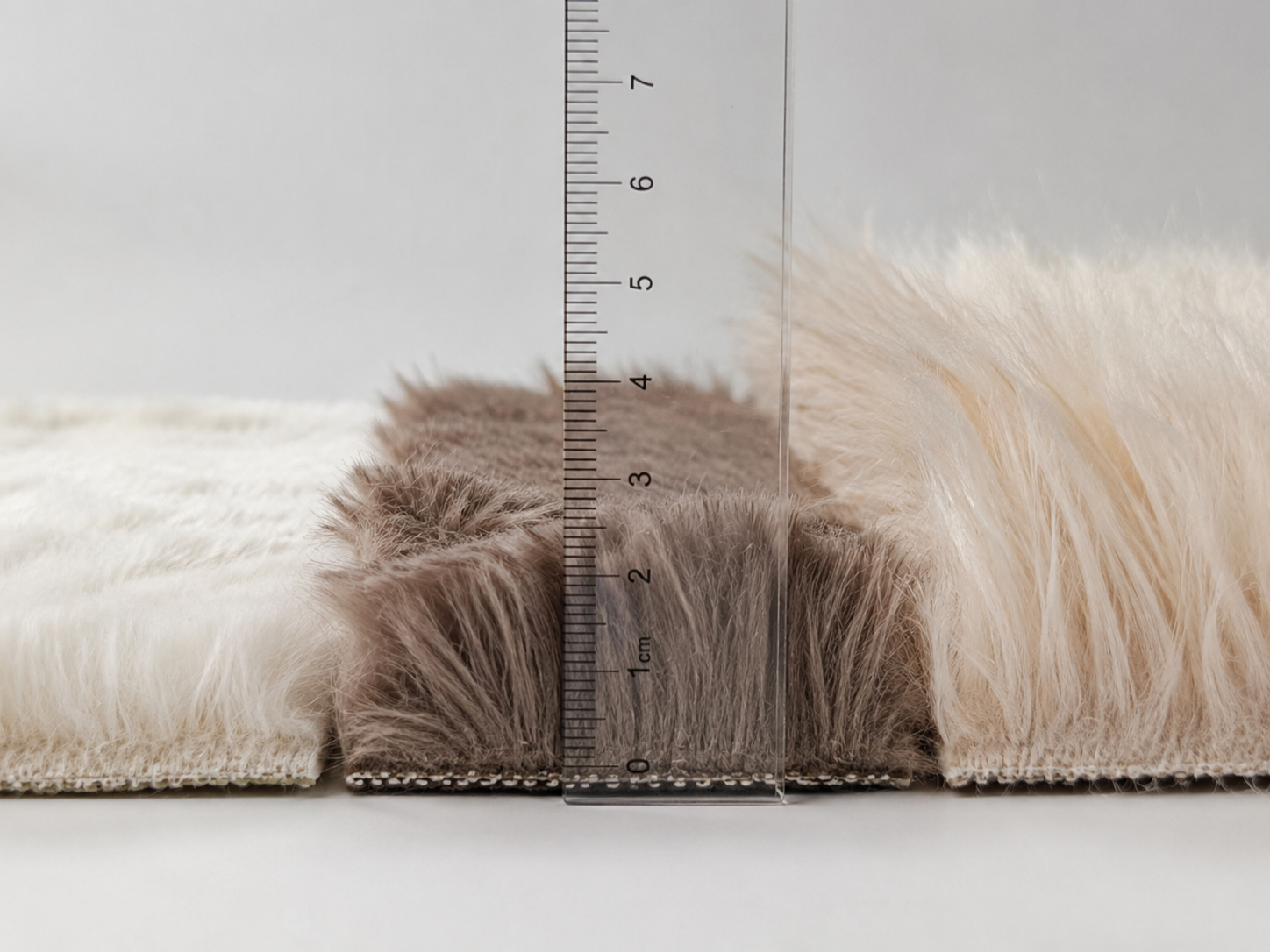
Pile height refers to the length of the fur fibers from the fabric base to the fiber tips. It affects the blanket’s appearance, softness, fluffiness, luxury feel, and ease of care.
| Pile Height | Appearance and Hand Feel | Suitable For |
|---|---|---|
| Short Pile | Neat, smooth, easy to maintain | Basic home blankets, kids’ blankets |
| Medium Pile | Soft, layered, visually attractive | Mainstream retail blankets |
| Long Pile | Fluffy, luxurious, decorative | Premium home decor, gifts, bed throws |
Medium and long pile faux fur blankets usually create a stronger premium look. They are suitable for brands that focus on home decor, holiday gifting, boutique retail, or lifestyle collections.
However, very long pile may be more difficult to maintain. It can trap dust more easily, become tangled after washing, or show pressure marks after compression. For hotels, pet-friendly homes, or high-frequency washing scenarios, short or medium pile may be more practical.
Before bulk production, buyers should confirm:
- The exact pile height in millimeters
- Whether the bulk pile height will match the approved sample
- Whether the pile direction is smooth and stable
- Whether the fur surface can recover after folding, compression, and packaging
5. Single-Sided vs. Double-Sided Faux Fur Blankets
Faux fur blankets usually come in two main structures: single-sided faux fur blankets and double-sided faux fur blankets.
Single-Sided Faux Fur Blanket
A single-sided faux fur blanket uses faux fur on the front side and another soft fabric on the reverse side, such as fleece, sherpa, mink fleece, or velvet.
This structure is suitable for:
- Regular retail products
- E-commerce bestsellers
- Gift blankets
- Mid-range home textile brands
- Price-sensitive wholesale orders
It offers a good balance of appearance, comfort, cost, and production efficiency.
Double-Sided Faux Fur Blanket
A double-sided faux fur blanket uses faux fur fabric on both sides. It provides a richer hand feel and stronger luxury appearance, but it also increases cost, weight, and shipping volume.
This structure is suitable for:
- Premium home textile collections
- Boutique gift markets
- High-ticket retail brands
- Winter limited-edition collections
- Brand image products
The better option depends on your product positioning. If you need a premium hero product, double-sided faux fur may be the better choice. If you need a scalable and cost-effective product, single-sided faux fur with soft backing is often more practical.
6. Why Do Faux Fur Blankets Shed?
Shedding is one of the most common quality concerns in faux fur blanket sourcing. A small amount of loose fiber at the beginning may be normal, but continuous shedding can lead to complaints, returns, and poor reviews.
Common causes of shedding include:
- Unstable fiber quality
- Low-density base fabric
- Weak knitting or weaving structure
- Poor finishing process
- Unclean cutting edges
- Incomplete removal of loose fibers after sewing
- Over-compressed packaging
- Poor wash performance
Buyers should check shedding during the sample stage instead of waiting until bulk production.
Useful test methods include:
- Hand-rubbing test
- Tape test
- Shaking test
- Rubbing against dark clothing
- Washing test
- Compression recovery test
If the sample already shows obvious shedding, the bulk order risk is usually high. Photos and videos are not enough. Physical samples and simple quality checks are essential.
7. How to Evaluate Hand Feel
Hand feel is one of the biggest selling points of a faux fur blanket. However, “soft” can mean different things in different markets.
Buyers can evaluate hand feel from five dimensions:
Surface Touch
The surface should feel smooth, soft, and comfortable. It should not feel rough, stiff, dry, or plastic-like.
Fluffiness
After pressing the blanket by hand, the fabric should recover well and keep a soft, airy feel.
Pile Direction
The pile should look natural and smooth. If the color or texture changes too strongly when brushed in different directions, buyers should confirm whether this is intentional.
Reverse-Side Comfort
If the reverse side uses fleece, sherpa, mink fleece, or velvet, it should also feel comfortable against the skin.
Weight Feeling
Premium markets often prefer a heavier and more substantial touch. Promotional or budget markets may prefer a lighter and more cost-friendly option.
For better sample evaluation, brands can involve purchasing, product development, sales, marketing, and even target users. Faux fur blankets rely heavily on first-touch experience and visual impression.
8. Key Specifications to Confirm Before Bulk Order
Before placing a bulk order, buyers should prepare a clear product specification sheet. This helps reduce communication errors and prevents differences between approved samples and bulk goods.
| Specification | Details to Confirm |
|---|---|
| Product Name | Faux fur blanket / faux fur throw blanket |
| Size | 50x60 inch, 60x80 inch, 130x170 cm, 150x200 cm, or custom size |
| Material | 100% polyester, recycled polyester, acrylic blend, or other blend |
| GSM | Front fabric GSM, reverse fabric GSM, total weight |
| Pile Height | Short, medium, long pile, with exact millimeter value |
| Color | Pantone number, approved swatch, or lab dip |
| Structure | Single-sided, double-sided, bonded, or laminated |
| Backing Fabric | Fleece, sherpa, mink fleece, velvet, or same faux fur |
| Edge Finish | Binding, folded edge, double stitching, hidden seam |
| Logo Method | Woven label, leather patch, embroidery, hang tag, sticker |
| Packaging | OPP bag, belly band, color box, vacuum packing, gift box |
| Testing | Color fastness, shrinkage, shedding, washing, size tolerance |
| Certification | OEKO-TEX, GRS, BSCI, ISO, or other required documents |
| MOQ | Minimum order quantity |
| Lead Time | Sample lead time and bulk production lead time |
A complete specification sheet is one of the simplest ways to reduce sourcing risk.
9. Customization Options for Faux Fur Blankets
Faux fur blankets are highly suitable for private label and custom product development.
Common customization options include:
Custom Size
Popular sizes include baby size, throw size, twin size, queen size, and king size. Sizes can be developed in inches or centimeters according to regional market needs.
Custom Color
Colors can be developed based on brand colors, seasonal trends, Pantone references, or buyer-provided swatches. Popular winter colors include ivory, cream, taupe, grey, chocolate, camel, black, blush, and sage green.
Custom Fabric Style
Buyers can choose from short pile, rabbit-fur-like texture, fox-fur-like texture, mink-style faux fur, wavy pile, jacquard faux fur, embossed faux fur, and other surface effects.
Custom Backing
The reverse side can use fleece, sherpa, velvet, mink fleece, or matching faux fur.
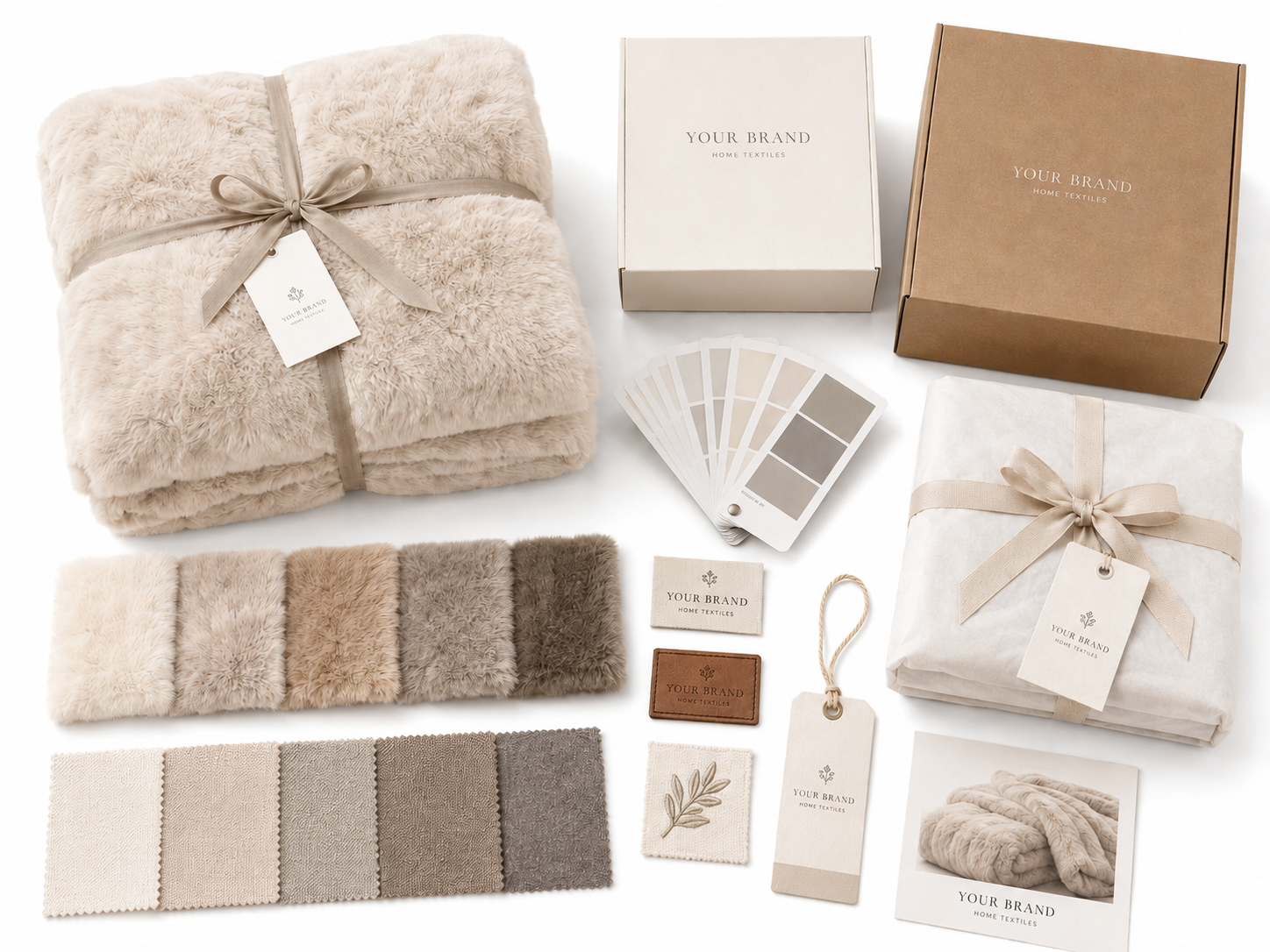
Custom Branding
Branding options include woven labels, leather patches, embroidery, hang tags, care labels, and packaging stickers.
Custom Packaging
Packaging options include OPP bags, paper belly bands, ribbons, gift boxes, tote bags, vacuum compression packaging, and e-commerce-ready mailer packaging.
For B2B brands, customization is not only about adding a logo. It is about creating a complete product experience through fabric, size, color, touch, packaging, and brand presentation.
10. How to Check Faux Fur Blanket Samples
Sample evaluation is one of the most important steps before bulk production. Buyers should not rely only on photos or videos.
A physical sample should be checked carefully in the following areas:
Appearance
Check whether the color is even and whether the pile is smooth. Look for stains, pressure marks, horizontal lines, shade variation, or obvious color differences.
Hand Feel
Touch both the front side and reverse side. Confirm softness, smoothness, fluffiness, and skin comfort.
Size
Measure the length and width. Since blankets are soft textile products, a reasonable size tolerance should be agreed in advance.
Weight
Weigh the sample and confirm whether it matches the expected GSM and total weight.
Stitching
Check whether the edge is flat, stitch density is even, and there are no skipped stitches, broken threads, loose threads, or crooked sewing.
Shedding
Use hand rubbing, shaking, tape testing, or rubbing against dark fabric to observe fiber loss.
Washing
Wash the sample according to the care label. Check shrinkage, deformation, shedding, matting, and color change.
Packaging Recovery
Fold or compress the sample for a period of time, then open it and check whether the fur surface can recover its fluffy appearance.
If sample performance is unstable, buyers should adjust fabric, pile height, GSM, backing fabric, or finishing process before approving bulk production.
11. Suitable B2B Sales Channels
Faux fur blankets have strong visual appeal and a soft hand feel, making them suitable for many B2B sales channels.
Home Textile Brands
Suitable for winter collections, holiday collections, bedroom lines, and living room soft furnishing programs.
Retailers
Suitable for seasonal displays, gift sections, home decor promotions, and member-exclusive products.
E-Commerce Sellers
Suitable for visually attractive product listings and review-driven sales. Sellers should pay special attention to shedding, packaging volume, and after-sales risk.
Gift Companies
Suitable for holiday gift boxes, corporate gifts, membership gifts, and co-branded programs.
Hotels and Vacation Rentals
Suitable for bed throws, sofa throws, and seasonal room upgrades. Buyers should focus more on washing durability and batch consistency.
Pet Home Brands
Some faux fur blankets can be developed as pet blankets. In this case, shedding control, safety, and easy cleaning should be carefully considered.
12. How to Choose a Reliable Faux Fur Blanket Supplier
When sourcing faux fur blankets, buyers should not compare suppliers only by unit price. The real risk often comes from inconsistent bulk quality, poor shedding control, delayed delivery, or weak communication.
A reliable supplier should have:
- Home textile manufacturing experience
- OEM and ODM development capability
- Stable fabric sourcing
- Sample and pre-production sample control
- Inline and final inspection process
- Export documentation support
- Certification support if required
- Practical advice on material, GSM, structure, packaging, and cost control
A professional supplier should not only provide a quotation. They should help buyers choose suitable materials and construction based on target price, market positioning, logistics method, and sales channel.
The lowest price does not always mean the lowest total cost. If the blanket causes shedding complaints, returns, poor reviews, or delivery delays, the long-term loss may be much higher than the initial saving.
13. Common Quality Problems in Faux Fur Blankets
Common faux fur blanket quality issues include:
- Heavy shedding
- Unstable pile direction
- Color difference from approved sample
- Large size tolerance
- Shrinkage after washing
- Deformation after washing
- Matting or loss of fluffiness
- Uneven stitching
- Packaging pressure marks
- Inconsistent hand feel between batches
- Unpleasant odor
- Incomplete care label information
- Carton size unsuitable for e-commerce warehousing
Most of these problems can be reduced through clear specification confirmation, sample testing, pre-production sample approval, and final inspection before shipment.
14. Are Faux Fur Blankets Suitable for Sustainable Product Lines?
Yes. Recycled polyester faux fur blankets can be a good option for brands that focus on sustainability, eco-conscious consumers, European markets, or premium lifestyle collections.
Before developing recycled polyester faux fur blankets, buyers should confirm:
- Whether recycled polyester is actually used
- Whether GRS or RCS-related documents are available
- Whether the certification covers the target product and supply chain
- The percentage of recycled content
- Whether the hand feel and color meet brand requirements
- Whether MOQ and cost are acceptable
Sustainability should not be only a marketing claim. It should be supported by traceable materials, proper documentation, and clear product labeling.
15. What Makes a High-Quality Faux Fur Blanket?
From a B2B sourcing perspective, a high-quality faux fur blanket should have:
- Soft and smooth hand feel
- Fluffy and natural-looking pile surface
- Good shedding control
- Suitable GSM for the target market
- Stable size and controlled tolerance
- Flat and durable stitching
- Good wash performance
- Stable color between batches
- Good recovery after packaging
- Complete care label and packaging information
- Custom branding support
- Stable bulk production quality
A successful faux fur blanket should look good, feel good, and also be easy to produce, inspect, pack, ship, and sell.
FAQ: Faux Fur Blanket Sourcing
Q1: Are faux fur blankets suitable for wholesale purchasing?
Yes. Faux fur blankets have strong seasonal demand, gift appeal, and premium visual value. They are suitable for home textile brands, retailers, e-commerce sellers, gift companies, and hotel projects.
Q2: What is the difference between a faux fur blanket and a fleece blanket?
A faux fur blanket focuses more on long-pile texture, luxury appearance, and decorative value. A fleece blanket is usually lighter, simpler, and more cost-effective.
Q3: Is a heavier faux fur blanket always better?
Not always. Higher GSM usually means the blanket is thicker and warmer, but it also increases cost, shipping weight, and storage volume. Buyers should choose GSM based on retail price, market positioning, and sales channel.
Q4: Do faux fur blankets shed?
High-quality faux fur blankets should only have minimal loose fibers and should not continue shedding heavily. Buyers should conduct shedding and wash tests during the sample stage.
Q5: Can faux fur blankets be machine washed?
Many faux fur blankets can be machine washed, but cold water, gentle cycle, and mild detergent are usually recommended. High heat drying, bleach, and strong spinning should generally be avoided. Exact care instructions should be confirmed through testing.
Q6: Can faux fur blankets be made with recycled polyester?
Yes. Recycled polyester faux fur blankets are suitable for sustainable home textile collections. Buyers should confirm certification documents, recycled content percentage, MOQ, cost, and hand feel before development.
Q7: What information should buyers provide for custom faux fur blanket development?
Buyers should provide size, color, fabric type, GSM, pile height, backing fabric, logo method, packaging method, target price, order quantity, testing requirements, and target market.
Q8: How can buyers judge whether a faux fur blanket supplier is reliable?
A reliable supplier should have home textile manufacturing experience, OEM/ODM capability, quality control procedures, export documentation support, certification support, and efficient communication.
Conclusion
Faux fur blankets are a strong product category for winter collections, premium retail, holiday gifting, hotel soft furnishings, and private label home textile programs. Their success depends not only on softness and appearance, but also on material selection, GSM, pile height, construction, shedding control, washing performance, packaging, and supplier capability.
For B2B buyers, a professional sourcing process should include:
Defining the target market → Confirming product positioning → Choosing material and GSM → Confirming pile height and structure → Developing samples → Testing quality → Approving pre-production samples → Controlling bulk production → Optimizing packaging and delivery.
If you are developing custom faux fur blankets, faux fur throw blankets, or home soft furnishing products, LISO HOME can support your brand with OEM/ODM development, material selection, color customization, logo branding, packaging solutions, and export-ready production.