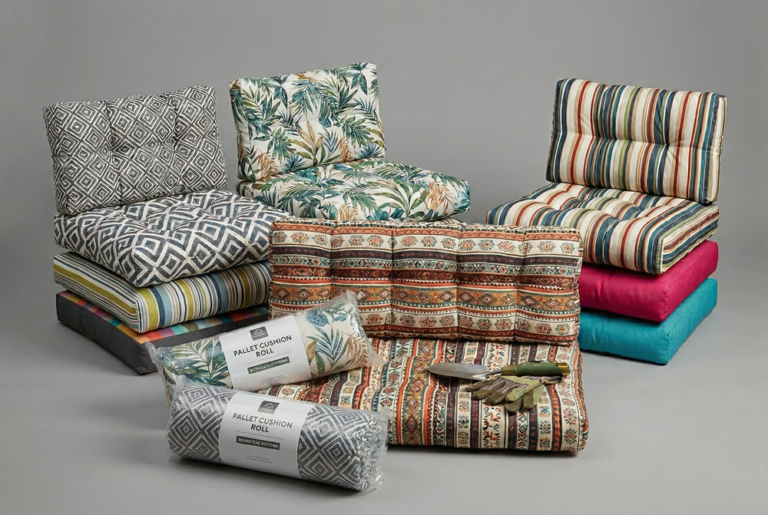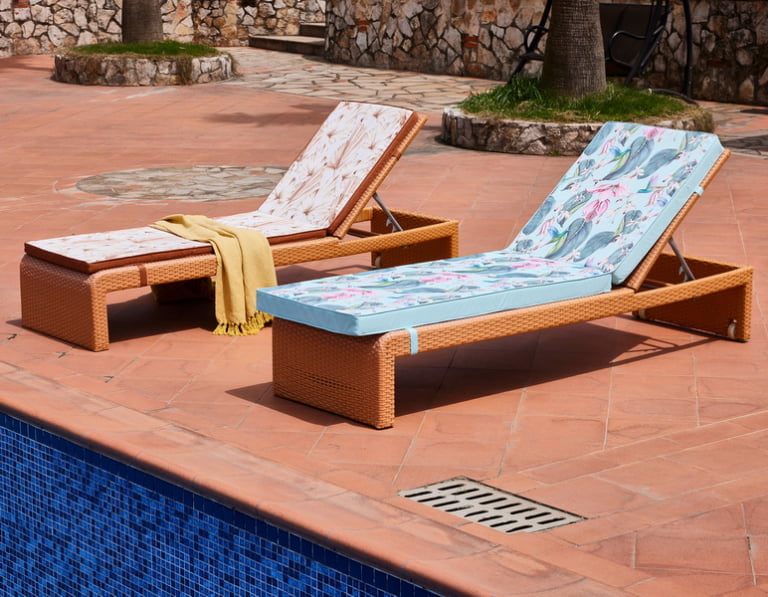
Beach and outdoor soft goods prepared for private-label sampling and seasonal sourcing.
Introduction
Each year we get the same kind of message from beach and outdoor buyers in March: “We need beach towels and cooler bags on the shelf by May. Is that still possible?” Sometimes it is. Often the buyer ends up cutting SKUs, paying for air freight, or skipping the early part of the season.
Most of the time the problem isn’t the factory or the product. It’s the calendar. A summer program sourced from China has to fit around sampling rounds, material lead times, ocean transit, marketplace check-in times, and the biggest variable of all: the Chinese New Year shutdown, which falls in early February in 2027.
LISO HOME (Hangzhou LISO Home Co., Ltd.) has been making OEM/ODM soft goods in Hangzhou since 2013. Our lines include beach towels, picnic blankets, sand-free beach mats, outdoor cushions, cooler bags, camping throws, and hammock chairs. This guide shares the planning rhythm we see work for brands, Amazon sellers, and retail buyers in the US, EU, and Australia.
One note before we start: every timeline below describes typical cadence and common practice. It is not a guaranteed lead time. Your actual schedule depends on fabric, print method, packaging, order volume, testing needs, and factory load when you confirm. Treat this as a planning framework, then check every date with your supplier.
How do I reverse-plan a summer launch from the shelf date?
Start with the date the product needs to be sellable, then count backwards. Most late programs start from the other end: “Let’s start sampling and see when it arrives.”
Here is a simplified reverse plan for a May 2027 shelf or Amazon “available” date:
| Step | What happens | Typical planning window (working backwards) |
|---|---|---|
| Shelf / live date | Product sellable in store or on marketplace | Early–mid May |
| Receiving & check-in | Warehouse receiving, retailer DC processing, or FBA check-in | Allow ~2–4 weeks; longer in peak periods |
| Ocean transit + customs + inland | Port-to-door, depending on destination | Often ~3–6+ weeks (US West Coast is usually shorter; US East Coast, EU, and AU are usually longer) |
| Cargo ready / ex-factory | Packed, inspected, booked | Roughly mid–late March |
| Bulk production | Cutting, printing/dyeing, sewing, packing | Beach programs often cited at ~30–40 days after materials and approvals are in place |
| Pre-production approvals | PP sample, artwork, packaging, labels, test plan | Must be done before the CNY shutdown |
| Sampling & development | Proto samples, revisions, color/print approval | Mainly November–January |
| Assortment lock | Final SKUs, colors, quantities, packaging | Ideally by ~February 1 at the latest, earlier if possible |
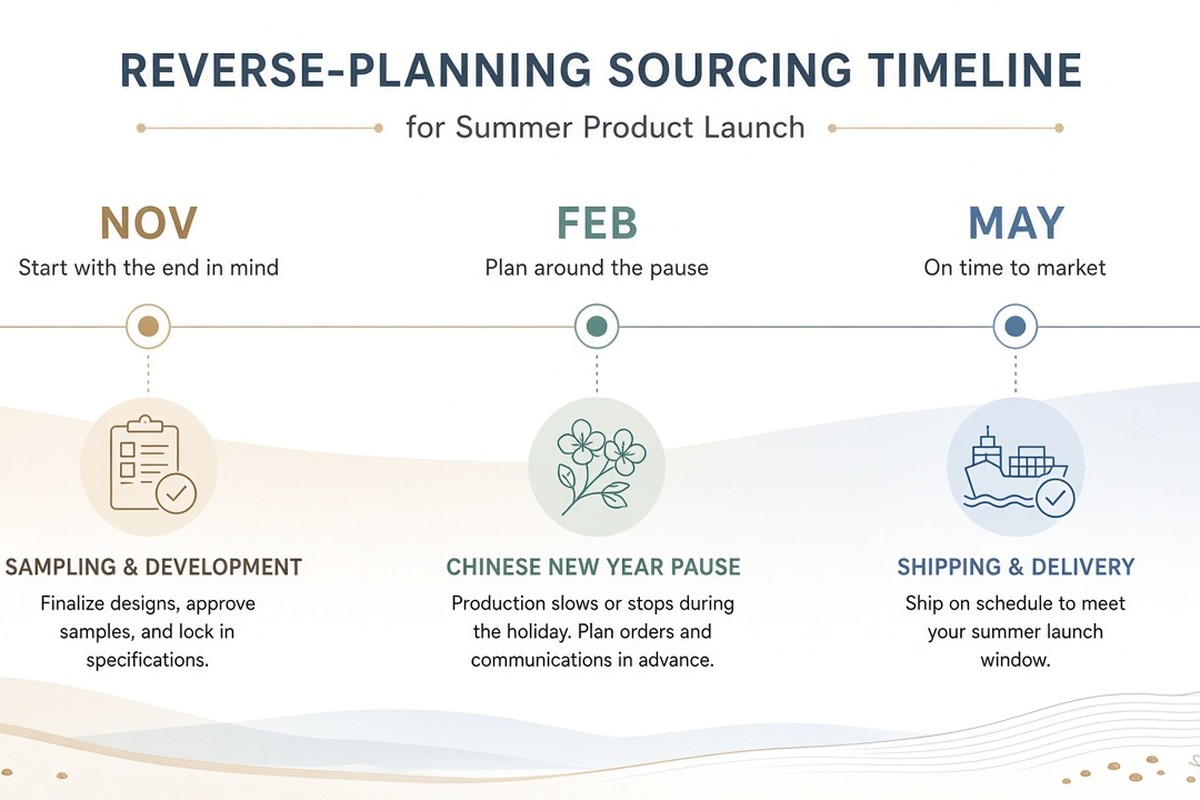
A typical reverse plan: lock the assortment before Chinese New Year so production can restart into a May shelf window.
The key point: for a May shelf date, the decisions that matter happen before Chinese New Year. If assortment, artwork, and packaging are locked and the PO is confirmed before the holiday, the factory can order materials and reserve a production slot for when work restarts. If those decisions slip into February, the program usually goes into the post-holiday queue behind orders that were confirmed earlier.
What if my shelf date is earlier, like March or April?
Move everything forward. For March/April floor sets, which are common with some big-box and EU retailers, buyers often aim to finish production before CNY. That means sampling in September–November and confirming the PO by early December. If you are reading this in November and need March delivery, talk to your supplier right away about which SKUs are realistic. Existing designs with small customizations are usually much faster than fully new development.
How does Chinese New Year 2027 affect beach and outdoor lead times?
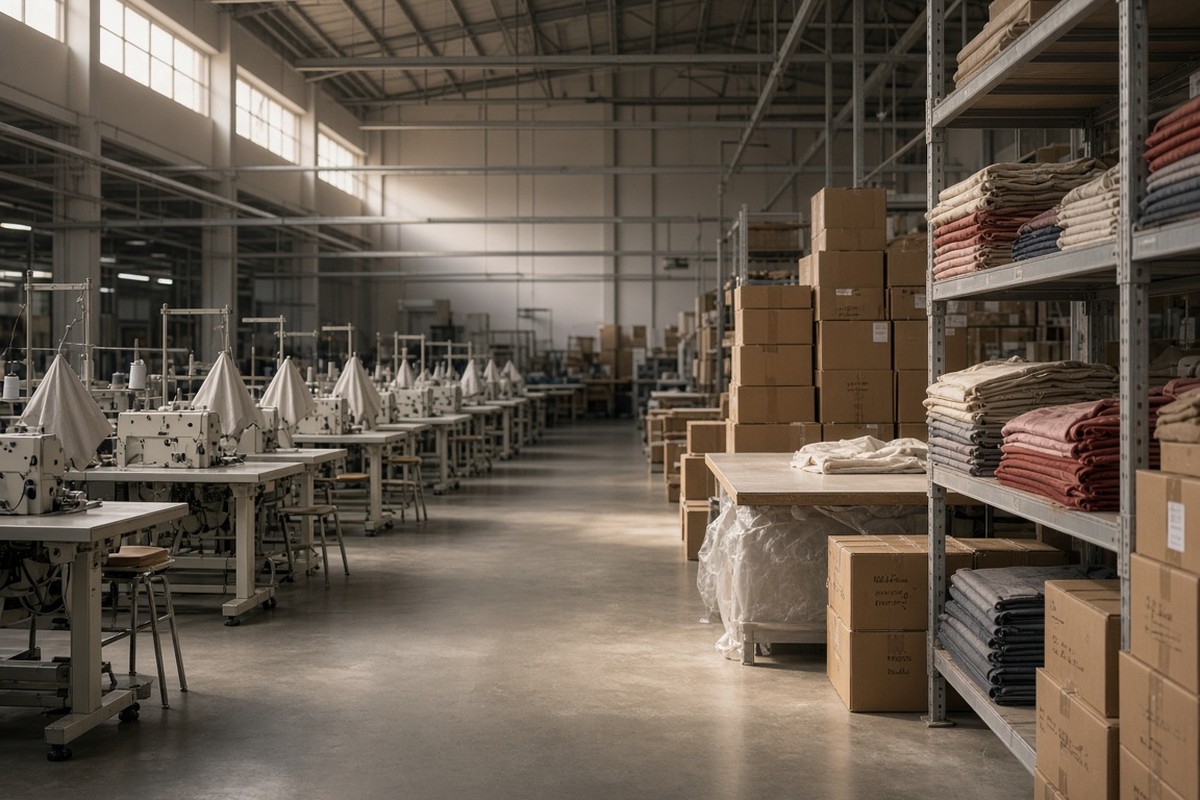
Around Chinese New Year, the practical slowdown is often longer than the official holiday days.
Chinese New Year (Spring Festival) falls in early February 2027. It is the most important holiday in China, and for manufacturing it means much more than a single day off.
What actually happens around CNY?
In our experience, the practical effect usually lasts about 3–4 weeks, not just the official holiday days:
- 1–2 weeks before: Many workers travel home to other provinces. Production slows down, and mills and printers try to finish open orders. Upstream suppliers (fabric, zippers, insulation foam, packaging printers) often stop taking new orders before the factories do.
- The holiday itself: Most factories, mills, and many logistics providers are closed or running minimal staff.
- 1–2+ weeks after: Factories reopen, but staffing takes time to return to normal. Upstream materials restart gradually, and every confirmed order is competing for the same capacity.
Why does this matter so much for summer programs?
Because the CNY gap sits right in the middle of the normal summer production window. A program that would have taken 6 weeks in October can take 9–10 weeks of calendar time if it runs across the holiday.
What can buyers do about it?
- Do sampling in November–January. That’s the realistic development window before the holiday.
- Confirm fabric, colors, and print artwork before the holiday. Then materials can be booked or produced before upstream mills close.
- Ask the factory directly: “If I confirm by [date], when is my realistic ex-factory date?” A good supplier will give you a straight answer based on its current load, not a slogan.
- Plan for the post-CNY restart instead of a smooth, uninterrupted run.
How long does sampling take for different beach and outdoor products?
There isn’t one standard sampling time. It depends on how much is new: fabric, construction, print, or hardware. For reference, LISO HOME often quotes ~7–10 business days for samples after specs are confirmed, and ~14–21 days for more complex specs. Treat these as typical ranges, not commitments. Here is how the main categories usually compare:
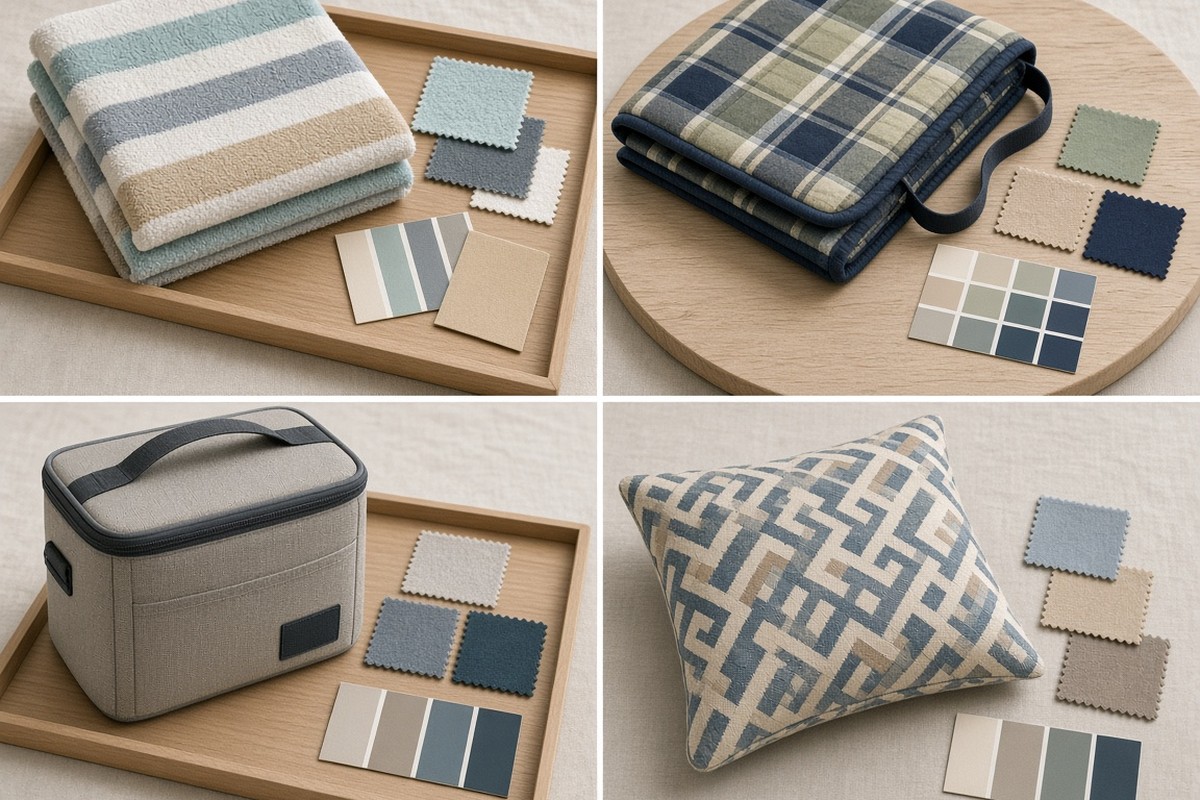
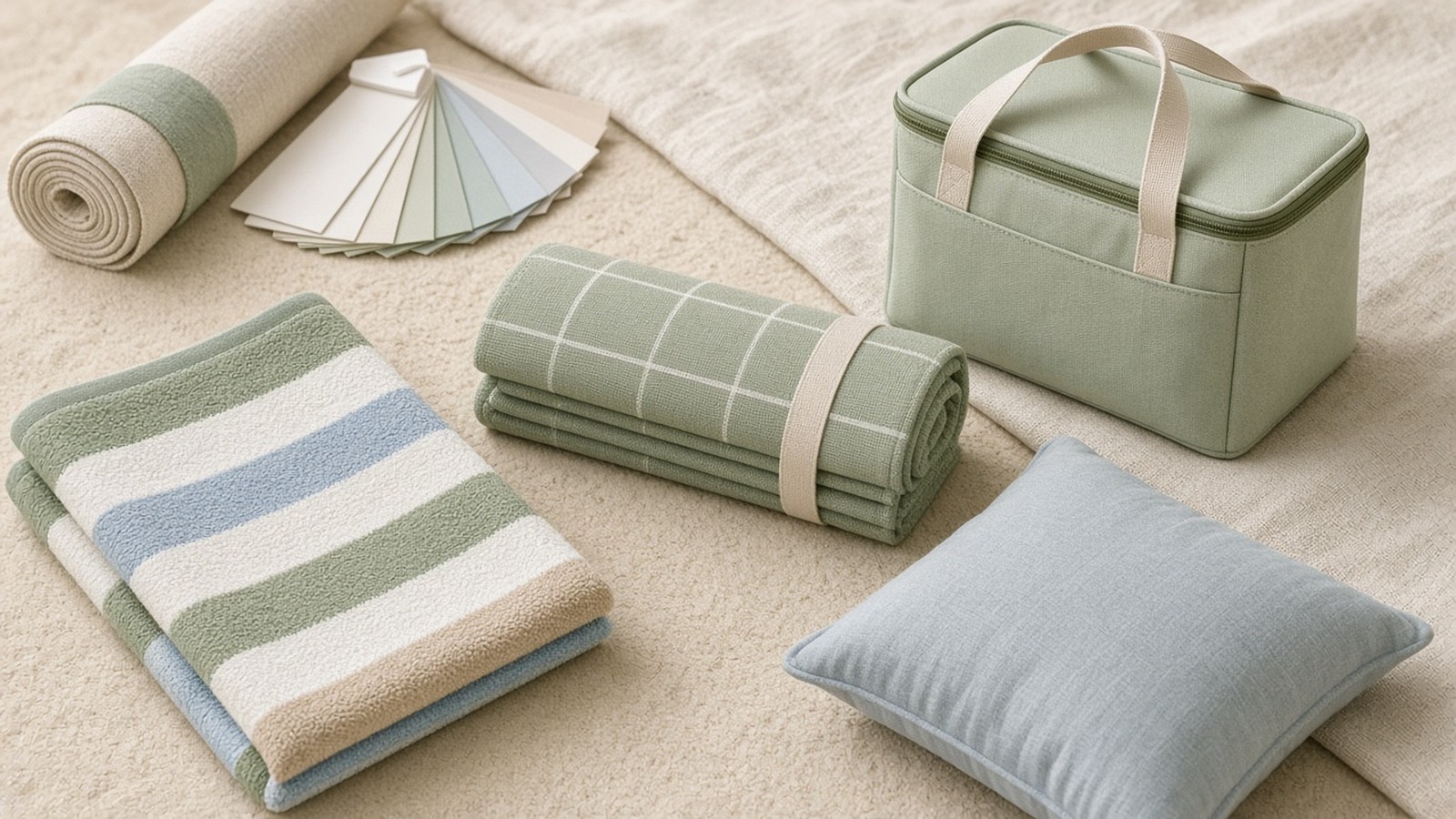
Four common beach and outdoor sample types: towel, picnic blanket, cooler bag, and outdoor cushion.
| Product | What usually drives sample time | Typical range after specs are confirmed* | What to approve first |
|---|---|---|---|
| Beach towels | Fabric route (terry / microfiber / velour), GSM, print or yarn-dye | ~7–10 business days; yarn-dye or complex print often longer | Size, handfeel, color/print accuracy |
| Picnic blankets | Multi-layer build, waterproof backing, fold/carry hardware | Often toward the middle of ~7–14 days | Waterproofing, fold size, strap/closure |
| Cooler bags | Insulation, liner, zipper, straps, more component suppliers | Often ~14–21 days per round | Leak resistance, zipper, load-bearing seams |
| Outdoor cushions | Outdoor fabric, UV/fade claims, fill recovery, zippers/ties | ~7–14 days; longer if testing is required | Cover fabric, fill shape retention, zipper/ties |
*Typical planning ranges only—not guaranteed lead times. Complex new development can take longer.
Beach towels: how many sampling rounds should I expect?
Beach towels look simple, but a lot of decisions sit behind one SKU: cotton terry vs. velour vs. microfiber (including sand-free styles), GSM (weight), size, and printing method (reactive print, digital/sublimation print, or yarn-dyed jacquard).
- Stock fabric with a new print is often the fastest route.
- Yarn-dyed jacquard designs usually take longer because the yarn colors and weave have to be developed.
- Color matching on printed towels often needs at least one revision round, especially for brand colors or Pantone references.
Which towel fabric is best? None of them is best for every program. It depends on your use case, your customer, and your price point. Cotton terry feels familiar and absorbs well. Microfiber is lighter, packs small, and is often used for sand-free and travel positioning. Velour gives the brightest printed graphics. Pick the fabric to match your customer, then sample against that.
Picnic blankets: what slows down sampling?
Picnic blankets are usually multi-layer constructions: a top fabric (often fleece, acrylic, polyester, or cotton blends), padding in some designs, and a waterproof backing. Sampling questions usually cover:
- Backing material and how waterproof it needs to be
- Folded size, carry strap or handle design, and closure
- Edge finishing and how layers are bonded or quilted
Expect at least one round focused on function (folding, waterproofing, carry) before you finalize the look (pattern, color).
Cooler bags: why do they often take the longest?
Cooler bags combine soft goods with insulation, liners, zippers, and sometimes hardware. Sampling often covers:
- Insulation thickness and liner material (and whether the liner needs to be leak-resistant or heat-sealed)
- Zipper quality and pull design
- Strap structure and load-bearing stitching
- Food-contact compliance questions for liner materials, depending on market and positioning
Because more components and more suppliers are involved, cooler bags often fall at the longer end of the sampling range. Start them early.
Outdoor cushions: what should I check in samples?
For outdoor cushions, ask about the fabric (UV and fade resistance, water repellency), the filling (how it holds shape, how it dries), and zippers or ties. If you make performance claims such as “fade-resistant” or “water-repellent,” decide early whether you need test reports to back them up, because testing adds time.
Sampling tip from the factory floor
The fastest sampling rounds we see come from buyers who send one complete tech pack: dimensions, materials, artwork files, Pantone references, label and packaging requirements, and target market. Each missing detail usually adds another message-and-revision loop, and in December, every loop eats into the window before CNY.
How do low-MOQ trial orders fit into a summer timeline?
Low-MOQ trials are a useful way to test a new category or design before committing to full volume. They work best when they are planned into the calendar rather than squeezed in at the last minute.
What MOQs are typical for beach and outdoor products?
As a general reference from LISO HOME’s current programs (these are typical ranges, not fixed rules):
- Existing designs: MOQ from around 100 pcs
- Beach programs: often around 200–300 pcs per set/design, depending on fabric, print, and packaging
- Fully custom OEM/ODM: often from around 1,000 pcs
Custom fabrics, yarn-dyed designs, custom-printed packaging, and special trims usually push MOQs up. Upstream mills and printers have their own minimums.
How do I use a trial order without losing the season?
A common approach is:
- November–December: Sample and approve 1–3 hero designs. Use existing or lightly customized bases where possible.
- Before CNY: Place a small trial order for the earliest window, often existing designs or stock fabrics with custom labels and packaging.
- Spring: Read early sell-through data, such as Amazon sessions/conversion or retail pilot stores.
- Re-order or scale up: Place a larger re-order for mid-season or plan the full program for the next year.
The trade-off is that trial quantities usually cost more per unit, and re-orders placed in March–April compete for capacity at the busiest time of year. If summer is your core season, a trial is a good way to reduce risk, but it shouldn’t replace planning for your main volume.
Can I consolidate multiple SKUs into one container to save on freight?
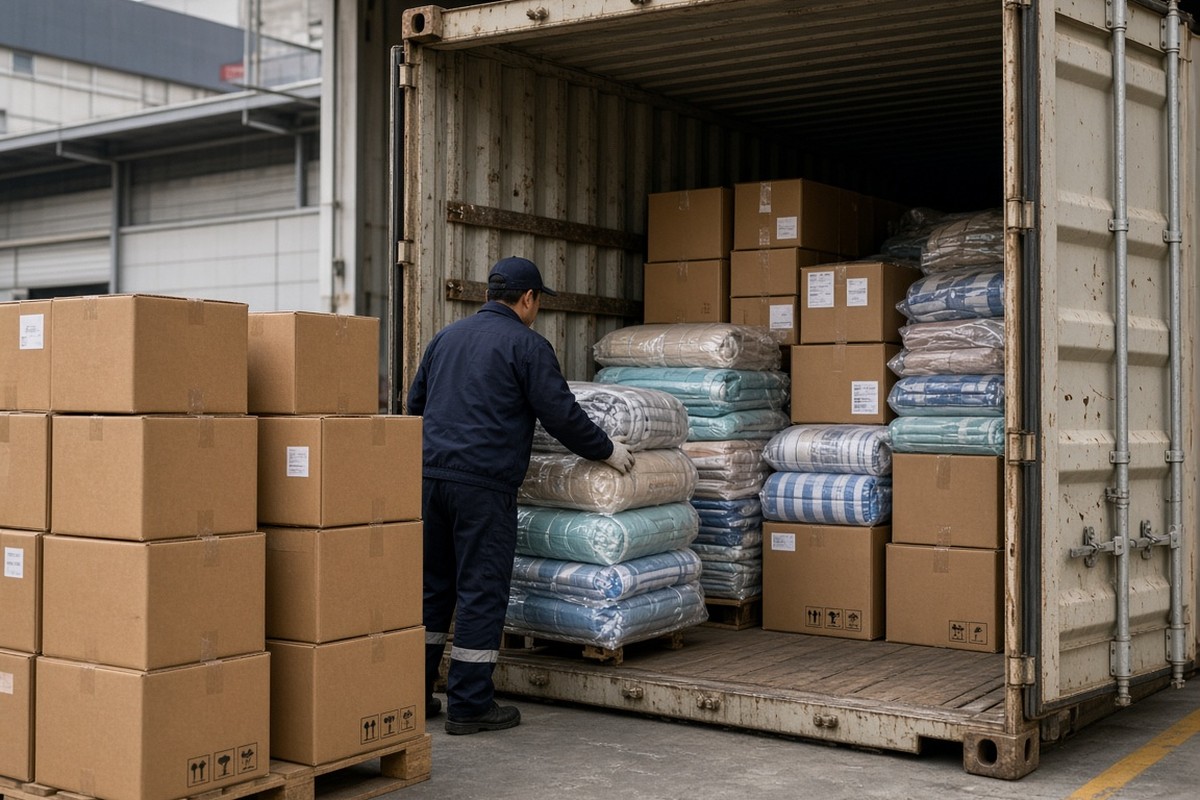
Consolidating beach and outdoor SKUs into fewer shipments can simplify freight and receiving.
Yes. For many small and mid-sized brands, this is one of the most practical ways to manage landed cost.
How does multi-SKU consolidation work?
Instead of shipping towels, picnic blankets, and cooler bags from three different factories in three separate LCL (less-than-container-load) shipments, you can combine several product types into one shipment. Depending on volume, that can be a fuller LCL shipment or a 20’ / 40’ container. Because LISO HOME covers several soft-goods lines (beach/outdoor, home textiles, travel organizers/bags, and pet travel), buyers can often combine categories in the same shipment.
What are the benefits?
- Shared freight cost across more units, which often lowers per-unit freight compared with several small LCL bookings
- Fewer customs entries and handling fees, since each shipment usually has its own broker, documentation, and terminal charges
- One inspection and one booking to coordinate instead of several
- Easier receiving at your warehouse or 3PL
What should I watch out for?
- Duties are still calculated per product classification. Consolidating doesn’t change the HS code or duty rate for each item, so confirm classifications with your customs broker.
- The slowest SKU sets the ship date. If cooler bags need an extra sampling round, they can hold up the whole container. Some buyers split into two shipments: early SKUs first, then the rest.
- Choose your Incoterm deliberately. LISO HOME supports FOB, CIF, or DDP arrangements. FOB gives you control over your own forwarder. CIF and DDP can be simpler for buyers without an established logistics setup. The right choice depends on your experience, your forwarder relationships, and your destination market.
Which compliance documents should I prepare early (OEKO-TEX, REACH, Prop 65, and more)?
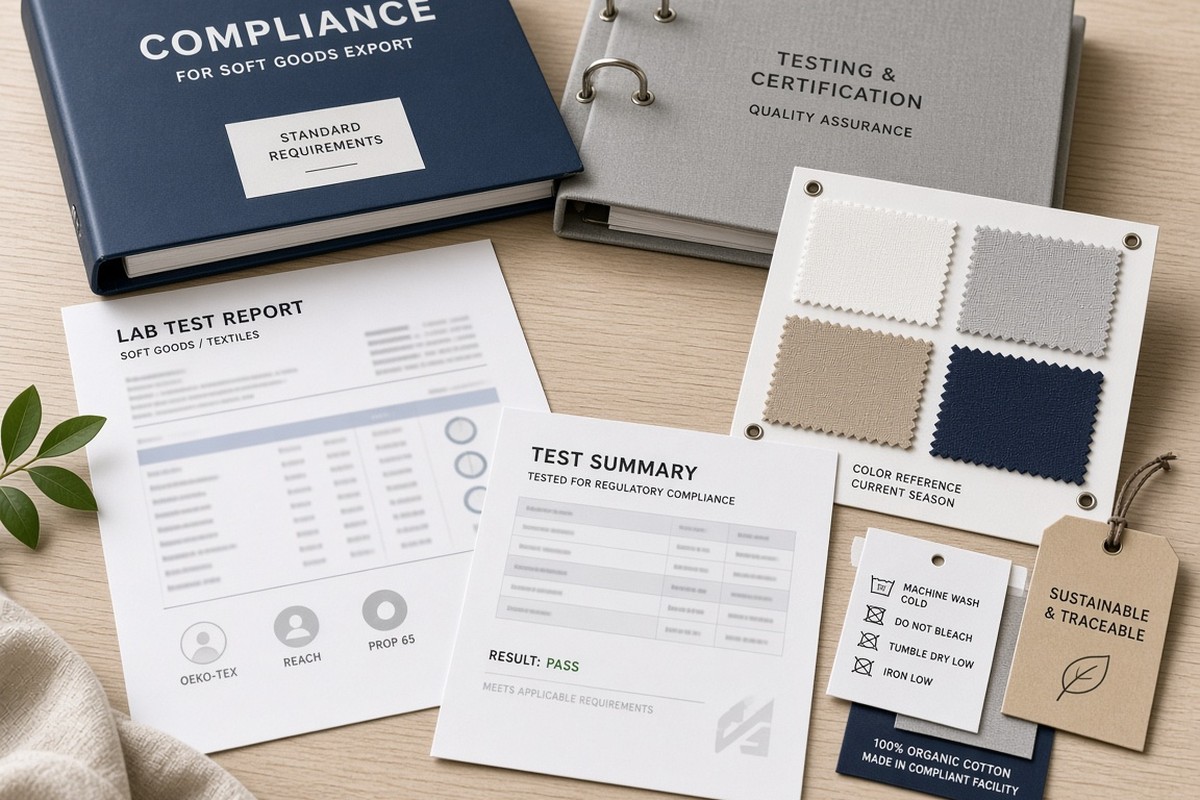
Agree on the test and document list during sampling so compliance does not delay shipment.
Compliance is the timeline risk buyers most often underestimate. Third-party testing takes time, and if a test fails, you may need to change materials, which can mean re-sampling. Agree on test requirements during sampling, not after bulk production.
Which certifications and tests are common for beach and outdoor soft goods?
The requirements depend on your market, retailer, sales channel, and product type. Common ones include:
- OEKO-TEX® STANDARD 100: A voluntary label showing textile materials were tested for certain harmful substances. Many retailers and brands ask for it on towels and blankets. Ask whether the certificate covers the specific materials and components in your product.
- EU REACH: Restricts certain chemicals (including Substances of Very High Concern, or SVHCs) in products sold in the EU. Retailers often ask for test reports on dyes, coatings, and PVC/PU components such as waterproof backings and cooler bag liners.
- California Proposition 65 (US): Requires warnings for products that expose consumers to listed chemicals unless levels are below safe-harbor thresholds. This is relevant for coated fabrics, plastics, zipper pulls, and printed parts. Many Amazon and US retail programs ask suppliers to test so that no warning is needed.
- CPSIA (US): Most relevant if any product is designed or marketed for children, such as kids’ beach towels or ponchos. It adds requirements like lead and phthalate testing, tracking labels, and a Children’s Product Certificate.
- Factory and material certifications: For example BSCI (social compliance), ISO 9001 (quality management), and GRS (Global Recycled Standard, if you are making recycled-content claims). LISO HOME works with these frameworks and can coordinate third-party testing for REACH, CPSIA, and Prop 65 as part of a program.
- Other market rules to check with your compliance advisor: For example, EU General Product Safety Regulation (GPSR) responsibilities and labeling, fiber content labeling rules in your target market, and care labeling conventions in the US, EU, and AU.
When should testing happen?
A common practice is:
- During sampling (Nov–Dec): Confirm the test list with your retailer or marketplace and with the factory. Choose materials that already have supporting reports where possible.
- Before or during bulk: Test production-representative materials or finished goods at an accredited third-party lab.
- Before shipping: Have reports, certificates, and labeling ready. Missing documents can delay customs clearance, retailer onboarding, or Amazon listing approvals.
Factory insight: Choosing materials that already have current test reports, such as an OEKO-TEX-certified fabric base, is often faster than testing an untested new material from scratch. Ask your supplier what’s already on file before choosing something new.
What should I do each month? Nov–Feb checklists for a summer 2027 program
These checklists assume a May–June 2027 shelf date. Adjust them for your own calendar.
November 2026: Define and brief
- [ ] Set the shelf / live date for each channel (Amazon, DTC, wholesale, retail).
- [ ] Reverse-plan your timeline: shelf date → check-in → transit → ex-factory → production → approvals.
- [ ] Shortlist categories and hero SKUs (e.g., beach towels, sand-free mats, picnic blankets, cooler bags, outdoor cushions).
- [ ] Prepare tech packs: sizes, materials, GSM, artwork, Pantone references, labels, packaging.
- [ ] Decide on target price points and work back to material options.
- [ ] Request samples, prioritizing the longest-lead items first (cooler bags, yarn-dyed towels, multi-layer blankets).
- [ ] Confirm target markets and draft a compliance/test list (OEKO-TEX, REACH, Prop 65, CPSIA if kids-related, retailer-specific requirements).
- [ ] Ask the supplier about MOQ by design and whether a low-MOQ trial is realistic.
December 2026: Sample, revise, and decide
- [ ] Review first samples for function (size, weight, absorbency, waterproofing, insulation, stitching, zippers).
- [ ] Review color and print. Request strike-offs or lab dips where needed.
- [ ] Send consolidated revision comments in one round (photos and measurements help).
- [ ] Finalize packaging and labeling: hang tags, belly bands, poly bags, barcodes/FNSKU, country-of-origin and care labels.
- [ ] Book third-party testing for materials or components that need it.
- [ ] Plan container consolidation: which SKUs ship together, estimated CBM, and Incoterm (FOB / CIF / DDP).
- [ ] Ask the factory for a realistic ex-factory date based on PO confirmation before CNY.
- [ ] Remember that Western holidays (late December) can slow approvals on the buyer side too.
January 2027: Lock and commit before CNY
- [ ] Approve final samples / PP samples and sign off on artwork.
- [ ] Lock the assortment: final SKUs, colors, and quantities per SKU.
- [ ] Confirm the PO and deposit so materials can be ordered before upstream mills close.
- [ ] Confirm the inspection plan (in-line and/or final random inspection, AQL level, and who performs it).
- [ ] Confirm shipping documents needed: commercial invoice, packing list, certificates, test reports.
- [ ] Book or tentatively plan freight space with your forwarder for March–April departures.
- [ ] Get a written production schedule from the factory that covers both sides of the CNY shutdown.
- [ ] Target: assortment and PO locked by ~February 1 at the latest, and earlier if your shelf date is before May.
February 2027: CNY and restart
- [ ] Expect limited communication during the holiday. Agree on an emergency contact and check-in date beforehand.
- [ ] After reopening, confirm production restart status and any changes to timing.
- [ ] Track test reports and resolve any failures quickly (material changes take time).
- [ ] Prepare marketplace and retail listings: photos from PP samples, copy, and compliance documents.
- [ ] Confirm inbound plans (FBA shipment creation, 3PL receiving appointments, retailer DC requirements).
- [ ] Decide on re-order triggers: what sell-through level would justify a mid-season re-order, and when the last re-order date is.
March–April 2027 (quick look ahead)
- [ ] Final inspection and approval to ship.
- [ ] Ex-factory, booking, and documents sent to your broker.
- [ ] Track transit, clear customs, and deliver to warehouse / FBA / DC.
- [ ] Go live, then watch early data for re-order decisions.
What does a realistic summer sourcing plan look like in practice?
Across the programs we work on, the summer launches that go smoothly tend to share a few habits:
- Decisions are made before the holiday. The buyers who are calm in April locked their assortment in January.
- One complete brief beats many partial messages. Clear tech packs shorten sampling more than anything else.
- Compliance is planned during sampling, not discovered at the shipping stage.
- Trial orders are planned, not rushed. Low-MOQ tests are most useful when they ship early enough to give real sell-through data.
- Shipments are planned as a program. Consolidating categories into fewer shipments usually makes freight and receiving simpler.
None of this needs a huge budget. It needs an early start and a supplier who is honest about capacity.
Planning a beach or outdoor private-label program for summer 2027?
If you’re putting together a 2027 beach or outdoor range, such as beach towels, sand-free mats, picnic blankets, cooler bags, outdoor cushions, camping throws, or hammock chairs, we’re happy to talk it through. We can look at your shelf date, suggest a realistic sampling and production plan around Chinese New Year, and share which designs suit a low-MOQ trial.
- Explore our Beach Day Essentials products
- See how we support private-label programs: Beach Day Essentials solutions
- Or email our team at [email protected] with your target categories, quantities, and shelf date.
LISO HOME (LISO LTD, Hong Kong / Hangzhou LISO Home Co., Ltd.) is an OEM/ODM soft-goods manufacturer based in Xiaoshan, Hangzhou, making pet travel, outdoor/beach, home textile, and travel organizer products since 2013.
FAQ
When should I start sourcing beach products for summer 2027?
Many buyers start sampling in November 2026 and lock their assortment and purchase orders before Chinese New Year in early February 2027. If your shelf date is earlier than May, start sooner.
How long is the Chinese New Year factory shutdown?
The official holiday is shorter, but the practical slowdown, including worker travel and the gradual restart, often lasts about 3–4 weeks. Upstream material suppliers may close earlier than factories.
How long does sampling take for beach towels or cooler bags?
Simple samples often take around 7–10 business days after specs are confirmed. Complex items, such as yarn-dyed towels or cooler bags with custom liners, often take around 14–21 days per round. These are typical ranges, not guarantees.
What is a typical MOQ for custom beach towels or beach sets?
It varies with fabric, print, and packaging. As a general reference, existing designs may start around 100 pcs, beach programs often run around 200–300 pcs per design, and fully custom OEM/ODM items often start around 1,000 pcs.
Can I ship towels, blankets, and cooler bags in one container?
Often, yes. Consolidating multiple SKUs into one shipment can lower per-unit freight and simplify customs and receiving. Duties are still assessed per product classification, and the slowest SKU sets the ship date.
Which compliance documents do beach and outdoor products need?
It depends on the market and the retailer. Common requests include OEKO-TEX STANDARD 100, EU REACH test reports, California Prop 65 testing, and CPSIA documents for children’s products. Confirm the test list during sampling so testing doesn’t delay shipment.