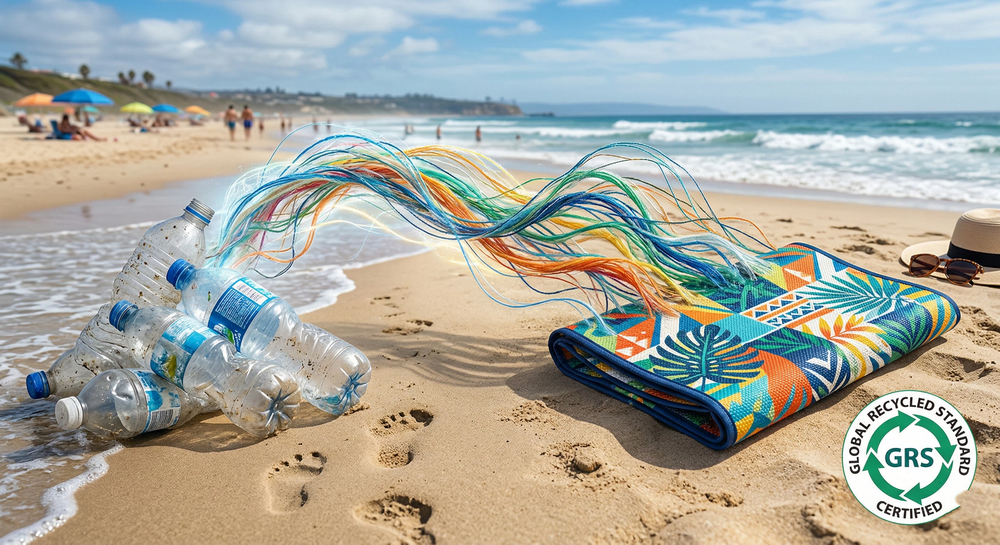
As sustainability shifts from a premium selling point to a baseline sourcing requirement, wholesale buyers are under increasing pressure to choose outdoor products that are both commercially viable and environmentally credible. For importers, retailers, and private label brands, sourcing a recycled beach mat is no longer just about style or price. It is also about certification validity, product consistency, supply chain transparency, and long-term brand protection.
If you are evaluating suppliers for your next outdoor textile project, understanding how GRS certified beach mats are actually made can help you reduce sourcing risk and make better purchasing decisions. In this guide, we explain how recycled beach mats are produced, how materials are verified, what quality controls matter in bulk orders, and which documents you should request before placing an order.
What GRS Certification Means for Beach Mat Buyers
For B2B buyers, GRS certification offers more than a recycled content claim. The Global Recycled Standard is valuable because it supports a broader framework of responsible production, including material traceability, chemical restrictions, environmental practices, and social responsibility across the supply chain.
When you source from a GRS certified beach mat manufacturer, you are not simply buying a mat made from recycled material. You are also working with a supplier that should be able to demonstrate:
- traceable recycled input materials
- controlled production processes
- responsible chemical management
- auditable certification documentation
This matters especially for brands selling into markets where sustainability claims are closely reviewed by retailers, customs authorities, and increasingly informed consumers. For many procurement teams, GRS certification serves as an added layer of protection against greenwashing risks and supply chain uncertainty.
Step 1: Sourcing RPET Raw Materials
The manufacturing journey begins with recycled polyester, or RPET, which is commonly made from post-consumer plastic bottles. Before a beach mat reaches the weaving floor, the plastic waste must first go through a series of processing steps: collection, sorting, cleaning, flake production, chip conversion, and yarn extrusion.
At this stage, not all recycled materials are equal. One of the biggest concerns in recycled textile manufacturing is consistency. Low-grade or unstable recycled yarn can lead to weaving defects, weak tensile performance, poor hand feel, and inconsistent finished products.
That is why a reliable recycled beach mat manufacturer does more than purchase yarn labeled as “recycled.” The material source should be verified carefully, with close attention paid to tensile strength, thickness consistency, and supply traceability. Strong raw material control helps ensure that the final beach mat is not only eco-friendly, but also durable enough for real outdoor use.
Step 2: Weaving the Base Fabric
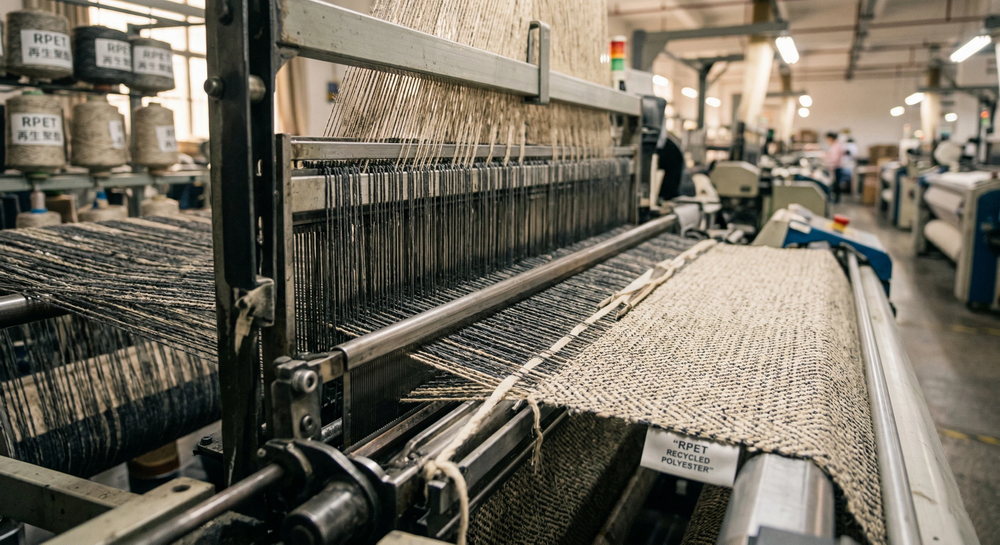
Once the RPET yarn is approved, it moves into the warping and weaving process. This stage forms the physical foundation of the beach mat and has a direct impact on durability, comfort, appearance, and long-term performance.
Depending on the design and target market, a recycled beach mat may be developed in different constructions, such as:
- lightweight woven mats for portability
- soft-touch polyester-based mats for comfort
- structured mats designed for repeated outdoor use
- functional surfaces optimized for sand resistance or easy cleaning
For wholesale orders, weaving precision is critical. Recycled fibers can be less uniform than virgin materials, so loom tension and speed must be carefully calibrated throughout production. Without strong process control, even small yarn variations can create visible defects or reduce product consistency across bulk orders.
A professional manufacturer should combine automated production efficiency with on-site technical oversight to maintain a stable, even weave throughout the order.
Step 3: Printing, Dyeing, and Surface Finishing
Sustainable products still need to meet commercial expectations for appearance and functionality. Buyers often require beach mats that are visually appealing, brandable, and suitable for specific retail or promotional channels.
After the base material is woven, the mat may go through additional finishing processes such as:
- sublimation printing for custom artwork and patterns
- controlled dyeing for stable and vibrant color performance
- lamination or coating for water resistance or sand-free functionality
- backing treatments to improve comfort, stability, or portability
For B2B projects, this stage is especially important because the environmental story does not depend only on the recycled fiber itself. It also depends on the materials and chemicals used during finishing. A qualified manufacturer should ensure that dyes, inks, coatings, and bonding agents are selected with compliance and end-use safety in mind.
In other words, a recycled beach mat should not only look good in a catalog. It should also perform well in the sun, resist wear, and align with the compliance expectations of your target market.
Step 4: Quality Control for Bulk Recycled Beach Mats
One common concern among importers and wholesalers is whether recycled beach mats can match the durability and feel of conventional products. In practice, this depends less on whether the material is recycled and more on how well the factory controls the production process.
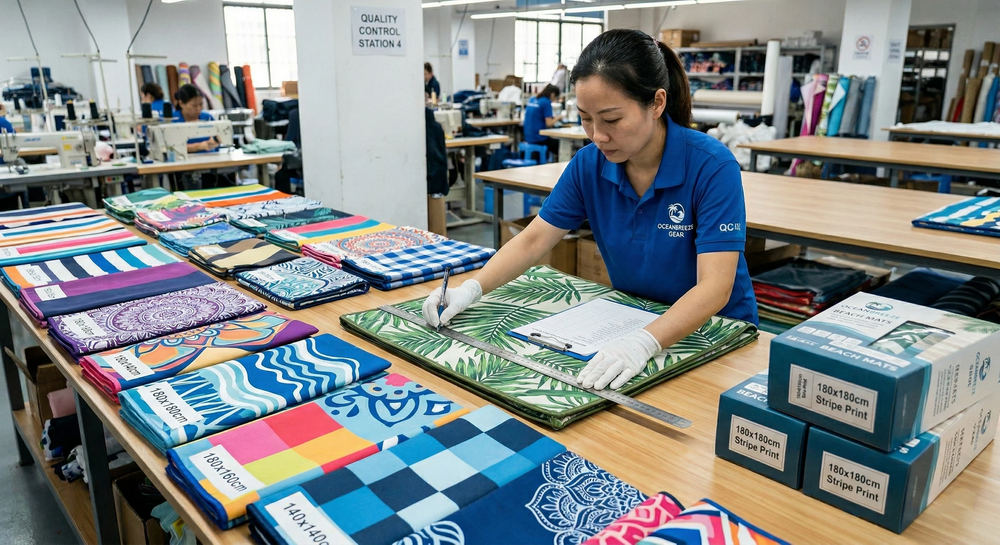
A professional quality control system should cover multiple checkpoints throughout manufacturing, not just a final visual inspection before shipment.
Tensile and Tear Strength Testing
Beach mats are exposed to pulling, folding, friction, and repeated movement during use. Tensile and tear strength testing helps verify that the product can withstand those conditions without premature damage.
UV and Color Fastness Testing
Because beach mats are often used in direct sunlight, color performance is essential. UV resistance and color fastness testing help reduce the risk of fading after a short period of outdoor exposure.
Odor and Chemical Residue Control
Lower-quality recycled products sometimes suffer from unpleasant odors or residue concerns. A well-managed production process should include checks to reduce these issues and improve user experience.
Visual and Dimensional Consistency Checks
For bulk orders, consistency matters just as much as certification. Buyers need confidence that the mats delivered in one shipment will match approved samples in size, weaving quality, print effect, and finishing.
When evaluating a supplier, it is worth asking how they inspect batch consistency, manage process deviations, and reduce defect rates during large-scale production.
Step 5: Certification Documents Buyers Should Request
A supplier stating that a product is “GRS certified” is not enough on its own. Serious B2B buyers should always ask what supporting documents are available and how certification will apply to the specific order.
Scope Certificate (SC)
The Scope Certificate confirms that the manufacturer is certified under the GRS system and is authorized to produce eligible products within the certified scope.
Transaction Certificate (TC)
The Transaction Certificate is often the most important document for buyers. It links a specific shipment to certified material flow and provides documentary support for downstream sustainability claims.
For importers, retailers, and brand owners, this is where certification becomes practical rather than theoretical. If a supplier cannot provide the appropriate documentation for your actual shipment, you should be cautious about marketing the product as GRS certified.
Customization Options for Private Label Buyers
For most B2B buyers, sustainability is only one part of the sourcing decision. A beach mat also needs to fit your brand, retail channel, price point, and user expectations.
A capable manufacturer should be able to support customization options such as:
- private label logos
- custom dimensions and thickness
- bespoke colors and printed patterns
- carry straps or handles
- hidden pockets or added functional elements
- weighted corners for windy environments
- recycled or retail-ready packaging solutions
For brands building a more complete eco-positioning story, packaging also matters. Replacing conventional plastic packaging with recycled paper sleeves, kraft wraps, or RPET carry bags can help align the product presentation with the sustainability message.
If you are sourcing for retail chains, e-commerce brands, resorts, promotional programs, or outdoor lifestyle collections, customization flexibility is often a major differentiator when comparing suppliers.
What Wholesale Buyers Should Ask Before Ordering
Before moving forward with a custom recycled beach mat project, it is worth confirming a few practical details early in the sourcing process. These questions can help you qualify suppliers faster and avoid misunderstandings later.
Ask your supplier:
- What is your MOQ for custom recycled beach mats?
- What percentage of recycled content is used?
- Can you provide both SC and TC documentation?
- What quality tests do you conduct for bulk production?
- What is the lead time for samples and mass production?
- Can you customize packaging for retail or e-commerce?
- What markets or compliance requirements have you served before?
- What information do you need in order to prepare a quotation?
A professional manufacturer should be able to answer these questions clearly and provide supporting documentation where needed.
Why Buyers Choose a Reliable GRS Certified Manufacturer
When B2B buyers choose a supplier for recycled outdoor products, they are usually evaluating more than product cost alone. In many cases, the right supplier adds value in three important areas.
1. Lower Compliance Risk
Working with a certified and experienced manufacturer helps reduce the risk of unsupported environmental claims, incomplete documentation, or product inconsistencies that could affect your market positioning.
2. Better Production Stability
Factories that understand recycled materials are generally better equipped to manage the performance variables that come with RPET and other recycled inputs. This helps improve consistency across sampling, approval, and final shipment stages.
3. Stronger Commercial Positioning
Sustainable outdoor products continue to attract interest from retailers and end users. When the sustainability message is supported by real documentation and stable product quality, it becomes much easier for brands to build trust and justify value.
FAQ: Common Questions from Wholesale Buyers
Are GRS certified beach mats more expensive than conventional options?
Usually, there is a moderate cost premium because recycled raw materials and certification management can increase production costs. However, many buyers find that this is offset by stronger retail positioning, higher perceived value, and alignment with sustainability goals.
Can I get a Transaction Certificate for every shipment?
A qualified GRS certified manufacturer should be able to explain whether a Transaction Certificate can be issued for your order and under what conditions. This should always be clarified before production begins.
Can you customize the product and packaging?
Yes. Common OEM options include custom size, logo printing, color development, functional accessories, and eco-friendly packaging tailored to retail or promotional use.
What do you need to provide an accurate quotation?
To prepare an efficient quote, most manufacturers will need details such as target size, material preference, artwork, expected order quantity, packaging requirements, and destination market.
Are recycled beach mats durable enough for long-term outdoor use?
Yes, provided they are made with stable raw materials and proper quality control. Product performance depends heavily on material selection, weaving quality, finishing methods, and testing standards.
Conclusion
Producing GRS certified beach mats is not simply a matter of using recycled plastic. It requires disciplined raw material sourcing, controlled manufacturing, consistent quality management, and proper certification documentation throughout the supply chain.
For wholesale buyers, the real value lies in choosing a manufacturer that can combine sustainability claims with real production capability. When your supplier understands both the technical requirements of recycled textiles and the practical needs of B2B sourcing, you are in a much stronger position to launch a product that is credible, marketable, and commercially reliable.
If you are developing a private label or wholesale outdoor product line, partnering with the right recycled beach mat manufacturer can help you reduce sourcing risk, strengthen your sustainability positioning, and deliver better value to your customers.
Ready to Source Custom Recycled Beach Mats?
If you are looking for a reliable GRS certified beach mat manufacturer, we are ready to support your project. Share your target size, estimated quantity, design concept, logo artwork, and packaging requirements, and our team can help you evaluate options, confirm feasibility, and prepare a quote for your OEM or wholesale order.