Outdoor Cushion Manufacturer: UV Fabric, Foam & Patio Cushion Sourcing Guide
B2B sourcing answer
Outdoor cushion sourcing is where comfort, fabric science and retail execution meet. A beautiful cushion still fails if color fastness, foam recovery, cover construction and packaging are not planned early.
As an outdoor cushion manufacturer, LISO develops patio cushions, chair pads, bench pads and removable cushion covers with UV-resistant fabrics, water-resistant options and private label finishing.
This article should become a support page for the Outdoor Patio Solution, helping buyers understand fabric, foam, sampling and testing before sending an RFQ.
Primary keyword: outdoor cushion manufacturer
Supporting terms: patio cushion manufacturer, custom outdoor cushion manufacturer, UV resistant outdoor fabric, outdoor chair pad manufacturer
Next step: Outdoor Patio OEM Solution | Outdoor cushion range | Chair pad range Focused sourcing route: If you are comparing supplier options now, review LISO's custom outdoor cushions page for cushion builds, cover-only programs, fabric choices and MOQ planning. For brand programs that need labels, carton marks and repeatable colors, the same page also explains private label outdoor cushions for coordinated patio lines.
What buyers should confirm before sampling
- Define the cushion type: patio chair cushion, bench pad, lounger cushion, sofa cushion, chair pad or replacement cushion cover.
- Select fabric based on target market: polyester Oxford, olefin, solution-dyed acrylic, recycled polyester or coated outdoor textile.
- Plan comfort details: foam density, batting, piping, zipper, ties, non-slip backing and removable cover construction.
- Confirm color fastness, UV exposure, water resistance and compliance expectations before bulk order.
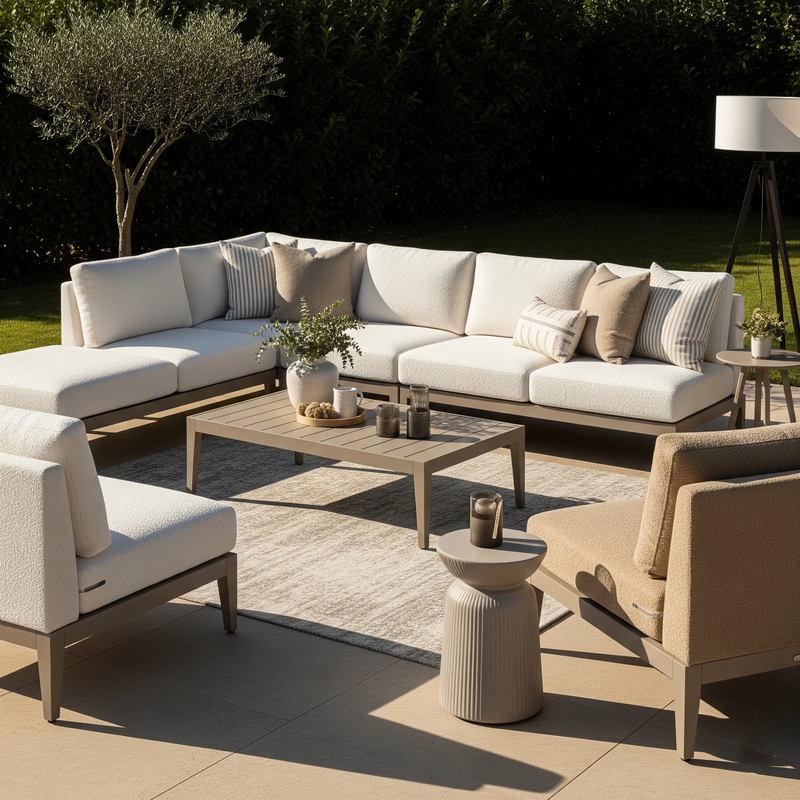
For decades, the outdoor furniture industry operated on a simple premise: make it look good, and ensure it survives a few seasons in the sun. But as we move through 2026, consumer expectations have radically matured. The ongoing "indoorization" of outdoor living spaces means end-users now demand the tactile comfort of a luxury living room sofa combined with military-grade weather resistance.
For overseas importers, wholesale distributors, and project procurement managers, this shift changes the procurement calculus entirely. The competition in the outdoor cushion sector is no longer merely about visual design; it has evolved into a complex, multidimensional battle of material science, structural engineering, and environmental compliance.
The harsh reality of our industry is that not all outdoor cushions are built the same. A cushion that looks identical on a showroom floor can perform drastically differently after three months in a high-UV or high-humidity environment. This guide unpacks the critical material upgrades and supply chain realities that B2B buyers must navigate to secure margins and reduce claim rates.
1. The Fabric Evolution: Tactile Luxury Meets Chemical Endurance
The days of stiff, plastic-feeling polyester dominating the patio are over. Modern B2B sourcing focuses on fabrics that perform technically while feeling indistinguishable from high-end indoor textiles.
The Rise of Sensory Textures: Bouclé and Chenille
One of the most significant shifts in 2025-2026 is the surge in bouclé-like textures and chenille-like outdoor fabrics.
- Why it’s trending: Consumers want "touchable" furniture. In high-end hospitality and premium residential markets, "flat" fabrics are perceived as cheap.
- The Business Logic: By incorporating textured weaves, brands can command a 20-30% premium at retail. However, from a manufacturing standpoint, these textures are notoriously difficult to make weather-resistant. We achieve this by using solution-dyed synthetic polymers extruded into textured shapes, offering visual depth without the moisture-wicking issues of natural fibers.
The Performance Hierarchy: Solution-Dyed Acrylic vs. Olefin
When evaluating an outdoor cushion supplier, the dyeing process is the single most important factor for ROI.
- Solution-Dyed Acrylic: Still the gold standard. Because the pigment is integrated into the polymer before the yarn is extruded (much like a carrot is orange all the way through), it offers the highest UV resistance. For markets like Australia, Florida, or the Middle East, this is non-negotiable to prevent fading.
- Olefin (Polypropylene): The "value champion" for mid-to-high-end retail. Olefin is also solution-dyed but has a lower cost-per-yard. It is naturally resistant to mold and chemicals. For high-volume wholesalers, Olefin offers the best balance of longevity and price-point competitiveness.
- The B2B Warning: Avoid piece-dyed or "outdoor treated" polyester. While the initial cost is low, the after-sales risk of fading and tearing—often within a single season—creates a "brand tax" in the form of returns and negative reviews.
2. Engineering the Core: Solving the "Wet Sponge" Problem
A premium fabric is useless if the core of the cushion fails. The most common consumer complaints—mold, odor, and flattening—stem from poor internal engineering.
Reticulated Foam vs. Standard PU Foam
Standard polyurethane foam acts like a sponge, trapping water and organic matter, which leads to mold and a "musty" smell.
- The Solution: The industry is pivoting toward quick dry outdoor cushions utilizing reticulated foam (often branded as Urecel QuickDry or similar).
- The Science: Reticulated foam undergoes "reticulation," a process that blows out the cell walls of the foam, leaving an open-cell structure. Water flows straight through the cushion rather than being absorbed.
- B2B Market Fit: This is a critical upgrade for the hospitality sector (hotels and resorts) where cushions must be dry and ready for use minutes after a rainstorm or cleaning.
Drainage Design and Structural Optimization
True "quick dry" performance requires more than just foam; it requires a holistic drainage design.
- Bottom Mesh Panels: We recommend cushions designed with a high-strength textilene or breathable mesh on the underside. This allows gravity to pull moisture out of the foam core efficiently.
- Hidden Zippers and Removable Covers: From a B2B perspective, custom outdoor cushions should always feature removable covers. This extends the product life—consumers can wash the covers or even replace them without buying new foam cores, a major selling point for sustainability-focused markets.
3. Addressing Procurement Pain Points: Longevity, Logistics, and Liability
B2B buyers don't just buy products; they manage risks. Understanding the technical solutions to common industry pain points is essential for a healthy supply chain.
Pain Point: Fading and UV Degradation
- The Solution: Demand 1,500 to 2,000-hour UV ratings for mid-range products, and 3,000+ for premium. Ensure your patio cushion manufacturer provides lab reports for color fastness to light (AATCC 16.3 or ISO 105-B02).
Pain Point: The Vacuum Packaging Dilemma
To optimize freight costs, many suppliers vacuum-pack cushions.
- The Risk: Cheap, low-density foam often suffers from "compression set." After months in a hot container, it may never fully recover its original shape, leading to wrinkled fabric and "collapsed" cushions.
- The Solution: Insist on High-Resilience (HR) foam with a minimum density of 25-30kg/m³. High-quality foam can be compressed for shipping but will "bounce back" instantly upon unpacking, protecting your inventory value.
Pain Point: Environmental and Chemical Compliance (PFAS)
The regulatory landscape is shifting. New laws in the US (like California’s AB 1817) and the EU are banning "forever chemicals" (PFAS) used in water-repellent coatings.
- The Business Impact: Non-compliant inventory could be seized at customs or face mandatory recalls.
- The Solution: Transition your sourcing to PFAS-free (C0) water-repellency treatments. This is no longer an "eco-friendly option"—it is a mandatory requirement for future-proofing your business.
4. The B2B Strategy: How to Select the Right Sourcing Tier
Not every market requires the most expensive materials. Successful procurement is about matching the material to the market segment.
| Feature | Entry-Level Retail | Mid-Market Wholesale | High-End / Hospitality |
|---|---|---|---|
| Fabric | Spun Polyester | Olefin / Textured Weaves | Solution-Dyed Acrylic |
| Foam | Standard PU Foam | High-Resilience (HR) Foam | Reticulated (Quick-Dry) Foam |
| UV Resistance | 200-500 Hours | 800-1,200 Hours | 2,000-5,000 Hours |
| Best For | Promotional Sales | Residential Collections | Resorts & Luxury Brands |
Customization and MOQ Flexibility
For specialized projects, custom outdoor cushions are often required in small batches. Traditional factories often demand high MOQs (Minimum Order Quantities).
- Our Insight: Look for suppliers who maintain "greige" fabric stocks or standard color programs in Olefin. This allows for lower MOQs on custom shapes and sizes, giving you the flexibility to test new designs without over-leveraging your capital.
Conclusion: Investing in Engineering, Not Just Fabric
In 2026, the outdoor cushion has moved from being a simple accessory to a high-performance component of the outdoor living experience. As a B2B buyer, shifting your focus from "lowest unit cost" to "total cost of ownership"—which includes the costs of returns, shipping damage, and brand reputation—is the only way to maintain a competitive edge.
At the end of the day, the most expensive cushion you can buy is the one that has to be replaced after six months. By prioritizing solution-dyed yarns, reticulated foam, and PFAS-free compliance, you are not just buying a product—you are buying peace of mind for your customers and sustainable margins for your business.
Partner with a Specialist Outdoor Cushion Manufacturer
Are you looking to upgrade your current product line or solve quality issues in your existing supply chain? As a leading outdoor cushion supplier, we specialize in high-performance materials and custom engineering for global importers.
[Contact our procurement consultants today] to request a sample kit of our latest textured Olefin fabrics and reticulated foam cores. Let’s build a more durable future together.
## Turn this sourcing topic into a product program

This article supports the [Outdoor Cushion & Chair Pad Manufacturer](https://lisohome.com/solutions/outdoor-patio-living/) cluster. Use these pages when you are ready to compare product scope, materials, MOQ, sampling and private label packaging.

- [Outdoor Patio OEM Solution](https://lisohome.com/solutions/outdoor-patio-living/)
- [Outdoor cushion range](https://lisohome.com/product/outdoor-patio/cushions/)
- [Chair pad range](https://lisohome.com/product/outdoor-patio/chair-pads/)

## FAQ for B2B buyers

### Can LISO work as an outdoor cushion manufacturer for private label brands?

Yes. LISO can develop patio cushions, outdoor chair pads, bench pads and removable cushion covers with custom size, fabric, label and packaging.

### What fabrics are suitable for outdoor cushions?

Common options include polyester Oxford, solution-dyed acrylic, olefin, recycled polyester and coated outdoor textiles. The choice depends on UV exposure, price and test requirements.

### Can outdoor cushions be water-resistant?

Yes. Water-resistant fabrics, coated backing, DWR finishes and removable cover designs can be planned based on the intended use.

### What should buyers prepare for an outdoor cushion quote?

Please prepare size, thickness, fabric preference, filling or foam requirement, quantity, logo method, packaging idea and target launch date.

If you are sourcing a reliable outdoor cushion OEM manufacturer, LISO offers custom patio cushions with waterproof fabrics, MOQ from 200 units, and samples ready within 14 days. Request a free quote →