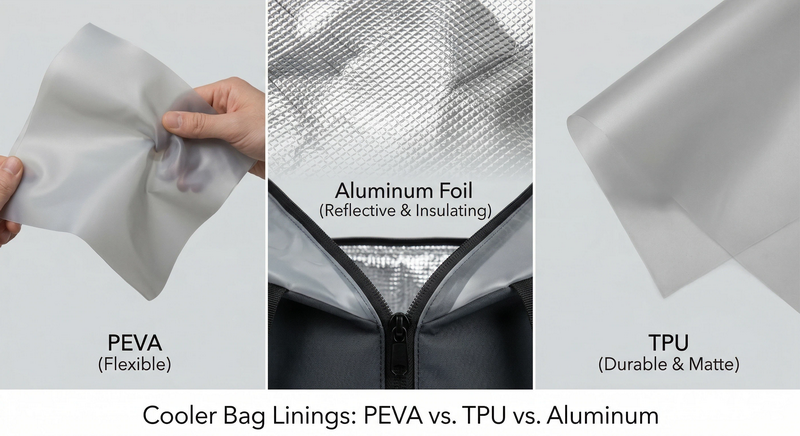
When sourcing insulated bags for wholesale or private-label projects, many buyers focus first on outer fabric, size, or print area. But from a product-performance standpoint, the lining material often matters just as much. It affects cost, leak resistance, compliance, and how the final product is positioned in the market.
For B2B buyers, choosing between PEVA, TPU, and aluminum foil is not simply a material comparison. It is a decision that shapes your pricing strategy, product claims, and customer experience.
In this guide, we will look closely at the differences between these three cooler bag lining materials, with special attention to cost, waterproof performance, and food-grade certification such as FDA and LFGB. We will also explain how manufacturers typically recommend matching each material to different use cases, including promotional gifts, outdoor sports, and pet travel.
Why Cooler Bag Lining Material Matters in B2B Sourcing
A cooler bag may look similar on the outside, but the lining determines how it performs in actual use. If the lining leaks, tears easily, traps odor, or cannot support compliance requirements, the product quickly loses value.
For importers, distributors, and brand owners, the inner lining directly affects:
- unit cost and margin planning
- waterproof and leakproof performance
- compatibility with seamless heat-pressed construction
- food-contact safety claims
- product durability and brand positioning
That is why experienced buyers evaluate cooler bag lining material based on application, not just price.
PEVA vs TPU vs Aluminum Foil: Quick Overview
Before diving into details, here is a simple way to understand the three materials:
- PEVA is a practical and cost-effective option for large-volume and mainstream cooler bags.
- TPU is the premium choice for strong waterproof performance, durability, and higher-end product positioning.
- Aluminum foil is commonly used in budget-friendly insulated bags, but it is more limited in waterproof strength and long-term durability.
1. PEVA Lining: Cost-Effective and Widely Used
PEVA is one of the most common liner materials in lunch bags, cooler totes, and promotional insulated bags. It is widely chosen because it offers a good balance between affordability and functional performance.
Cost Advantage of PEVA
From a wholesale perspective, PEVA is usually one of the most cost-effective choices. It helps buyers keep the product within a competitive price range, especially for high-volume orders and price-sensitive retail channels.
For projects where budget control is critical, PEVA often provides the best overall balance between appearance, usability, and production efficiency.
Waterproof Performance of PEVA
PEVA itself offers good water resistance, but waterproof performance depends heavily on the manufacturing method. If the lining is stitched, needle holes may allow leakage over time.
This is why seamless heat-pressed construction is so important.
With seamless heat pressing, PEVA panels are bonded without stitching, creating a smoother and more leak-resistant inner compartment. For everyday cooler bags, lunch bags, and promotional insulated bags, this process significantly improves practical waterproof performance.
While PEVA performs well in standard use, it is generally not as durable or elastic as TPU in harsher environments or repeated heavy-duty use.
FDA and LFGB Compliance for PEVA
PEVA can be manufactured to meet FDA and LFGB requirements, depending on raw material quality and supplier testing standards. For buyers, the important point is clear: not all PEVA materials are identical.
If your project requires food-contact compliance, always ask the supplier for valid test reports for the actual material used in production.
When PEVA Makes the Most Sense
PEVA is usually the right fit when your project needs:
- controlled material cost
- practical leak resistance
- seamless heat-pressed lining options
- food-grade compliance for mainstream markets
- good performance for everyday or promotional use
2. TPU Lining: Premium Performance for Higher-End Cooler Bags
TPU is increasingly popular in premium cooler bags because it offers strong waterproofing, better flexibility, and a more refined material profile. For brands targeting a more technical or performance-driven market, TPU is often the preferred lining choice.
Cost of TPU
TPU is generally more expensive than PEVA and aluminum foil. The raw material cost is higher, and production standards are usually more demanding.
That means TPU is best suited for products with a higher target selling price, stronger brand positioning, or more demanding end-use requirements.
Waterproof Performance of TPU
Among these three lining materials, TPU offers the strongest waterproof potential, especially when paired with seamless heat-pressed construction.
This combination allows manufacturers to create a more dependable leak-resistant lining without stitched seams. For outdoor and travel use, that difference matters. A well-made TPU lining handles moisture, pressure, and repeated folding better than most standard alternatives.
TPU also tends to perform well in:
- flexibility
- abrasion resistance
- cold-weather stability
- repeated-use durability
If your product needs a strong leakproof story, TPU is usually the most convincing option.
FDA and LFGB Compliance for TPU
TPU can also be made to comply with FDA and LFGB standards, making it a strong choice for premium food-contact or pet-related applications. As with PEVA, compliance should be confirmed through documentation rather than assumed.
For buyers serving stricter markets or premium retail channels, TPU often supports a stronger quality narrative.
When TPU Makes the Most Sense
TPU is a strong choice when your cooler bag project needs:
- premium waterproof performance
- seamless heat-pressed leakproof construction
- stronger durability in outdoor environments
- higher perceived product value
- food-grade material options for advanced product lines
3. Aluminum Foil Lining: Common and Affordable, but More Limited
Aluminum foil lining is a familiar option in basic insulated bags. It is often selected because it gives the product an immediate “thermal” look and helps maintain a low price point.
Cost of Aluminum Foil
Aluminum foil lining is usually economical and suitable for entry-level insulated bags. For simple products with modest performance expectations, it can be a practical solution.
Waterproof Performance of Aluminum Foil
Although aluminum foil can help with insulation, it is usually less reliable when buyers want true leakproof performance.
Compared with PEVA and TPU, foil-based laminated linings are more likely to wrinkle, puncture, or separate over time. They are also less ideal for forming a durable seamless heat-pressed waterproof chamber.
If your product positioning includes claims such as “leakproof,” “heavy-duty,” or “for repeated outdoor use,” aluminum foil is generally not the best primary choice.
FDA and LFGB Compliance for Aluminum Foil Structures
With aluminum foil lining, compliance depends on the entire laminate structure, including backing materials and adhesives. In other words, it is not enough to evaluate the foil layer alone.
Some foil-based constructions can meet FDA or LFGB standards, but buyers should verify the full material specification carefully before moving forward.
When Aluminum Foil Makes the Most Sense
Aluminum foil is better suited for projects that need:
- an economical insulated bag solution
- basic thermal function
- short-term or light-duty use
- a simple promotional or low-cost retail format
PEVA vs TPU vs Aluminum Foil: Key Differences That Matter Most
1. Cost Comparison
If your priority is cost control, PEVA and aluminum foil are usually the most economical options. Between the two, PEVA often provides a better balance of usability and appearance.
If your priority is premium performance and durability, TPU is worth the additional material cost.
2. Waterproof Performance Comparison
For waterproof performance, construction matters as much as the material itself.
A stitched lining can leak even if the material is technically water-resistant. That is why manufacturers often recommend seamless heat-pressed lining technology for buyers who want better leak resistance.
In general:
- TPU performs best for leakproof and waterproof construction
- PEVA performs well for standard leak-resistant applications, especially with seamless heat pressing
- Aluminum foil is the least reliable choice for long-term waterproof performance
3. Food-Grade Certification Comparison
All three materials may be available in compliant versions, but actual certification depends on the specific formulation and supply chain controls.
For buyers who need food-contact safety, the correct approach is to request:
- FDA test reports
- LFGB test reports
- confirmation that the tested sample matches production material
This step is especially important for food packaging, lunch bags, family-use products, and pet travel items.
How to Choose the Right Lining Material by Product Scenario
Choosing the best cooler bag lining material becomes easier when you start from the real use case rather than the material name.
Best Material for Promotional Gift Cooler Bags
For promotional campaigns, price sensitivity is usually the main concern. Buyers need a product that looks clean, performs well enough for daily use, and remains cost-efficient in large quantities.
Recommended material: PEVA
PEVA is often the best fit because it keeps the budget under control while still allowing an upgrade through seamless heat-pressed construction. This gives the bag better leak resistance than a standard stitched lining and creates a stronger value proposition for promotional customers.
Aluminum foil may be used for very low-cost items, but it generally feels less durable and less refined.
Best Material for Outdoor Sports Cooler Bags
Outdoor-use cooler bags face more demanding conditions. They may be carried during hiking, camping, cycling, fishing, or beach trips. In these cases, buyers need stronger waterproofing, better durability, and more dependable leak resistance.
Recommended material: TPU
TPU is the strongest option for this segment because it pairs very well with seamless heat-pressed waterproof construction. It also stands up better to repeated folding, rough handling, and temperature variation.
For sports retailers and premium outdoor brands, TPU supports both product performance and brand positioning.
Best Material for Pet Travel Cooler Bags
Pet travel products often require a careful balance of hygiene, easy cleaning, food-safe material choices, and spill resistance. Buyers may be packaging treats, fresh food, or cooling supplies for pets on the go.
Recommended material: TPU or PEVA, depending on product level
For premium pet travel bags, TPU is usually the better option because it is durable, easy to wipe clean, and well suited for leak-resistant construction.
For value-driven pet product lines, PEVA can still be a smart choice, especially if it is paired with seamless heat-pressed seams and supported by FDA or LFGB compliance documentation.
Aluminum foil is generally less ideal in this category because it is not as durable for repeated cleaning and handling.
What B2B Buyers Should Ask Their Supplier Before Ordering
Before placing a bulk order, buyers should go beyond material names and ask specific technical questions.
Here are a few important ones:
- Is the lining stitched or made with seamless heat-pressed construction?
- Can you provide FDA or LFGB reports for the exact material used?
- What is the thickness and structure of the lining?
- Is the bag intended for promotional, outdoor, or pet-related use?
- How does the chosen material affect MOQ, cost, and production time?
These questions help prevent mismatches between product claims and real-world performance.
Final Thoughts
There is no single best cooler bag lining material for every project.
If your focus is cost efficiency and broad commercial practicality, PEVA is often the best choice.
If your focus is premium waterproof performance and durability, TPU is the clear leader.
If your focus is basic insulation at a low price point, aluminum foil may still have a place.
For B2B wholesale buyers, the smartest decision comes from matching the lining material to the intended market, price level, and use scenario. In most cases, the winning formula is not just about the material itself, but about the combination of material selection, seamless heat-pressed waterproof construction, and verified FDA/LFGB compliance.
FAQ
Is PEVA or TPU better for cooler bag lining?
It depends on your target market. PEVA is usually better for cost-sensitive, high-volume projects, while TPU is better for premium cooler bags that need stronger waterproof performance and durability.
Is aluminum foil lining waterproof?
Aluminum foil lining can resist some moisture, but it is generally less reliable than PEVA or TPU for true leakproof performance, especially in repeated-use products.
Why is seamless heat-pressed construction important in cooler bags?
Seamless heat-pressed construction reduces or eliminates needle holes, which improves leak resistance and creates a cleaner, more waterproof inner compartment.
Can cooler bag lining materials meet FDA or LFGB standards?
Yes, PEVA, TPU, and some aluminum foil laminate structures can meet FDA or LFGB requirements, but compliance must be verified with valid material testing reports.
Which lining material is best for promotional cooler bags?
PEVA is usually the most practical choice for promotional cooler bags because it offers a good balance of cost, appearance, and waterproof performance.
Request Custom Samples for Your Next Cooler Bag Project
If you are planning a cooler bag collection and need expert advice on PEVA, TPU, or aluminum foil lining options, contact lisohome.com to request custom samples tailored to your brand, price target, and application needs.
Cooler bag sourcing next step
Turn the lining choice into a complete cooler bag program.
After buyers compare PEVA, TPU and aluminum foil, the next decision is the real product route: tote cooler, collapsible cooler, lunch cooler, backpack cooler or promotional soft cooler. LISO helps importers align food-grade lining, insulation thickness, zipper route, logo method, MOQ and retail packaging before sampling.