Beach bags are no longer just simple summer accessories. In today’s market, they have become an important category for brands, retailers, and wholesale buyers looking to meet growing demand for functional, stylish, and travel-friendly outdoor bags.
Commercial sourcing path: If this topic is part of a retail, resort, promotion or private-label sourcing brief, use LISO's wholesale beach bag options to review materials, capacity, logo placement and buyer-ready product routes before sending specs.
So, what is a beach bag? More importantly, what makes a beach bag commercially successful in the best beach bag 2026 market?
In this guide, we explain what defines a beach bag, which materials are most relevant today, what features buyers value most, and how brands can approach product development for different market segments.
What Is a Beach Bag?
A beach bag is a large-capacity carry bag designed for beach, poolside, resort, and other outdoor leisure scenarios. Compared with an everyday tote bag, a beach bag is built to handle real outdoor conditions such as sand, moisture, sun exposure, and bulkier personal items.
A well-designed beach bag usually offers:
- larger storage capacity
- lightweight construction
- easy-clean materials
- better organization for beach essentials
- stronger durability for outdoor use
- materials that perform well in humid or sandy environments
For end users, this means convenience and comfort. For brands and buyers, it means a product category with clear function, strong seasonality, and good room for design differentiation.
Why Beach Bags Matter in the 2026 Market
The best beach bag 2026 trend is shaped by two parallel demands:
- consumers want bags that are both practical and stylish
- brands want products that can support stronger positioning, better margins, and broader seasonal collections
Beach bags now sit at the intersection of:
- resort fashion
- travel accessories
- family outdoor gear
- promotional seasonal products
- sustainable lifestyle collections
For B2B buyers, this makes beach bags a flexible category suitable for:
- retail collections
- resort stores
- private label development
- promotional gifting
- OEM and ODM programs
- summer capsule launches
Key Characteristics of a Good Beach Bag
A true beach bag is different from a basic tote because it is built around a specific use scenario.
Large Capacity
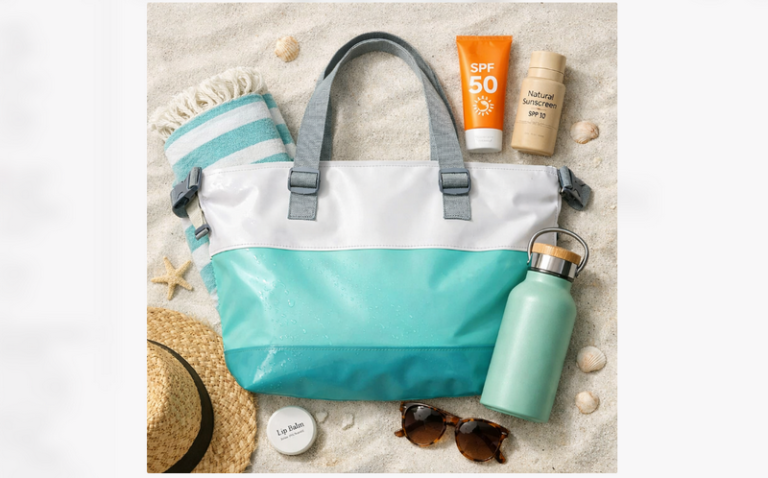
Beach users often need to carry more than daily essentials. A beach bag should be able to hold:
- towels
- swimwear
- sunscreen
- water bottles
- snacks
- sandals
- books or magazines
- toys for children
- wet or sandy items
For family-oriented products, larger capacity is often one of the main selling points.
Lightweight Structure
Even a large bag should remain easy to carry. This is especially important for travel retail, resort use, and family beach trips where users may already be carrying several items.
Easy-Clean Construction
Outdoor leisure products need low-maintenance materials. Bags that are easy to rinse, wipe, or air dry are more practical and reduce user complaints after purchase.
Durability for Outdoor Conditions
Beach bags should perform well under:
- sun exposure
- damp environments
- repeated seasonal use
- abrasive contact from sand
- heavy packing loads
Better Organization
Modern beach bags often include:
- zippered pockets
- wet and dry sections
- bottle holders
- waterproof pouches
- open outer pockets for quick access
For many buyers, organizational details can be the difference between an entry-level design and a premium product.
Popular Beach Bag Materials in 2026
Material selection plays a key role in cost, functionality, visual identity, and target market positioning. In the ultimate guide to beach bags, material strategy should always be part of product planning.
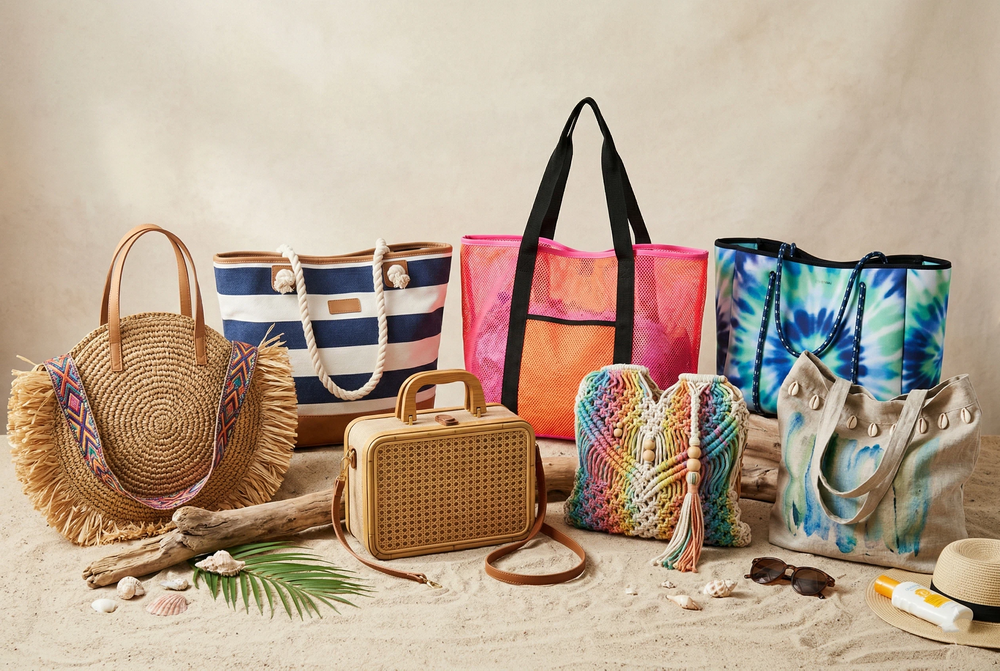
Canvas Beach Bags
Canvas remains one of the most established materials in the beach bag category.
Advantages of canvas
- durable and strong
- suitable for larger bag structures
- easy to customize with printing or embroidery
- classic casual look for broad market appeal
Common applications
- family beach totes
- private label collections
- promotional beach bags
- resort and gift shop assortments
Points to consider
- untreated canvas can absorb water
- drying speed is slower than mesh or TPU
- coated finishes may be needed for better performance
Canvas is a strong choice for brands that want a balance between function, cost control, and design flexibility.
Mesh Beach Bags
Mesh beach bags remain highly relevant because they directly solve one of the most common beach problems: sand buildup.
Advantages of mesh
- allows sand to fall through
- quick drying
- lightweight to carry
- breathable construction
- practical for wet items and toys
Best-fit markets
- family-focused retail
- children’s beach accessories
- pool and water activity users
- practical summer travel products
Points to consider
- less protection for valuables
- may require reinforcement for heavier loads
- often positioned more as functional than premium fashion
Mesh works especially well for value-driven and utility-focused product lines.
Eco-Friendly Straw and Woven Beach Bags
For brands targeting resort, boutique, and lifestyle channels, eco-friendly straw beach bags and woven beach bags continue to gain attention.
Why this material direction is growing
- strong summer and holiday visual appeal
- supports eco-conscious brand messaging
- aligns with fashion-driven resort collections
- lightweight and easy to merchandise visually
Common material options
- natural straw
- paper straw
- raffia
- woven recycled fibers
- blended natural-look materials
Best-fit markets
- boutique retail
- holiday collections
- fashion-led summer assortments
- resort gift shops
Points to consider
- natural-look materials may need structural reinforcement
- water resistance is usually limited
- lining and handle construction are important for product lifespan
For B2B customers, these materials can create stronger perceived value when paired with upgraded trims, inner pouches, or custom branding.
Waterproof TPU Beach Bags
Waterproof TPU beach bags are one of the most important material directions for premium and performance-led product development in 2026.
TPU offers a cleaner and more technical alternative for buyers targeting outdoor, travel, and water sports categories.
Advantages of TPU
- strong waterproof performance
- wipe-clean surface
- flexible feel
- modern premium appearance
- suitable for technical bag designs
Best-fit markets
- boating
- paddle sports
- outdoor travel
- premium beach accessories
- electronics-safe carry solutions
Points to consider
- higher material and production cost
- requires careful construction quality
- better suited to modern technical styling than natural resort aesthetics
For brands wanting to expand beyond basic seasonal beach totes, TPU offers an opportunity to build a more differentiated and higher-value collection.
Other Materials Used in Beach Bags
Depending on price point and target market, beach bags may also use:
-
polyester
- lightweight
- cost-effective
- suitable for printing
-
nylon
- durable
- abrasion-resistant
- good for travel-oriented bags
-
PVC-coated fabrics
- water-resistant
- easy to clean
- common in promotional and entry-level waterproof styles
-
insulated linings
- useful for cooler beach bags
- ideal for food and drink storage
Material choice should always be matched with:
- target price level
- sales channel
- brand positioning
- expected load-bearing needs
- consumer usage scenario
Common Types of Beach Bags
Different formats serve different commercial needs.
Open-Top Beach Tote
A simple and versatile format for everyday beach use.
Best for
- mass retail
- resort stores
- promotional projects
Zippered Beach Bag
Adds security and better content control.
Best for
- travel-oriented collections
- premium retail
- users carrying electronics or valuables
Mesh Beach Bag
Best for wet, sandy, or family-use scenarios.
Best for
- practical summer collections
- toy and swim categories
- family beach users
Waterproof Beach Bag
Focused on moisture protection and technical performance.
Best for
- sports and marine channels
- outdoor travel collections
- premium functional positioning
Insulated Beach Bag
Combines beach carry with cooler functionality.
Best for
- picnic and family outdoor lines
- multifunctional travel products
- value-added seasonal collections
What Features Do Buyers Look for in a Beach Bag?
From a B2B perspective, commercial success usually comes from combining appearance with practical performance.
Features that add product value
- reinforced shoulder straps
- zippered inner pockets
- detachable waterproof pouch
- separate wet and dry storage
- foldable structure for travel
- easy-clean inner lining
- insulated compartment
- custom logo application area
- reinforced bottom panel
These features can support stronger product positioning and help brands target different price tiers.
How to Choose the Right Beach Bag for Your Market
A product that works for a resort boutique may not work for a supermarket chain or sporting goods customer. That is why beach bag development should begin with market positioning.
1. Define the target user
Common segments include:
- families
- solo travelers
- resort guests
- beach sports users
- fashion-led summer shoppers
2. Match the material to the sales channel
- Canvas for broad appeal and easy customization
- Mesh for practical and family-focused use
- Eco-friendly straw for resort and boutique markets
- Waterproof TPU for premium outdoor and performance channels
3. Build the right size strategy
A beach bag line can include:
- small sizes for personal use
- medium sizes for general retail
- large sizes for family needs
- extra-large sizes for equipment-heavy outdoor use
4. Consider custom development options
For private label and OEM programs, common customization points include:
- logo printing
- embroidery
- woven labels
- custom lining
- branded zipper pullers
- seasonal colors
- packaging upgrades
5. Think beyond appearance
A successful beach bag should also answer practical questions:
- Is it easy to clean?
- Can it handle wet items?
- Is it comfortable when fully loaded?
- Does it offer enough compartments?
- Does the material match the intended price point?
Beach Bag Care: An Important Selling Point
Care information is often underused in beach bag content, but it matters to both buyers and end users.
Basic care recommendations
Canvas
- shake out sand before cleaning
- spot clean or hand wash
- dry completely before storage
Mesh
- rinse with clean water
- hang dry fully
- inspect seams after heavy use
Eco-friendly straw or woven materials
- wipe gently
- do not soak
- store in a dry place
TPU
- wipe clean with a soft cloth
- avoid long-term storage under extreme heat
- do not sharply fold for extended periods
Adding care guidance to product pages can help reduce return risk and improve buyer confidence.
Beach Bag Trends for 2026
The best beach bag 2026 category is moving toward products that combine usability, better materials, and clearer positioning.
Key trends to watch
- sustainable and natural-look materials
- waterproof technical constructions
- hybrid beach and travel functionality
- better internal organization
- stronger resort and lifestyle styling
- premium add-ons such as detachable pouches and insulated sections
For brands, the opportunity is not just to sell a bag, but to offer a product that fits modern travel, leisure, and outdoor lifestyles.
Final Thoughts
So, what is a beach bag? From a product development perspective, it is a specialized outdoor bag designed to carry beach essentials while handling sand, moisture, sun exposure, and larger packing needs better than a regular tote.
For B2B buyers, beach bags remain a valuable category because they offer:
- broad seasonal demand
- flexible material options
- good potential for private label development
- room for both practical and fashion-led positioning
In 2026, the most competitive products are likely to combine strong functionality with clear material direction. Canvas beach bags and mesh beach bags continue to perform well in core markets, while eco-friendly straw beach bags and waterproof TPU beach bags are becoming key growth directions for brands seeking stronger differentiation.
If your business is building a new seasonal bag collection, beach bags are still one of the most commercially flexible categories to develop.
<h2>Need Custom Beach Bags for Your Brand?</h2> <p>For brands, retailers and importers, the next step is to turn the beach bag idea into a clear sourcing brief: fabric, lining, handle strength, logo method, MOQ and packaging. LISO supports private label beach bags for retail, resort and seasonal Beach Day programs.</p> <p><a href="https://lisohome.com/product/beach-day-essentials/beach-bags/">View Beach Bag Manufacturing Options</a></p>