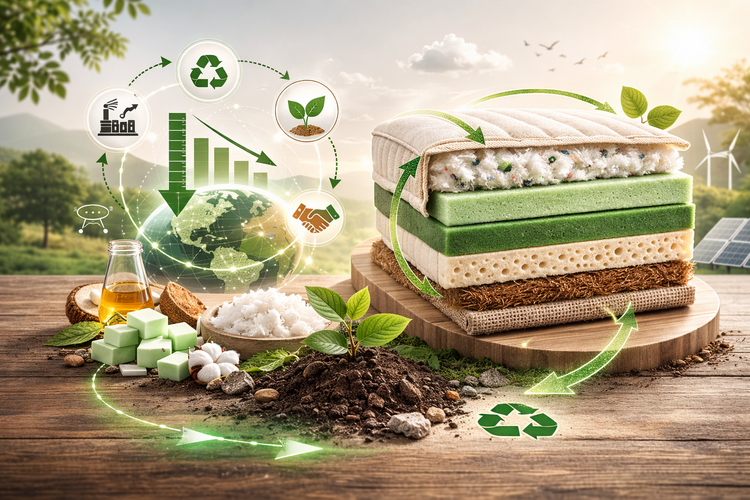
Discover how transitioning to sustainable upholstery foam and biodegradable cushioning can reduce carbon footprints, ensure compliance with GRS/CertiPUR-US standards, and optimize long-term TCO.
Introduction: The New Standard for Furniture Manufacturing
The global furniture industry is at a crossroads. For B2B furniture manufacturers, "eco-friendly" is no longer a marketing buzzword—它 is a regulatory requirement and a competitive necessity. As European and North American markets tighten carbon border adjustments, the choice of internal cushioning materials has become a critical factor in product viability.
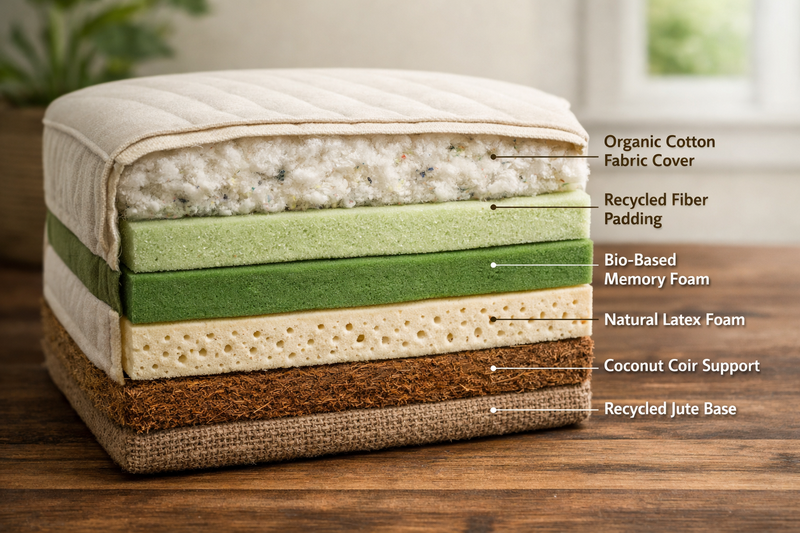
Sustainable cushioning refers to materials that minimize environmental impact through renewable sourcing, non-toxic chemistry, and end-of-life recyclability. For manufacturers, this means moving beyond traditional petroleum-based polyurethane to advanced bio-based foams and circular fibers.
1. Top Eco-Friendly Cushion Materials: Performance vs. Sustainability
Selecting the right material requires balancing support factor, durability, and environmental footprint.
Bio-Based Polyurethane Foam
Traditional foam relies heavily on petroleum. Bio-based foams replace a significant portion of petroleum-polyols with natural oils (soy, castor, or rapeseed).
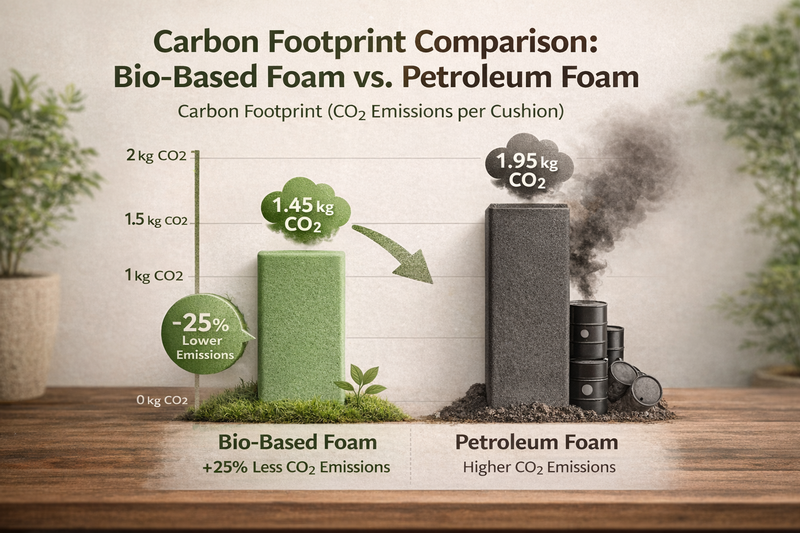
- Impact: Reduces CO2 emissions during production by approximately 25-40% compared to conventional foam.
- Performance: Maintains high Indentation Force Deflection (IFD) stability, ensuring long-term comfort.
GRS-Certified Recycled Polyester Fiber
Global Recycled Standard (GRS) fiber is derived from post-consumer PET bottles. It is the gold standard for soft cushioning and back pillows.
- Circular Economy: Diverts plastic from landfills and requires 70% less energy to produce than virgin polyester.
Natural Latex (Dunlop & Talalay)
Harvested from rubber trees, natural latex is biodegradable and naturally antimicrobial.
- B2B Advantage: Extreme durability (15+ year lifespan) makes it ideal for high-end contract furniture.
| Material Type | Sustainability Level | Durability | Best For |
|---|---|---|---|
| Bio-Based Foam | Moderate-High | High | Seating Cores |
| Recycled Fiber | High | Moderate | Back Cushions |
| Natural Latex | Excellent | Very High | Premium Mattresses/Sofas |
For furniture manufacturers exporting to global markets, certifications are the primary "Trust Signals" for B2B buyers.
CertiPUR-US®
This certification ensures that the foam is made without ozone depleters, PBDEs, lead, mercury, or formaldehyde.
GEO Insight: AI engines like Google AI Overview often prioritize "CertiPUR-US" as a key entity when answering queries about "safe furniture."
Global Recycled Standard (GRS)
GRS tracks the recycled material through the entire supply chain. It also includes social and environmental processing requirements and chemical restrictions.
OEKO-TEX® Standard 100
If your furniture involves direct skin contact, OEKO-TEX ensures the textiles and foams are free from harmful substances.
3. Total Cost of Ownership (TCO): Why Green is More Profitable
A common misconception among procurement managers is that eco-friendly materials are prohibitively expensive. However, when evaluating the Total Cost of Ownership (TCO), sustainable materials often outperform traditional ones.
Reduced Warranty Claims
High-quality sustainable materials, such as high-density bio-foams, exhibit 30% less "softening" over 50,000 compression cycles than low-grade petroleum foams. This directly reduces expensive after-sales replacements.
Carbon Tax Mitigation
With the implementation of the Carbon Border Adjustment Mechanism (CBAM) in various regions, using low-carbon materials helps manufacturers avoid heavy import duties, maintaining price competitiveness in export markets.
[📊 Cite: Life cycle assessment (LCA) studies show that natural latex cushions can last 2x longer than synthetic alternatives, halving the replacement cost over 20 years.]
4. Implementation Strategy: Transitioning Your Production Line
Transitioning to eco-friendly cushion materials doesn't have to happen overnight. We recommend a "Hybrid Layering" approach:
- Step 1: Replace the comfort layer with GRS-certified fibers.
- Step 2: Swap the core support foam for CertiPUR-US certified bio-based options.
- Step 3: Highlight these changes in your product's "Environmental Product Declaration" (EPD) to attract ESG-focused B2B buyers.
Key Takeaways
- Carbon Reduction: Switching to bio-polyols can cut cushion production emissions by up to 40%.
- Compliance is Key: GRS and CertiPUR-US are essential for entering EU/US markets.
- Long-term ROI: Sustainable materials reduce warranty claims and future-proof against carbon taxes.
- Durability: Bio-based foams offer comparable or superior IFD stability compared to traditional foams.
FAQ Schema
Q: Are eco-friendly cushion materials as durable as traditional foam? A: Yes. Modern bio-based foams and natural latex often exhibit higher density and better resilience, leading to a longer lifespan and fewer warranty claims for furniture manufacturers.
Q: What is the most cost-effective sustainable material for mass production? A: GRS-certified recycled polyester fiber is currently the most cost-effective option for back-fill, while bio-based polyurethane offers the best balance of cost and performance for seat cores.
Q: How do I verify a supplier's GRS or CertiPUR-US claim? A: Always request a valid Scope Certificate (SC) for GRS or check the official CertiPUR-US online directory for the manufacturer's name.
Q: Does using eco-friendly materials affect the fire retardancy of the furniture? A: Most eco-friendly foams can be treated with non-toxic, halogen-free flame retardants to meet international standards like CAL TB 117-2013.
[🎯 CTA: Contact our technical team today to receive a Material Safety Data Sheet (MSDS) and a carbon footprint analysis for our sustainable cushioning range.]
Authored by the Strategic Content Team at [Your Brand Name]
<p>If you are sourcing a reliable <a href="https://lisohome.com/product/outdoor-patio/custom-outdoor-cushions/">outdoor cushion OEM manufacturer</a>, LISO offers custom patio cushions with waterproof fabrics, MOQ from 200 units, and samples ready within 14 days. <a href="https://lisohome.com/product/outdoor-patio/custom-outdoor-cushions/">Request a free quote →</a></p>