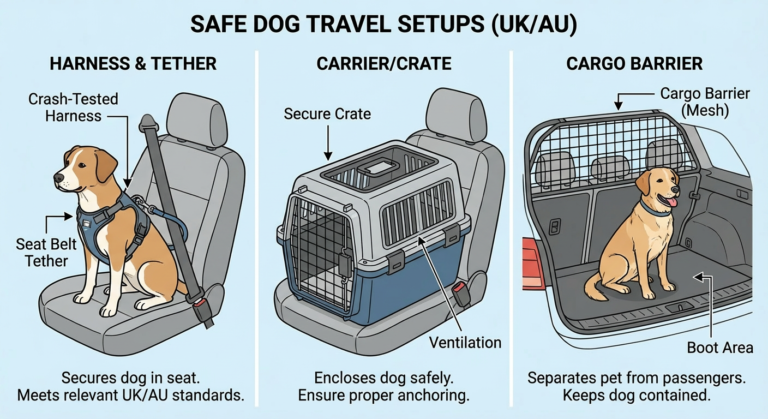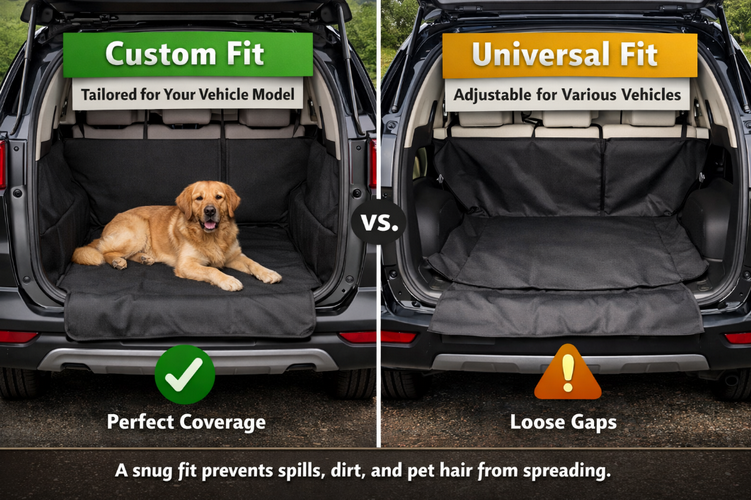
Machine-washable pet car mats are not one uniform product category. A bench cover, hammock, split-access cover, cargo liner, and removable upper layer protect different parts of a vehicle and create different fit and cleaning requirements.
This 2026 guide compares configurations rather than ranking commercial brands. Before buying or sourcing, verify the dimensions, complete layer construction, care instructions, and relevant test records for the exact model.
What “Best” Means in This Guide
“Best” is conditional. Each top pick below matches a specific vehicle layout and cleanup workflow; none is presented as the result of a proprietary side-by-side product test.
Define four inputs first:
- where the dog rides: rear bench, shared rear seat, or cargo area;
- the vehicle dimensions, split ratio, upholstery, and anchor locations;
- the area that needs protection, including seat, doors, sides, or bumper edge;
- the intended care label and the properties that must remain acceptable after washing.
A machine-washable claim should identify the applicable component, wash and drying procedure, sample revision, number of cycles, and acceptance criteria. “Waterproof” and “non-slip” also need a clear claim scope; a face fabric or backing sample does not represent every seam, opening, strap, and layer in the finished product.
Five Machine-Washable Pet Car Mat Configurations
| Configuration | Primary use | Evidence to request | Common trade-off |
|---|---|---|---|
| Bench cover | Rear-seat daily use | Dimensions, care scope, post-wash fit | Limited side and door coverage |
| Split-access hammock | Dog and human passenger sharing | Split geometry, closures, belt access | More openings and hardware to inspect |
| Cargo liner with bumper flap | SUV or hatchback cargo area | Cargo measurements, flap reach, complete-product care | Does not protect the rear bench |
| Side-protection hammock | Door and seat-edge coverage | Flap dimensions, attachment method, seam condition | More installation steps and wash bulk |
| Removable upper cover | Frequent cleaning programs | Component-level care labels and replacement plan | Whole assembly may not be machine washable |
1. Bench Cover — Rear-Seat Daily Use
Best fit: a dog that consistently travels on a flat rear bench where fast installation and removal matter more than maximum coverage.
Verify the seat width and depth, backrest height, headrest spacing, seat-anchor position, backing compatibility, and access to every required belt opening. Confirm that the care label applies to the complete cover, including binding, backing, labels, and attached hardware.
If a water barrier is claimed, ask whether the evidence applies to the main material or the finished assembly. Stitched seams and openings require a separate leakage check.
Trade-off: a bench cover normally protects less of the doors, footwell-facing edge, and cargo area than a hammock or cargo liner.
2. Split-Access Hammock — Dog and Human Passenger
Best fit: a shared rear seat where part of the cover must unzip, fold, or separate for a passenger.
The product must match the vehicle’s split ratio and closure direction. Check zipper or overlap alignment, belt access, headrest compatibility, strap adjustment range, and the condition of openings after the agreed wash program. Installation instructions should show both the covered and exposed seating positions.
More attachment points do not automatically prove better stability. The complete installed geometry—including backing, anchors, straps, dimensions, and upholstery—must be evaluated under one defined procedure.
Trade-off: extra seams, closures, and hardware add flexibility but create more points to inspect for alignment, wear, fit, and leakage.
3. Cargo Liner With Bumper Flap — SUV Cargo Use
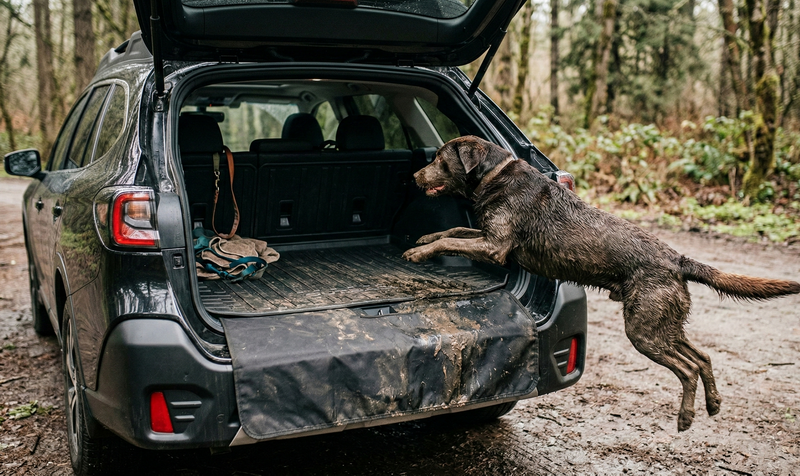
Best fit: a dog that travels in the cargo area and enters across the rear bumper.
For a cargo liner for dogs machine washable, measure cargo length and width with the rear seats in the intended position. Record wheel-arch geometry, side-wall coverage, anchor locations, access to cargo hooks or controls, and the required bumper-flap reach.
Confirm whether the complete liner can follow the stated care procedure or only a removable layer. The liner must fit the declared washing equipment without substituting a generic care statement for the product-specific label.
Trade-off: cargo spaces vary substantially, and a cargo liner does not protect a rear bench when the dog changes riding position.
4. Side-Protection Hammock — Door and Edge Coverage
Best fit: rear-seat use where paws, mud, hair, or moisture regularly reach the door-facing edges.
Specify side-flap dimensions, zipper or seam construction, attachment positions, belt access, and a door-safe installation method. Check whether the flaps remain aligned after the agreed wash and drying procedure and whether the installed product interferes with vehicle controls.
A hammock or cover is a surface-protection product. Its straps and openings must not be represented as crash-restraint components without separate, applicable evidence for that purpose.
Trade-off: extra panels can increase installation time, washing-machine bulk, seam count, and the number of fit variables.
5. Removable Washable Upper Cover — Frequent Cleaning
Best fit: programs that need to wash the pet-contact layer more often than the underlying barrier or support layer.
Identify every included component and its care method. Verify how the upper cover reconnects to the base, whether the attachment interface remains aligned after washing, and whether replacement parts use the same dimensions and revision as the approved sample.
A washable upper layer does not make a non-washable base machine washable. Packaging, product pages, and care labels should distinguish component-level and complete-product claims.
Trade-off: modular cleaning can simplify replacement, but claim scope and part compatibility require tighter control.
Buyer Test Checklist for Wash Durability
- Lock the sample and specification. Record the sample ID, bill of materials, finished dimensions, hardware, backing, and proposed care label.
- Create a pre-wash baseline. Photograph the product and record fit, dimensions, seam condition, coating condition, closure operation, attachment security, and any agreed water-resistance result.
- Run the agreed procedure. State the machine type, detergent, temperature, drying method, cycle count, and sample count. Do not replace these fields with a generic instruction.
- Measure dimensional change. Compare the same reference points before and after washing and drying.
- Inspect the complete construction. Check delamination, seam opening, edge curl, padding migration, backing damage, strap distortion, zipper operation, and label condition.
- Repeat relevant performance checks. Material water resistance and finished-product leakage are separate scopes; both may need post-wash evaluation.
- Verify fit and movement. Install the product on the representative vehicle surface with the specified anchors and straps, then measure movement using an agreed load and method.
- Keep the raw report. Record conditions, individual results, failures, and photographs instead of reporting only a pass label.
ISO 6330:2021 specifies domestic washing and drying procedures for textile testing, including different machine and drying procedures. It does not by itself certify a product as durable or machine washable; the applicable procedure and acceptance criteria still need to be defined.
ISO 5077:2007 provides a method for determining dimensional change after washing and drying. The buyer and supplier still need to agree which dimensions are critical and what change is acceptable for the product.
ISO 811:2018 measures a fabric’s resistance to water penetration under hydrostatic pressure. A fabric result does not establish that seams, zippers, needle holes, or the complete cover are watertight.
How to Choose Without Invented Scores
Vehicle fit
Compare measured geometry, not the appearance of a listing image. Record usable width, depth, height, split ratio, headrest spacing, belt openings, anchor locations, and the intended seat position.
Care scope
Identify which components enter the washing machine, which must be removed, and which follow a different cleaning method. A care claim must match the exact construction revision sold.
Water claim scope
Separate face-material, barrier-layer, seam, and finished-assembly evidence. A waterproof machine washable dog car seat cover claim needs both a defined care procedure and evidence that matches the stated water-protection scope.
Stability
A non slip pet car mat should be evaluated as an installed system. Backing material, seat or cargo surface, product dimensions, anchors, straps, applied load, and post-cleaning condition can all affect movement.
Ownership cost
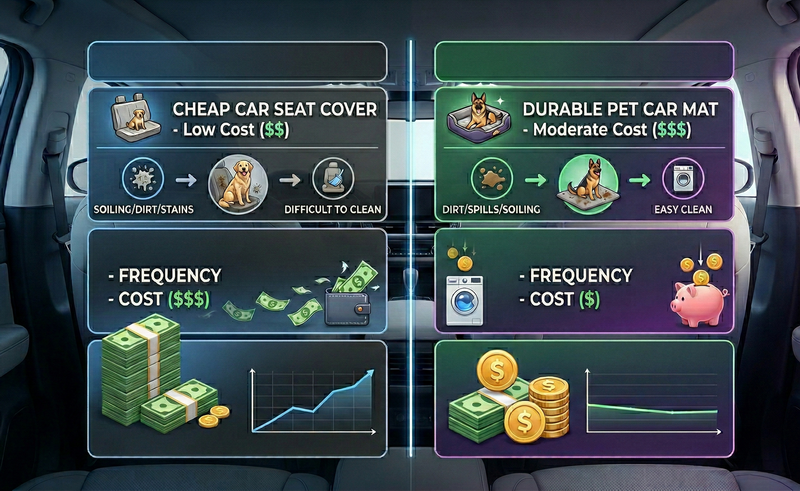
Use a transparent model: purchase cost plus cleaning labor, replacement cost, vehicle-cleaning cost, returns, and warranty cost. Populate it with actual operating assumptions instead of a universal trip-frequency threshold.
Frequently Asked Questions
What makes a pet car mat machine washable?
The care instruction must apply to the exact sold product or a clearly identified removable component. For a sourcing program, record the procedure and the properties inspected after the agreed number of wash and dry cycles. The wording is not a lifetime-performance guarantee.
Is waterproof fabric enough to make the finished cover waterproof?
No. Fabric, coating, seams, zippers, needle holes, and openings are different claim scopes. Ask what was tested, under which method, and whether the finished product received a separate leakage check.
Which configuration is suitable for an SUV?
Choose by the dog’s designated travel area. A cargo liner matches cargo-floor use; a bench cover or hammock matches rear-seat use. Confirm the exact vehicle dimensions and access points.
How should sliding be assessed?
Test the complete installed product on the intended upholstery or cargo surface with its backing, anchors, straps, and defined load. Do not infer whole-product stability from a backing sample alone.
Does a cover replace a pet restraint or carrier?
No restraint performance is evaluated in this guide. A mat or cover is specified for surface protection and cleanability. Select and use a restraint or carrier separately according to its instructions, the vehicle manual, and applicable local requirements.
Which wash settings should be used?
Follow the care label for the exact model. For an OEM program, agree the intended washing and drying procedure before testing and before publishing the care claim.
Key Takeaways
- Select the configuration by riding position, vehicle fit, required coverage, and cleaning workflow.
- Verify wash performance with a defined procedure and recorded post-wash checks for dimensions, seams, coatings, hardware, and fit.
- Distinguish water-resistant material evidence from finished-product leakage performance.
- Treat non-slip performance as a complete installed-system question.
- Keep component-level and complete-product care claims separate.
Related OEM Sourcing Page
For a vehicle-protection pet line, use the pet car accessories manufacturer page to compare material, anti-slip backing, fit, straps, cargo coverage, washing, packaging, and claim scope.
An OEM request should identify the target vehicle type, product dimensions, material and backing requirements, intended care label, wash-test conditions, packaging, and evidence required for each public claim.