Most pet brands pick a material without knowing why it works. That means their buyers get a product that disappoints — and they come back looking for answers.
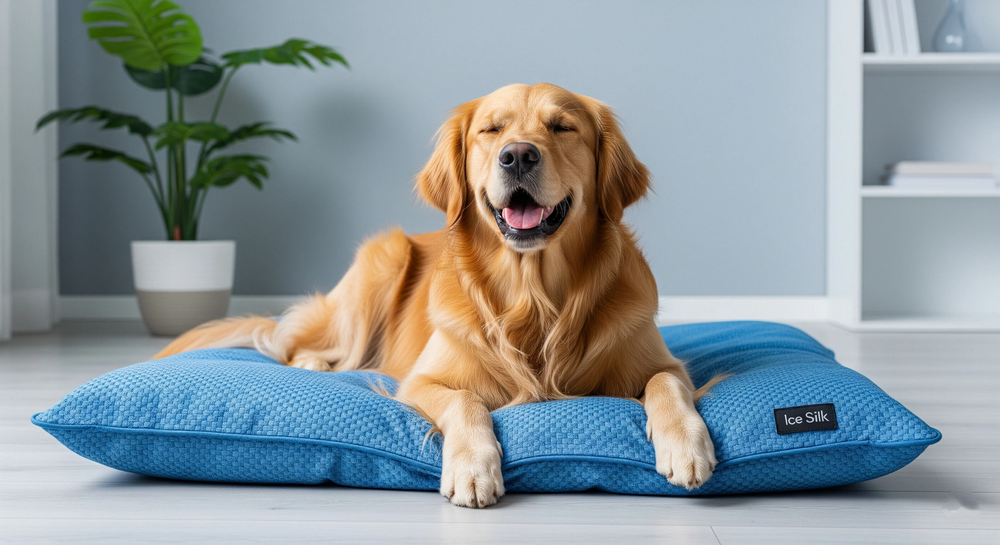
The best cooling dog bed materials1 fall into two main categories: gel-based and cool-touch fabric2. Gel absorbs body heat through phase change and stays cool for up to three hours. Cool-touch fabric conducts heat away on contact. Each has a different mechanism, a different use case, and a very different export compliance3 path.
I have spent years working with factories that make pet products for North American and European brands. The question I hear most often is simple: which material is better? The honest answer is that there is no single winner. But there is a right answer for each situation — and most brand owners do not know how to tell the difference. This article breaks it down.
What Are the Main Cooling Technologies Inside a Dog Bed?
Most people see "cooling dog bed" and assume all cooling is the same. It is not. The mechanism changes everything — how long it works, who can use it, and how hard it is to ship internationally.
There are five main cooling technologies used in dog beds today: gel-based phase change materials4, cool-touch fabric2 (like ice silk5 and Arc-Chill fiber6), water-filled chambers7, elevated mesh frames8, and hybrid systems9 that combine gel with cooling fabric. Each works differently and fits a different buyer profile.
Understanding these five types is the foundation of any smart sourcing or product development decision. I have seen brand owners focus only on what looks good in an Amazon listing photo — and then run into compliance problems, product returns, or sourcing dead ends they never saw coming.
The Five Types at a Glance
| Type | Cooling Mechanism | Key Benefit | Main Limitation |
|---|---|---|---|
| Gel (phase change) | Absorbs body heat, stores it | Strong, lasting cool feel | Complex export compliance3 |
| Cool-touch fabric | Conducts heat away on contact | No leakage risk, washable | Works best in AC environments |
| Water-filled | Water absorbs heat | Very cool feel | Heavy, inconvenient, leaks over time |
| Elevated mesh | Airflow under the pet | Passive, no material risk | No active cooling, climate-dependent |
| Hybrid (gel + fabric) | Both mechanisms combined | Best comfort and cooling | Higher cost, same gel compliance issues |
The elevated mesh bed is often overlooked. But for brands targeting outdoor and travel markets, it is one of the most reliable options — no chemicals, no leaking, and it works regardless of how the dog uses it.
The hybrid category is where the premium segment is heading. Brands are combining a gel core with a removable cool-touch fabric2 cover. The outer fabric improves feel and washability. The gel layer provides lasting cold.
Why Does Gel Face So Many Export Compliance Barriers?
I talk to factories constantly, and this is the point where most of them go quiet. Gel sounds simple. It is not.
Gel cooling products are regulated both as consumer goods and as chemical products. Each export market has its own requirements — the US requires CPSC compliance10 and may trigger California Prop 65 chemical disclosure, while the EU enforces REACH regulations11 on chemical content. Almost no single factory holds full certification for every major market.
The root problem is that gel is not a single substance. Different factories use completely different formulas.
What Is Cooling Gel Actually Made Of?
The gel composition varies widely across manufacturers:
| Gel Type | Common Ingredients | Risk Profile |
|---|---|---|
| Glycerin-based | Glycerin + water | Widely used by Chinese factories, variable testing |
| Propylene glycol + CMC | Food-grade PG + Carboxymethyl Cellulose | Better safety profile, passes skin irritation tests |
| Sodium sulphate + cellulose | Salt compound + water | Common in pressure-activated mats, non-toxic |
| Polymer gel | Synthetic polymer | Low cost, flagged as microplastic risk in EU |
| Paraffin PCM | Paraffin wax compound | Non-toxic if leaked, good for phase change performance |
Each of these formulas may pass testing in one market and fail in another. A glycerin gel formula that clears US testing may still face issues under EU REACH if any restricted substances are present in trace amounts. The polymer gel12 type faces growing scrutiny in Europe because of microplastic regulation pressure.
The compliance work does not stop at the formula. In the US, the CPSC finalized new rules in January 2025 that require importers to electronically file compliance certificates at the point of customs entry, effective July 2026. This means documentation that used to be kept in a filing cabinet now needs to be submitted digitally with each shipment. The compliance burden is not shrinking — it is growing.
A brand sourcing a gel cooling bed needs SGS or Intertek test reports specific to each target market. That means multiple rounds of testing, multiple certificates, and a factory that actually understands what documents are needed for which country. In my experience, very few factories have that full picture. Most can cover one or two markets. Almost none cover all of them cleanly.
Is Cool-Touch Fabric the Smarter OEM Choice for Growing Brands?
I did not always think so. But after watching how compliance issues have slowed down gel-based product lines, my view has shifted.
Cool-touch fabric — including ice silk5, Arc-Chill fiber6, and high-Q-Max13 materials — avoids the chemical compliance complexity of gel entirely. It is treated as a textile, which means standard REACH and CPSC textile testing applies. It is machine washable, has no leakage risk, and is easier to certify for multi-market export.
The key technical metric buyers need to understand here is Q-Max13. This is the standard measure of how fast a fabric draws heat away from the body on contact.
How to Evaluate Cooling Fabric Quality
| Q-Max13 Value | Market Tier | Consumer Feel |
|---|---|---|
| > 0.5 | Premium | Noticeably cold on touch, comparable to cool floor |
| 0.4 – 0.5 | Mid-range | Refreshingly cool, suitable for most indoor use |
| < 0.4 | Entry level | Mild cool-touch, mainly psychological effect |
Ice silk fabric uses a hollow fiber structure. The large surface area picks up moisture and evaporates it quickly. That evaporation pulls heat away from the skin. The mechanism is similar to sweating — passive, continuous, and effective in moderate temperatures.
Arc-Chill is a Japanese-origin cooling fiber brand. Products using Arc-Chill cite BOKEN Japan quality control. This has become a recognizable quality signal on Amazon listings — brands use the "Arc-Chill" name directly in their product titles because buyers have started searching for it. From an OEM perspective, this is a clear signal of where the fabric category is going: toward certified, branded fiber technologies with verifiable performance data.
The trade-off is honest. Cool-touch fabric does not produce the same depth of cooling as a gel pad. In a hot room without air conditioning, the fabric surface will warm up after a while. It does not recharge the way gel does. For a dog that is seriously overheating or living in a high-heat environment, a fabric-only bed may not be enough.
But for a dog using the bed in a typical indoor setting — which describes most of the North American and European market — the fabric solution is more than adequate. And the product is washable, durable, and safe if the dog chews the edge. Those three things matter enormously to end consumers and reduce return rates for the brands that buy from us.
How Do You Match the Right Material to the Right Dog and Market?
This is the question that brand buyers almost never ask, but should.
The right cooling material depends on three factors: the dog's behavior (chewing habits, age, health), the environment (indoor climate control availability), and the destination market (which certification framework applies). Gel suits controlled environments and non-chewing dogs; fabric suits multi-market OEM programs and active, outdoor-use products.
I see brand buyers make the same mistake repeatedly. They pick material based on what looks impressive in a product brief. They do not think about the dog who will actually use it, or the customs clearance process that product will go through.
Decision Framework for OEM Buyers
| Buyer Scenario | Recommended Material | Reason |
|---|---|---|
| US-only launch, non-chewing adult dogs | Gel or hybrid | Strong cooling performance, manageable compliance scope |
| EU + UK multi-market launch | Cool-touch fabric | REACH textile compliance is straightforward |
| Travel and outdoor product line | Elevated mesh + cool fabric cover | No chemical risk, portable, weather-tolerant |
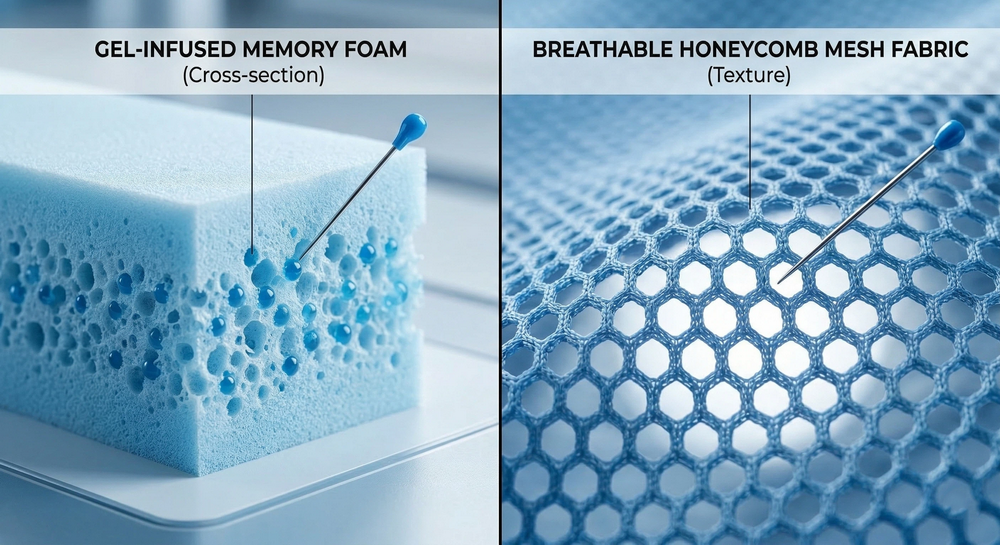
| Senior dogs with joint issues | Hybrid: gel-infused memory foam + fabric cover | Gel provides lasting cool, foam provides joint relief |
| Dogs that chew everything | Fabric-only (no gel) | Zero ingestion risk, machine washable |
| Premium North America brand | Hybrid with Q-Max13 > 0.5 outer cover | Combines performance and safety messaging |
The senior dog use case is worth pausing on. An older dog spending long hours resting needs lasting cool and joint support. That is where the gel-plus-foam hybrid makes the most sense. The memory foam shapes to the dog's body and reduces pressure on joints. The gel layer keeps the surface temperature down. A cool-touch fabric2 cover makes the whole product washable and safe.
The fabric-only solution is the one I recommend most often to brand owners entering new markets with limited compliance resources. The certification path is clear. The product is safe, washable, and photogenic. And as Q-Max13 ratings and Arc-Chill branding become familiar to consumers, the performance story is easier to tell without needing to explain phase-change chemistry to a buyer who just wants their dog to stop lying on the kitchen floor.

Conclusion
Gel cools deeper. Fabric ships easier. The best dog bed material depends on your dog, your market, and your compliance capacity — not on a single ranking.
Working with a factory that understands cooling material compliance for North American and European markets? Contact the LISO team to discuss your OEM requirements.
Explore this link to discover the top materials for cooling dog beds and their benefits. ↩
Find out how cool-touch fabric works and why it's a great choice for dog beds. ↩
Learn about the complexities of export compliance for pet products and how it affects sourcing. ↩
Learn about gel-based phase change materials and how they keep your dog cool. ↩
Learn about ice silk fabric and its cooling properties for dog beds. ↩
Find out how Arc-Chill fiber enhances cooling performance in dog beds. ↩
Understand the mechanics of water-filled chambers and their cooling benefits. ↩
Discover the advantages of elevated mesh frames for outdoor and travel dog beds. ↩
Explore hybrid systems that combine gel and fabric for optimal cooling. ↩
Understand the importance of CPSC compliance for ensuring pet product safety. ↩
Explore REACH regulations and their impact on pet product manufacturing. ↩
Explore the benefits and risks of using polymer gel in cooling dog beds. ↩
Discover how Q-Max ratings determine the effectiveness of cooling fabrics. ↩