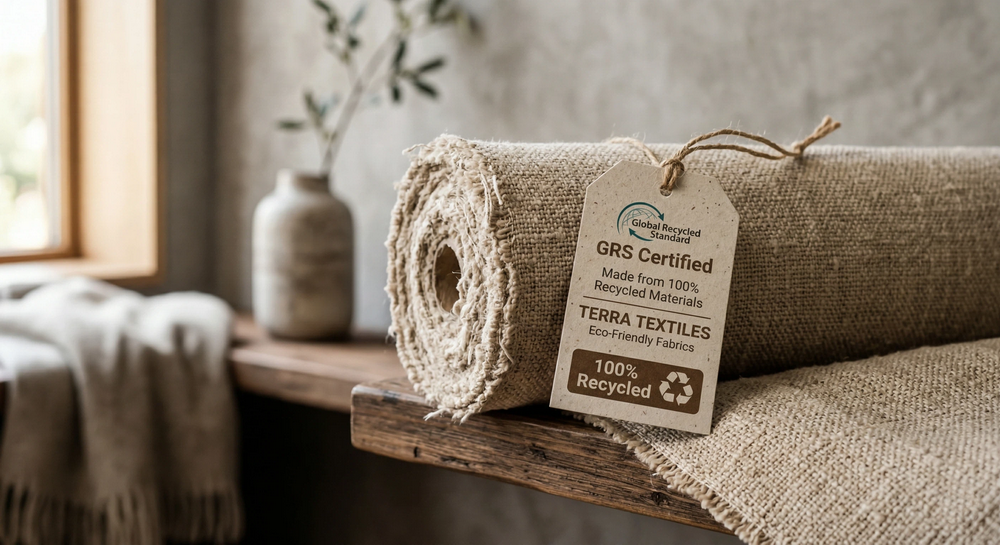
Here's what most importers get wrong when sourcing eco beach totes1: they treat "organic cotton2" as a synonym for "sustainable3." European buyers have drilled this into supplier conversations for years, and now the assumption is almost impossible to challenge at the sample stage. But the supply chain reality4 is different. Cotton — even organic cotton2 — is one of the most resource-intensive materials in textile production. And right now, importers who won't look at alternatives are paying 30–40% more per unit to tell a sustainability story that a cheaper, equally certified material tells just as well.
📌 Key Takeaways
- One standard cotton tote bag uses approximately 2,700 liters of water in production — three years of drinking water for a single person
- GOTS-certified organic cotton5n](https://www.who.int/news-room/questions-and-answers/item/food-genetically-modified)%%%FOOTNOTE_REF_2%%% adds 30–50% to unit cost vs. conventional cotton, and runs nearly double the FOB price of GRS-certified recycled PET canvas6
- GRS (Global Recycled Standard)7 carries equal retail credibility to GOTS in the European market, accepted by major buyers in Germany, the Netherlands, and Scandinavia
- Audited factories in Jiaxing and Shaoxing, Zhejiang produce 280 gsm recycled PET beach totes1 at $3.20–$4.20 FOB — versus $5.50–$7.00 for the equivalent organic cotton2 spec
- The gap between these two materials is not a sustainability gap — it's a storytelling gap, and it's one you can close with the right certification and the right product narrative8
The "Cotton = Clean" Assumption Is Costing You Real Money
Organic cotton is the most familiar sustainable3 material in import sourcing — not the most cost-efficient, and not always the most defensible on actual environmental data9.
The numbers are hard to argue with. A single standard cotton tote bag requires approximately 2,700 liters of water to produce. That figure covers the full agricultural chain — seed to fiber. Organic cotton removes synthetic pesticides from that chain, which is a genuine improvement. But it does nothing to reduce the water demand, and it adds significant cost at every step from ginning to fabric production. Compared to conventional cotton, GOTS-certified organic fabric runs 30–50% more expensive at the mill level. When that cost flows through FOB pricing, a standard 280 gsm organic cotton2 beach tote from factories in Shaoxing, Zhejiang lands at $5.50–$7.00 per unit, depending on handle spec and print complexity.
Now run the same spec in GRS-certified recycled PET canvas6. Same 280 gsm weight. Same webbing handles. Same screen print on the body. The FOB price from the same factory region drops to $3.20–$4.20 per unit. That is a 30–40% unit cost gap10. At a 3,000-unit order, you are looking at a $6,900–$8,400 difference — before you even get to freight and duties. I've seen buyers place orders at the 5,000-unit level in organic cotton2 and leave over $15,000 in recoverable margin on the table. The product they received was nearly identical to what recycled PET would have produced. The certification was equally strong. The only thing that was different was the story they knew how to tell their retail buyer.
What GRS Actually Certifies — and Why European Retailers Already Accept It
GRS (Global Recycled Standard)7 is a full chain-of-custody certification issued by Textile Exchange that verifies recycled input content, chemical restrictions, and social compliance across the entire manufacturing process — the same scope as GOTS, applied to recycled materials.
Third-party audit bodies including Bureau Veritas, Control Union, and TÜV Rheinland issue GRS scope certificates to qualifying factories. In the European retail market — particularly Germany, the Netherlands, France, and the Nordics — GRS is recognized on par with GOTS for non-apparel textile products. Retailers including Decathlon and several Scandinavian private-label outdoor brands already source GRS-certified tote bags as part of their verified sustainable3 product ranges. The certification documentation required for EU customs and retail compliance is identical in structure to what you would submit for a GOTS product.
Here is a direct spec and cost comparison:
| Criteria | GOTS — Organic Cotton | GRS — Recycled PET |
|---|---|---|
| Issuing body | GOTS Association | Textile Exchange |
| Material verified | Organic natural fibers ≥70% | Recycled content ≥20% (labeled at actual %) |
| Chain of custody | Yes | Yes |
| Chemical restrictions | GOTS Positive List | ZDHC MRSL |
| Social compliance | Yes | Yes |
| EU retail acceptance | High | High (equal in most non-apparel categories) |
| Cost premium vs conventional | +30–50% | +5–10% vs standard PET |
| FOB unit cost (280 gsm beach tote) | $5.50–$7.00 | $3.20–$4.20 |
| Typical MOQ (beach tote) | 500–1,000 pcs | 500–1,000 pcs |
| Key production region | Shaoxing, Zhejiang | Jiaxing & Shaoxing, Zhejiang |
Factories producing GRS-certified recycled PET beach totes1 are concentrated in Jiaxing and Shaoxing in Zhejiang province, with some Guangzhou-based suppliers handling smaller MOQ runs below 500 pieces. Most of these facilities hold GRS scope certificates alongside BSCI or SA8000 social audits — which covers the compliance checklist that European importers and brands require at the vendor qualification stage. The fear that "buyers will reject recycled PET" is based on a market reality that no longer exists. Consumer research from Germany and the Netherlands shows that "made from recycled plastic bottles" tests equally or better than "organic cotton2" in beach and outdoor product sustainability messaging11. The narrative has already shifted.
Telling the Recycled PET Story — This Is Where Most Importers Leave Value Behind
Importers who insist on organic cotton2 are not solving a material problem — they are solving a storytelling problem with an expensive material instead of with words and documentation.
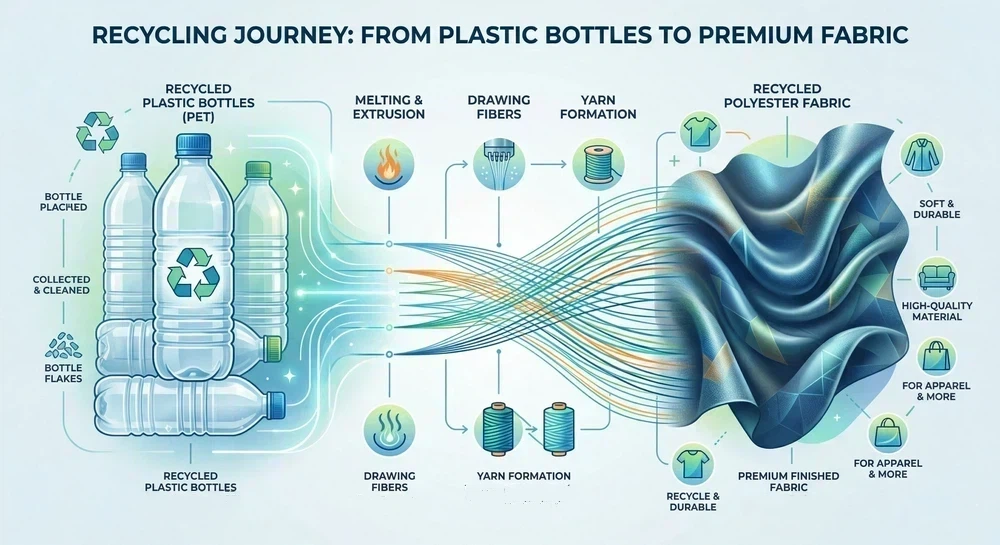
A beach tote made from GRS-certified recycled PET carries a concrete, visual consumer story. Each bag typically uses five to seven post-consumer plastic bottles — bottles that would otherwise enter landfill or waterways. That is a specific data point your retail buyer can put on a hangtag, a product page, or a point-of-sale card. "This bag kept 6 plastic bottles out of the ocean" connects directly to beach retail context in a way that "organic cotton2" simply does not. The organic cotton2 narrative is strongest in apparel, baby products, and skincare-adjacent categories. For beach totes1, the plastic reduction story is more contextually relevant to the end consumer and more differentiated on the shelf.
The brands already making this switch at the 3,000-unit level are winning on two fronts simultaneously. First, they are reducing COGS by 30–40% without dropping certifications or sustainable3 positioning. Second, they are accessing a product narrative8 that is more relevant to their specific category. I've worked with importers who were convinced their European accounts would push back on recycled PET. In practice, zero pushback materialized — because the GRS documentation was solid, the product narrative8 was prepared in advance, and the factory audit trail was clean. The resistance existed only in the buyer's assumption about what their customer wanted, not in what the customer actually responded to.
Two Actions You Can Take This Week
Request a parallel quote in 280 gsm GRS-certified recycled PET canvas6 against your current organic cotton2 spec — same gsm, same handle type, same print method. Compare FOB prices directly. If your current factory doesn't hold an active GRS scope certificate, that is information you need before your next order cycle. Then contact us with your unit cost, MOQ, and target market. We work with audited facilities in Jiaxing and Shaoxing that hold GRS certification and can produce beach-grade recycled PET totes from 500-piece minimums. We'll have a comparative quote back to you within 48 hours — with the certification documentation your European buyer needs to approve the switch.
Stay updated on beach tote trends to make informed sourcing decisions. ↩
Explore the advantages of organic cotton and its role in sustainable sourcing to make informed decisions. ↩
Understanding sustainable sourcing can help you make better choices for eco-friendly products. ↩
Understanding supply chain realities can help you navigate sourcing challenges effectively. ↩
Learn about GOTS certification to ensure your products meet high sustainability standards. ↩
Find out how recycled PET canvas can be a sustainable alternative in product sourcing. ↩
Discover the importance of GRS certification in promoting recycled materials in textiles. ↩
Discover how a well-crafted product narrative can boost your marketing efforts. ↩
Understanding environmental data can guide you in making more sustainable sourcing choices. ↩
Explore the financial implications of choosing between organic cotton and recycled materials. ↩
Learn how to craft compelling sustainability messages that resonate with consumers. ↩