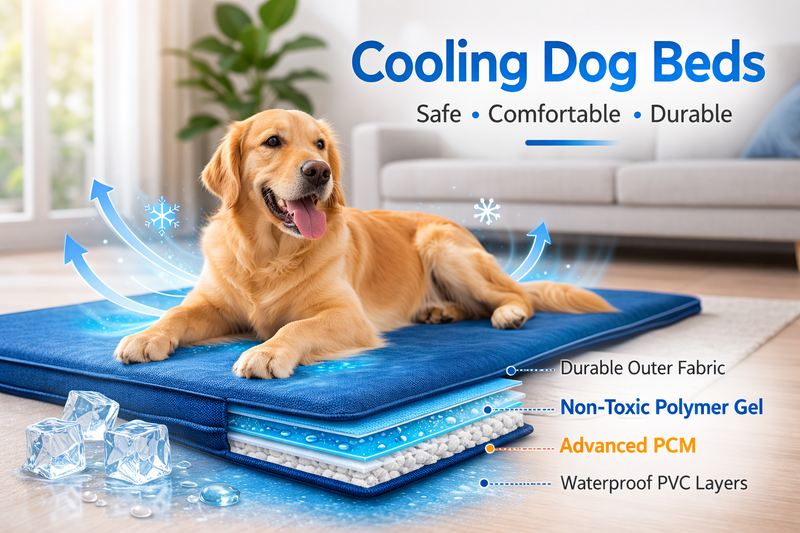
Cooling dog beds promise relief from heat, but poorly manufactured products can harbor toxic materials, bacterial growth hazards, or choking risks from degraded components. For retailers, importers, and brands, understanding material safety is critical—not just for pet health, but for liability protection, product return reduction, and brand reputation.
The pet cooling bed category lacks universal safety standards, making rigorous supplier vetting, AQL inspections, and deep material knowledge essential. This guide examines cooling bed safety from materials science, regulatory compliance, and practical supply chain perspectives to help you source and sell safe, highly profitable products.
📌 Key Takeaways for B2B Buyers
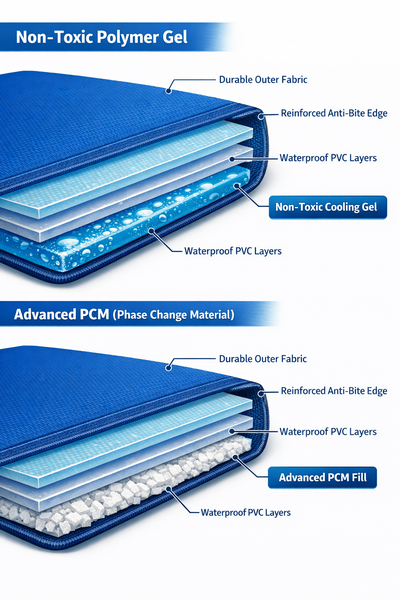
- Know your gel: Standard pressure-activated mats use water and polymer gels, while premium phase-change materials (PCM) use wax or salt hydrates. Both require strict purity verification.
- European market alert: CE marking is illegal on standard pet beds unless they have electrical components. Focus on the General Product Safety Directive (GPSD) and REACH compliance instead.
- Quality control is non-negotiable: Implement strict AQL (Acceptable Quality Limit) inspections before shipment to prevent leaking seams and toxic ingestion risks.
- Chew resistance: Sourcing durable, multi-ply covers is critical to prevent the ingestion of internal cooling materials, which requires immediate veterinary attention.
1. Understanding Cooling Bed Technologies
How Different Cooling Methods Work
| Technology | Mechanism | Core Material | Safety Considerations |
|---|---|---|---|
| Pressure-Activated Gel | High heat capacity absorbs and dissipates heat | Water, CMC (Carboxymethyl cellulose), Polyacrylamide | Ingestion risk, cover puncture resistance, mold if poorly sealed |
| Phase Change (PCM) | Absorbs heat through phase change (solid to liquid) | Purified paraffin wax or salt hydrates | Chemical purity, petroleum contaminants |
| Evaporative | Water evaporation cools surface | Nylon/mesh + water reservoir | Mold, standing water hygiene |
| Conduction | Draws heat to conductive surface | Aluminum, cool-touch PE fabrics | Surface temperature limits in direct sun |
Safety Ranking by Technology
| Rank | Technology | Primary Risk | Mitigation for Sourcing |
|---|---|---|---|
| 1 (Safest) | Elevated mesh/cot | Minimal | Standard OEKO-TEX material safety |
| 2 | Conductive/fabric | Surface burns if direct sun | Specify UV-resistant textiles and shade requirements |
| 3 | Evaporative | Mold, bacteria | Require antimicrobial treatments and quick-dry materials |
| 4 | Gel (Water/Polymer) | Ingestion, burst seams | Specify multi-ply PVC/Nylon, double-sealed seams |
| 5 (Highest risk) | PCM (Wax/Salt) | Chemical toxicity, ingestion | Require food-grade materials, extreme chew-resistant construction |
2. Material Safety Deep Dive
Cooling Gel & PCM Materials
Safe vs. Unsafe Components:
| Component | Safe Grade | Unsafe Alternative | Health Risk |
|---|---|---|---|
| Base polymer (Gel) | Food-grade sodium polyacrylate / CMC | Industrial-grade polymers | Toxic if ingested |
| Phase change material | Purified paraffin wax | Industrial paraffin | Petroleum contaminants, heavy metals |
| Preservative | Potassium sorbate (food-grade) | Formaldehyde releasers | Carcinogen, severe skin irritation |
| Colorants | FDA-approved / Food-safe | Heavy metal-based dyes | Heavy metal toxicity |
Warning Signs During Factory Sample Review:
- Strong chemical odor upon opening
- Oily residue on the outer surface
- Inconsistent gel distribution or "clumping"
- Weak edge sealing (can be pulled apart easily)
Textile & Cover Safety Standards
| Standard | Covers | What It Tests | Sourcing Importance |
|---|---|---|---|
| OEKO-TEX Standard 100 | Textile safety | 100+ harmful substances | Essential for all fabric components |
| REACH (EU) | Chemical safety | SVHCs (substances of very high concern) | Mandatory for EU market entry |
| CPSIA | Children's products | Lead, phthalates | Highly recommended for US pet products to mitigate liability |
| California Prop 65 | Chemical warnings | Carcinogens, reproductive toxins | Warning requirements for CA sales; better to source compliant materials |
3. Supplier Vetting & Quality Control (AQL)
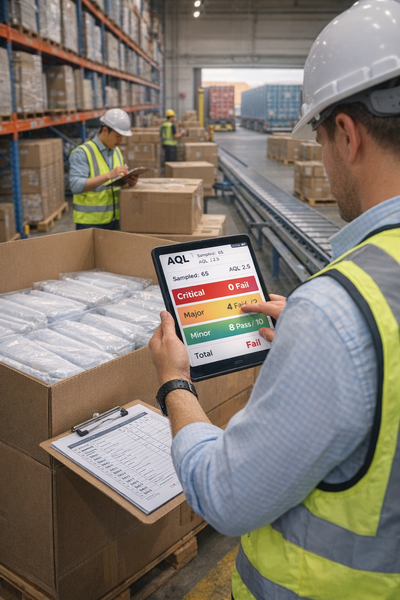 Relying solely on a factory's word is a fast track to product recalls. Implement strict quality control measures before the goods ever leave the port.
Pre-Shipment AQL Inspection Guidelines
For cooling pet beds, importers should mandate a General Inspection Level II.
Standard AQL Limits:
- Critical Defects: 0 (Completely unacceptable)
- Major Defects: 2.5 (Affects usage or sales)
- Minor Defects: 4.0 (Cosmetic issues)
Defect Classification for Cooling Mats:
| Defect Type | Examples | AQL Classification |
|---|---|---|
| Toxicity/Safety | Pungent chemical smell, mold inside packaging | Critical (0) |
| Functionality | Leaking gel/water, broken seals, tearing at seams | Critical (0) |
| Construction | Missing waterproof layer, incorrect sizing (>5% variance) | Major (2.5) |
| Cosmetic | Uneven printing, loose threads, minor scratches on fabric | Minor (4.0) |
Testing to Request from OEM Partners
| Test | Purpose | Frequency |
|---|---|---|
| EN 71-3 (Heavy Metals Migration) | Ensures chemicals won't leach if chewed | Per material change |
| Seam Tensile/Pressure Testing | Validates burst resistance | Per batch/shipment |
| Antimicrobial Efficacy (ISO 20743) | Validates anti-mold claims | Per treatment formulation |
4. Regulatory Compliance by Market
European Union
| Requirement | Standard | Consequence of Non-Compliance |
|---|---|---|
| GPSD | General Product Safety Directive | Mandatory for all non-electrical consumer goods |
| REACH | Chemical safety (SVHC limits) | Customs seizure, market withdrawal, severe fines |
| CE Marking | ONLY required if the bed has electrical components (e.g., fans) | Illegal to affix to standard non-electrical pet beds |
| EU 10/2011 | Food contact materials | Recommended if pets frequently mouth or chew the bed |
United States
| Requirement | Applies To | Enforcement |
|---|---|---|
| CPSC reporting | Defects causing injury | Mandatory reporting |
| State-specific laws | CA Prop 65 | Civil lawsuits, fines for lack of warning labels |
| EPA FIFRA | Products claiming antimicrobial/anti-odor properties | Registration required for specific marketing claims |
5. Specifications for Safe Cooling Bed Sourcing
When drafting your Purchase Order (PO) or OEM specification sheet, include the following minimum requirements:
Construction Requirements
| Feature | Minimum Sourcing Standard | Premium OEM Specification |
|---|---|---|
| Cover layers | 2-ply (Nylon + waterproof PVC inner) | 3-ply with ripstop nylon and reinforced edges |
| Seam strength | Wide heat-pressed margins | Double heat-sealed, folded edges |
| Closure | Fully sealed (No zippers for gel mats) | Hidden seams, burrito construction |
| Chew resistance | Standard heavy-duty Oxford | Reinforced impact zones, Kevlar stitching |
Required Supplier Documentation
Before transferring any deposit, ensure the supplier can provide:
- SDS (Safety Data Sheet) for the specific gel/PCM formulation used.
- OEKO-TEX certificates for outer fabrics (verify the certificate number online).
- Recent Audit Reports (BSCI or ISO 9001) to prove manufacturing consistency.
- Product Liability Insurance (Optional but highly recommended for major suppliers).
Data Transparency & Limitations: Chemical safety data is based on general materials science and international trade requirements. Specific formulations vary by manufacturer and should always be verified through third-party testing (e.g., SGS, TÜV, Intertek).