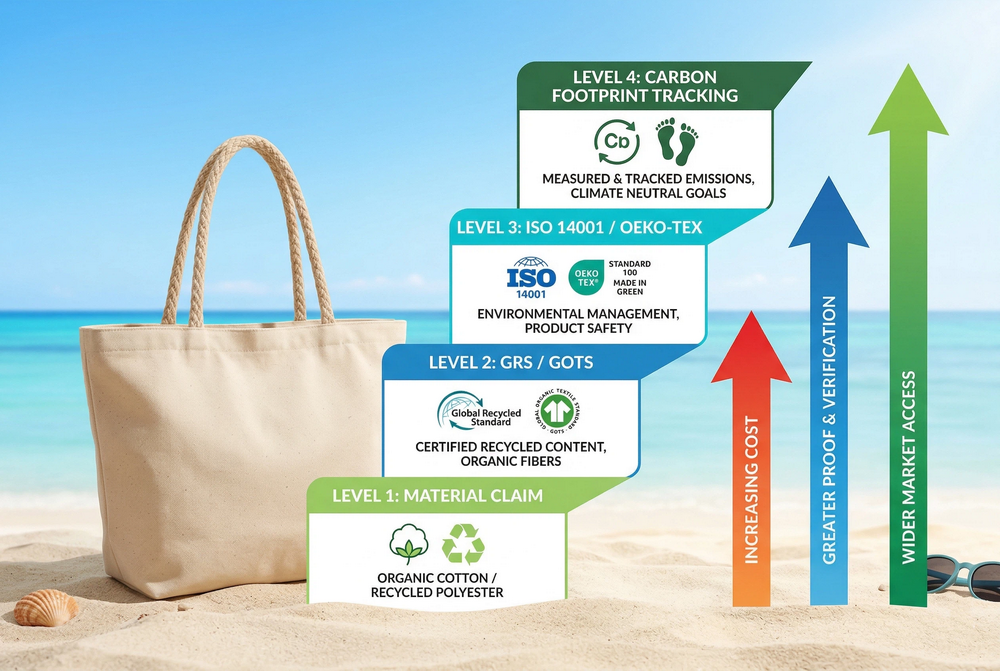
Eco-friendly beach bags are not all the same. In real sourcing, they usually fall into four different levels of cost, proof, and market access. The right level depends on who you sell to, how much margin you have, and what your buyers actually require.
I have spent years helping people buy products from factories. I see the same mistake every single month. People spend thousands of dollars on “green” features that their customers do not even want. Or worse, they buy bags that they cannot sell into certain channels because they are missing one document. This guide will help you understand the four levels of eco-friendly beach bags so you can choose the right one for your business without losing your story or your profit.
Who This Guide Is For
This guide is for importers, private label buyers, and sourcing teams selling beach bags through Amazon, discount chains, European boutiques, or premium lifestyle stores. If you are trying to balance sustainability claims, buyer requirements, and cost control, this is the framework you should use.
Should You Settle for Basic Materials or Pay for the Certificate?
Suppliers often say a bag is eco-friendly, but that can mean very different things. The first big decision is whether you only need a material claim or whether you need a certificate that proves the claim.
Level 1 uses recycled PET, organic cotton, jute, or similar materials without third-party proof, usually adding 10–20% in cost. Level 2 adds certifications such as GRS or GOTS, which typically increase costs further but provide documentation many retail buyers expect.
I remember my first big order for a client in Germany. I thought I was being smart by choosing a factory that promised “recycled PET.” The price was only 10% higher than normal plastic. I felt great until the client asked for the GRS certificate. I did not have it. The factory did not have it. I lost that client because I did not understand the difference between a material claim and a certified material.
Level 1 is the most basic stage. You use eco-friendly sounding materials because they support your marketing story, but you do not have third-party proof. Many cost-sensitive brands stay here. I see this a lot with small Amazon sellers. They want the “eco” angle, but they do not want the higher costs or documentation burden.
Level 2 is where sustainability starts becoming commercially credible. This is where certifications like GRS and GOTS matter.
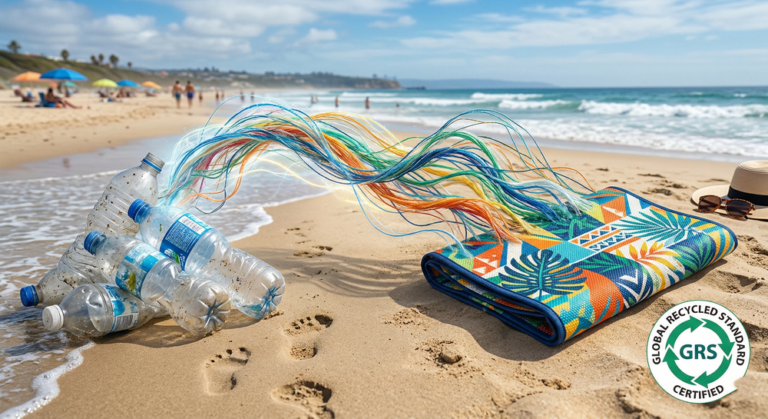
- GRS (Global Recycled Standard) helps verify recycled content and supply chain traceability.
- GOTS (Global Organic Textile Standard) is used for organic fibres and covers processing, manufacturing, and labelling requirements.
This level costs more because you are not just paying for a label. You are paying for certified raw materials, documentation, audits, and a more controlled supply chain. In my experience, this level is often necessary when selling to buyers who ask for proof instead of marketing language. If you sell to price-driven channels, Level 2 may be unnecessary. If you sell to boutiques or premium retailers, it can open doors that Level 1 keeps closed.
| Level | What It Means | Typical Cost Impact | Best Fit |
|---|---|---|---|
| Level 1 | Material claim without third-party proof | +10–20% | Budget retail, entry-level private label |
| Level 2 | Certified materials such as GRS or GOTS | Higher than Level 1 due to certification and documentation | EU boutiques, specialty retail, proof-focused buyers |
Do Your Retail Buyers Really Care About Factory Environmental Standards?
A lot of buyers do not stop at the material. They also want to know how the product was made and whether the factory itself meets environmental or chemical safety expectations.
Level 3 focuses on production standards and factory systems, including ISO 14001 and OEKO-TEX requirements. At this level, buyers care not only about what the bag is made from, but also about how the factory manages waste, chemicals, and compliance.
Once you move past materials, you hit another wall. I once tried to pitch bags to a larger retail buyer in London. The materials were right, but the buyer asked about the factory’s environmental controls. I had no answer. That was the moment I learned Level 3 is not about the bag alone. It is about the system behind the bag.
Here is where people often get confused:
- ISO 14001 is an environmental management system standard. It shows the factory has a structured way to manage environmental impact.
- OEKO-TEX STANDARD 100 focuses on testing textiles for harmful substances and helps build trust in product safety.
This level usually adds cost because you are working with factories that have stronger systems, cleaner chemical controls, and better audit readiness. I see this becoming more important for importers who want to grow beyond small-scale selling. At this stage, you are no longer just offering an eco-friendly beach bag. You are offering a cleaner, safer, more professional supply chain.
| Requirement | ISO 14001 | OEKO-TEX STANDARD 100 |
|---|---|---|
| Focus | Environmental management system | Harmful substance testing |
| Main Target | Factory operations | Textile product safety |
| Best Value | Retail compliance and supplier approval | Consumer trust and safer textile claims |
Is Carbon Footprint Tracking Necessary for Your Beach Bag Brand Today?
This is the highest level, and also the one most people misunderstand. Carbon tracking sounds impressive, but it is not always a smart investment for every product or every sales channel.
Level 4 means tracking the carbon footprint across the product lifecycle. Today, this is usually more relevant for premium positioning, long-term reporting, or advanced sustainability strategies than for price-sensitive mass-market beach bags.
I see this most often with premium brands. They want to know how much CO2 is tied to one bag, from raw material to shipping to final production. That data can be useful, but it is expensive, time-consuming, and often unnecessary if you are selling low-cost products.
For most brands today, Level 4 is not the starting point. It is an advanced layer. It makes more sense when your product already sells at a premium and your customer is paying for values, not just function. If your bag costs $5 to make, this level may not be worth it. If your bag costs $50 and sells for $200, carbon data can support the premium story.
The smart way to think about Level 4 is not “Do I need this right now?” but “Will this strengthen my brand, improve buyer trust, or prepare me for future reporting expectations?” That is a very different question.
| Brand Type | Level 4 Relevance | Recommended Action |
|---|---|---|
| Mass market | Low | Ignore for now |
| Premium brands | High | Start exploring carbon data |
| Long-term EU-focused exporters | Medium to High | Prepare gradually |
A Simple Way to Choose the Right Level
If you only remember one thing from this guide, remember this: match your sustainability level to your buyer, not your emotions.
- Selling to budget stores or price-sensitive e-commerce channels: stay around Level 1 unless proof is specifically required.
- Selling to specialty retail or EU boutiques: consider Level 2.
- Selling to larger chains or trying to become a stronger supplier: aim for Level 3.
- Building a premium sustainability-led brand: explore Level 4.
That is how you protect your profit and avoid paying for certifications that do not create real market value.
Mistakes to Avoid
- Do not pay for Level 2 if your buyers do not require proof.
- Do not assume a material claim is the same as a certification.
- Do not confuse OEKO-TEX with ISO 14001. They solve different problems.
- Do not jump to carbon tracking too early if your product is still competing mainly on price.
Conclusion
Choose the level of eco-friendly that fits your buyer. Do not pay for fancy certifications if you sell to budget stores. Match your cost to your market so you can stay profitable, sound credible, and grow with the right sustainability story.
FAQ
What is the difference between GRS and GOTS for beach bags?
GRS is mainly used to verify recycled materials and traceability in the supply chain. GOTS is focused on organic fibres and includes processing, manufacturing, and labelling requirements.
Are eco-friendly beach bags worth the higher cost?
Yes, but only when the added cost matches buyer expectations or supports a stronger selling position. If your customer only cares about price, extra certification may not improve sales.
Do I need ISO 14001 or OEKO-TEX to sell beach bags?
Not always. These standards become more important when selling to larger retailers, more compliance-focused buyers, or brands that care about environmental systems and product safety.
Which certification level is best for private label beach bags?
It depends on the channel. Entry-level private label sellers often start with Level 1 or Level 2. More advanced sellers targeting premium or international markets may need Level 3.
What is the best focus keyword for this article?
The best focus keyword is eco-friendly beach bags.