Many buyers ask for an airline-ready pet backpack, but this phrase can hide risk. A weak sample may pass photos and fail during real travel.
Airline-ready pet carrier backpacks should match many mainstream in-cabin size needs, support under-seat travel checks, and pass safety details. They should not be sold as a universal airline guarantee, because every airline, aircraft, route, and staff check can be different.
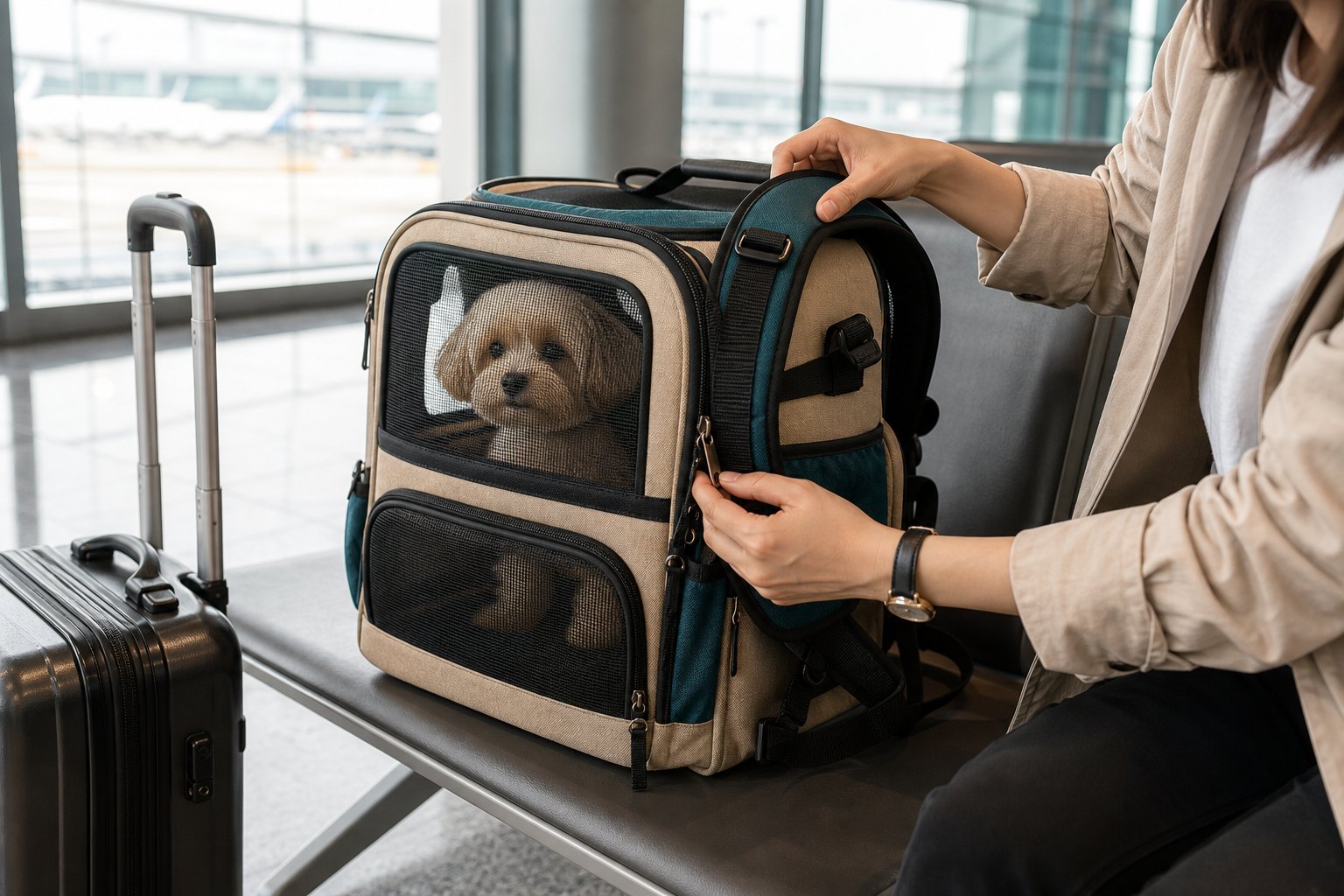
I always tell buyers to treat airline-ready as a design direction, not a promise. A factory can help with size, structure, ventilation, cleaning, and load strength. But a factory should not promise that one pet backpack will be accepted by every airline in every country. That is not honest. For B2B buyers comparing a pet backpack carrier program and a soft-sided pet backpack carrier manufacturer page, the smarter question is simple. Can this backpack reduce the risk of airline rejection, pet discomfort, leakage, strap failure, and customer returns?
What Does Airline-Ready Really Mean?
Many buyers use the word airline-ready because it sounds simple. But if the meaning is not clear, the sample brief becomes loose and the factory can hide behind vague words.
Airline-ready means the pet carrier backpack is designed around common in-cabin travel needs, including size control, soft structure, ventilation, leak resistance, secure closure, and easy pet access. It does not mean every airline will accept it, and it does not remove the buyer's need to check the airline's latest rules.
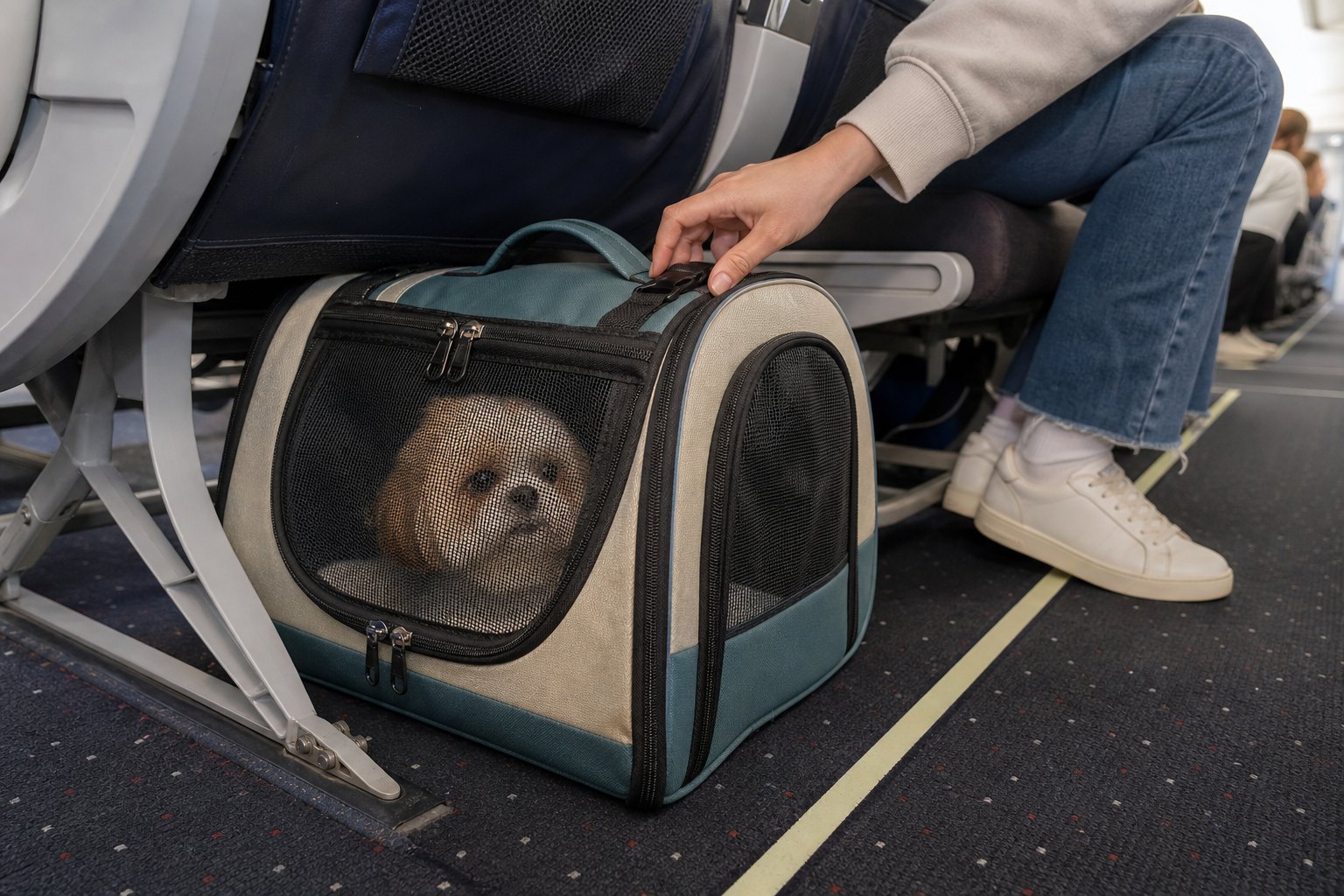
For in-cabin pet travel, buyers should focus on under-seat fit and airline-specific rules. I do not recommend using a loose claim like "globally airline approved." That wording creates false confidence. A better way to explain the product is this: the backpack is designed to meet many mainstream in-cabin carrier needs, but final acceptance depends on each airline, aircraft, route, and staff check.
A clearer sourcing definition
| Claim | Better meaning for buyers |
|---|---|
| Airline approved | Too broad unless a specific airline confirms it |
| Airline-ready | Designed around common in-cabin travel needs |
| Travel-friendly | Suitable for airport, car, vet and short outdoor use |
| Under-seat compatible | Needs target airline and aircraft size check |
| Leak-resistant | Needs coating, bottom structure and liner test |
This wording protects both the brand and the factory. It also helps the buyer build better product pages. A good B2B product page should say what the backpack is designed for, and what the buyer still needs to verify. That level of honesty builds trust. It also reduces disputes after the customer places the order. If the buyer also needs soft-sided carriers, sling bags or broader travel structures, the same claim logic should be checked on the pet carrier manufacturer page.
Which Pet Backpack Sample Details Fail Most Often?
A sample can look clean in photos and still fail when the pet is inside. This is why I always ask buyers to test the stress points, not only the outside design.
The most common failure order is shoulder straps, zippers, mesh, bottom board, and then size. Shoulder strap root stitching is usually the highest-risk point because most carrying force gathers there during real use.
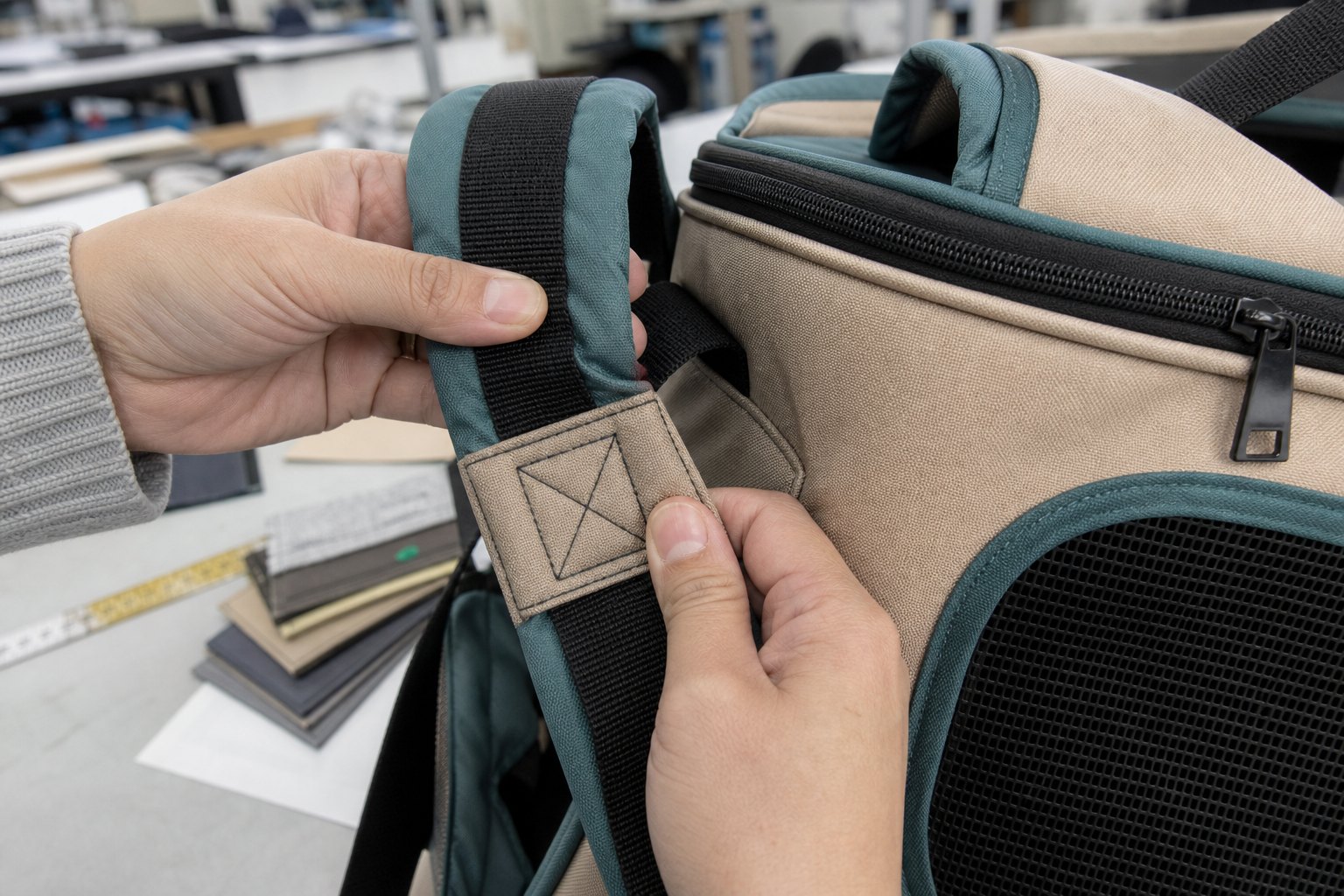
In my view, shoulder straps are the first detail to inspect. The common problems are weak stitching, thin webbing, loose adjustment sliders, and poor reinforcement at the root. When the backpack carries a moving pet, the load is not stable. The pet may shift, jump, lean or scratch. If the strap root is not reinforced, the seam can open or the webbing can tear.
Sample failure checklist
| Area | Common failure | Buyer check |
|---|---|---|
| Shoulder strap root | Broken stitches, weak webbing, poor bartack | Pull repeatedly with load |
| Zipper | Thin zipper tape, stuck slider, weak end stop | Open and close many times |
| Mesh | Loose yarn, low tear resistance, weak edge binding | Scratch and pull test |
| Bottom board | Soft board, sagging, loose binding | Put weight inside and lift |
| Size | Cutting or pattern error | Measure against approved spec |
Zippers are the second high-risk point. Thin zipper tape can tear. The slider can jam. End stops can fail when the pet pushes against the entry opening. Bubble-window openings and large entrance zippers need special attention because they often carry both access function and stress force.
Mesh is another area that buyers often underestimate. Thin mesh may look breathable, but pets can scratch through it. If the yarn is too sparse or the edge sewing is weak, the product may fail very fast. For a pet backpack, ventilation is a selling point. So mesh cannot be only decorative. It must be durable enough for claws and repeated use.
Should New Brands Start With Rolling Pet Carrier Backpacks?
Rolling pet carrier backpacks look attractive because they offer more functions. But for a new brand, more function often means more cost, more MOQ pressure, and more sample risk.
Low-MOQ buyers should usually start with a regular backpack or hand-carry pet carrier first. Rolling and trolley styles need more parts, more fitting checks, and higher accessory costs, so they are better for buyers with stable orders.
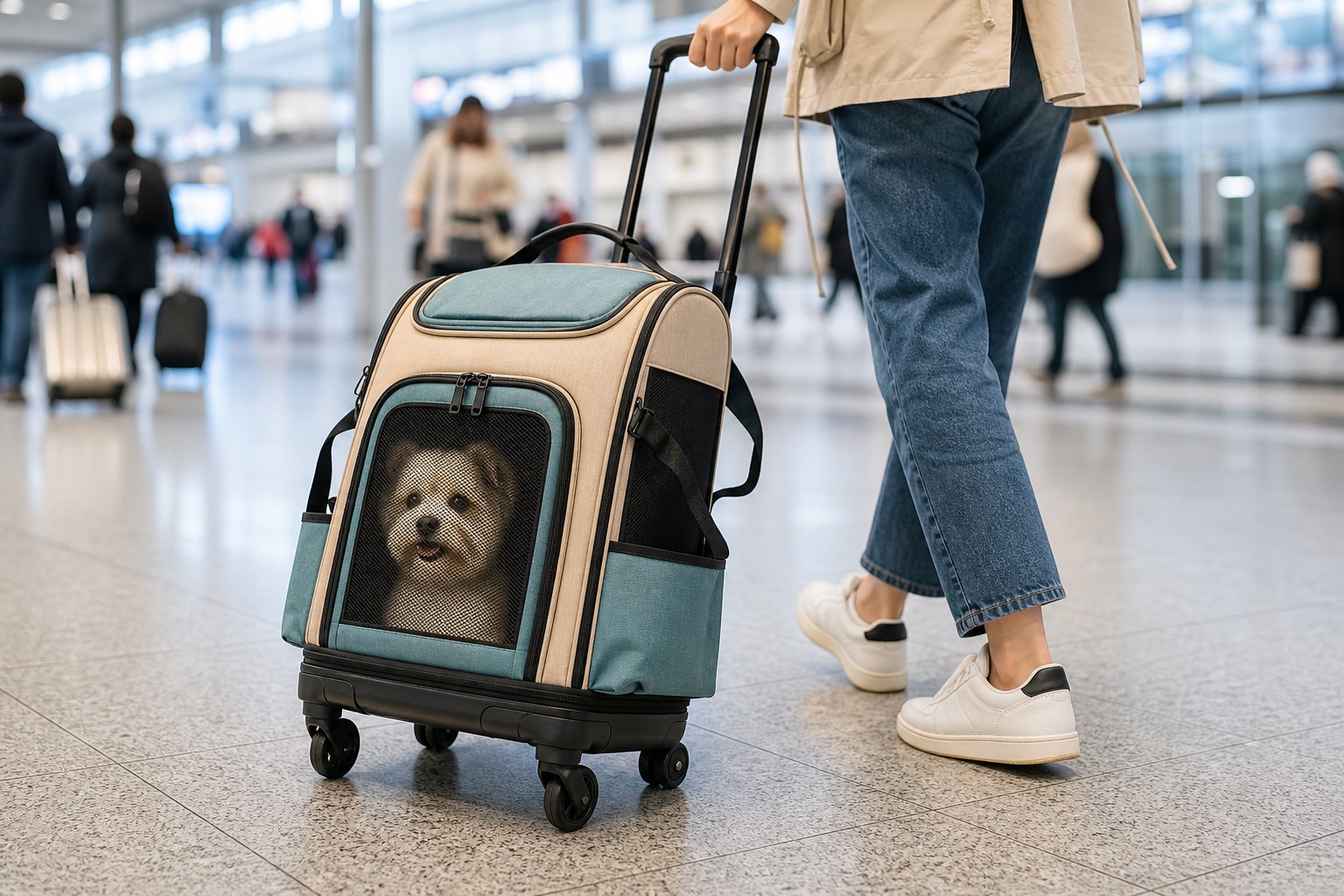
A rolling pet carrier is not just a backpack with wheels. It uses a trolley handle, wheels, base support, rivets, fixed plates, bottom structure and more hardware. These parts may have their own MOQ. If the buyer only orders a small quantity, the accessory cost becomes high. The final product price may lose competition before the brand even tests the market.
Why rolling styles are hard for low MOQ
| Issue | Why it matters |
|---|---|
| Hardware MOQ | Wheels, handle and base parts may have high minimums |
| Sampling cost | Hole position, base support and load balance need more trials |
| Matching tolerance | Parts may not fit perfectly in small-batch sourcing |
| Repair risk | Wheels and handles add after-sales risk |
| Retail price | Higher cost may make new products hard to sell |
For 0-to-1 buyers, I prefer a safer route. Start with a regular backpack or hand-carry design. Test the channel. Collect reviews. Understand the pet size range and customer price point. Once sales are stable, then develop a trolley version as a product-line upgrade. This is also why a pet travel product line should be planned by launch stage, not by putting every possible function into the first SKU.
If a buyer still wants a rolling version at the beginning, I would suggest a pre-order model. Do not hold too much inventory. Collect demand first, then purchase parts in a more concentrated batch. This reduces cost pressure and lowers stock risk. A factory should not push a beginner buyer into the most complex design just because the sample looks more premium.
Where Should Buyers Focus During Load Testing?
Many buyers think load testing means checking the bottom board only. I do not agree. The bottom matters, but the highest stress usually happens where the strap connects to the bag body.
The first load-test point should be the shoulder strap root and bartack reinforcement. Then buyers should check body seam edges, bottom support points, handle joints, and zipper-side stress areas.
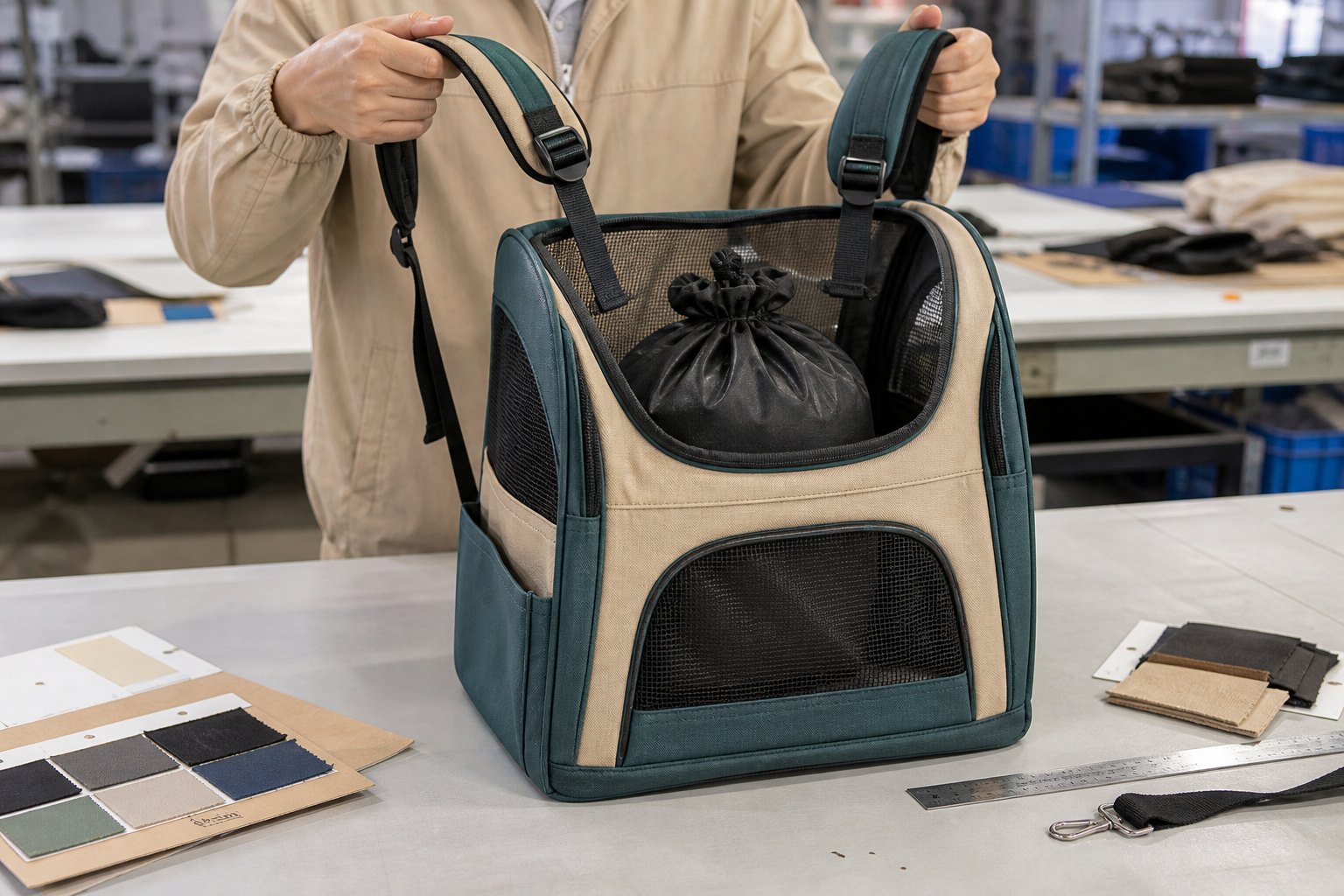
When a pet is inside the backpack, the force is not like a fixed metal weight. The pet moves. It leans to one side. It may push against the mesh or zipper. The user may lift the backpack suddenly. This creates repeated stress on the strap roots and body seams. That is why the connection point is more important than many buyers think.
Load testing priority
| Priority | Area | Why it matters |
|---|---|---|
| 1 | Shoulder strap root | Most carrying force gathers here |
| 2 | Body seam and edge binding | Long-term load can open seams |
| 3 | Bottom board support | Prevents sagging and pet discomfort |
| 4 | Handle joint | Important for lifting and short carry |
| 5 | Zipper-side stress edge | Large openings can deform under load |
At LISO, I pay close attention to X-box stitching, bartack reinforcement and dense sewing at connection points. These details are not always visible in a product listing. But they decide whether the backpack survives real use. A buyer should not only ask for a nice appearance. The buyer should ask the factory to show close-up photos of the strap root, handle joint, zipper end and bottom support.
A simple buyer test is useful. Put weight inside the backpack. Lift it repeatedly. Pull the shoulder straps by hand. Check whether the stitches move, whether the slider slips, whether the webbing stretches, and whether the body shape collapses. This kind of test is basic, but it reveals many weak samples. I explained more fabric, MOQ and stitching risks in my earlier pet carrier backpack sourcing guide, and those checks still apply here.
Bubble Window Or Large Mesh: Which Is Better For B2B Buyers?
Bubble-window backpacks and mesh backpacks serve different channels. I do not think one is always better. The right choice depends on the buyer's retail position, climate, price point and marketing channel.
Bubble-window pet backpacks are better for visual premium and social-media selling. Large-mesh pet backpacks are better for breathability, summer use, lower cost and volume sales. Many B2B buyers should consider both lines.
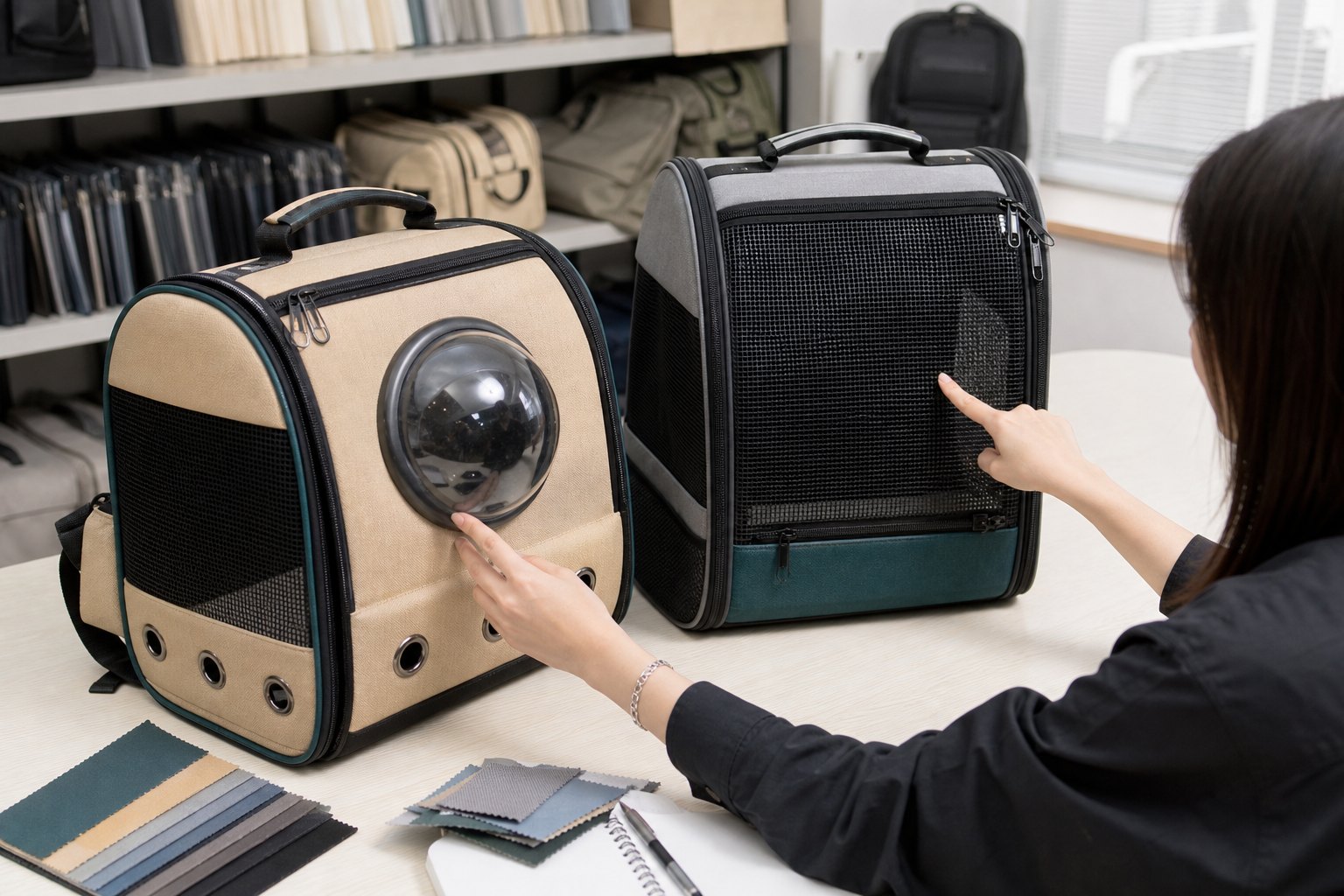
Bubble-window designs have a strong visual effect. The pet is visible. The product looks different in photos. This helps cross-border sellers, Amazon sellers and boutique pet brands create a higher-value listing. It also works better for TikTok, Instagram and short video. The selling language is easy: panoramic view, stylish travel, clear pet visibility and stronger scene appeal.
Channel-based recommendation
| Buyer type | Better direction | Reason |
|---|---|---|
| Premium pet brand | Bubble window | Strong visual value and higher price room |
| Amazon seller | Bubble or hybrid | Better main-image click potential |
| Pet store volume line | Large mesh | Lower cost and fewer ventilation complaints |
| Summer or outdoor line | Large mesh | Better airflow and lower heat risk |
| Balanced retail program | Half bubble and side mesh | Combines appearance and ventilation |
But bubble designs have risks. Ventilation is weaker than full mesh. PVC or TPU clear panels can age, yellow, scratch or deform under heat. If the product is used in direct sunlight, overheating can become a real customer complaint. So I do not suggest selling bubble-window backpacks only by appearance.
Large mesh designs are more practical. They are more breathable. They are usually lower cost. The production process is simpler. The defect rate can be lower. They are good for value lines, summer products and physical pet stores. The weakness is that the look can be common. If every competitor sells a similar mesh backpack, price competition becomes harder.
My practical suggestion is to build two product lines. Use bubble-window designs as the profit line. Use large-mesh designs as the traffic and volume line. For many buyers, the best middle route is a half-bubble, side-mesh design. It gives enough visual value while keeping better airflow. That is often easier to sell and easier to defend after reviews.
How Should Buyers Test Waterproofing And Cleaning Before Approval?
Cleaning is often discussed too late. A pet backpack can look premium, but one urine leak in a car or airport can create a bad review that is hard to recover from.
Buyers should test the coating, bottom panel, inner pad and seam area before bulk approval. A removable inner pad is usually more realistic than asking customers to wash the whole backpack every time.
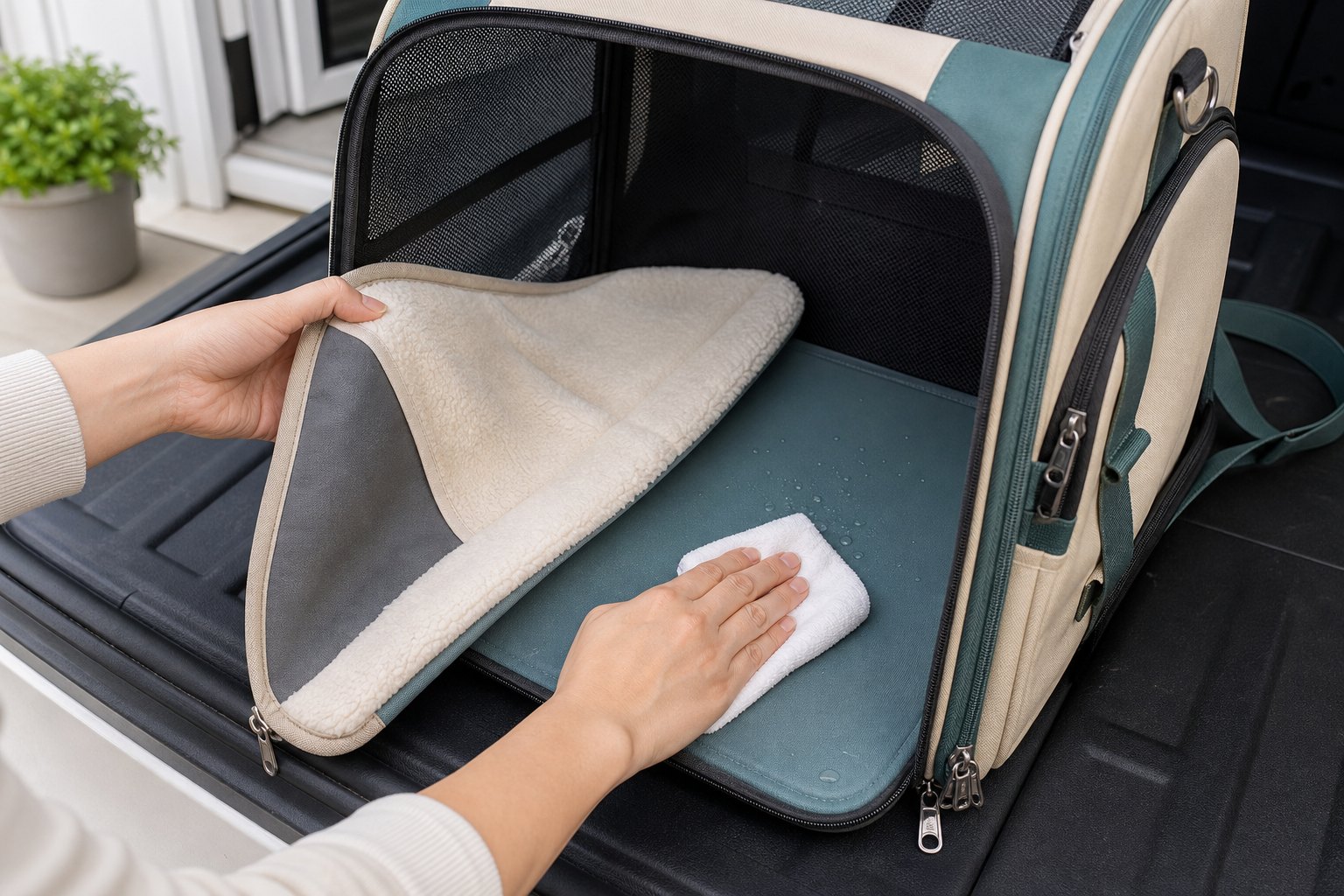
For pet carrier backpacks, I prefer to separate two ideas. The first is water repellency. The second is anti-seep performance. PU water-repellent coating may handle small splashes, but it may not stop urine from passing through if the pet has an accident. PVC coating is often a stronger route when the buyer needs better anti-seep performance.
Cleaning and leakage checks
| Check | Why it matters |
|---|---|
| Removable inner pad | Easier for the consumer to wash |
| Bottom coating | Reduces seepage risk |
| Side seam area | Leakage can move through stitching |
| Zipper opening | Mess can collect around corners |
| Odor after drying | Odor is a customer-service issue |
This is also why buyers should not only ask whether the fabric is waterproof. They should ask where the coating is applied, how the inner pad is built, how seams are finished, and whether the pad can be removed without fighting the structure. If the full backpack can open wide with zippers, whole-bag cleaning becomes easier. But for many styles, removable pad cleaning is still the most practical daily solution.
In sourcing, this detail affects returns. A customer may forgive a normal fabric wrinkle. But a leaking pet carrier can damage a car seat, a hotel floor or luggage. Even after cleaning, odor may stay if liquid reaches sponge or inner padding. That is why coating and cleaning should be discussed before price, not after the sample is finished.
Related OEM sourcing page
If this article is part of your backpack sample review, use the core product page to compare fabric weight, PVC coating, shoulder strap reinforcement, mesh, bottom-board structure and realistic low-MOQ choices. Continue with the pet backpack carrier manufacturer page.
- Backpack carrier structure and stress points
- 600D or 900D Oxford fabric choices
- Logo, color and packaging choices by MOQ
Conclusion
The safest pet carrier backpack is not built from a photo. It is built from honest claims, strong stress points, cleanable materials and realistic MOQ choices.
My Role
I help buyers source pet carrier backpacks with practical checks before mass production. I care about fabric truth, stitching strength, realistic MOQ, cleaning performance and product claims that buyers can defend.