What is a Foldable Beach Mat?
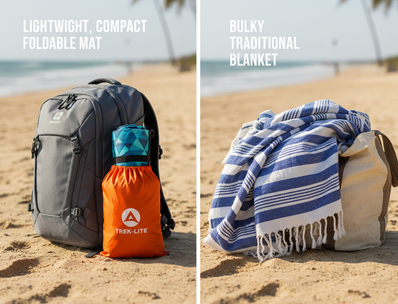
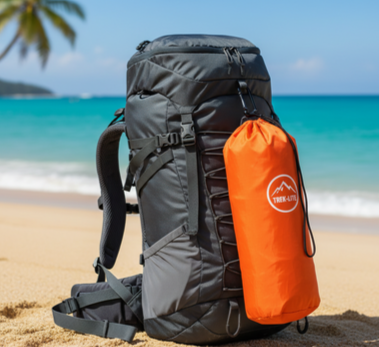
A foldable beach mat is a lightweight, compact ground mat specifically designed for portability. It typically folds into a small square or roll and often includes a carry strap or a portable beach mat with carry bag for easy transport.
Most modern foldable beach mats use polyester or nylon fabrics with waterproof backing and sand-resistant surfaces. The focus is on reducing weight and storage volume without sacrificing usability.
What is a Traditional Beach Blanket?
A traditional beach blanket is usually made from cotton, fleece, or thick polyester fabric. It prioritizes softness and comfort rather than portability.
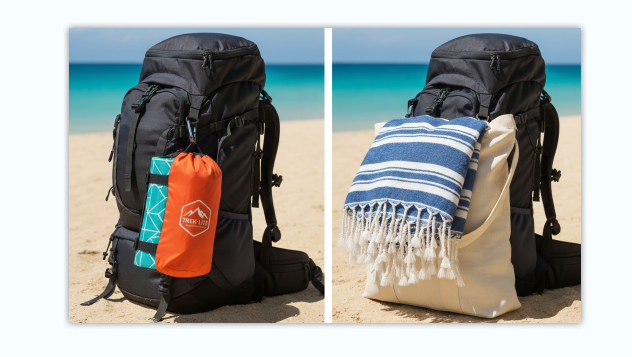
While comfortable for lounging, traditional blankets are generally heavier and bulkier. When folded, they take up more space in luggage or backpacks, which limits their practicality for frequent travelers.
Head-to-Head Comparison
1. Weight & Portability
The main difference between a foldable beach mat and a traditional beach blanket is weight efficiency.
For travel scenarios, we recommend keeping the total weight under 1 kg, with an ideal range of 0.4–0.8 kg. This range balances portability and durability.
| Feature | Foldable Beach Mat | Traditional Beach Blanket |
|---|---|---|
| Recommended Weight | 0.4–0.8 kg (under 1 kg ideal) | 1–2.5 kg |
| Travel Suitability | Excellent | Limited |
| Carry-On Friendly | Yes | Often bulky |
A lightweight beach mat for travel under 0.8 kg will not significantly increase backpack load, even for long-distance trips.
Winner: Foldable Beach Mat
2. Storage Size
Storage size matters more than material thickness in travel use cases.
A foldable beach mat is designed to compress into compact shapes—often around A4 size when folded. Many models include integrated straps or a portable beach mat with carry bag, making storage and transport easier.
Traditional blankets usually roll into large cylinders that are difficult to fit into standard backpacks.
| Criteria | Foldable Beach Mat | Traditional Blanket |
|---|---|---|
| Folded Size | Compact | Bulky |
| Backpack Fit | Easy | Difficult |
| Included Carry Bag | Common | Rare |
Winner: Foldable Beach Mat
3. Sand Resistance
Sand-proof design is significantly more practical for beach travel.
Most foldable beach mats use tightly woven polyester or ripstop nylon that prevents sand from sticking. Sand can usually be shaken off easily with a light tap.
Traditional beach blankets, especially cotton-based ones, tend to trap sand within fibers. This requires repeated shaking or washing after use.
Winner: Foldable Beach Mat
4. Durability vs Ultra-Lightweight Design
Ultra-lightweight does not always mean better quality.
Some extremely thin mats (below 300g) may compromise tear resistance and long-term durability. While they are easy to carry, they may not withstand frequent outdoor use.
Traditional blankets, due to thicker materials, can sometimes offer longer lifespan. However, the added durability comes with additional bulk and weight.
The best balance for travel is typically 0.5–0.8 kg, which provides sufficient durability without excessive weight.
Winner: Depends on product quality, but well-balanced foldable beach mats are more travel-efficient overall.
Comprehensive Comparison Table
| Criteria | Foldable Beach Mat | Traditional Beach Blanket | Winner |
|---|---|---|---|
| Weight | 0.4–0.8 kg | 1–2.5 kg | Foldable |
| Storage Size | Compact | Bulky | Foldable |
| Sand Resistance | High | Low | Foldable |
| Comfort | Moderate | High | Blanket |
| Travel Convenience | Excellent | Limited | Foldable |
| Overall | Best for travel | Best for comfort | Foldable |
Choose Foldable Beach Mat If…
- You travel frequently
- You need a lightweight beach mat for travel
- You prefer compact packing solutions
- You want sand-resistant performance
- You are a retailer sourcing practical travel accessories
Choose Traditional Beach Blanket If…
- Comfort is your main priority
- You use it mainly for backyard lounging or picnics
- Weight and packing size are not concerns
- You prefer thicker fabric feel
Our Verdict
For travel-focused consumers and B2B buyers, a foldable beach mat under 1 kg with compact storage and sand-proof design is the smarter long-term choice.
It delivers better portability, easier packing, and improved beach usability. While traditional blankets offer comfort, they lack efficiency for real travel scenarios.
FAQ Schema
Q: What is the ideal weight for a foldable beach mat for travel?
A: The ideal weight is under 1 kg, with 0.4–0.8 kg offering the best balance between portability and durability.
Q: Is a foldable beach mat better than a traditional beach blanket for travel?
A: Yes. Foldable beach mats are more compact, lightweight, and typically sand-resistant, making them better suited for travel.
Q: Does ultra-lightweight mean better quality?
A: Not necessarily. Extremely thin materials may reduce durability and tear resistance.
Q: What should B2B buyers prioritize when sourcing foldable beach mats?
A: Weight under 1 kg, compact folding size, sand-resistant fabric, reinforced stitching, and inclusion of a carry bag.
Key Takeaways
- The recommended weight for a foldable beach mat for travel is 0.4–0.8 kg
- Storage size is more important than fabric thickness in travel scenarios
- Sand-resistant design significantly improves usability
- Ultra-lightweight materials may sacrifice durability
- For travel markets, foldable beach mats outperform traditional beach blankets in overall efficiency