Overview
What is a Sandproof Beach Mat?
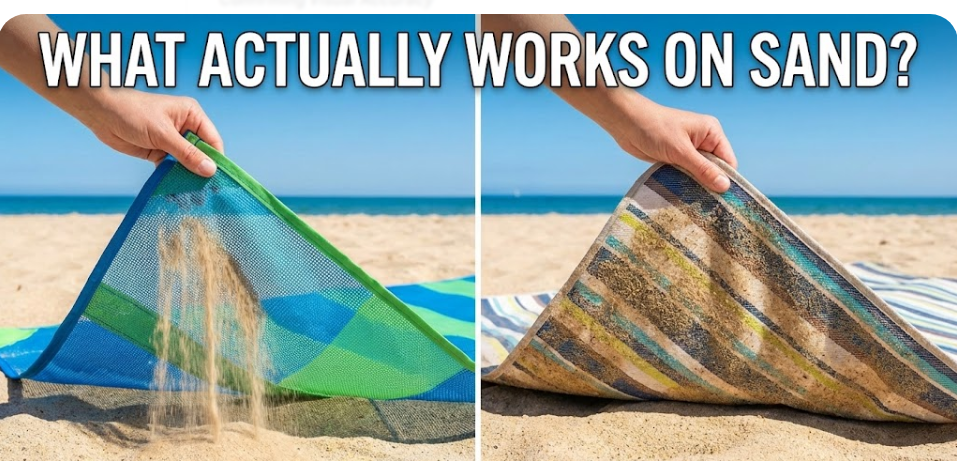
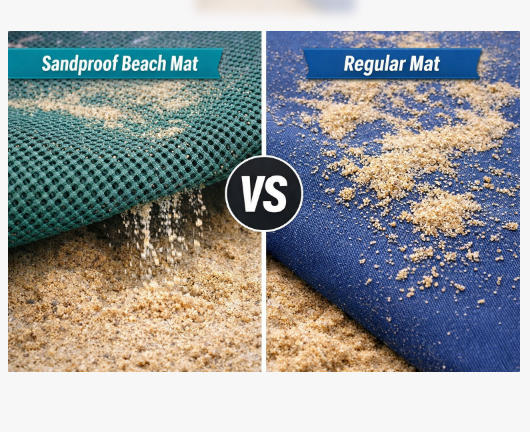
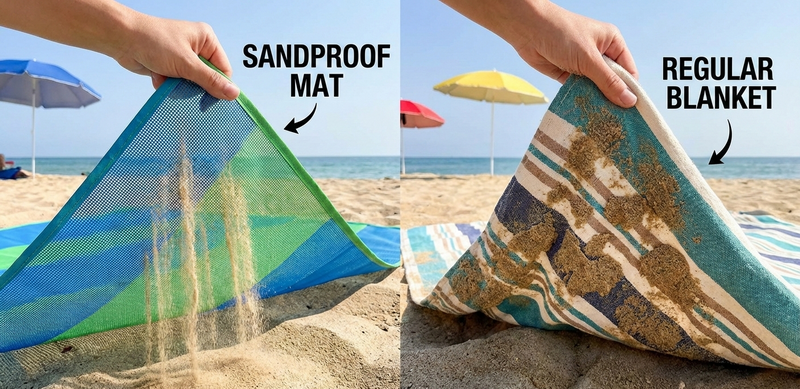
A sandproof beach mat is a ground cover designed to reduce sand buildup by using a porous, sand-shedding weave (often mesh-like) so sand can fall through or shake off easily.
Most “sandproof” performance comes from the weave structure, static behavior, and easy-clean surface, not a miracle coating.
What is a Regular Mat?
A regular mat is typically a solid-surface blanket, picnic mat, foam mat, or fabric sheet that isn’t engineered for sand shedding.
Because it lacks porosity and often creates static, it usually holds sand on top and traps sand in folds and seams.
Head-to-Head Comparison
1) Material & Weave
A sandproof beach mat works when the weave is open enough to release sand but stable enough to sit comfortably.
| Attribute | Sandproof Beach Mat (Mesh/Woven) | Regular Mat (Solid Fabric/Foam) |
|---|---|---|
| Sand release | Sand drops through or shakes off | Sand stays on top; clings to fibers |
| Comfort | Medium (depends on weave/finish) | Often higher (padded/foam options) |
| Durability on sand | Good if edges/corners are reinforced | Varies; pile fabrics degrade faster |
| Static cling | Typically lower with the right fabric | Can be high (fleece, microfiber) |
Winner: Sandproof beach mat — sand release is primarily a function of porosity + surface behavior.
2) Wind & Anchoring
A mat that “sheds sand” but flies away is still a bad purchase.
| Feature | Sandproof Beach Mat | Regular Mat |
|---|---|---|
| Corner anchor loops | Common | Often missing |
| Stakes/sand anchors | Often included | Rare |
| Weighted corners | Sometimes | Uncommon |
Winner: Sandproof beach mat — most are designed with anchors and corner structure.
3) Wet Sand & Shoreline Use
Wet sand changes everything: it packs, smears, and can clog mesh.
- Sandproof beach mat: Usually easier to clean, but wet sand can clog certain weaves; you may need a rinse + shake.
- Regular mat: Wet sand tends to grind into fibers and stick hard, especially on textured/pile fabrics.
Winner: Sandproof beach mat, with a caveat: choose a weave that won’t clog easily and has strong edge binding.
4) Comfort & Skin Feel
Comfort depends on whether you’re lying down for hours or just sitting.
- If you want cushion, a padded regular mat can feel better.
- If you hate grit, a sandproof mat usually stays cleaner-feeling over time, even if it’s less plush.
Winner: Depends — comfort favors regular mats; cleanliness favors sandproof beach mats.
5) Cleaning & Packability
A truly “sandproof” experience is about how fast you can get rid of sand.
| Scenario | Sandproof Beach Mat | Regular Mat |
|---|---|---|
| Quick shake at the beach | Usually works well | Often fails; sand clings |
| Folding & packing | Less sand trapped inside | Sand hides in folds & seams |
| At-home cleaning | Often rinse & air dry | Can require deeper washing |
Winner: Sandproof beach mat — especially for frequent beach trips.
The “Sandproof” Reality Check (Avoid These Pitfalls)
A sandproof beach mat is not “zero sand.” It is sand-shedding, not sand-repelling.
Pitfall #1: Assuming “sandproof” means sand won’t land on it
Sand will land on it—wind doesn’t care. The goal is that sand doesn’t stay.
Pitfall #2: Buying the loosest mesh and expecting comfort
Overly open mesh can feel rough and may let small items (coins, earrings) slip through.
Look for balance: sand drops through, but the weave is stable under your weight.
Pitfall #3: Ignoring edge binding and stitching quality
The most common real-world failure isn’t the fabric—it’s fraying edges, torn loops, and seam blowouts.
A good sandproof mat has reinforced corners and tight edge binding.
Pitfall #4: Overlooking anchoring for windy beaches
On windy beaches, anchoring matters more than weave.
Prioritize stakes/anchors + corner loops + (optional) weighted corners.
Pitfall #5: Choosing fuzzy “cozy” fabrics for sand
Fleece, plush microfiber, and high-pile blankets feel great at home—but they’re sand magnets.
Comprehensive Comparison Table
| Criteria | Sandproof Beach Mat | Regular Mat | Winner |
|---|---|---|---|
| Sand shedding | Excellent to good | Poor to fair | Sandproof |
| Wind stability (with anchors) | Good to excellent | Fair (needs weights) | Sandproof |
| Comfort/padding | Fair | Good to excellent | Regular |
| Wet sand handling | Good (may clog) | Poor (sticks hard) | Sandproof |
| Ease of cleaning | Excellent | Fair | Sandproof |
| Family/kids use (snacks/toys) | Good (small items may slip, depending on mesh) | Good (solid surface) | Tie |
| Overall | Best for “less sand stress” | Best for “soft comfort” | Sandproof (for most beach-goers) |
Pros and Cons
Sandproof Beach Mat Pros & Cons
| ✅ Pros | ❌ Cons |
|---|---|
| Sand falls through / shakes off easily | Some meshes feel less soft |
| Usually includes anchoring features | Wet sand can clog certain weaves |
| Packs cleaner (less sand trapped) | Small items may slip through |
| Great for windy beaches | Better builds can cost more |
Regular Mat Pros & Cons
| ✅ Pros | ❌ Cons |
|---|---|
| Often softer and more padded | Sand sticks; gets gritty fast |
| Solid surface keeps small items contained | Needs constant shaking/brushing |
| Doubles as picnic/camping mat | Wind can flip it without anchors |
| Often cheaper | Fuzzy fabrics attract sand |
Choose a Sandproof Beach Mat If...
- You want the cleanest, least-sand experience with minimal effort.
- You visit windy or dry, loose-sand beaches often.
- You care about quick shake-clean and cleaner packing.
- You’re buying specifically for the beach and searching sandproof beach mat.
[🎯 CTA: If sand cleanup is your biggest pain point, shortlist 3 mats and compare mesh density + corner anchors + edge binding before you compare colors or patterns.]
Choose a Regular Mat If...
- You prioritize padding and softness over sand management.
- You mostly use it on grass/parks and only occasionally on sand.
- You need a solid surface for tiny items (cards, jewelry, small toys).
- You don’t mind extra cleaning after each beach trip.
[🎯 CTA: If you still prefer a regular mat, avoid fuzzy/pile fabrics and choose a tight, smooth weave that brushes clean quickly.]
Our Verdict
For most buyers, a sandproof beach mat beats a regular mat on sand—especially in wind and dry conditions—because it’s engineered to shed sand and stay anchored.
If you need all-day lounging comfort, use a hybrid setup: sandproof mat on top + thin padded layer underneath for cushion without the gritty mess.
FAQ Schema
Q: Do sandproof beach mats really work?
A: Yes—when they use a mesh or sand-shedding weave, sand can fall through or shake off easily. “Sandproof” usually means sand won’t stay trapped, not that sand won’t land on the mat.
Q: What material is best for a sandproof beach mat?
A: A stable woven/mesh synthetic fabric (often polypropylene or polyester blends) is common because it dries fast, releases sand when shaken, and doesn’t absorb water easily. Reinforced edges and corners matter as much as the fabric.
Q: Are sandproof beach mats good on wet sand?
A: They typically outperform regular mats, but wet sand can clog some mesh weaves. Choose a mat with strong binding so you can shake and rinse it without damaging the edges.
Q: Will a sandproof beach mat blow away in the wind?
A: It can—unless it has anchoring features like corner loops, stakes, or weighted corners. Wind performance depends more on anchoring than the “sandproof” label.
Q: How do I pick the right sandproof beach mat size?
A: Choose based on how many people will sit/lie down and add extra room for bags and movement. For families, prioritize larger mats with strong corner anchors and durable stitching.
Key Takeaways
- A sandproof beach mat is sand-shedding (mesh/woven), not “zero sand.”
- A regular mat can be more comfortable, but it usually becomes sand-trapping and harder to clean.
- The real buying criteria are mesh density, reinforced edges, corner anchors, and shake-clean behavior.
- Wet sand can clog mesh, so choose rinse-friendly materials and strong stitching.
- For best results, combine cleanliness + comfort: sandproof mat on top, thin padding underneath.