How We Evaluated
“Non-slip” is not a marketing claim—it’s a performance outcome. We evaluated each grip feature based on how well it prevents sliding during real dog behaviors: jump-in impact, paw-scratching, turning, braking, and repeated entry/exit. For B2B buyers, we also weighted commercial outcomes: lower return rates, fewer support tickets, stronger reviews, and longer replacement cycles.
| Evaluation Dimension | Weight | Why It Matters for B2B Buyers |
|---|---|---|
| Base Traction (Backing Grip) | 30% | Without it, mats drift over time—driving “it slides” returns. |
| Mechanical Anchoring | 25% | Prevents forward/back sliding under braking and movement. |
| Edge & Side Control | 15% | Stops curling and bunching that trigger negative reviews. |
| Installation Reliability | 15% | Reduces user error and improves “stays in place” outcomes. |
| Durability & TCO | 15% | Lowers replacement frequency and warranty costs. |
[📊 Cite: Review text mining for “sliding/bunching” complaints, customer support tags, and return reason codes from your own channels.]
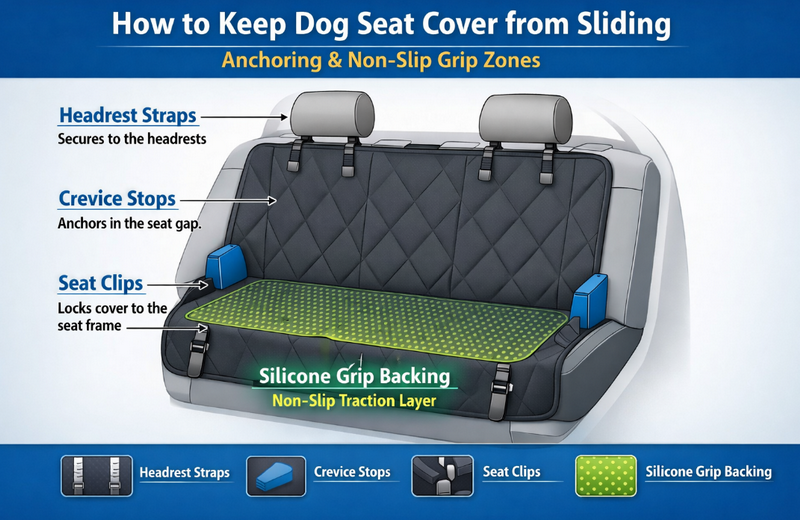
1. Silicone/TPR Backing Layer — Best for “Dog Car Mat That Stays in Place”
Score: ⭐ 4.8/5
A silicone or TPR (thermoplastic rubber) backing works because it increases friction between the mat and the seat surface. That prevents micro-slips from becoming full sliding events.
Why it actually works
- Grip patterns (dots, webs, grids) create high-friction contact points that “bite” into fabric weave.
- It resists “creep,” where a mat slowly migrates after a week of daily use.
- It performs better than smooth PVC on both cloth and many leather-like interiors.
What to specify (B2B spec checklist)
- Backing material: silicone dots / silicone web / TPR grid
- Pattern density: more contact points typically improves hold
- Backing coverage: full-back coverage is usually more reliable than partial patches
Pros
- Strong baseline grip with minimal user effort
- Works across a wide range of vehicle seats
Cons
- Low-grade silicone can peel or degrade
- Some patterns may leave temporary impressions on soft leather
[🎯 CTA: Ask suppliers for backing samples and run a quick slip test on cloth and leather seats before committing to volume.]
2. Dual Headrest Anchor Straps — Best for Hard-Braking Stability
Score: ⭐ 4.6/5
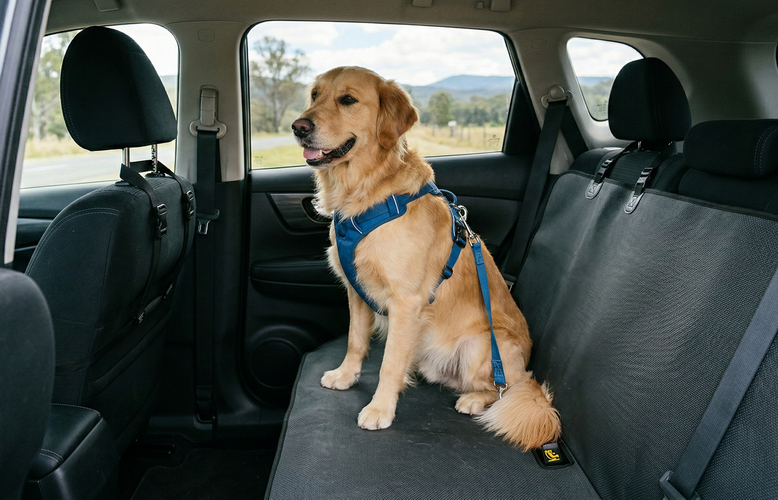
Headrest anchors work because they turn sliding force into strap tension against the seat structure. That prevents forward drift when the driver brakes or the dog shifts weight.
Why it actually works
- During deceleration, mats tend to slide toward the front. Anchors stop that movement.
- Dual anchors reduce twisting and keep the mat aligned.
What to specify
- Two adjustable straps with reinforced stitching
- Buckles designed for repeated load cycles (avoid brittle, low-grade plastics)
- Strap geometry that fits SUVs, sedans, and trucks
Pros
- Reliable stabilization under real driving forces
- Easy value story: “anchored to the seat”
Cons
- Some vehicles have fixed or flush headrests
- User error: slack straps = drifting mat
3. Seat Crevice Stops (Seat Anchors) — Best for Preventing Bunching
Score: ⭐ 4.5/5
Seat crevice stops work because they lock the mat into the seat-back/seat-bottom gap, reducing migration and wrinkling when dogs pivot or scratch.
Why it actually works
- Dogs generate shear force when turning. The mat “walks” without a hard stop.
- Stops reduce the “wrinkle ridge” that leads to claw snagging and early wear.
What to specify
- Firm cores that do not collapse after a few weeks
- Correct size to fit common seat gaps
- At least two stops for better width control
Pros
- Strong anti-bunching effect
- Helps reduce claw-driven damage
Cons
- Not all vehicles have a pronounced seat gap
- Oversized anchors can create edge lift
[📊 Cite: Support ticket reduction when install includes crevice stops and correct placement.]
4. Seat Frame Clips / Seatbelt Latch Clips — Best for “Zero Drift” Installs
Score: ⭐ 4.4/5
Seat clips work because they add mechanical fixation at the edges, preventing lateral sliding and keeping the mat’s shape under repeated entry/exit.
Why it actually works
- Backing handles friction; clips handle edge control and side-to-side drift.
- Especially valuable on bench seats where dogs move laterally.
What to specify
- Clip types matched to use case: seat frame hooks, latch clips, or adjustable straps
- Corrosion-resistant hardware (coated metal where needed)
- Quick-release design to reduce user frustration
Pros
- Strong hold even on smoother seat materials
- Reduces door-side curling and shifting
Cons
- Vehicle fit variability
- Poor clipping can stress seams if over-tensioned
[🎯 CTA: Include a 3-step install card in every box—clip placement is a top driver of “stays in place” reviews.]
5. Traction-Focused Surface Geometry (Textured Top + Smart Quilting) — Best for Paw Grip + Anti-Scrunch
Score: ⭐ 4.2/5
Surface geometry works because it influences how paws apply force. A dog that feels stable is less likely to dig claws for traction, and the mat is less likely to “accordion” or wrinkle.
Why it actually works
- A textured top improves paw traction and reduces frantic shifting.
- Thoughtful quilting can distribute tension and reduce fabric creep.
What to specify
- Top fabric with tactile traction (not overly slick)
- Quilting layout that resists common shear directions
- Balanced padding: too thick can slide; too thin can bunch
Pros
- Better comfort and perceived stability
- Helps reduce scratch-driven damage
Cons
- Supportive feature, not a substitute for real anchoring
- Over-quilting can reduce flexibility and fit
Comparison Summary
| Grip Feature | What It Prevents | Best For | Buyer Risk If Missing |
|---|---|---|---|
| Silicone/TPR backing | Micro-slips → full sliding | “dog car mat that stays in place” positioning | High returns due to drift |
| Headrest anchors | Forward slide under braking | Larger dogs, frequent driving | Safety complaints and bunching |
| Crevice stops | Wrinkling and migration | Scratchy dogs, daily use | Premature wear and tearing |
| Seat/frame clips | Side drift and edge lift | Bench seats, wide mats | Door-side curling complaints |
| Textured geometry | Paw slip and scrunching | Comfort-focused SKUs | Lower satisfaction, claw damage |
How to Choose the Right Non-Slip Setup (B2B Decision Guide)
A simple rule: choose at least one friction feature + one mechanical anchoring feature. That combination performs more consistently across vehicle types.
If you want “best non slip dog car seat cover” positioning
- Must-have: silicone/TPR backing + headrest anchors
- Upgrade: add clips for premium SKUs and larger dogs
If customers ask “how to keep dog seat cover from sliding”
- Provide: anchors + a simple install SOP
- Reduce support: include spare clips/anchors in the packaging
If your hero SKU is “waterproof non slip dog car mat”
Waterproof membranes can reduce friction if the underside is poorly designed. Offset that with:
- full-coverage grip backing
- crevice stops + clips to reduce drift and wrinkling
The TCO Lens: Why “Non-Slip” Protects Your Margins
For B2B buyers, a non slip pet car mat for dogs is a cost-control feature, not just a differentiator. Slip failures drive expensive outcomes: returns, replacements, negative reviews, and customer service load.
TCO drivers to model
- Lower returns from fewer “sliding/bunching” complaints
- Lower warranty claims from reduced seam stress and tearing
- Review uplift from “easy install” and “stays in place” outcomes
- Longer replacement cycles and fewer churn-driven refunds
Procurement test plan
- Run a 2-week field test with 10–20 users across cloth and leather seats.
- Track: slip incidents, bunching frequency, install time, and odor complaints.
[📊 Cite: Your pilot test data, return-rate baseline, and post-purchase survey results.]
[🎯 CTA: Add a “non-slip performance spec” to supplier agreements (backing coverage %, anchor count, clip type, seam reinforcement, and install SOP).]
FAQ Schema
Q: What makes a non slip pet car mat for dogs actually stay in place?
A: A mat stays in place when it combines high-friction backing (silicone/TPR) with mechanical anchoring such as headrest straps, seat crevice stops, or seat/frame clips. Friction reduces micro-slips, while anchors stop drift during braking and movement.
Q: Why do “non-slip” dog car mats still slide on leather seats?
A: Leather is smoother and reduces friction, especially when the backing is smooth PVC or has limited grip coverage. For leather seats, prioritize full-coverage silicone/TPR backing and use anchors/clips for mechanical fixation.
Q: How do I keep a dog seat cover from sliding after a week of use?
A: Tighten headrest straps, seat crevice stops, and clips, and remove hair/dust from the backing and seat surface. Debris can reduce friction, and slack anchors allow the mat to drift over time.
Q: Are waterproof non slip dog car mats less grippy?
A: Some are, especially if the waterproof layer is paired with a low-friction underside. The best designs combine waterproof construction with silicone/TPR backing and anchoring features to prevent drift and wrinkling.
Q: Which grip feature reduces returns the most?
A: In most channels, the biggest impact comes from silicone/TPR backing plus headrest anchors, because it addresses both micro-slip and braking drift. Adding crevice stops further reduces bunching complaints.
Key Takeaways
- A non slip pet car mat for dogs works best when it combines friction + anchoring.
- The highest-impact features are silicone/TPR backing, headrest anchors, and seat crevice stops.
- Seat/frame clips and traction-focused surface geometry reduce edge drift, curling, and claw damage.
- For B2B buyers, “non-slip” is a TCO lever: fewer returns, fewer tickets, better reviews, and longer product life.
- Standardize success with a short install SOP and a simple field test across seat materials.
[🎯 CTA: Build a procurement checklist for every SKU (backing coverage, anchor count, clip type, seam reinforcement, and install instructions) to reduce slip-related returns and protect margins.]