Why a Travel Beach Mat Is Different from a Regular Mat
A travel beach mat is designed to save space and reduce weight while staying practical in sand, sun, and occasional wind. A regular bulky mat may feel comfy, but it often becomes dead weight in luggage and takes forever to dry.
For travel, you’re optimizing for carry-on compatibility, quick setup, and easy cleanup. That’s why a compact beach mat for carry on is usually a smarter choice than thick foam or heavy terry cloth.
Top Features to Look For in a Lightweight Beach Mat for Travel
A lightweight beach mat for travel should solve three problems: packing, sand, and moisture. Use the features below as your buying and packing filter.
1) Packability (Foldability + Compression)
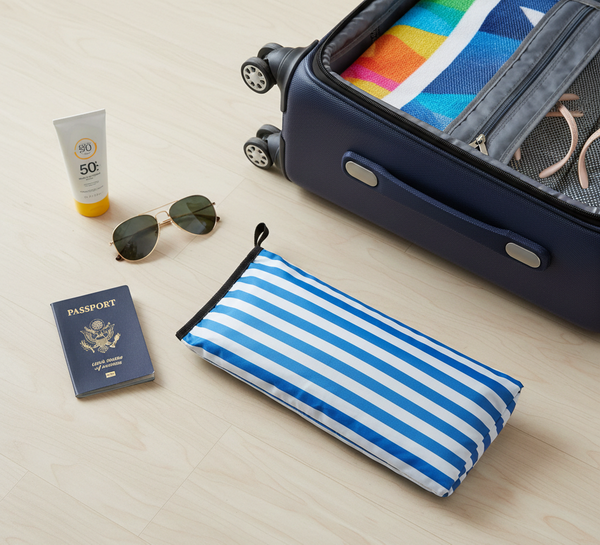
A truly travel-friendly mat folds or rolls into a tight bundle and stays that way. Look for:
- Built-in elastic straps, compression bands, or a stuff sack
- A slim profile that fits in a daypack, not just a suitcase
- A simple fold pattern you can do in 10 seconds
Tip: If it only rolls neatly on a perfect floor, it’s not travel-proof.
Long-tail keyword fit: This is where a foldable beach mat for travel shines—less wrestling, more beach time.
2) Low Weight (But Not “Flimsy”)
Lightweight is good, but “ultralight” can sometimes mean thin stitching and torn corners. Aim for:
- Reinforced edges or binding
- Ripstop-style weaves or durable synthetic blends
- Corners designed to resist fraying
Rule of thumb: Choose “light + reinforced,” not “light at any cost.”
3) Sand Management (Sandproof / Sand-Resistant Fabric)
A sandproof mat doesn’t magically repel sand—it just makes it easier to remove. The best fabrics:
- Don’t trap grains deep in the fibers
- Let you shake sand off quickly
- Don’t feel like sandpaper on skin after a few uses
If “shake-clean” is your top goal, prioritize a sandproof lightweight beach mat over plush fabric.
4) Quick-Dry & Water Resistance
On trips, your mat will meet wet swimsuits, saltwater, and surprise rain. Choose materials that:
- Dry quickly in shade or airflow
- Don’t hold odors
- Resist soaking through on damp sand
Travel reality: If it stays wet, it ends up sealed in your bag—and smells like it.
5) Stability in Wind (Anchors, Pockets, or Stakes)
A mat that drifts is annoying and unsafe near water. Travel-friendly stability features include:
- Corner loops (tie to a bag or stake)
- Small sand pockets in corners
- Pegs (best for beaches where stakes are allowed and practical)
Pro packing move: If your mat has anchor loops, you can use a mini carabiner or a spare shoelace instead of carrying stakes.
6) Comfort & Skin Feel
Comfort isn’t just thickness. It’s also how the fabric feels when it’s hot, salty, or sandy.
- Smooth fabrics feel cooler but may be slippery
- Textured fabrics grip better but can trap sand
- A slightly larger size helps you avoid direct sand contact
If you’re tall or share space, a bit of extra length matters more than extra padding.
7) Carry Convenience (Strap, Handle, Clip Points)
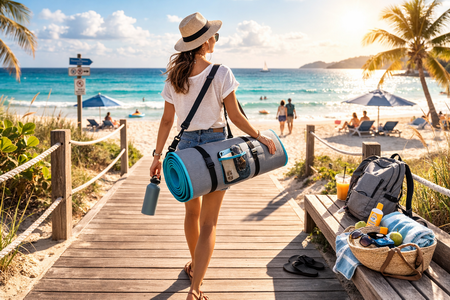
The best mats are easy to carry hands-free:
- Crossbody strap or backpack-style carry
- Clip points to hang from a daypack
- External pocket or sleeve for a small item (keys, card)
This is a huge advantage in airport-to-beach days.
Packing Tips by Travel Scenario
A lightweight beach mat for travel is only as useful as how you pack it. These scenario tips keep it accessible without bulking up your kit.
Scenario A: Carry-On Only (Weekend Trip)
Pack for speed and security checks:
- Fold the mat into a flat rectangle
- Place it against the back panel of your carry-on or inside a laptop sleeve area
- Keep liquids and sunscreen separate to avoid stains
Bonus: A flat-packed mat can act like a “buffer layer” protecting fragile items.
Scenario B: Personal Item + Daypack (City + Beach Mix)
You want the mat reachable:
- Clip it outside the daypack using strap loops (if weather is dry)
- Or pack it on top so you can deploy it quickly at the beach or park
Smart use: It doubles as a picnic/park mat in transit days.
Scenario C: Family Travel (More Gear, More Chaos)
Stability and size matter more:
- Choose a mat with corner anchors
- Pack it in the “beach go-bag” with towels and snacks
- Add a small zip pouch for phone + cards so you’re not burying essentials
Practical: If you’re already carrying toys and snacks, prioritize durability over shaving the last few ounces.
Scenario D: Tropical / Humid Destinations
Moisture control is everything:
- Never store the mat wet in a sealed bag
- Air it out for 10 minutes before packing
- Bring a small microfiber cloth to wipe saltwater off
Result: Less odor, less mildew risk, longer lifespan.
Scenario E: Road Trip / Campervan
You can prioritize convenience:
- Store it near the door for quick stops
- Use it as a clean surface for changing after swims
- Consider a slightly larger mat since storage isn’t as limited
[🎯 CTA: If you want a “one mat for every trip,” make a shortlist using the checklist table below—then pick the lightest option that still meets your durability and quick-dry needs.]
Quick Comparison Checklist (Table)
Use this table to compare options fast—especially when product pages feel vague.
| Criteria | What “Good” Looks Like | Why It Matters for Travel | Quick Test |
|---|---|---|---|
| Packability | Folds/rolls into compact bundle with strap/sack | Fits carry-on/daypack without stress | Can you pack it in under 15 seconds? |
| Weight | Lightweight but reinforced edges | Reduces luggage load, avoids tears | Pull on corners—does stitching feel solid? |
| Sand resistance | Shake-clean fabric, low sand cling | Faster cleanup, less mess in bags | Shake once—does most sand fall off? |
| Quick-dry | Dries fast, low odor retention | Avoids mildew and smelly bags | Wet a corner—does it dry quickly in shade? |
| Wind stability | Loops/pockets/anchors | Stops drifting and flapping | Can you secure corners to a bag/shoes? |
| Comfort | Skin-friendly feel, adequate size | Less direct sand contact | Lie down—does it feel sticky or scratchy? |
| Carry convenience | Strap/handle/clip points | Hands-free transport | Can it clip to a backpack easily? |
[📊 Cite: Use manufacturer specs for weight and material; validate packability and sand shake-off with real user photos/reviews.]
Care & Maintenance on the Road
A few habits keep your mat working trip after trip:
- Rinse salt and sunscreen when possible (even a quick water bottle rinse helps).
- Dry before packing—even partially—then air out at your hotel.
- Spot clean stains early; sunscreen and oils set fast in heat.
- Avoid sharp shells/rocks if the fabric is ultralight.
Think in terms of total cost over time: a slightly more durable mat often outlasts two “cheapest” mats, especially on frequent travel.
Key Takeaways
- A lightweight beach mat for travel should be compact, sand-resistant, quick-dry, and easy to carry.
- The best “travel” wins come from packability + shake-clean fabric, not extra thickness.
- Match features to your trip style: carry-on travelers need flat packing, humid destinations need quick-dry, and families need durability.
- Use the checklist table to compare options quickly and avoid marketing buzzwords.
[🎯 CTA: Want a fast recommendation? Pick your scenario (carry-on only, family, humid, road trip) and choose the mat that checks all “must-have” boxes—then optimize weight last.]
FAQ Schema
Q: What makes a lightweight beach mat for travel different from a beach towel?
A: A travel beach mat is usually more sand-resistant and structured than a towel, so it shakes clean and packs predictably. Many mats also dry faster and include carry straps or anchor points, which helps on windy beaches and when you’re moving between locations.
Q: What size should a foldable beach mat for travel be for carry-on luggage?
A: A carry-on-friendly mat should fold flat or compress small enough to fit in a personal item or daypack. Choose a size that covers your torso and hips at minimum, and prioritize a compact fold pattern so you can pack it quickly without frustration.
Q: Are sandproof lightweight beach mats actually sandproof?
A: “Sandproof” usually means sand-resistant, not sand-repellent. The best fabrics don’t trap sand deep in the weave, so most grains shake off easily, keeping your bag and car cleaner after the beach.
Q: How do I keep my travel beach mat from blowing away?
A: Look for corner loops, sand pockets, or anchor points. If you don’t have stakes, you can secure corners using a small carabiner, a shoelace tied to your bag, or even placing sandals on the corners.
Q: How do I clean and store a lightweight beach mat while traveling?
A: Rinse off salt and sunscreen when possible, shake out sand thoroughly, and let it dry before packing. If you must pack it damp, unpack and air it out as soon as you arrive to reduce odors and mildew risk.