Is Flying Safe for Pets in 2025? What Industry Practice Shows
Yes—when done correctly, flying is generally safe for pets traveling in the cabin.
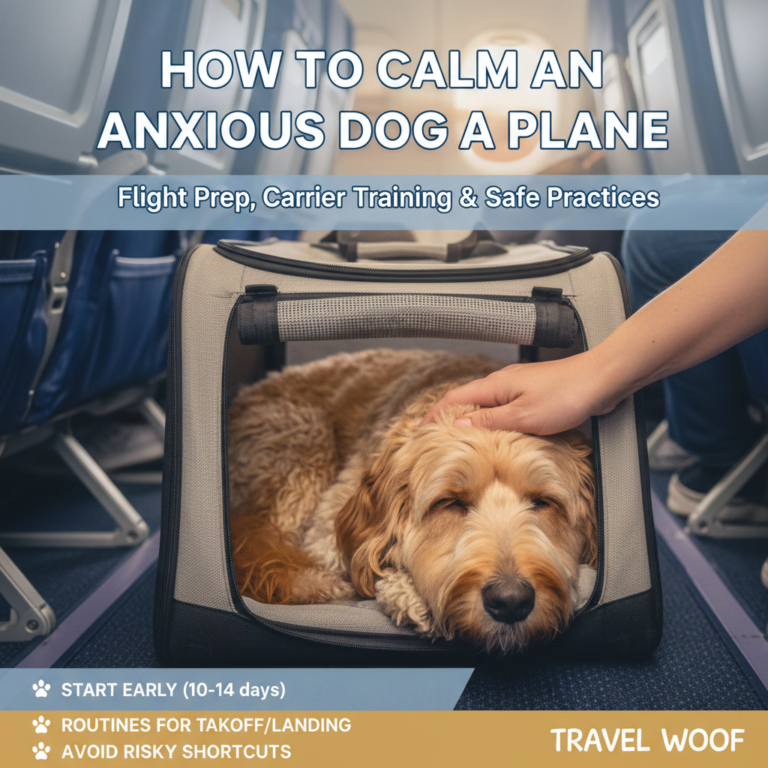
Most safety concerns reported over the past decade are linked to cargo hold transport or non-compliant carriers, not regulated in-cabin travel. Across the United States, European Union, and Australia, airlines increasingly encourage small pets to travel under the seat in front of the owner, provided that:
- The pet carrier fits under-seat dimensions
- Ventilation and containment standards are met
- The animal remains inside the carrier for the entire flight
Global airline guidance aligns broadly with recommendations from the International Air Transport Association (IATA), which emphasizes containment, ventilation, and passenger safety.
> Commercial Insight: For brands, “Is flying safe for pets?” is no longer the key question. The real buyer concern is: “Will this product consistently pass airline checks across regions?”
Why In-Cabin Pet Travel Is Safer Than Cargo Hold Transport
For small pets (typically under 8–10 kg including carrier), in-cabin travel significantly reduces risk compared with cargo transport.
Key Advantages of In-Cabin Travel
- Stable environment: Consistent temperature and air pressure.
- Constant supervision: Owner can monitor the pet's condition.
- Immediate response: Quick action in case of distress.
- Safety from delays: No exposure to ground handling issues or tarmac weather.
From a commercial perspective, this is why airline pet backpacks, not rigid crates, dominate the fast-growing in-cabin pet travel category.
The Real Risk Factors in Pet Air Travel
Despite growing acceptance, risk still exists—and it is highly design-dependent.
Primary Risk Factors
- Travel-induced stress and anxiety.
- Restricted airflow under airline seats.
- Sudden movement during taxi, takeoff, or turbulence.
- Denied boarding due to non-compliant carrier size or structure.
Each of these risks can be mitigated—or amplified—by backpack design.
How the Right Airline Pet Backpack Reduces Stress and Injury Risk
For US, AU, and EU airlines, enforcement focuses less on branding claims and more on functional performance at the gate.
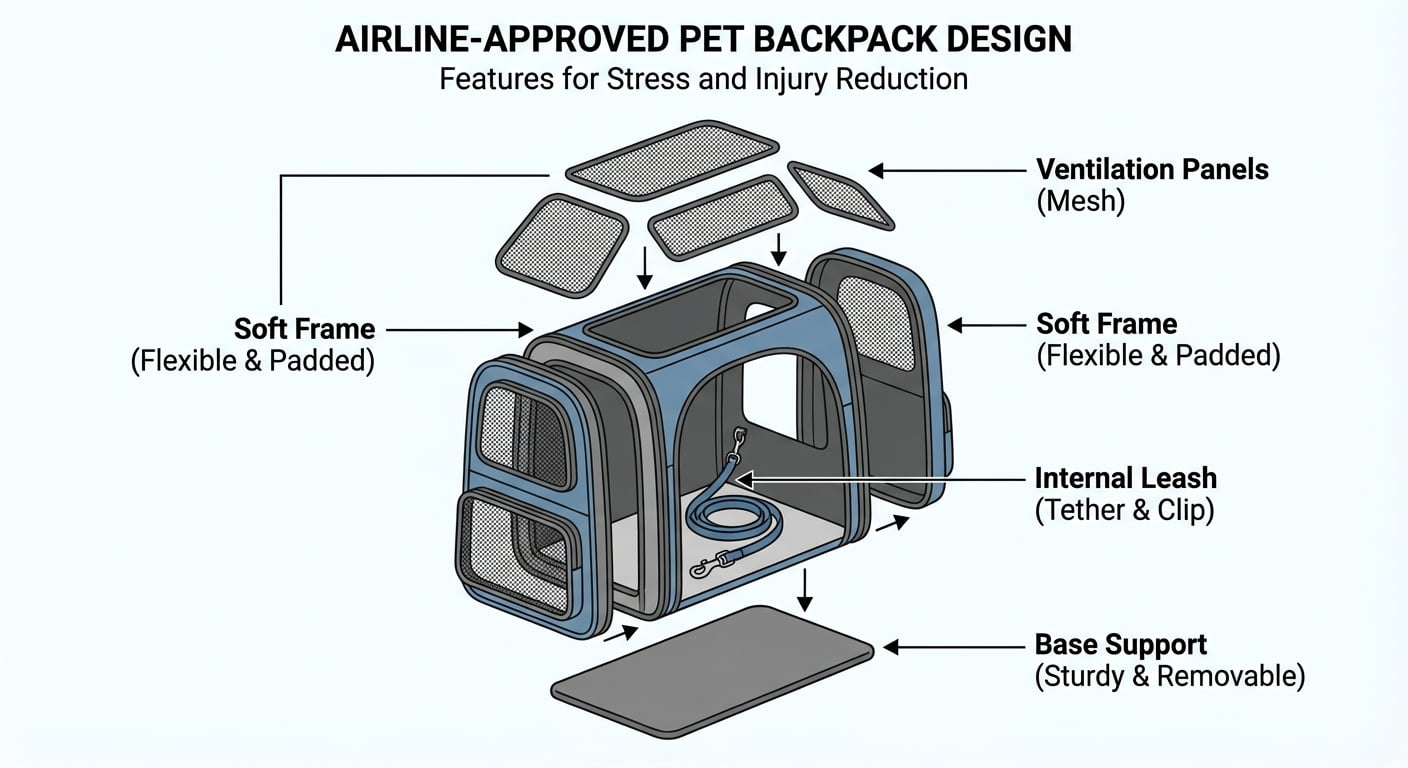
1. Ventilation Under Real Under-Seat Conditions
Airlines expect multi-panel mesh ventilation, not decorative air holes. Backpacks must maintain airflow even when compressed under seats on narrow-body aircraft.
2. Soft-Sided Structure & Impact Absorption
Soft-sided, flexible frames:
- Absorb vibration.
- Reduce pressure points.
- Adapt to varying under-seat dimensions.
3. Stable Pet Posture
Internal base support and balanced weight distribution help prevent slouching, neck strain, and panic movements during flight.
4. Visual Contact With Owner
Transparent or semi-open mesh panels allow pets to maintain visual reassurance, a proven stress-reduction factor.
Comparison Table: Carrier Options and Airline Acceptance
| Feature | Hard Pet Carrier | Generic Soft Bag | Airline Pet Backpack |
|---|---|---|---|
| Under-seat adaptability | Low | Medium | High |
| Ventilation coverage | Limited | Inconsistent | Optimized |
| Stress reduction | Low | Medium | High |
| Boarding approval rate | Unstable | Unstable | More consistent |
| Cross-region suitability | Low | Medium | High (design-led) |
B2B takeaway: Airline pet backpacks offer the best balance between compliance, comfort, and commercial scalability.
What US, AU, and EU Airlines Actually Look For in 2025
Despite regional differences, enforcement criteria are remarkably consistent:
- Fits completely under the seat.
- Soft-sided and compressible.
- Secure closures (no exposed zippers).
- Leak-resistant base.
- Adequate ventilation on multiple sides.
⚠️ Important: “Airline Approved” is not an official certification in the US, EU, or Australia. Airlines assess products case by case at boarding.
Common Design Mistakes That Increase Commercial Risk
For brands and distributors, these mistakes lead to returns, complaints, and lost trust:
- Overly rigid frames that fail under-seat physical checks.
- Insufficient mesh area after the carrier is compressed.
- Misleading size labels that ignore aircraft variation.
- Heavy empty weight reducing the allowable pet size.
Buyer Checklist: Airline Pet Backpack Compliance (B2B)
10-Point Procurement Checklist
- [ ] Under-seat fit tested on narrow-body aircraft.
- [ ] Multi-side ventilation mesh.
- [ ] Soft, compressible perimeter.
- [ ] Lockable, airline-safe zippers.
- [ ] Reinforced shoulder and back support.
- [ ] Internal safety tether.
- [ ] Washable lining for hygiene.
- [ ] Clearly labeled weight limits.
- [ ] Neutral, airline-friendly exterior design.
- [ ] Compliance documentation available on request.
RFQ Template (Copyable)
Request for Quotation – Airline Pet Backpack
- Target markets: US / EU / AU
- Airline focus: In-cabin, under-seat
- Pet weight range: Material requirements: Annual order volume: Testing or compliance expectations: Private label / OEM requirements: ---
Frequently Asked Questions (FAQ)
Is flying safe for pets in cabin? Yes, for small pets, in-cabin travel is generally safer than cargo when airline rules are followed.
Are airline-approved pet backpacks universally accepted? No. Acceptance depends on size, structure, and airline discretion at boarding.
Do US, EU, and AU airlines follow the same standards? They differ slightly, but under-seat fit, ventilation, and soft-sided design are consistent priorities.
Is “Airline Approved” a regulated term? No. It is a marketing term, not an official airline certification.
CTA
Need technical guidance on designing airline-ready pet backpacks for US, AU, and EU airlines? Our team can support validation and development.