Table of Contents
- [Introduction: Why Your Choice of Beach Bag Reflects Your Brand]
- [TPU vs. PVC: The Great Material Debate]
- [The Science of Dry: Why Welding Beats Stitching]
- [Durability Standards for Hotels and Resorts]
- [Custom Branding: Making an Impact Without Compromising Quality]
- [Key Takeaways]
- [FAQ]
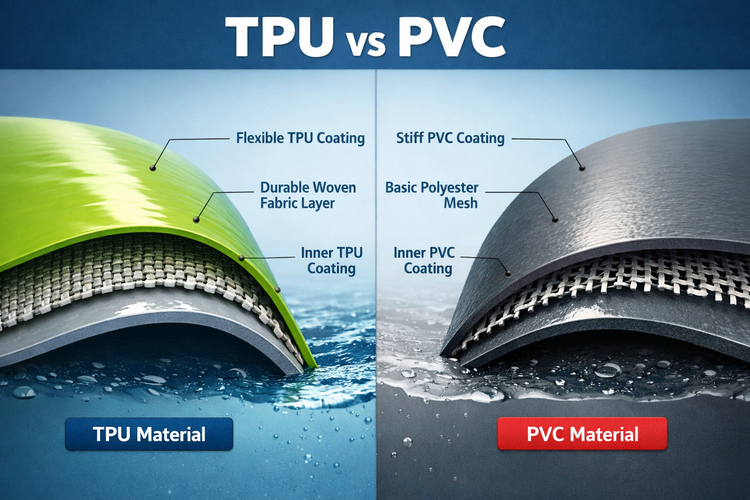
[📷 Image suggestion: A high-quality cross-section of a TPU vs PVC dry bag material showing texture and flexibility | Alt: TPU vs PVC waterproof beach bag material comparison]
Introduction: Why Your Choice of Beach Bag Reflects Your Brand
In the world of B2B procurement—whether you are sourcing for a luxury Mediterranean resort or a global retail chain—the "waterproof" label is often thrown around loosely. However, a bag that leaks or peels after three days in the sun isn't just a product failure; it’s a hit to your brand's reputation.
Today’s procurement managers are moving away from disposable, low-quality options toward heavy duty beach dry bags that offer a high Return on Investment (ROI) through longevity and eco-friendliness. In this deep dive, we’ll explore the technical nuances that separate a "cheap giveaway" from a "premium brand asset."
[📊 Cite: Global Outdoor Gear Market Report 2025 - Increasing demand for eco-friendly TPU materials in marine environments.]
TPU vs. PVC: The Great Material Debate
When sourcing bulk waterproof beach bags, the first decision you’ll face is the base polymer. While PVC (Polyvinyl Chloride) has been the industry standard for decades due to its low cost, TPU (Thermoplastic Polyurethane) is rapidly becoming the gold standard for premium B2B applications.
Why TPU is the Superior Choice
TPU is a "bridge" between rubber and plastic. It is incredibly flexible, durable, and, most importantly, environmentally friendly.
- Environmental Impact: TPU is biodegradable over 3-5 years in soil and doesn't release toxic phthalates or dioxins. This is a critical selling point for resorts aiming for "Green Key" or LEED certifications.
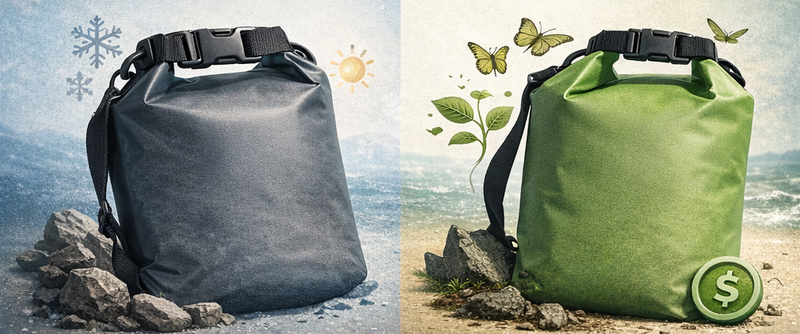
- Temperature Resilience: PVC tends to become brittle in cold weather and "sticky" or off-gassing in extreme heat. TPU maintains its structural integrity from -30°C to +70°C.
- Abrasion Resistance: TPU has significantly higher shear strength, meaning it won’t puncture easily when tossed onto rocky shores or packed in tight luggage.
| Feature | PVC (Polyvinyl Chloride) | TPU (Thermoplastic Polyurethane) |
|---|---|---|
| Eco-Friendliness | Low (Contains Phthalates) | High (Recyclable & Biodegradable) |
| Durability | Moderate (Prone to cracking) | Exceptional (Abrasion resistant) |
| Feel/Hand-feel | Plastic-like / Stiff | Soft / Premium / Rubber-like |
| Cost | Budget-friendly | Premium Investment |
Expert Insight: If your target audience is the high-end luxury market, PVC's distinct "plastic smell" can diminish the perceived value of your gift or merchandise. TPU is odorless and offers a much more sophisticated matte or transparent finish.
The Science of Dry: Why Welding Beats Stitching
A common mistake in purchasing heavy duty beach dry bags is overlooking the seams. In a truly waterproof bag, there are no needles involved.
High-Frequency (HF) Welding Explained
High-Frequency welding (also known as Radio Frequency welding) uses electromagnetic energy to agitate the molecules of the TPU or PVC, causing them to fuse together at a molecular level.
- Waterproof Integrity: Unlike stitching, which creates thousands of tiny holes for water to seep through, a welded seam is a single, continuous piece of material.
- Stress Distribution: Welded seams are actually stronger than the surrounding material itself. Under heavy loads (like carrying 10kg of wet towels), a stitched seam will "grin" or pull apart; a welded seam will hold firm.
- Aesthetics: HF welding creates a clean, "bonded" look that is essential for custom branded beach bags aiming for a modern, sleek aesthetic.
The "Stitch-and-Tape" Trap: Some suppliers use traditional stitching and then apply a waterproof tape over the inside. For B2B buyers, beware: salt water and heat often cause this tape to delaminate within one season. Always insist on 100% Seamless Welded Construction.
Durability Standards for Hotels and Resorts
For a resort procurement manager, the "Total Cost of Ownership" (TCO) is more important than the "Unit Price." A bag that lasts three seasons is cheaper than a bag that lasts one month.
The "Resort-Ready" Checklist
- UV Resistance: Constant exposure to UV rays degrades cheap polymers. Ensure your bulk order specifies UV-stabilized coatings to prevent yellowing or "chalking" (the white powdery residue seen on old plastic).
- Denier Rating (Fabric Density): Look for at least 500D to 600D (Denier) polyester or nylon base fabric. This provides the "Heavy Duty" backbone that prevents the bag from stretching out of shape.
- Salt-Water Resistant Hardware: Zippers and D-rings must be high-grade plastic (like Duraflex) or 316 Stainless Steel. Standard metal alloy zippers will corrode and seize within weeks of salt spray exposure.
[📊 Cite: Hospitality Quality Assurance Standards - Durability metrics for guest-facing amenities.]
Custom Branding: Making an Impact Without Compromising Quality
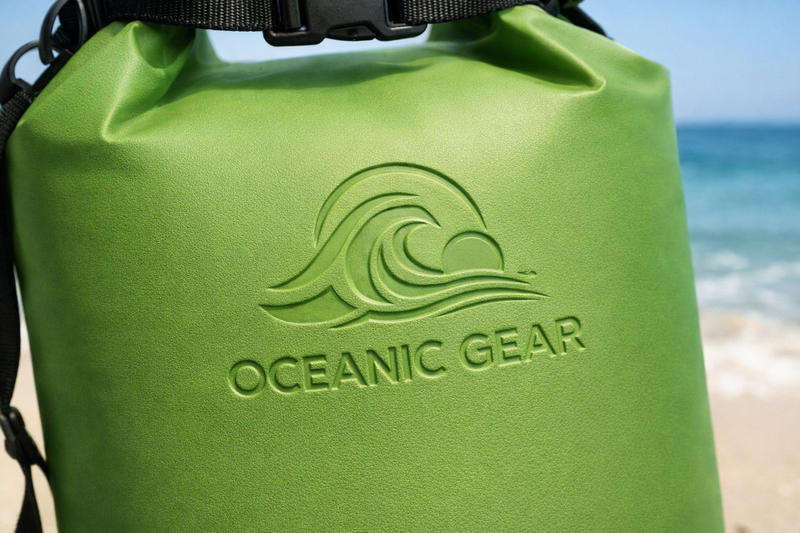
When ordering custom branded beach bags, the method of logo application matters as much as the bag itself.
Best Practices for B2B Branding
- Screen Printing: Best for large, simple logos. When done on TPU, use specialized inks that "bond" with the surface to prevent peeling.
- Laser Etching: Works beautifully on darker TPU materials for a subtle, high-end "stealth" look.
- Reflective Prints: A great safety feature for guests who might be walking back to their villas at dusk.
[🎯 CTA: Request a Custom Sample Kit for Your Resort]
Key Takeaways
- Choose TPU over PVC if you value environmental sustainability, a premium feel, and long-term durability.
- Prioritize HF Welding over stitched seams to ensure 100% waterproof performance and higher weight-bearing capacity.
- Resort Standards require UV resistance and salt-water-proof hardware to survive the harsh coastal environment.
- Quality Branding should be integrated into the design phase to ensure the logo doesn't peel or compromise the bag's structure.
FAQ Schema
Q: What is the minimum order quantity (MOQ) for custom branded beach bags? A: Most professional manufacturers require an MOQ of 300-500 pieces for full customization (color, size, and logo), though "ready-to-ship" stock with simple logo prints can often be ordered in smaller quantities of 50-100.
Q: Is TPU really worth the extra cost compared to PVC? A: Yes, specifically for B2B applications. TPU's resistance to UV, oils, and cold-cracking means fewer replacements and higher guest satisfaction, ultimately lowering your long-term procurement costs.
Q: Can these bags be submerged in water? A: Most "roll-top" beach dry bags are rated IPX6 (protected against powerful water jets/heavy rain). For full submersion (IPX8), you would need a specialized airtight zipper system.
Q: How do I clean and maintain bulk beach bags for my guests? A: TPU bags are non-porous and easy to sanitize. A simple wipe-down with fresh water and mild soap is sufficient. Avoid machine washing, as the mechanical agitation can damage the welded seams over time.
Q: How long does the custom production process take? A: Typically, for bulk waterproof beach bags, you should allow 15 days for sampling and 30-45 days for mass production and shipping, depending on the complexity of the custom features.
Written by the [Brand Name] Content Team – Specialists in High-Performance Marine Gear.
[🎯 CTA: Download our 2026 Waterproof Gear Catalog for Procurement Managers]