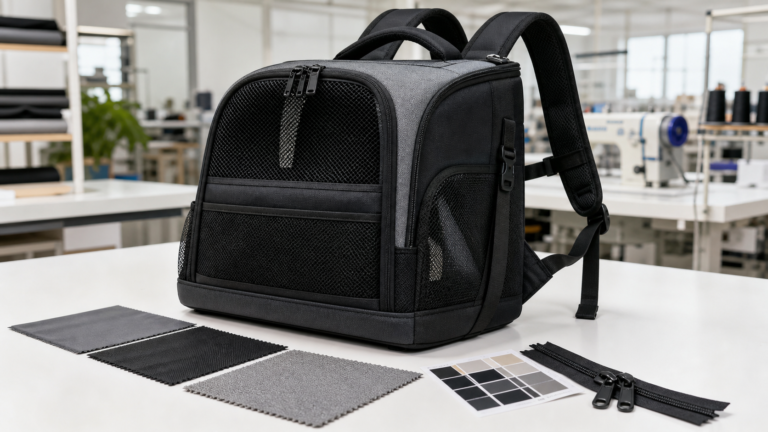
A pet carrier for plane travel can fail before the flight. The problem is often not fabric only. It is claim wording, fit, and structure.
Buyers should treat airline compatibility as a design and documentation target, not a universal promise. Check under-seat fit, soft-sided compression, ventilation, leak resistance, zipper security, removable pads, and claim wording.
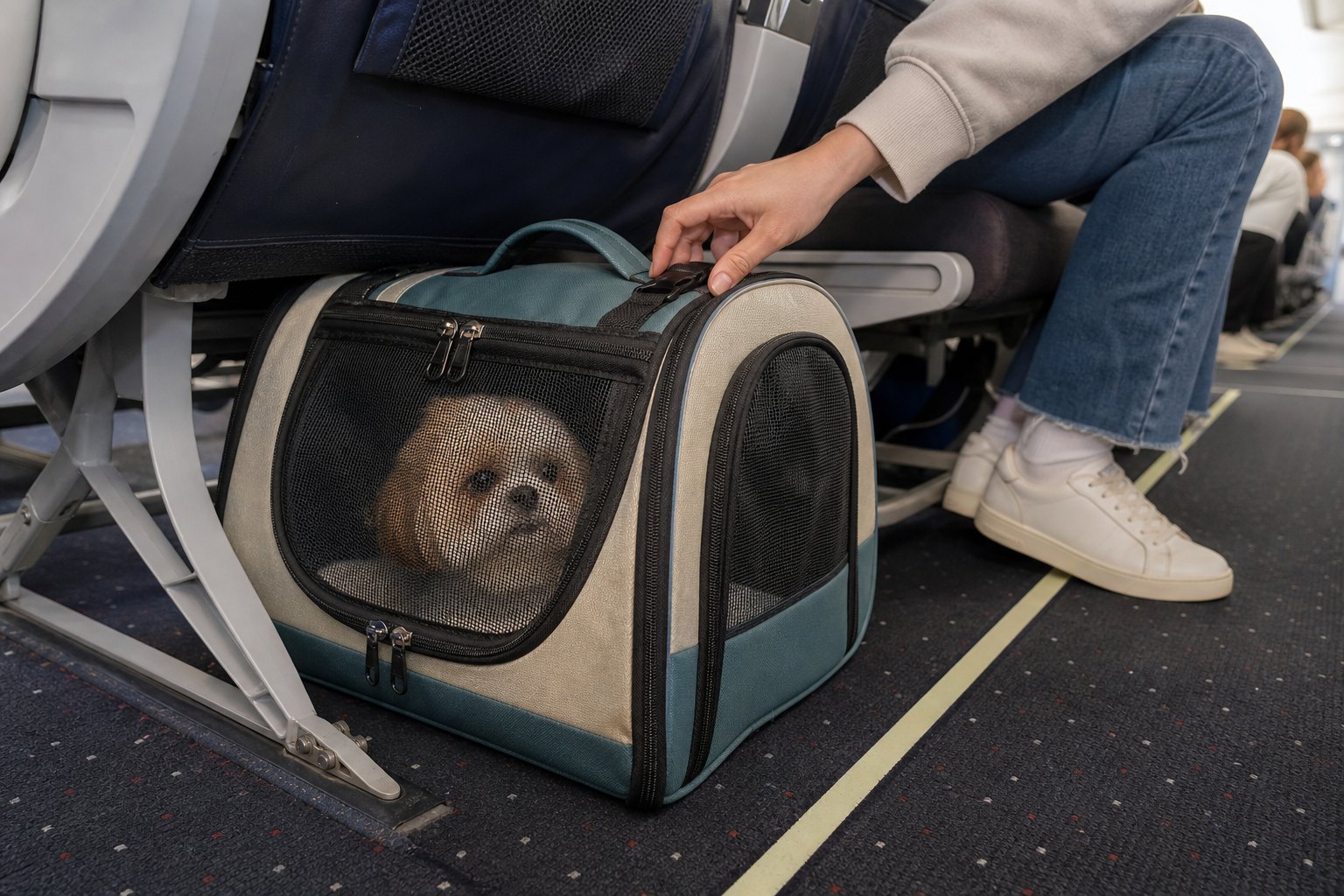
I write this from the sourcing side because I have seen one phrase create too much risk: "airline approved." It sounds useful for search. It also sounds simple for a retail listing. But real airline travel is not simple. Seat space changes by airline, aircraft, cabin, and route. Rules can change. A carrier that works for one trip may not be accepted on another trip if the size, pet fit, or check-in standard is different.
For OEM buyers, the safer question is not "Can I print airline approved?" The safer question is, "What product design, documentation, and wording can support my target market?" That question leads to better sampling. It also helps buyers avoid customer complaints after launch.
If you are building a pet travel line, you can use LISO's pet carrier manufacturer page as a starting point, then compare the design with your target airline and retail requirements.
Related sourcing route: If the project is a backpack-style carrier, compare this plane-travel guide with LISO's airline-ready pet carrier backpack sourcing guide, the soft-sided pet backpack carrier manufacturer page, and the broader pet backpack carrier program. Use the child page when the buyer needs direct discussion of mesh strength, bottom-board support, removable-pad cleaning and logo MOQ before sample approval.
Why Should Buyers Be Careful With "Airline Approved" Claims?
The phrase looks powerful, but it can become a promise the product cannot defend. Airline policies are not one universal product standard.
"Airline approved" is risky because acceptance can depend on airline rules, aircraft under-seat space, pet size, cabin type, route, and check-in judgment. Buyers should use precise compatibility wording and keep proof ready.
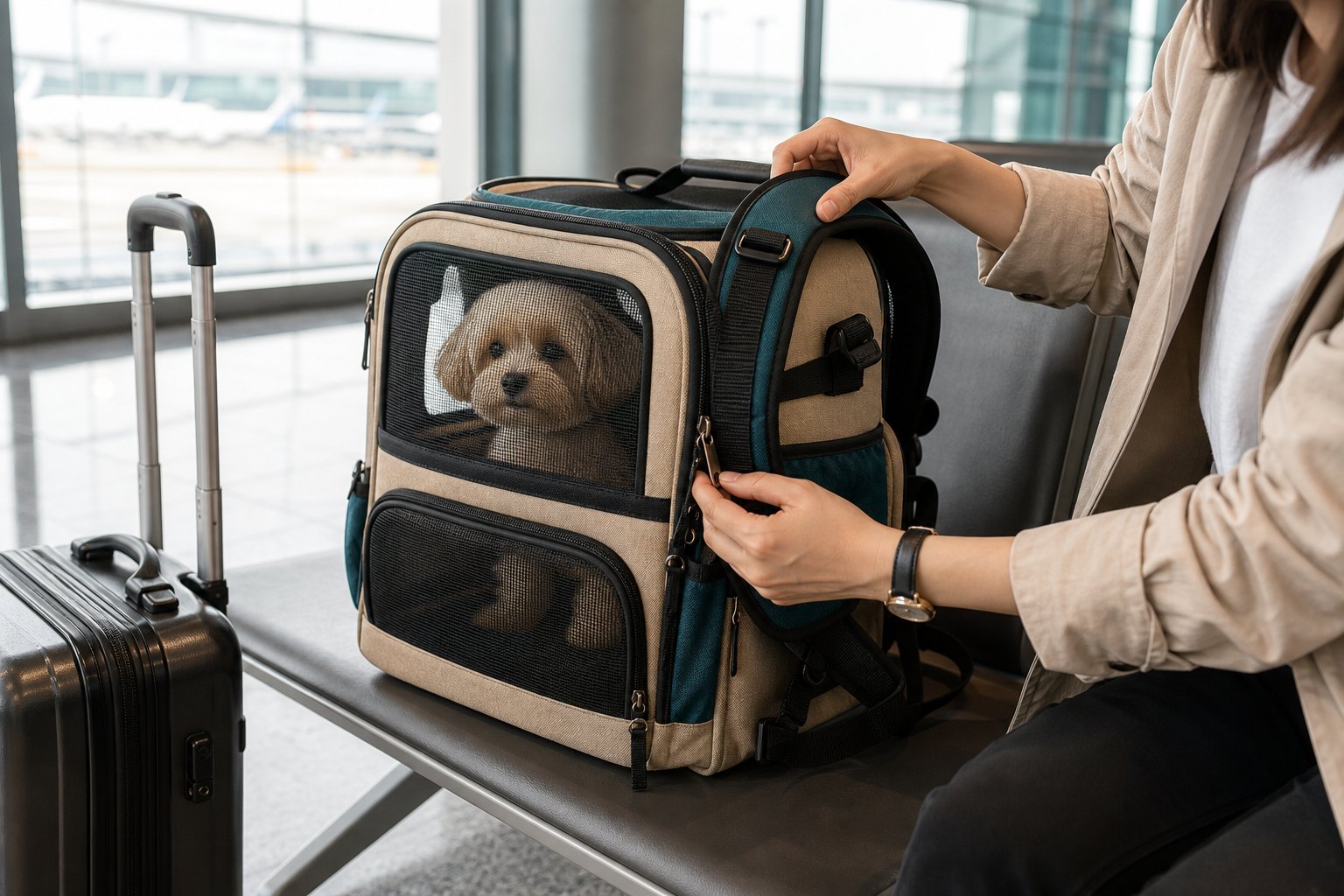
What should buyers say instead of making a universal claim?
I prefer wording that is clear and honest. A buyer can say "designed for in-cabin travel use" when the dimensions, structure, and materials support that purpose. A buyer can say "fits many common under-seat requirements" only when they have checked the target carriers and aircraft. A buyer should avoid saying "fits all airlines" or "approved for every flight." That is too broad.
The product page, packaging, and Amazon listing should also guide the end customer to confirm their own airline rules before flying. This is not weak marketing. It is responsible marketing. It shows that the brand understands travel reality.
For B2B sourcing, I ask buyers to keep a documentation folder before launch. It can include product dimensions, photos of compression behavior, material information, ventilation layout, leak-resistant bottom details, zipper and puller specifications, and any test reports required by the target market. This folder helps the buyer answer retailer questions and customer service questions later.
| Risk phrase | Better wording | Why it is safer |
|---|---|---|
| "Airline approved" | Designed for in-cabin pet travel use | It describes intent without claiming every airline accepts it |
| Fits all airlines | Check target airline and aircraft rules before travel | It respects rule differences |
| IATA compliant | Use only if the buyer has exact supporting evidence | It avoids unsupported standard claims |
| 100% leak proof | Leak-resistant bottom or leak-resistant liner | It is easier to support with real construction |
| Guaranteed to fit | Sized for common under-seat travel needs | It avoids a universal promise |
Good SEO should not create bad customer service. I want buyers to win traffic with wording that can survive real questions.
What Dimensions Should Buyers Confirm Before Approving an In-Cabin Carrier?
A pet carrier for plane use must be designed around space limits. The most important space is usually under the seat in front of the passenger.
Buyers should confirm length, width, height, soft-sided compression, pet fit, and target airline rules before approving a pet carrier for plane programs. The carrier must fit the pet and the travel environment.
Why is a size chart not enough?
A size chart is a starting point, not the full answer. A soft-sided carrier can compress slightly. That can help it fit under a seat. But it should not collapse onto the pet. If the top panel presses down too much, the product may pass a simple dimension check but fail the comfort test. A buyer should ask for photos or a video that shows how the carrier keeps shape under light compression.
Pet fit also matters. The pet should be able to stay inside the closed carrier with reasonable comfort. If the retail buyer targets cats and small dogs, the size range should be realistic. A bigger carrier may feel more comfortable at home, but it may not fit under many seats. A smaller carrier may fit better, but it can create stress for the pet if the internal space is too tight.
| Dimension question | What I ask the buyer to confirm | Why it matters |
|---|---|---|
| Outer size | Length, width, height after sewing tolerance | It affects airline and retail listing accuracy |
| Internal space | Pet sitting and lying comfort | It affects customer satisfaction |
| Compression | How much the top and sides flex | It affects under-seat fit and pet comfort |
| Shape recovery | Whether panels bounce back after compression | It affects long-term appearance |
| Tolerance | Production variation from sample to bulk | It affects complaint risk |
I also suggest that buyers create their own target-airline matrix. List the main markets, airlines, and carrier size notes. Then design the product around that matrix instead of copying a competitor listing.
How Should Soft-Sided Structure Balance Compression and Pet Comfort?
Soft-sided does not mean shapeless. A good travel carrier needs controlled flexibility, stable panels, and enough airflow.
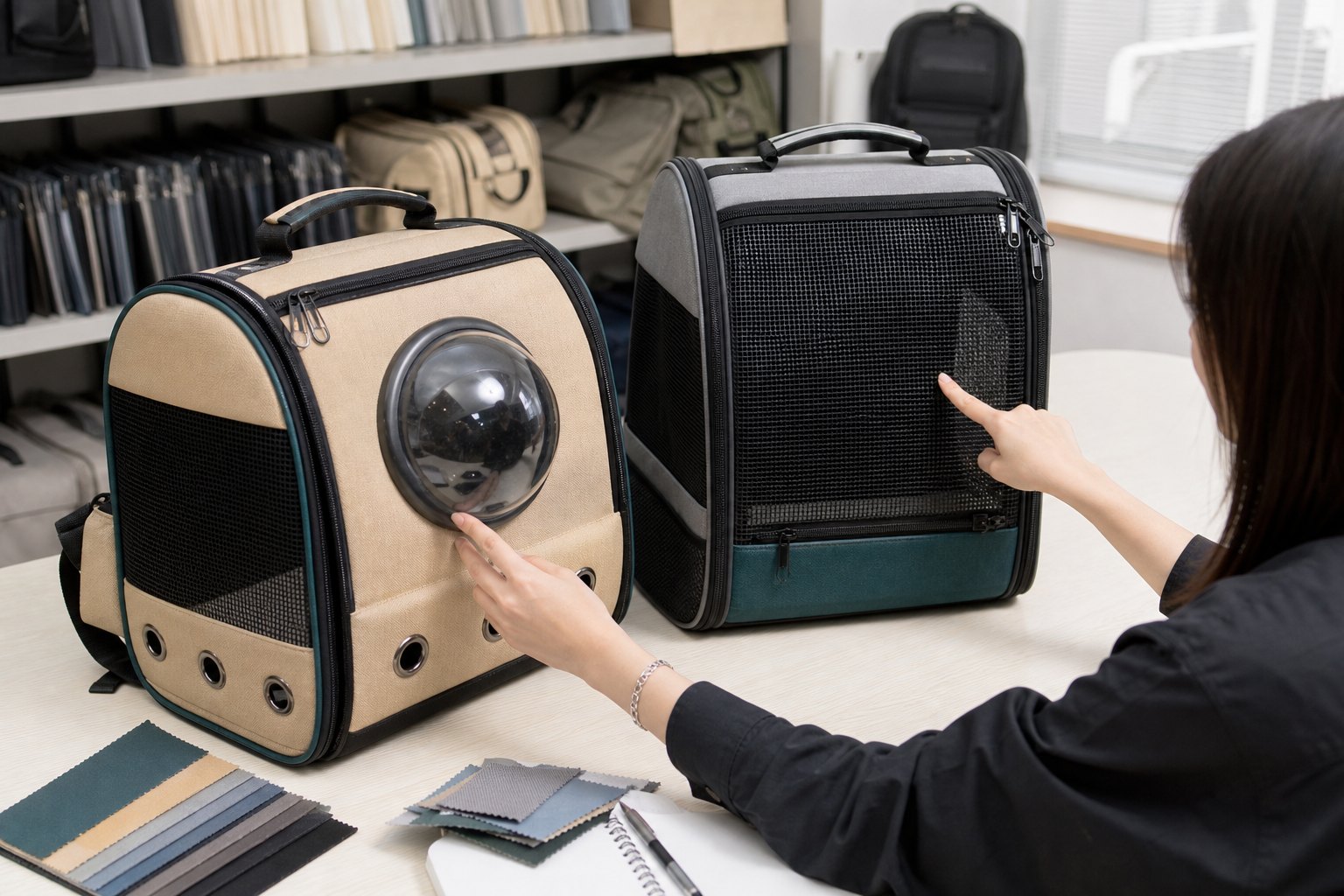
A soft-sided in-cabin pet carrier should compress enough for travel handling, but it should keep a safe interior space through panel support, bottom stability, mesh ventilation, and balanced zipper openings.
Where does structure usually fail?
Structure often fails at the top panel, side wall, bottom, and zipper opening. If the top is too soft, it may fold down. If the side walls are too weak, the bag can look collapsed in use. If the bottom board is too thin, the pet may feel unstable. If the zipper opening is poorly planned, the carrier can lose shape when opened.
Ventilation is another part of structure. Mesh panels should support airflow, but they also need to resist claw damage. A large mesh panel looks breathable, but it may reduce structure if it is not framed well. A very small mesh panel may look cleaner, but it can create heat and anxiety during travel. The buyer should balance mesh area, mesh strength, stitching, and panel support.
For OEM development, I ask buyers to decide the travel scene first. Is the product for airport use only? Is it for car and flight combined? Will the owner carry it by hand, shoulder, luggage strap, or backpack mode? These choices change the support points.
| Structure area | Better design question | Buyer risk if ignored |
|---|---|---|
| Top panel | Does it flex without pressing the pet? | Comfort complaints and check-in concern |
| Bottom board | Does it stay flat when lifted? | Pet feels unstable |
| Mesh panel | Does it balance airflow and strength? | Heat, claw damage, or weak side walls |
| Zipper path | Does opening weaken the shape? | Bag collapses during loading |
| Carry points | Are handles and straps reinforced? | Load-bearing failure |
This is why a low-price sample needs real handling. A soft-sided pet carrier can look fine when empty. It tells the truth when it carries weight.
What Details Should Buyers Inspect Before Claiming Travel-Ready Quality?
Travel-ready quality is not one feature. It is a group of small details that work together during a stressful trip.
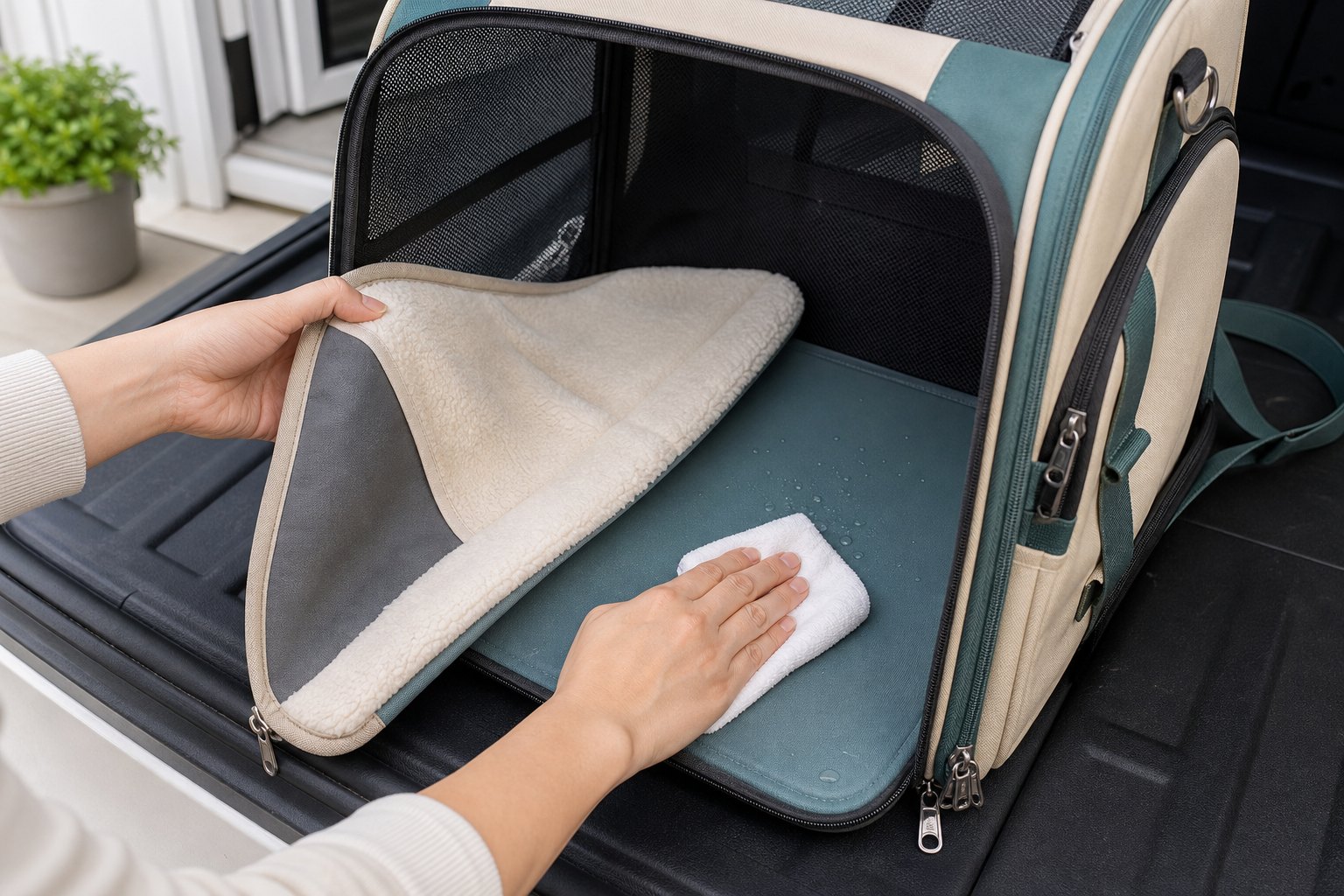
Before claiming travel-ready quality, buyers should inspect leak-resistant bottom construction, removable inner pad cleaning, zipper security, ventilation, strap reinforcement, luggage sleeve fit, label wording, and production tolerance.
Which sample checks help buyers avoid returns?
I start with the parts that create returns. The first is the bottom. Many customers care about accidents, moisture, and cleaning. A leak-resistant bottom can be made with coating, lining, or a tray-style insert, but each solution has a trade-off. A coated sewn panel may be lighter. A tray insert may be easier to wipe or replace. The right answer depends on price, weight, and cleaning promise.
The second is the removable pad. If the pad can be removed and cleaned, the brand can make a practical cleaning promise. If the pad is fixed, cleaning becomes harder and after-sales risk rises. I would rather make a modest but true claim than a strong claim that fails after one accident.
The third is the zipper. Travel carriers are opened and closed many times during a trip. A weak zipper can ruin a good bag. Buyers should check zipper smoothness, slider strength, puller shape, and whether the pet can push into the opening. If the product uses a safety tether, the tether connection should also be reinforced.
| Inspection point | What to test | What to record |
|---|---|---|
| Bottom | Lift with weight, wipe after moisture, check seams | Bottom material and cleaning method |
| Pad | Remove, wash or wipe, reinstall | Pad fabric and care wording |
| Zipper | Open and close many times with light tension | Zipper brand or agreed grade |
| Ventilation | Check airflow path and mesh strength | Mesh size, location, and panel count |
| Straps | Lift by handle and shoulder strap | Stitching pattern and reinforcement |
If a buyer wants to sell a pet carrier for plane travel, the sample should be tested like a travel product, not like a photo prop.
How Should Buyers Prepare Labels, Listings, and Sales Copy?
A strong product can still create problems if the listing promises too much. Sales copy must match the design and the evidence.
Buyers should prepare claim wording, care instructions, size notes, target-use limits, material details, and customer-service answers before launch. This keeps SEO, sales, and after-sales teams aligned.
What should be ready before the first bulk order?
I like to prepare the content system before production. This sounds early, but it helps the buyer catch weak product logic. If the listing says the carrier is for in-cabin travel, the product should have a size explanation. If the listing says easy cleaning, the product should show the removable pad. If the listing says breathable, the mesh panels should be visible and strong. If the listing says durable, the buyer should know how the straps, handle, and zipper were specified.
This is also where the factory and buyer should agree on final wording. The factory can provide product specs. The buyer controls the market claim. Both sides should avoid phrases that cannot be defended. If a buyer sells in more than one country, they should check the label rules and marketplace rules for each target market.
For LISO projects, I prefer a buyer-first checklist:
| Launch item | Why I prepare it early |
|---|---|
| Size note | It reduces airline-fit misunderstandings |
| Care label | It protects the cleaning promise |
| Material note | It supports premium or value positioning |
| Claim wording | It reduces compliance and customer-service risk |
| Product photos | It shows ventilation, bottom, zipper, and pad details |
| FAQ answers | It helps the buyer respond to real travel questions |
If your product is designed well, clear wording makes it stronger. If the wording is too aggressive, even a good product can become a problem.
Related LISO Sourcing Resources
- Pet carrier manufacturer for soft-sided carriers, airline-ready size planning, fabric, coating, MOQ and QC.
- Pet backpack carrier manufacturer for backpack-style programs, shoulder strap checks, mesh options, bubble windows and private label packaging.
- Airline-ready pet carrier backpack guide for honest airline-ready wording, load testing, rolling carrier MOQ risk and cleaning checks.
- Pet backpack sample inspection guide for fabric, stitching, bottom support, zippers and low-MOQ customization.
- Pet Travel hub for carriers, dog beds, pet car accessories and stroller programs.
<section class="wp-block-group" data-cluster-target="pet-carrier" style="margin:32px 0;padding:24px;border:1px solid #d9e6e4;border-radius:14px;background:#f7fbf9;"> <h2 style="margin:0 0 12px;color:#1f2a26;font-size:24px;line-height:1.25;">Related OEM sourcing page</h2> <p style="margin:0 0 14px;color:#4f5f59;line-height:1.7;">If this article is part of your carrier sourcing work, use the core product page to turn airline wording, under-seat fit, ventilation, zipper security and cleanable pad requirements into one RFQ. Continue with the <a href="https://lisohome.com/product/pet-travel/pet-carrier-manufacturer/">OEM pet carrier manufacturer page</a>.</p> <ul style="margin:0;padding-left:20px;color:#4f5f59;line-height:1.7;"><li>Soft-sided and airline-ready carrier programs</li><li>MOQ and custom packaging planning</li><li>Load, zipper, mesh and leak-control checks</li></ul> </section>
Conclusion
A strong in-cabin pet carrier program needs honest fit planning, stable soft structure, cleanable details, and claim wording that buyers can defend.
My Role
I help OEM buyers turn travel requirements into practical product specifications. I prefer careful wording because careful wording protects the order after launch.