What “Waterproof Beach Mat” Really Means
A waterproof beach mat is a ground mat designed to block moisture from below (wet sand, damp grass, spills) while staying comfortable to sit on.
In practice, “waterproof” can mean waterproof backing only (most common) or fully waterproof construction (backing + seams + edges).
A quick reality check: If a mat has stitched seams, unsealed edges, or absorbent top fabric, it may be water-resistant in the center but still leak at seams or soak on top.
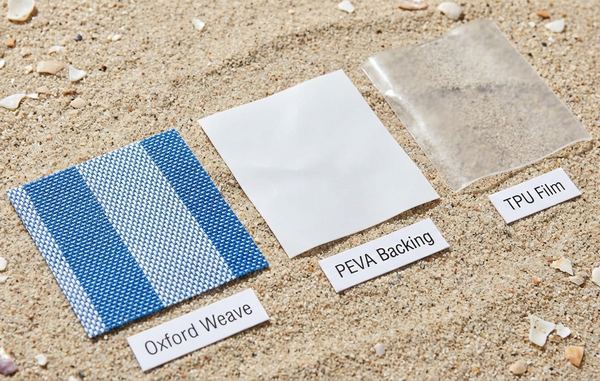
Best Waterproof Beach Mat Materials (and When They Make Sense)
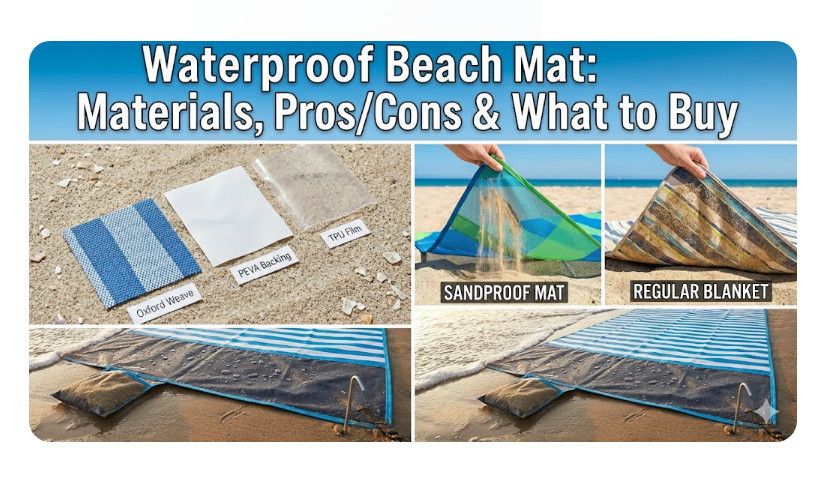
A waterproof beach mat typically combines a top layer (comfort + feel) and a bottom layer (water barrier).
The “best” material depends on whether you care more about durability, comfort, sand control, or pack size.
1) Oxford Fabric (Polyester) + Waterproof Backing (TPU/PEVA)
Oxford polyester refers to a durable woven fabric often used in outdoor gear.
It’s popular because it balances tear resistance, cost, and portability.
Best for: frequent beach trips, families, general outdoor use.
2) TPU (Thermoplastic Polyurethane) Backing
TPU is a flexible, durable waterproof film often used as a backing layer.
It tends to feel more premium than basic plastic backing.
Best for: buyers who want longer lifespan and better flex performance.
3) PEVA Backing (PVC-Free Alternative)
PEVA is a plastic-like waterproof layer frequently used for mats and liners.
It’s usually cost-effective and easy to wipe clean.
Best for: value buyers who still want a true moisture barrier.
4) Polyethylene (PE) or “Plastic Film” Backing
PE film is common in budget mats.
It can be waterproof, but often sacrifices durability and long-term crack resistance.
Best for: occasional use, backup/travel mats.
5) Silicone-Coated Fabrics / Specialty Coatings
Silicone coatings can create excellent water repellency and easy cleaning.
However, product quality varies widely depending on coating thickness and base fabric.
Best for: buyers optimizing for water beading + easy cleanup.
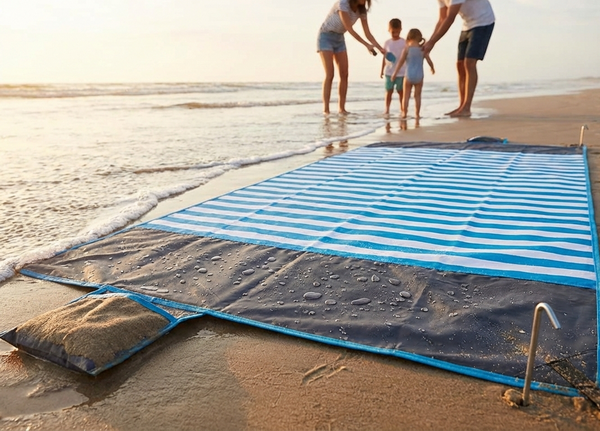
Pros & Cons by Material
A waterproof beach mat choice is essentially a trade-off between durability, comfort, noise/feel, and cost.
Use this table as a fast filter before you compare brands.
| Material / Build | Waterproofness | Durability | Comfort | Sand Handling | Weight | Typical Best For | Main Downsides |
|---|---|---|---|---|---|---|---|
| Oxford + TPU backing | High | High | Medium | Medium | Medium | Most buyers, families | Pricier than budget film |
| Oxford + PEVA backing | High | Medium-High | Medium | Medium | Medium | Value + reliability | PEVA can scuff over time |
| Fleece/top fabric + waterproof backing | High (bottom) | Medium | High | Low-Medium | Medium-High | Cooler weather, comfort-first | Top can trap sand and hold water |
| PE film backing (budget) | High (initially) | Low-Medium | Low-Medium | Medium | Low | Occasional use | Cracking/tearing risk |
| Silicone-coated fabric | Medium-High to High | Medium-High | Medium | Medium-High | Low-Medium | Easy-clean users | Quality varies by coating |
[🎯 CTA: If you’re sourcing for a team or retail line, shortlist 2 builds—Oxford+TPU (premium) and Oxford+PEVA (value)—then request samples to compare seam and edge construction.]
What to Buy: A Practical Selection Checklist
A waterproof beach mat is only “good” if it survives your real usage: wind, kids, food, saltwater, and repeated folding.
Use this checklist to avoid the most common purchase mistakes.
1) Verify the Waterproof Layer (Not Just the Label)
A true waterproof beach mat should have a continuous waterproof backing (TPU/PEVA/PE film) and edges that don’t wick water.
Look for:
- “Waterproof backing” + material stated (TPU/PEVA/PE)
- Bound edges or sealed laminate transitions
- Wipe-clean underside
Red flags:
- No backing material listed
- Absorbent underside
- Thin film that feels brittle
2) Check Seam and Edge Construction
Seams and edges are where moisture sneaks in.
If the mat is stitched through the waterproof layer, it may need taped seams or smart binding design.
Prefer:
- Minimal seams in the sitting area
- Reinforced corners
- Neat binding that doesn’t fray
3) Sand Management Features (Underrated)
Sand isn’t just messy—it’s abrasive and shortens lifespan.
Choose designs that reduce sand migration and prevent wind lift.
Helpful features:
- Corner sand pockets
- Stakes/anchor loops
- Weighted corners
- Smooth top surface that shakes off easily
4) Cleaning Friction: Wipe vs Wash
The best waterproof beach mat is the one you’ll actually keep clean.
If you hate laundry, prioritize wipe-clean top surfaces and non-absorbent layers.
If kids/pets are involved: wipe-clean becomes a real ROI factor.
5) Comfort & Skin Feel (Top Layer Matters)
A waterproof backing doesn’t guarantee comfort.
Top layers vary from smooth polyester to softer textiles.
Rule of thumb:
- Smooth polyester top = easier sand shake-off, faster dry
- Soft textile top = better comfort, but can trap sand and hold moisture
Size, Weight, and Packability: How to Pick the Right Dimensions
Picking the wrong size is the #1 reason people “upgrade” after one season.
Match size to how many people actually sit/lie down.
Common sizing guidance
- 1–2 adults: ~59" x 79" (150 x 200 cm) range
- 2 adults + child / gear: ~79" x 79" (200 x 200 cm)
- Family (3–5): larger square/oversized formats
Carry style matters
- Backpack carry: prioritize compact fold + lightweight
- Car/beach wagon: size and comfort can increase
- Travel flights: look for packable designs and lighter builds
Use-Case Recommendations (Beach, Park, Camping, Kids)
A waterproof beach mat is most effective when you choose for the surface and conditions.
Beach (wet sand + wind)
A beach mat should be wind-stable and easy to shake clean.
Choose corner pockets + stakes and a smooth top.
Best pick: Oxford + TPU/PEVA backing, sand pockets, anchor loops.
Park / grass (damp ground)
A mat should block moisture without feeling clammy.
Choose thicker backing and a top that’s comfortable for sitting.
Best pick: Oxford + TPU backing, medium thickness, easy fold.
Camping / mixed terrain
A mat should resist punctures and abrasion.
Choose stronger fabric and reinforced corners.
Best pick: heavier Oxford + TPU, reinforced edges, simple fold.
Families with kids
A mat should be wipe-clean and not hold odors.
Choose quick dry, wipeable surfaces and consider stain resistance.
Best pick: wipe-clean top + waterproof backing, easy wash design.
[🎯 CTA: If you’re buying for frequent use, prioritize durability and cleanability over the softest top—comfort is easy to add with a towel; durability is not.]
Care, Cleaning, and Lifespan Tips
A waterproof beach mat lasts longer if you treat it like outdoor gear.
Most failures happen from abrasion + trapped sand + poor drying.
After each use
- Shake out sand before folding
- Wipe underside if it touched wet sand/mud
- Air dry fully before storage to prevent odor/mildew
Washing guidance (general)
- Spot clean first (mild soap + water)
- Avoid harsh solvents that can degrade coatings
- If machine washable, use gentle cycle and air dry (when allowed by the brand)
Storage
- Store loose/rolled when possible to reduce repeated crease stress
- Keep out of hot car trunks long-term (heat can accelerate coating wear)
Key Takeaways
- A waterproof beach mat works best when it combines a durable top fabric with a true waterproof backing (TPU/PEVA/PE).
- Oxford + TPU is the safest “buy once” choice; Oxford + PEVA is a strong value alternative.
- Don’t ignore edges and seams—they often determine whether a mat leaks or lasts.
- For beach use, sand pockets/anchors and a smooth shake-clean top matter as much as “waterproof.”
- Choose size based on real occupancy + gear, and carry style based on how you travel.
FAQ Schema
Q: What is the best material for a waterproof beach mat?
A: The best all-around choice is typically Oxford polyester with a TPU waterproof backing because it balances durability, flexibility, and moisture blocking. If you want a more budget-friendly option, Oxford with a PEVA backing often delivers solid waterproof performance with slightly lower abrasion resistance.
Q: Are waterproof beach mats actually waterproof or just water-resistant?
A: Many are waterproof on the bottom layer but only water-resistant on the top. A mat is most reliably waterproof when it has a continuous waterproof backing and well-finished edges/seams that don’t let moisture seep through stitching or wicking.
Q: How do I stop my beach mat from blowing away?
A: Choose a waterproof beach mat with corner sand pockets, stake loops, or weighted corners. On windy days, add sand to the pockets or use stakes where permitted to keep the mat stable.
Q: What size waterproof beach mat should I buy for two people?
A: For two adults, a common comfortable range is around 150 x 200 cm (59" x 79"). If you also want space for a cooler or bags, consider stepping up to a larger square format.
Q: How do you clean a waterproof beach mat?
A: Shake off sand, then wipe with mild soap and water. Let it fully air dry before storage. Avoid harsh chemicals that can damage waterproof coatings, and follow the brand’s washing instructions if machine washing is allowed.