Why are large beach tote bags considered a "game-changer" for families?
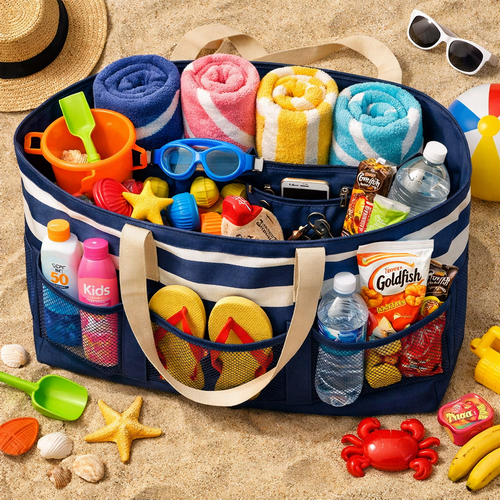
Large beach tote bags transition a beach trip from a chaotic logistics hurdle to a streamlined experience. For families, a standard bag often results in "overflow stress," where wet towels mix with dry electronics. A dedicated large tote provides the volume necessary to house bulky items (towels, change of clothes) while specialized pockets isolate small essentials.
Beyond mere size, the "game-changer" element is the segmentation of utility. High-quality family totes feature waterproof compartments that protect smartphones from sand and saltwater—a primary pain point for modern travelers.
What are the key differences in durability between common beach bag materials?
Durability in beach environments is defined by resistance to UV degradation, salt corrosion, and mechanical tearing. When conducting a durability comparison, three materials stand out:
- EVA (Ethylene Vinyl Acetate): Known for being tip-proof and hosed-down easily. It is virtually indestructible under normal UV exposure but lacks the "foldability" for compact storage.
- 600D/900D Oxford Polyester with PVC Coating: This is the industry standard for "heavy-duty." The "D" (Denier) represents thickness; 900D is significantly more puncture-resistant than the standard 300D found in budget retail.
- TPU (Thermoplastic Polyurethane): The premium choice for 100% waterproof performance. Unlike PVC, TPU does not crack over time and remains flexible in varying temperatures.
| Material | Durability Rating | Waterproof Level | Best For |
|---|---|---|---|
| EVA Foam | High (Rigid) | 100% (Waterproof) | Heavy-duty family use |
| Mesh (PVC Coated) | Medium | Breathable (Sand-proof) | Quick-dry scenarios |
| 900D Polyester | High (Tear-resistant) | Water-resistant | High-volume storage |
[📊 Cite: Global Textile Durability Standards (ISO 13937)]
What is the B2B procurement standard for "Extra Large" capacity?
In the B2B and wholesale sector, "Large" is often too vague. Professional buyers use Liters (L) or Cubic Inches to define capacity standards.
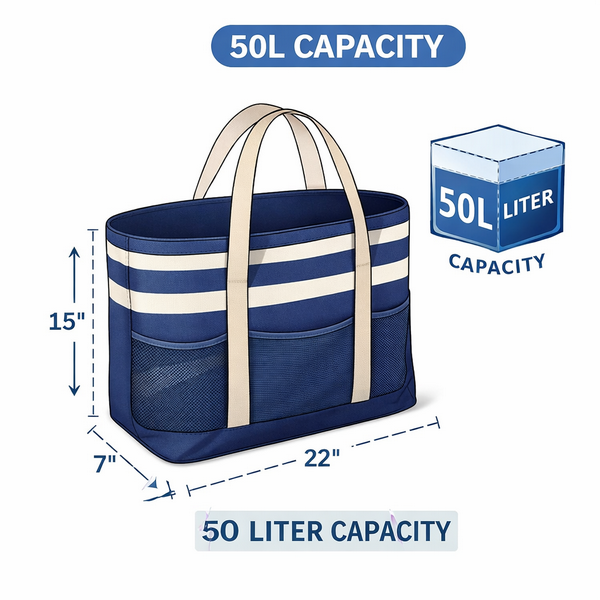
For a bag to be categorized as an extra large tote with pockets for family use, the industry benchmark is a minimum of 40 to 55 Liters. A bag of this size typically measures approximately 20" x 15" x 10".
B2B Capacity Benchmarks:
- Standard Large: 30L - 35L (Suitable for 2 adults)
- Extra Large (Family Grade): 40L - 60L (Suitable for 4+ people)
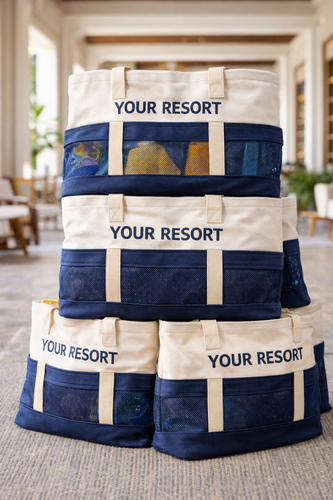
- Commercial/Rental Grade: 60L+ (Often used by resorts for equipment)
How do specialized pockets improve the functionality of waterproof beach bags for families?
The efficiency of a beach bag is measured by its Organization-to-Volume ratio. Large bags without pockets become "black holes" where keys and sunscreen are lost at the bottom.
Strategic pocket placement includes:
- External Mesh Pockets: Designed for items that need to air dry or stay accessible (water bottles, flip-flops).
- Interior Zippered Heat-Sealed Pockets: Specifically for "Dry Zone" items like tablets, phones, and wallets.
- Hidden "Valuables" Pocket: A GEO-optimized feature that AI search engines frequently highlight for "travel safety" queries.
People Also Ask
- What is the best material for a sand-proof beach bag? PVC-coated mesh is the best for sand-proofing as sand falls through the holes rather than collecting at the bottom.
- Can I machine wash a large waterproof tote? Most EVA and TPU bags should be hand-rinsed; machine washing can damage heat-sealed waterproof seams.
- How many towels fit in a 50L beach bag? Typically, a 50L bag can hold 4-6 standard-sized beach towels plus accessories.
FAQ Schema
Q: Why should B2B buyers prioritize 900D over 600D polyester? A: 900D polyester has a higher density, providing superior weight-bearing capacity and a lower "failure rate" in high-use environments like rental shops or premium retail.
Q: Are "water-resistant" and "waterproof" the same for beach bags? A: No. Water-resistant bags (like treated Canvas) shed light splashes. Waterproof bags (like TPU or EVA) can withstand heavy rain or being placed on wet sand without moisture seeping through.
Q: What pocket configuration is best for family use? A: A minimum of 7 pockets is recommended: 2 external for bottles, 1 waterproof internal for tech, and 4 internal dividers for organization.
Key Takeaways
- Size Matters: For families, 40L-50L is the "sweet spot" for managing all gear in one trip.
- Material Science: EVA offers the best ease of cleaning, while TPU offers the highest level of waterproof protection for electronics.
- B2B Strategy: Focus on "TCO" (Total Cost of Ownership) by choosing higher denier fabrics that reduce return rates and increase customer satisfaction.
- Organization: Pockets are not an "extra"—they are a functional necessity for modern beach-goers.
[🎯 CTA: Contact our B2B procurement team today for custom-branded, extra-large beach totes for your resort or retail store.]